The Driest City in Every US State
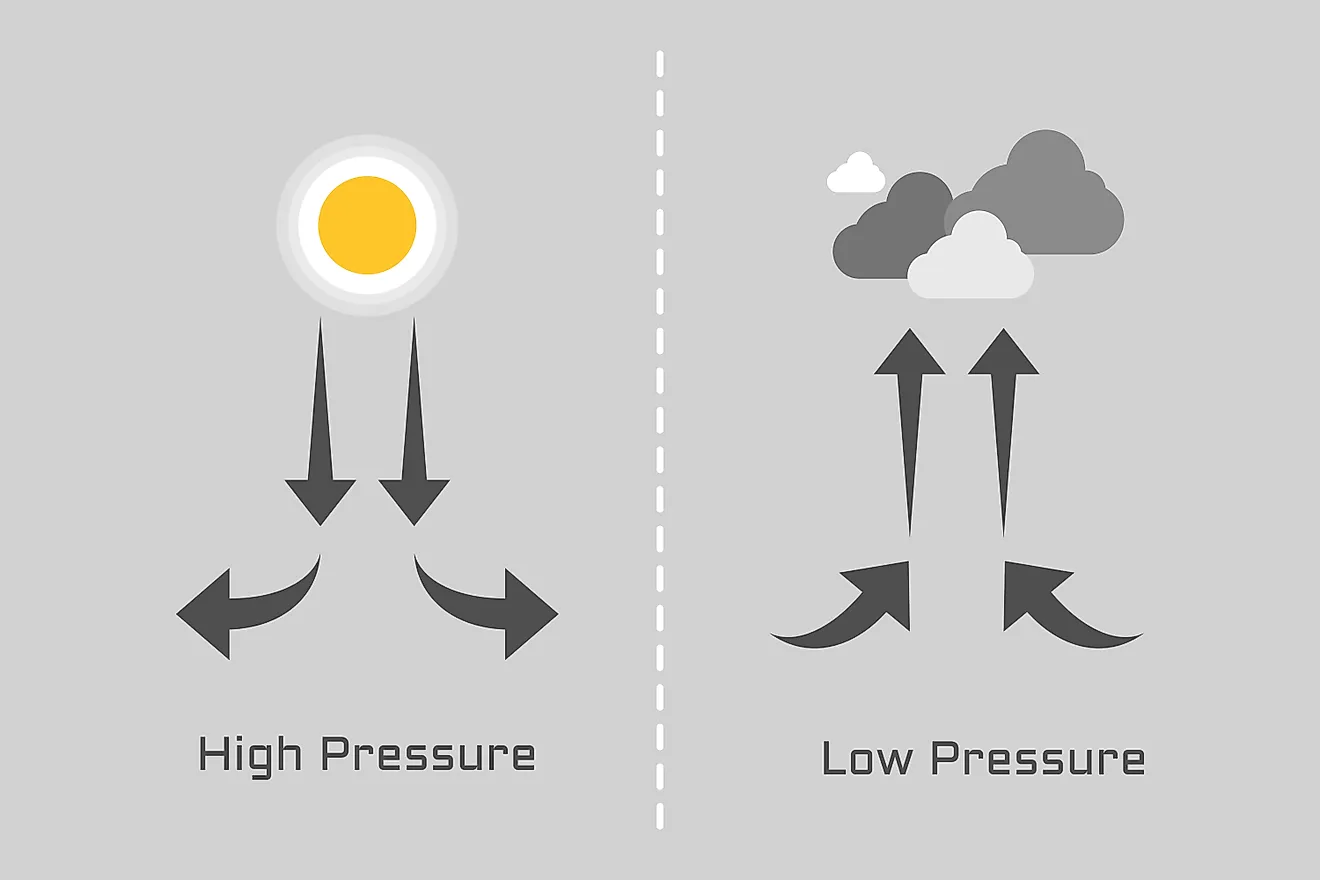
The driest cities in the United States are shaped by more than a simple lack of rain. They usually lie in one of three spots: behind mountains that block rain clouds, deep inland where the air has already lost its moisture, or under high-pressure systems that push storms away. Together, several factors explain why certain places stay dry year after year.
The list identifies the driest city in every US state using long-term, 30-year average precipitation records from the National Centers for Environmental Information (NCEI-NOAA). The focus is on long-term averages, not short-term droughts. In these areas, dryness is not a passing weather pattern but a geographic reality that shapes agriculture and dictates infrastructure design.
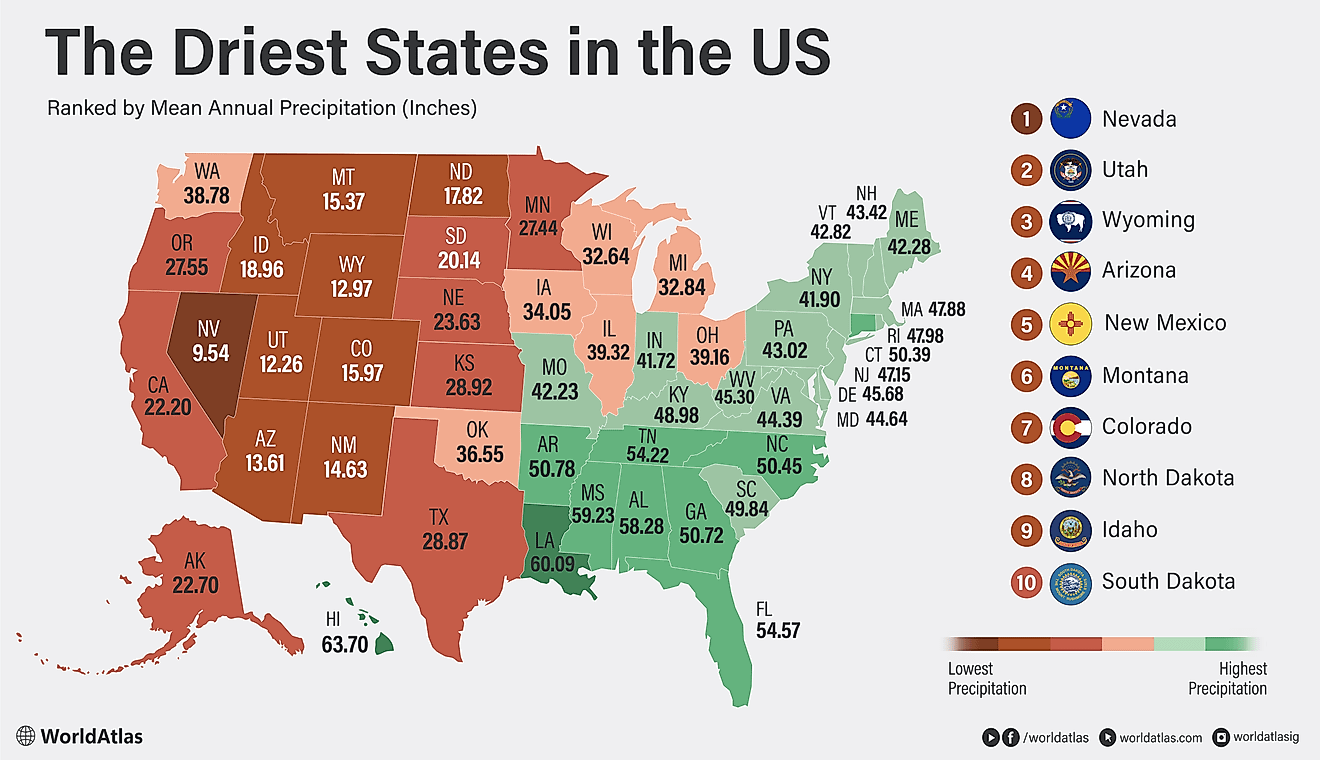
The contrast across the country is stark. Hawaii, Louisiana, and Mississippi lead the nation in rainfall, each averaging close to 60 inches a year or more, while Nevada, Utah, and Wyoming sit at the dry end with statewide averages below 13 inches. The gap can be just as wide within a single state: California averages 22 inches statewide, yet El Centro in the Imperial Valley sees only about 2.5, the lowest figure on this entire list. What follows is the driest city in each of the 50 states, listed alphabetically, with the local annual average set against the statewide one.
Decatur, Alabama

Decatur sits in the Tennessee Valley of northern Alabama and averages 49.5 inches of rain a year, below Alabama's 58.3-inch statewide average. The northern interior lies far from the Gulf of Mexico, so it misses much of the tropical moisture and heavy summer downpours that soak the coastal counties.
Utqiagvik, Alaska

Utqiagvik is a polar desert on the North Slope tundra, receiving 5.4 inches of precipitation annually, far below Alaska's 22.5-inch statewide average. The region's extremely cold air holds very little moisture, keeping precipitation low throughout the year.
Yuma, Arizona

Set at the junction of the Sonoran and Colorado deserts, Yuma gets 3.3 inches of rain annually, well below Arizona's 13.6-inch statewide average. The city's desert location and heavy reliance on Colorado River irrigation make large-scale winter farming possible.
Russellville, Arkansas
Russellville sits in the Arkansas River Valley between the Ozark and Ouachita highlands, averaging 46.4 inches of rain a year, under Arkansas's 50.6-inch statewide average. The valley setting leaves it a little drier than the wetter southern and eastern reaches of the state.
El Centro, California

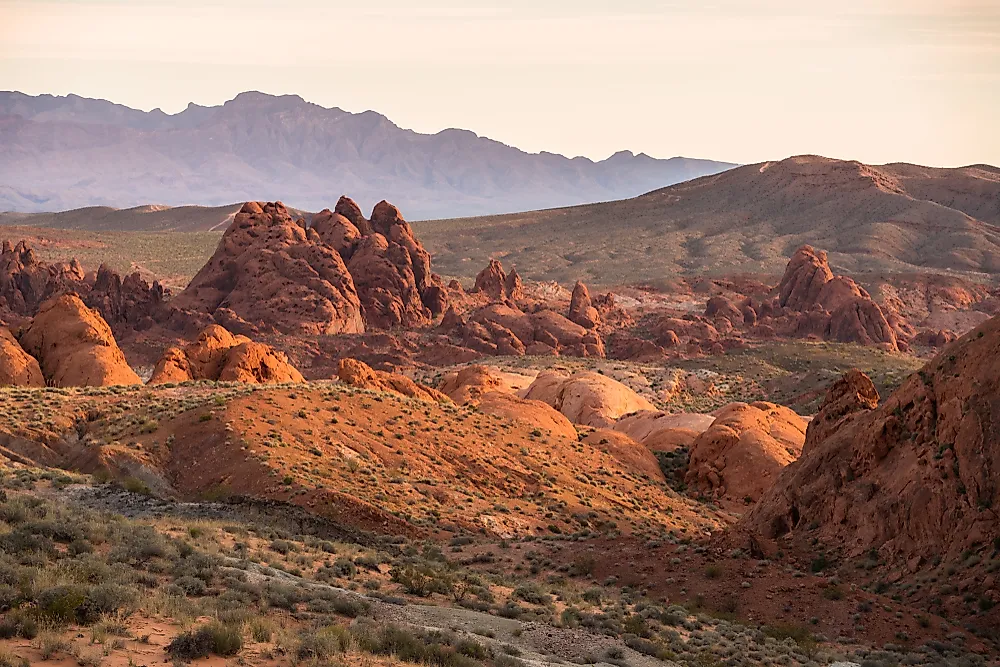
Set 50 feet below sea level in the Imperial Valley, El Centro receives 2.5 inches of rain annually, well below California's 22.2-inch statewide average. Surrounding mountain ranges create a rain shadow that blocks Pacific moisture, making the area dependent on Colorado River water.
Alamosa, Colorado

Alamosa averages 7.3 inches of precipitation a year, well under Colorado's 15.9-inch statewide average. Set in the high-altitude San Luis Valley, it is shielded by the Sangre de Cristo and San Juan Mountains, which strip moisture from incoming storms.
New London, Connecticut
On the coast at the mouth of the Thames River, New London receives 39.3 inches of precipitation a year, below Connecticut's 50.3-inch statewide average. Its shoreline position keeps totals lower than the higher inland hills of the state's northwest, where elevation wrings more rain and snow from passing systems.
Georgetown, Delaware
Georgetown sits inland at the center of Delaware's coastal plain and averages 43.9 inches of rain a year, just under Delaware's 45.7-inch statewide average. Away from the immediate coast, it records slightly lower totals than areas more exposed to ocean-driven storms.
Key West, Florida

Key West receives 40.4 inches of rain annually, lower than Florida's 54.5-inch statewide average. Because it is a small island with limited land mass, it misses the intense afternoon thunderstorms that build over mainland Florida.
Augusta, Georgia

Augusta averages 44.1 inches of rain annually, below Georgia's 50.7-inch statewide average. Set along the Fall Line, the city lies between the humid coastal plain and the Appalachian foothills, often receiving less topographic-driven rainfall than the higher terrain to its north.
Kailua-Kona, Hawaii
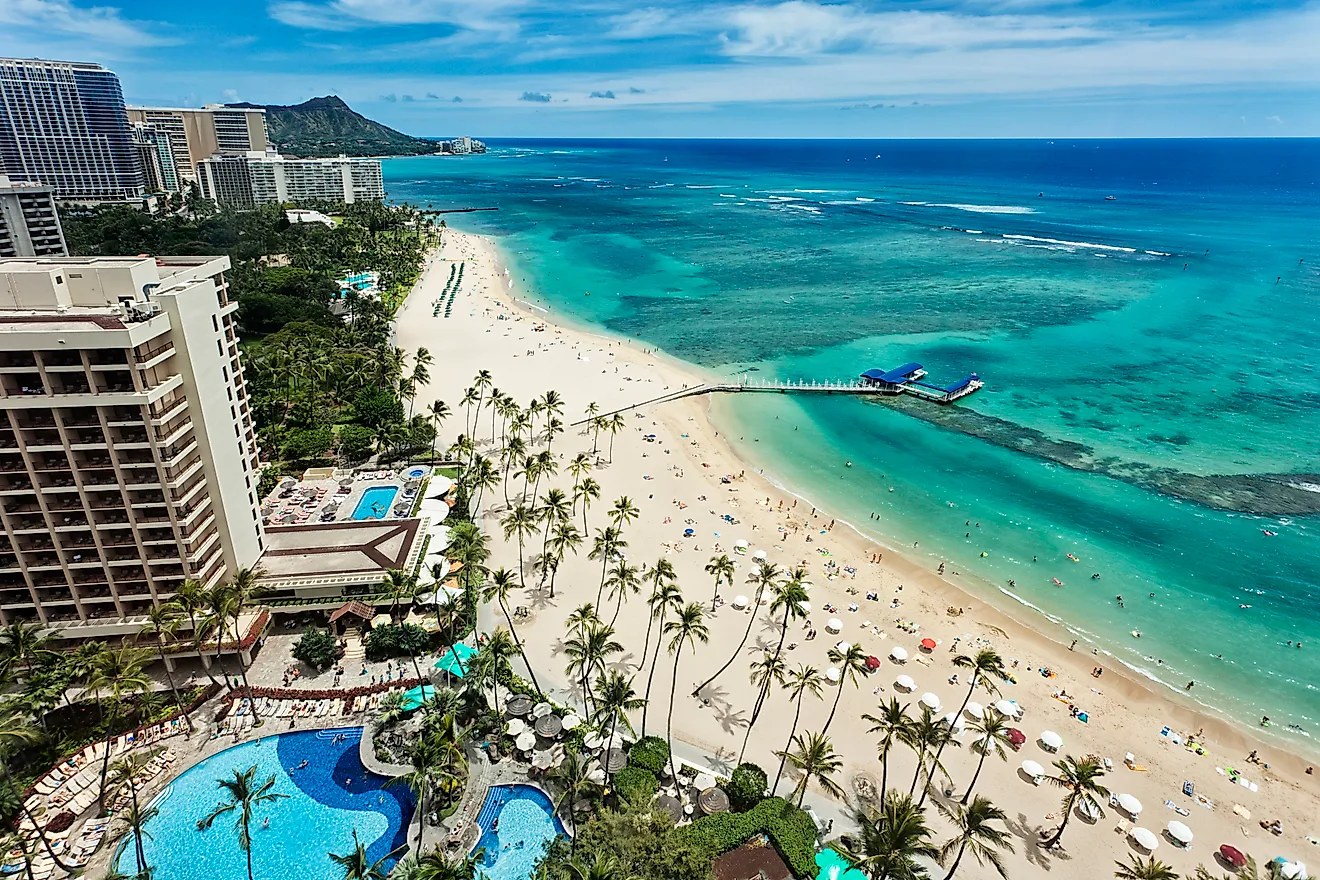
On the leeward Kona coast of Hawaii Island, Kailua-Kona averages 9.9 inches of rain a year, far below Hawaii's 63.7-inch statewide average. Most of the island sits upwind to the east, where trade winds drop their moisture on the windward slopes long before reaching the dry Kona side.
Salmon, Idaho

Salmon sits in a deep valley along the Salmon River in east-central Idaho and averages 9.5 inches of precipitation a year, well below Idaho's 18.9-inch statewide average. Mountains on every side cast a strong rain shadow, stripping moisture from storms before they reach the valley floor.
Waukegan, Illinois
On the Lake Michigan shore north of Chicago, Waukegan averages 35.3 inches of precipitation a year, below Illinois's 39.2-inch statewide average. Its northern position sits away from the heavier, more consistent rainfall that Gulf moisture brings to central and southern Illinois.
Angola, Indiana

Angola lies in the northeastern corner of Indiana's lake country and averages 38.8 inches of precipitation a year, just under Indiana's 41.7-inch statewide average. Its northern position keeps it a little drier than the parts of the state more open to Gulf moisture tracks.
Spirit Lake, Iowa

Spirit Lake sits in the northwestern lakes region of Iowa and averages 29.1 inches of precipitation a year, below Iowa's 34.0-inch statewide average. On the dry western edge of the state, it is farther from the steady Gulf moisture that keeps eastern Iowa wetter.
Elkhart, Kansas
Elkhart sits in the far southwestern corner of the Kansas High Plains and averages 18.4 inches of precipitation a year, well below Kansas's 28.9-inch statewide average. High elevation and a long distance from the Gulf of Mexico give the area a semi-arid climate.
Henderson, Kentucky
On the Ohio River in western Kentucky, Henderson averages 46.0 inches of precipitation a year, a little under Kentucky's 48.9-inch statewide average. The broad Ohio Valley here sees somewhat lower totals than the higher terrain of the state's southeast.
Shreveport, Louisiana

With 51.4 inches of annual rainfall, Shreveport is drier than Louisiana's 60.1-inch statewide average. Its inland position in the state's northwest corner places it farther from the direct tropical moisture and frequent heavy storm systems that affect the Gulf Coast.
Presque Isle, Maine
Presque Isle sits on the interior plateau of Aroostook County in far northern Maine and averages 38.1 inches of precipitation a year, below Maine's 42.2-inch statewide average. Well inland, it misses the heaviest moisture from the Atlantic coastal storms that strike southern and Down East Maine.
Hagerstown, Maryland
Hagerstown sits in the Cumberland Valley of western Maryland and averages 35.6 inches of precipitation a year, well below Maryland's 44.5-inch statewide average. Ridges of the Appalachians to the west block much of the moisture that reaches the state's Piedmont and coast.
North Adams, Massachusetts

Set among the Berkshire hills of far northwestern Massachusetts, North Adams averages 42.3 inches of precipitation a year, below Massachusetts's 47.7-inch statewide average. Its sheltered valley records lower totals than the coast and the higher hills nearby, which catch more rain and snow.
Iron Mountain, Michigan
Iron Mountain sits in the western Upper Peninsula along the Wisconsin border and averages 20.8 inches of precipitation a year, well below Michigan's 32.8-inch statewide average. It sits away from the heaviest lake-effect snow bands that raise totals elsewhere in the Great Lakes region.
Alexandria, Minnesota
Alexandria sits in west-central Minnesota and averages 24.1 inches of precipitation a year, below Minnesota's 27.3-inch statewide average. Gulf moisture weakens by the time it reaches this part of the prairie, leaving the west of the state drier than the southeast.
Greenville, Mississippi

In the Mississippi Delta beside the river, Greenville averages 49.0 inches of rain a year, below Mississippi's 59.0-inch statewide average. The Delta lies far enough from the Gulf Coast to avoid the most frequent tropical downpours that strike the state's south.
St. Joseph, Missouri

In northwest Missouri, St. Joseph gets 34.8 inches of precipitation annually, under the state's 42.2-inch statewide average. Set near the edge of the Great Plains, it misses the heavier rainfall totals typically found in the Ozark Mountains to the south.
Cut Bank, Montana
Cut Bank sits on the high plains just east of the Rocky Mountain Front and averages 10.8 inches of precipitation a year, below Montana's 15.3-inch statewide average. The mountains to the west cast a strong rain shadow, leaving Pacific storms largely spent by the time they reach the plains.
Scottsbluff, Nebraska

Scottsbluff, in Nebraska's panhandle, sees 15.7 inches of precipitation each year, well below the state's 23.6-inch statewide average. High Plains conditions and a significant distance from Gulf moisture sources keep the local climate semi-arid.
Las Vegas, Nevada

Surrounded by mountains in the Mojave Desert, Las Vegas averages just 4.2 inches of precipitation annually, less than half of Nevada's 9.5-inch statewide average. Its basin topography and arid environment make it one of the driest and hottest major cities in the country.
Lebanon, New Hampshire
Lebanon sits in the Connecticut River valley on New Hampshire's western edge and averages 38.1 inches of precipitation a year, below New Hampshire's 43.4-inch statewide average. Its sheltered valley keeps totals lower than the heavier precipitation of the White Mountains to the northeast.
Millville, New Jersey

On the flat coastal plain of southern Cumberland County, Millville averages 43.4 inches of rain annually, just below New Jersey's 47.1-inch statewide average. Its flat terrain sees more uniform rainfall than the northern highlands, which can record higher totals due to elevation.
Farmington, New Mexico

Farmington receives 8.0 inches of precipitation annually, below New Mexico's 14.6-inch statewide average. On the Colorado Plateau, the city falls within a rain shadow created by the high terrain of the San Juan Mountains to the north.
Plattsburgh, New York

On the western shore of Lake Champlain, Plattsburgh averages 30.9 inches of precipitation a year, well below New York's 41.8-inch statewide average. The Adirondacks to the west wring moisture from incoming systems, placing the city in a pronounced rain shadow.
Asheville, North Carolina

Set in the French Broad valley among the southern Appalachians, Asheville averages 40.6 inches of rain a year, below North Carolina's 50.3-inch statewide average. The surrounding peaks ring the city and block much of the moisture that drenches the higher slopes nearby, leaving the valley floor comparatively dry.
Williston, North Dakota
Williston sits in the northwestern corner of North Dakota near the Montana line and averages 15.1 inches of precipitation a year, below North Dakota's 17.8-inch statewide average. Far out on the northern plains, it lies beyond the reach of the Gulf moisture tracks that water the state's south and east.
Toledo, Ohio

Toledo receives 35.0 inches of precipitation annually, less than Ohio's 39.1-inch statewide average. Its position near Lake Erie and flat terrain leave it slightly drier than the hillier southern and eastern parts of the state.
Boise City, Oklahoma
In the Oklahoma Panhandle, Boise City gets about 17 inches annually, less than half of Oklahoma's 36.5-inch statewide average. It lies at the arid western end of the state's moisture gradient, where the influence of Gulf moisture is weakest.
Madras, Oregon
Madras sits on the high desert plateau of central Oregon east of the Cascades and averages 9.4 inches of precipitation a year, far below Oregon's 27.4-inch statewide average. The Cascade crest casts a deep rain shadow, capturing the Pacific moisture that soaks the western half of the state.
Altoona, Pennsylvania

Altoona sits in a valley of the Allegheny Mountains in central Pennsylvania and averages 36.7 inches of precipitation a year, below Pennsylvania's 42.9-inch statewide average. Surrounding ridges shelter the valley, holding totals below the wetter higher elevations nearby.
Westerly, Rhode Island
On the southwestern Rhode Island coast, Westerly averages 42.8 inches of precipitation a year, below Rhode Island's 47.9-inch statewide average. Its shoreline position sees somewhat lower totals than inland areas where terrain lift and storm tracks add rain.
Greenwood, South Carolina
Greenwood sits in the Piedmont of western South Carolina and averages 42.0 inches of rain a year, below South Carolina's 49.8-inch statewide average. The inland Piedmont stays drier than the subtropical coastal plain and the Blue Ridge to the northwest, where slopes lift more rain from passing systems.
Mobridge, South Dakota

On the Missouri River in north-central South Dakota, Mobridge averages 17.3 inches of precipitation a year, below South Dakota's 20.1-inch statewide average. West-river country sits far from Gulf moisture and trends drier than the southeastern corner of the state.
Bristol, Tennessee

Bristol sits in the Tri-Cities of upper East Tennessee, in the Appalachian ridge-and-valley country, and averages 44.0 inches of precipitation a year, well below Tennessee's 54.2-inch statewide average. The valley floor receives less rain than the high peaks of the Great Smoky Mountains to the south.
El Paso, Texas

Deep in the Chihuahuan Desert, El Paso receives just 8.8 inches of precipitation annually, well below Texas's 28.9-inch statewide average. This arid environment is governed by its inland position and high desert topography, making it the driest major city in Texas.
Wendover, Utah
On the edge of the Bonneville Salt Flats at the Nevada line, Wendover averages 3.6 inches of precipitation a year, far below Utah's 12.2-inch statewide average. The Great Salt Lake Desert sits in a deep rain shadow east of Nevada's ranges, one of the driest settings in the state.
Burlington, Vermont

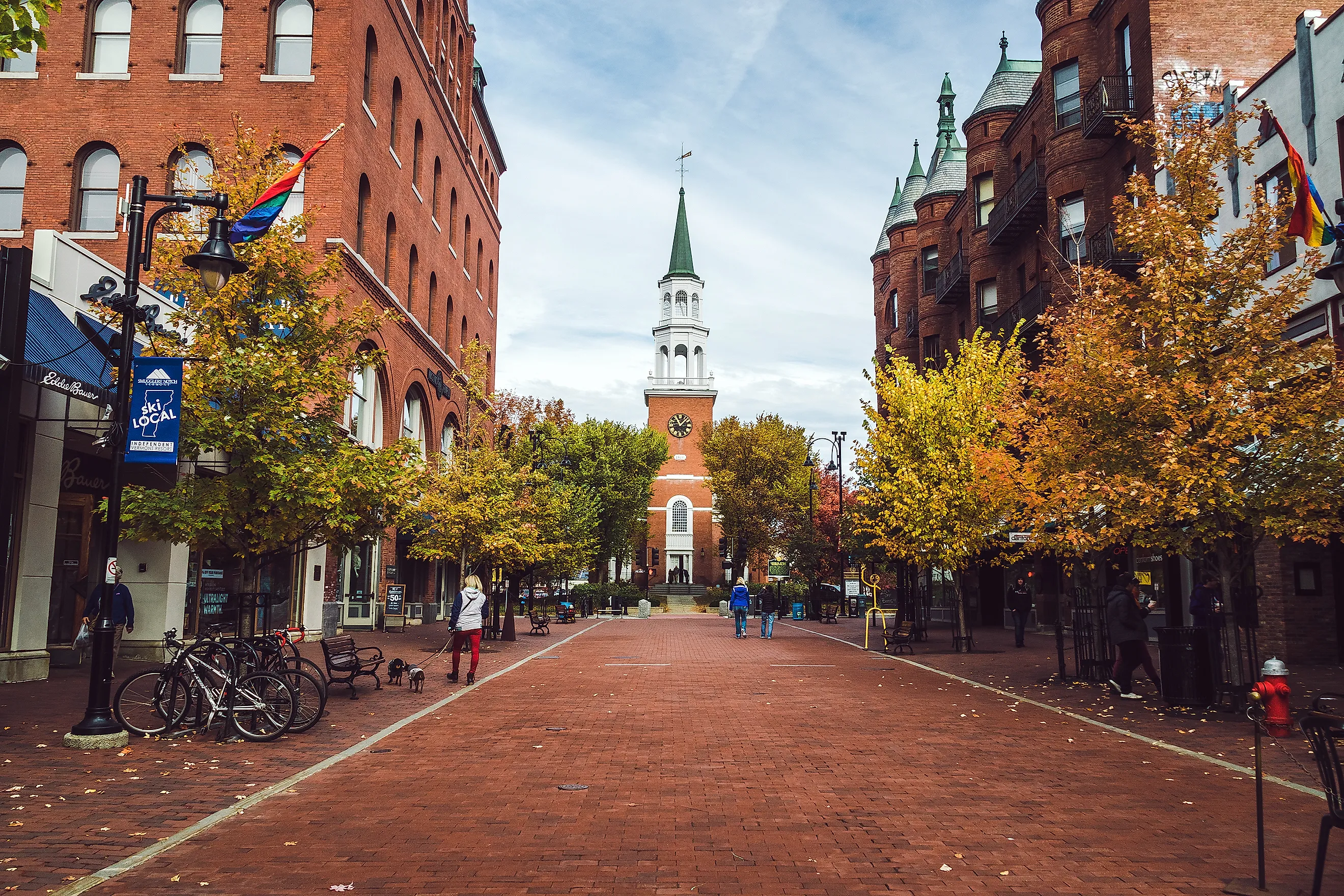
On the eastern shore of Lake Champlain, Burlington receives 37.5 inches of precipitation annually, lower than Vermont's 42.7-inch statewide average. The Green Mountains to the east capture much of the region's moisture, leaving the Champlain Valley comparatively sheltered.
Harrisonburg, Virginia

Harrisonburg sits in the Shenandoah Valley of western Virginia and averages 39.0 inches of precipitation a year, below Virginia's 44.3-inch statewide average. The Blue Ridge and Allegheny ranges on either side limit the reach of heavier coastal and orographic rainfall.
Moses Lake, Washington

In the Columbia Basin of central Washington, Moses Lake averages 7.8 inches of precipitation a year, far below Washington's 38.4-inch statewide average. The Cascades to the west cast one of the country's strongest rain shadows, leaving the basin in near-desert conditions.
Martinsburg, West Virginia

In the eastern panhandle of West Virginia, Martinsburg sits in the lower Shenandoah Valley and averages 39.0 inches of precipitation a year, below West Virginia's 45.2-inch statewide average. The Allegheny ridges to the west strip moisture from passing storms, keeping the valley drier than the rest of the state.
Ashland, Wisconsin
On Chequamegon Bay at the south shore of Lake Superior, Ashland averages 27.9 inches of precipitation a year, below Wisconsin's 32.6-inch statewide average. It sees less lake-effect moisture than areas to the east, where a longer wind fetch over the lake adds snow.
Rock Springs, Wyoming

Set on the Rock Springs Uplift, this high-desert city receives about 7.6 inches of precipitation each year, below Wyoming's 12.9-inch statewide average. Its dry climate comes from its location near the Great Divide Basin and its distance from major moisture sources.
The Driest of the Dry
A handful of these cities stand out even on a list of dry places. El Centro, California, is the driest of all at about 2.5 inches a year, trailed by Yuma, Arizona, at 3.3 inches and Wendover, Utah, at 3.6. All three sit in the desert Southwest, where rain shadows and persistent high pressure wring the air nearly dry, and several of them, El Centro, Yuma, and Las Vegas among them, depend on water piped in from the Colorado River to make up for what the sky withholds. The contrast with the wettest states is sharp: even the driest cities in Florida and Mississippi, Key West and Greenville, each clear 40 inches a year, more than fifteen times what El Centro receives.
What Makes a City the Driest
Low rainfall across the United States follows clear geographic patterns. Areas downwind of mountain ranges lose moisture through rain shadows, inland regions receive weakened air masses, and persistent high-pressure systems redirect storms before they arrive. These factors lead to consistently lower precipitation rather than occasional dry spells.
Dryness shapes more than weather. It affects water availability, limits crop choices, and increases reliance on irrigation and storage systems. In these cities, geography drives how much rain falls and how communities adapt to living with less of it.