The 10 Most Poisonous Fruits In The World
Most fruit is exactly what it looks like: a sweet, harmless snack. But a surprising number of fruits carry a hidden dark side, sometimes in the seed, sometimes in the leaf, and occasionally in the fruit itself. A few are dangerous only to certain people, others only when eaten unripe or raw, and a rare handful are lethal enough to earn painted warning signs. Here are ten fruits worth knowing about before you take a bite, and exactly what makes each one risky.
Star Fruit

Star fruit, or carambola, is genuinely good for you if your kidneys are healthy: low in calories, high in fiber, loaded with vitamin C. The trouble is what rides along with those nutrients. Star fruit is rich in oxalic acid and a neurotoxin called caramboxin, which healthy kidneys flush out but damaged ones cannot. For someone with chronic kidney disease, even a single fruit can set off relentless hiccups, vomiting, confusion, seizures, and in severe cases death. Healthy people are not entirely in the clear either, since eating a large amount at once, especially on an empty stomach, has caused acute kidney injury. Enjoy it in moderation, and skip it altogether if your kidneys are compromised.
Elderberries

Elderberries are a real ingredient in syrups, jams, and wines, but only after cooking, and only the ripe berries. Everything else on the elder plant is a problem. The leaves, bark, roots, stems, and unripe berries contain cyanide-producing compounds that will leave you nauseated and doubled over with cramps. Even raw ripe berries can upset your stomach in quantity. Cook them properly and they are a folk-remedy staple; eat them straight off the bush and you will regret it.
Rhubarb

Here is one where the danger sits entirely in the leaves. The tart red stalks of rhubarb are the stuff of strawberry-rhubarb pie, perfectly edible and beloved in spring desserts. The big leafy tops, though, are loaded with oxalic acid. Eat enough of them and you are looking at stomach pain, nausea, breathing trouble, and, in extreme cases, kidney failure. It would take a lot of leaf to kill an adult, but there is no reason to test the limit. Cook with the stalks and compost the leaves.
Manchineel

If any fruit here deserves a skull and crossbones, it is the little green apple of the manchineel tree. Native to Florida, the Caribbean, Central America, and northern South America, the manchineel is regularly called one of the most dangerous trees on Earth. Its milky sap blisters skin, sheltering under it in the rain can raise burns, and its sweet-smelling fruit, nicknamed the "little apple of death," brings on severe burning and swelling in the mouth and throat. Documented deaths are rare, but the suffering is real enough that officials in some areas paint warning bands on the trunks. If you spot one, keep your distance.
Ackee

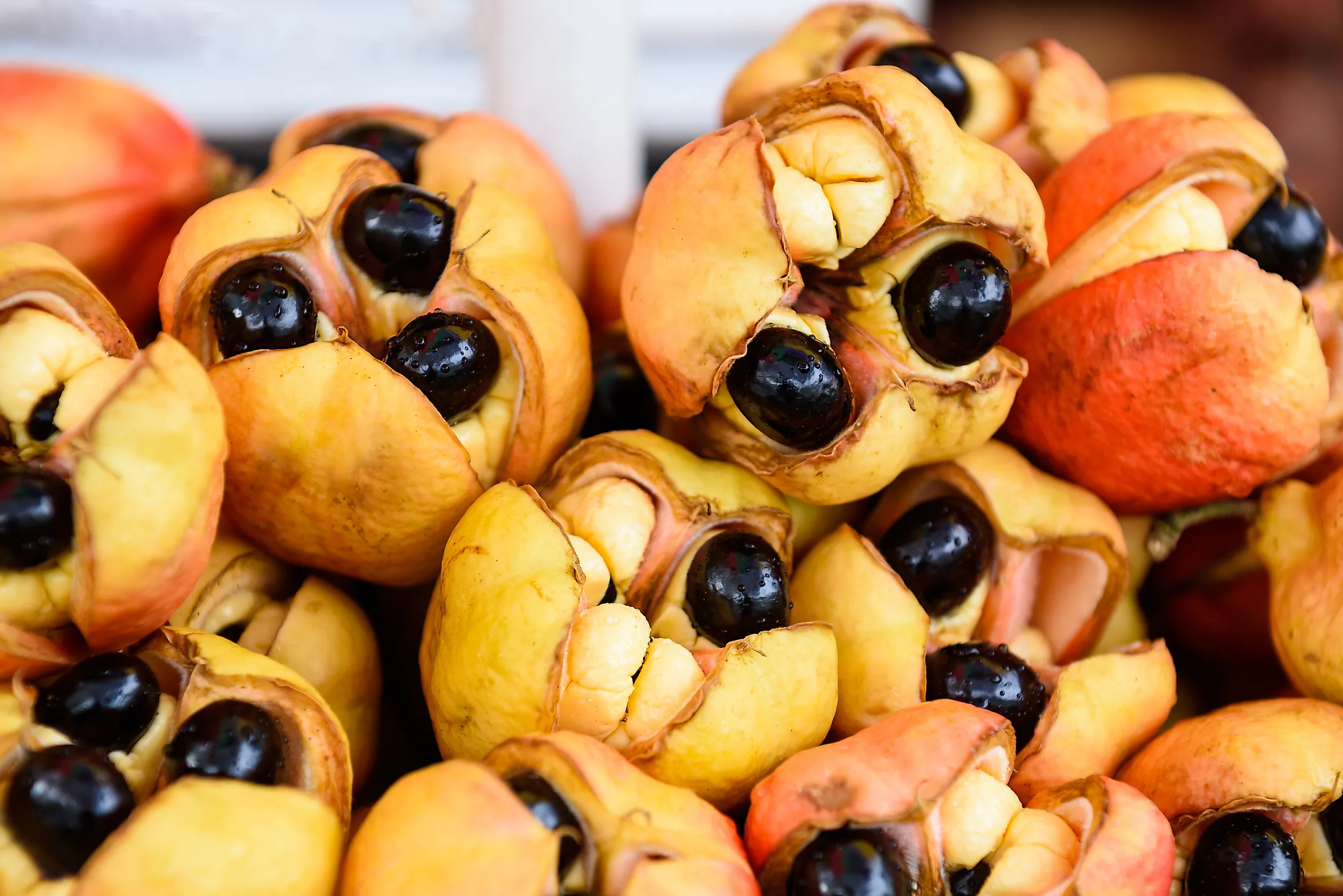
Ackee is a study in contradictions. Ripe and properly prepared, it is the national fruit of Jamaica and the heart of the country's signature dish, ackee and saltfish, with a soft texture and a mild flavor often compared to scrambled eggs. Unripe, it is one of the more dangerous fruits in the world. The unripe arils are packed with hypoglycin A, a toxin that causes "Jamaican vomiting sickness": violent vomiting, a dangerous crash in blood sugar, and, in serious cases, seizures, coma, and death. The fruit is only safe once it ripens and splits open naturally on the tree, and even then the shiny black seeds and the pink membrane stay toxic. The risk is real enough that the United States restricts imports to tested, properly processed products. Delicious when it is ready, dangerous when it is not.
Winterberry

Winterberry, a type of holly, is a gift to wildlife and a hazard to people. Its bright red berries feed songbirds and small mammals through the cold months, which is a big part of why the shrub is so popular in gardens and wetlands. For humans, though, the berries, seeds, leaves, and bark are toxic. Swallow a few and you can expect nausea, vomiting, and drowsiness; a larger dose is more serious, particularly for a small child. Admire the color, and leave the berries for the birds.
Peaches

A ripe peach is one of summer's great pleasures, and the flesh is not the problem, so relax. The catch is the pit. Peach kernels, like the seeds of cherries, apricots, and plums, contain amygdalin, a compound that releases small amounts of cyanide as the body breaks it down. Swallowing a whole pit by accident is unlikely to hurt you, since the intact seed passes straight through. Deliberately cracking the pits open and eating the kernels inside, however, is a genuinely bad idea. Eat the fruit, toss the pit, and do not treat the seed as a snack.
Pokeberry

Pokeweed grows tall and weedy across much of the eastern and central United States, topped in late summer with drooping clusters of glossy purple-black berries that look almost like grapes. Birds eat them happily. People should not. The berries, seeds, roots, and leaves all carry toxins that bring on cramping, nausea, vomiting, and bloody diarrhea, and the roots, the most poisonous part, are sometimes mistaken for edible plants by foragers. Cooked young pokeweed shoots are a Southern tradition, but only after repeated boiling in several changes of water, which is not a process to improvise. When in doubt, admire the color and move on.
Jatropha

The physic nut, or jatropha, grows across tropical and subtropical regions worldwide, and its sweet-looking yellow fruit has poisoned many a curious child, with clusters of cases reported in parts of India. The danger is in the seeds, which contain curcin, a toxin chemically related to the ricin found in castor beans, along with irritant compounds called phorbol esters. Eating them brings on vomiting, diarrhea, abdominal pain, and in severe cases dehydration and circulatory collapse. Curiously, breeders have developed low-toxin edible varieties in Central America, and the plant is widely grown for biofuel, but the ordinary garden jatropha is one to keep well away from children.
Desert Gourd

Out in the Sahara, a vine that looks a lot like a wild watermelon sprawls across the sand, dotted with small, hard, pale-green fruits. This is the desert gourd, also called colocynth or bitter apple, and that second name is a warning. The pulp is intensely bitter and acts as a violent purgative, thanks to compounds called cucurbitacins, enough to cause severe stomach cramps and dangerous dehydration. People in the region have long found uses for the plant, pressing the seeds for oil and turning parts of it into traditional remedies and even fuel, but the raw fruit sits firmly in the do-not-eat column.
When In Doubt, Leave It On The Branch
The thread running through this list is simple: a fruit looking ripe and inviting tells you nothing about whether it is safe. Several of these are perfectly good food in the right form, ripe ackee, cooked elderberries, rhubarb stalks, and dangerous only in the wrong one. Others, like the manchineel, are risky to so much as touch. The safest habit with any wild or unfamiliar fruit is also the oldest one: if you cannot positively identify it and you do not know how to prepare it, do not eat it.