What Causes Heat Waves?
In late June 2026, an enormous dome of high pressure settled over Europe and simply refused to move. France logged its hottest day ever recorded, Germany smashed all-time temperature records at 252 weather stations in a single stretch, and the World Health Organization tied more than 1,300 deaths to the heat in a matter of weeks. Days later the same kind of setup clamped down on the eastern United States, where roughly 150 million people fell under heat alerts and Washington, DC braced for what forecasters warned could be its hottest Fourth of July on record. So what exactly is a heat wave, and what turns the open air into an oven? The tricky part is that there is no single, universal definition. What counts as dangerous heat in one country is just an ordinary summer afternoon in another.
What Counts as a Heat Wave?
Because "hot" is relative, most countries draw their own lines. The Netherlands, for instance, calls it a heat wave only when the temperature clears 25 degrees Celsius (77 degrees Fahrenheit) for at least five days in a row, with at least three of those days topping 30 degrees Celsius (86 degrees Fahrenheit). Belgium and Luxembourg use that same yardstick. Denmark sets its bar a little differently: it declares a national heat wave when the average of the highest daily temperatures over three days climbs past 28 degrees Celsius (82 degrees Fahrenheit) across more than half the country.
The United States, by contrast, does not bother with one national number. The National Weather Service treats a heat wave as a stretch of two or more days of dangerously hot weather measured against what is normal for that particular place and time of year, and it issues advisories based on the heat index, which folds in humidity. That local yardstick matters, because in many of the world's warmest countries the temperatures that trigger a Dutch or Danish alert would not raise an eyebrow. The simplest working definition, then, is the loosest one: a heat wave is a prolonged spell of abnormally hot weather for wherever you happen to be standing.
What Actually Causes a Heat Wave?
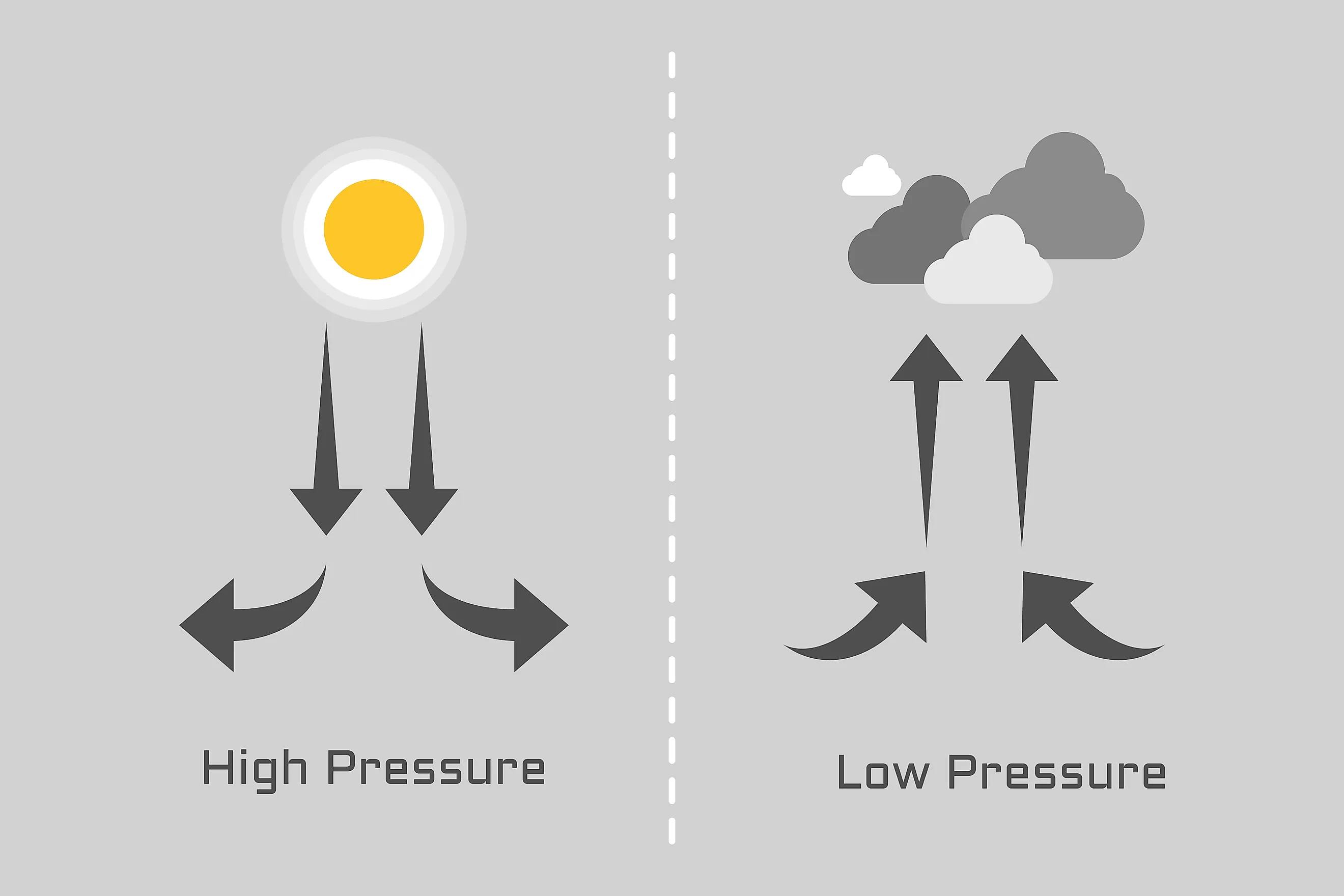
Almost every heat wave starts the same way, with a system of high pressure that parks over a region and stalls out for days or even weeks. Inside that high, air from the upper atmosphere sinks toward the ground. As it descends it gets compressed, and compressing air heats it up, the same way a bike pump warms when you push the plunger. That sinking, warming air is the engine of the heat.
The high does two other things that pile on. It sweeps the sky clear of clouds, so the sun beats down on the surface unfiltered all day long. And it behaves like a lid, sitting so heavily over the area that cooler weather systems and rain-bearing fronts cannot push their way in. With nothing able to knock it loose, the heat just accumulates, one scorching day stacking onto the next. Dry ground makes the whole thing worse: when the soil has no moisture left to evaporate, none of the sun's energy goes into drying it out, so all of it goes straight into heating the air instead. Heat waves turn up in summer in both hemispheres, simply at opposite times of the year, because that is when these stubborn high-pressure patterns are slowest to break down.
The Heat Dome Effect

When that high-pressure lid grows especially strong and stubborn, meteorologists give it a name you have probably heard on the news: a heat dome. It is essentially a mountain of hot air held in place by a ridge in the jet stream. One common version is the "omega block," named because the jet stream bulges into the shape of the Greek letter omega, wedging a dome of high pressure between two low-pressure systems that hold it in place like bookends. That is exactly the pattern that cooked Europe in the summer of 2026, trapping hot Saharan air and pushing temperatures 16 to 18 degrees Celsius above normal.
The most infamous recent example struck the Pacific Northwest in June 2021. A region famous for its mild summers watched Portland, Oregon hit a staggering 116 degrees Fahrenheit (46.7 degrees Celsius) and Seattle reach 108 degrees Fahrenheit (42 degrees Celsius). The heat was intense enough to buckle roads and melt the power cables on Portland's light-rail system. More than 1,400 people are believed to have died across the United States and Canada, making it the deadliest weather event in Canadian history. Scientists later concluded the event would have been virtually impossible without human-caused climate change.
Why Heat Waves Are Getting Worse

Here is the uncomfortable through-line connecting all of this. Of every kind of extreme weather, the link between climate change and heat waves is the clearest and most direct. As the planet warms, heat waves are becoming more frequent, more intense, and longer-lasting, exactly as the Intergovernmental Panel on Climate Change has long projected. The last few years drive the point home: 2023 and then 2024 each set a new record as the hottest year ever measured worldwide.
A whole field called attribution science now exists to measure the fingerprint. Researchers with the World Weather Attribution network run rapid studies after major heat waves, and they keep reaching the same verdict. The 2021 Pacific Northwest event was at least 150 times less likely in a world without warming; Europe's 2026 heat wave, they found, would have been virtually impossible that early in the summer a few decades ago. The effect is not spread evenly, either. According to the WHO, Europe is the fastest-warming continent on Earth, heating at roughly twice the global average, and unusually warm oceans are pumping still more energy into the system.
Heat Waves in the Headlines
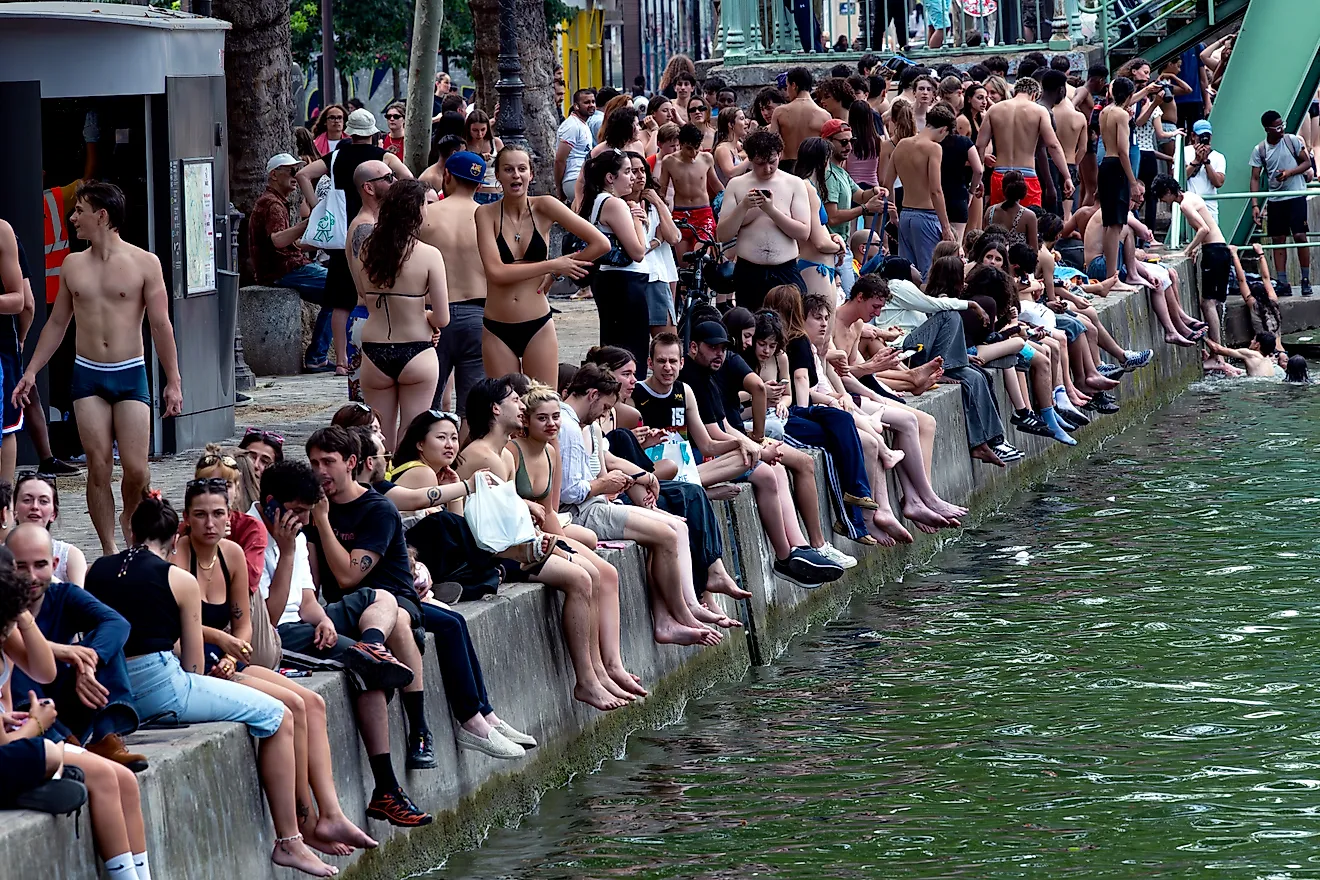
The summer of 2026 offered a brutal preview of the new normal. Europe endured its most severe heat wave on record, with France recording its hottest day ever on June 24 and readings reaching 43.8 degrees Celsius (111 degrees Fahrenheit) in the west of the country. Germany logged 41.7 degrees Celsius (107 degrees Fahrenheit), the Netherlands declared its first-ever "super-heatwave," and the UK, Poland, the Czech Republic, Hungary, and Austria all toppled temperature records. Spain alone blamed roughly 900 deaths on an extraordinarily hot June. One reason the toll runs so high is infrastructure: only about 20 percent of European homes have air conditioning, and much of the housing was designed to hold heat in, not let it out.

Then the heat jumped the Atlantic. As the eastern United States sweltered in early July, New York City was forecast to touch 100 degrees Fahrenheit (38 degrees Celsius) for the first time in a decade and Philadelphia was staring down a 104-degree day. For a sense of the outer limit, look to Death Valley, California, which holds the world record at 134 degrees Fahrenheit (56.7 degrees Celsius), set back in 1913. What is new is not that such heat exists, but how often extreme heat is now spilling into places built for something milder.
The Health Toll

Heat is not just uncomfortable; it is the deadliest form of weather in the United States, killing more Americans in a typical year than hurricanes, tornadoes, floods, and lightning combined. The trend line is grim. The Centers for Disease Control and Prevention recorded more than 2,300 heat-related deaths in 2023, the highest annual toll on record, with a similar number in 2024, and the yearly figure has more than doubled since 2019. Even those numbers are almost certainly undercounts, because heat deaths are often written up on death certificates as heart attacks or kidney failure.
Milder cases show up as heat cramps, heat rash, heat edema (swelling), and heat syncope (fainting), while heat exhaustion and full-blown heatstroke are the dangerous end of the scale. Heatstroke, when the body's core climbs past about 40 degrees Celsius (104 degrees Fahrenheit) and its cooling system fails, is a medical emergency. Here is a counterintuitive truth that public-health researchers stress: the deadliest heat waves are often not the hottest ones. They are the ones where the temperature never drops at night, denying the body the cool hours it needs to recover. That is why the 1995 Chicago heat wave killed 739 people in just five days. The greatest risk falls on the elderly, infants and young children, outdoor workers, people with chronic illness, and anyone without access to air conditioning.
How to Stay Safe in a Heat Wave
The good news is that heat is one of the more survivable hazards if you take it seriously. Stay out of direct sun during the hottest part of the day, usually late morning through late afternoon, and cut back on strenuous activity. Drink plenty of water before you feel thirsty, and lean on air conditioning where you can, whether that means your own home or a public cooling center. Wear loose, light clothing, and never leave children or pets in a parked car, where temperatures spike within minutes.
It also pays to look out for others, since the people most at risk are often the least able to ask for help. Check on elderly neighbors and relatives during a hot spell. And learn the warning signs of heatstroke, which include confusion, a rapid pulse, and hot, dry skin with little or no sweating. If someone shows them, that is a call-for-emergency-help situation, not a wait-and-see one.
Heat waves are a natural part of summer, and they always have been. What has changed is the math. A warming climate is loading the dice toward hotter, longer, and more frequent extremes, which means the records that fell in 2026 are unlikely to stand for long. Understanding what drives a heat wave, and respecting what it can do, is fast becoming a basic summer survival skill rather than a curiosity.