Strange Animals That Actually Live In The US
- The United States is home to several animals, including 1,154 fish species, 311 reptiles, 100,000 insect species, 295 amphibian species, 800 bird species, and 432 mammal species.
- Gila monsters are venomous lizards that are native to Sonora, Mexico, and the southwestern parts of the United States.
- Hellbender is an aquatic giant salamander species that is endemic to central and eastern United States.
Every country has its odd wildlife. The United States has an African antelope grazing beside a missile range, a jellyfish from the Yangtze turning up in farm ponds, and a fish that hauls itself out of the water and walks. The word doing the heavy lifting in the title is "actually," because a good share of the animals below were never supposed to be here at all. Some are natives strange enough to earn the label on their own. The rest are accidents, escapees, and bad ideas that thrived. Here are ten that call the country home, in no particular order, because "strangest" is not something you can measure.
Gemsbok

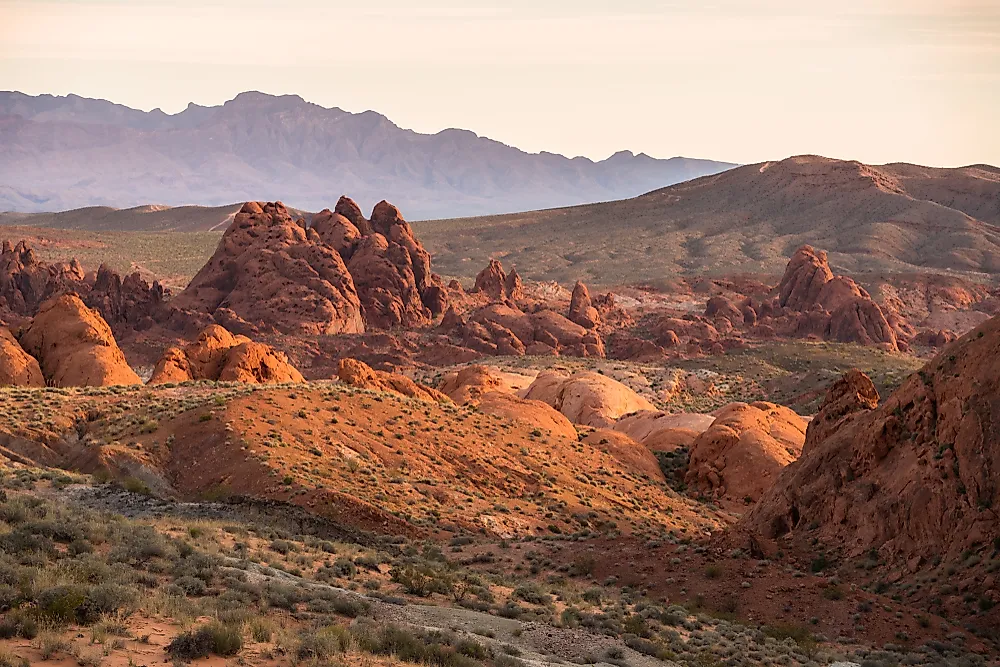
The gemsbok is a heavy African antelope with rapier horns, built for the Kalahari Desert. It now lives in southern New Mexico, because in 1969 the state Game and Fish Department decided hunters deserved bigger game and turned some loose in the Tularosa Basin. Ninety-three animals went out between 1969 and 1977. With no lions or hyenas to keep them honest, the herd swelled to around 3,000, and the descendants have taken to loitering on the White Sands Missile Range, where they occasionally wander onto the runway. The desert they were bred for and the desert they landed in turned out to be close enough.
Nutria

Nutria, also called coypu, are big semi-aquatic rodents from South America with bright orange front teeth and a rat's sense of ambition. Fur farmers brought them north between 1899 and the 1930s, betting on a pelt industry that never quite paid off. The animals handled the rest themselves, escaping or being dumped into the wetlands, where they now chew through marsh roots across roughly sixteen states, Louisiana and the Gulf Coast worst of all. A rodent the size of a small dog turns out to be very good at eating a coastline.
Sea Lamprey

A sea lamprey has no jaw. What it has instead is a round sucker of a mouth ringed with rasping teeth and a tongue that files a hole in whatever it latches onto, then drinks the blood and body fluids. Native to the Atlantic, the sea lamprey reached the Great Lakes through shipping canals and set about attaching itself to lake trout and whitefish, helping collapse fisheries that had supported the region for generations. It carries one of the oldest body plans still swimming, and it looks every bit of it. Nothing about a lamprey was designed to reassure you.
Gila Monster

The Gila monster is the only venomous lizard native to the United States, which is the kind of distinction that sounds worse than it is. It is a slow, heavy, beaded animal in orange and black, about two feet long, that lives across the Southwest and into Sonora, Mexico. Its venom is real, but it delivers the dose by chewing rather than striking, so a person would have to work fairly hard to get bitten. Utah liked it enough to name it the state reptile in 2019. Venomous, yes, but mostly it would prefer to be left alone.
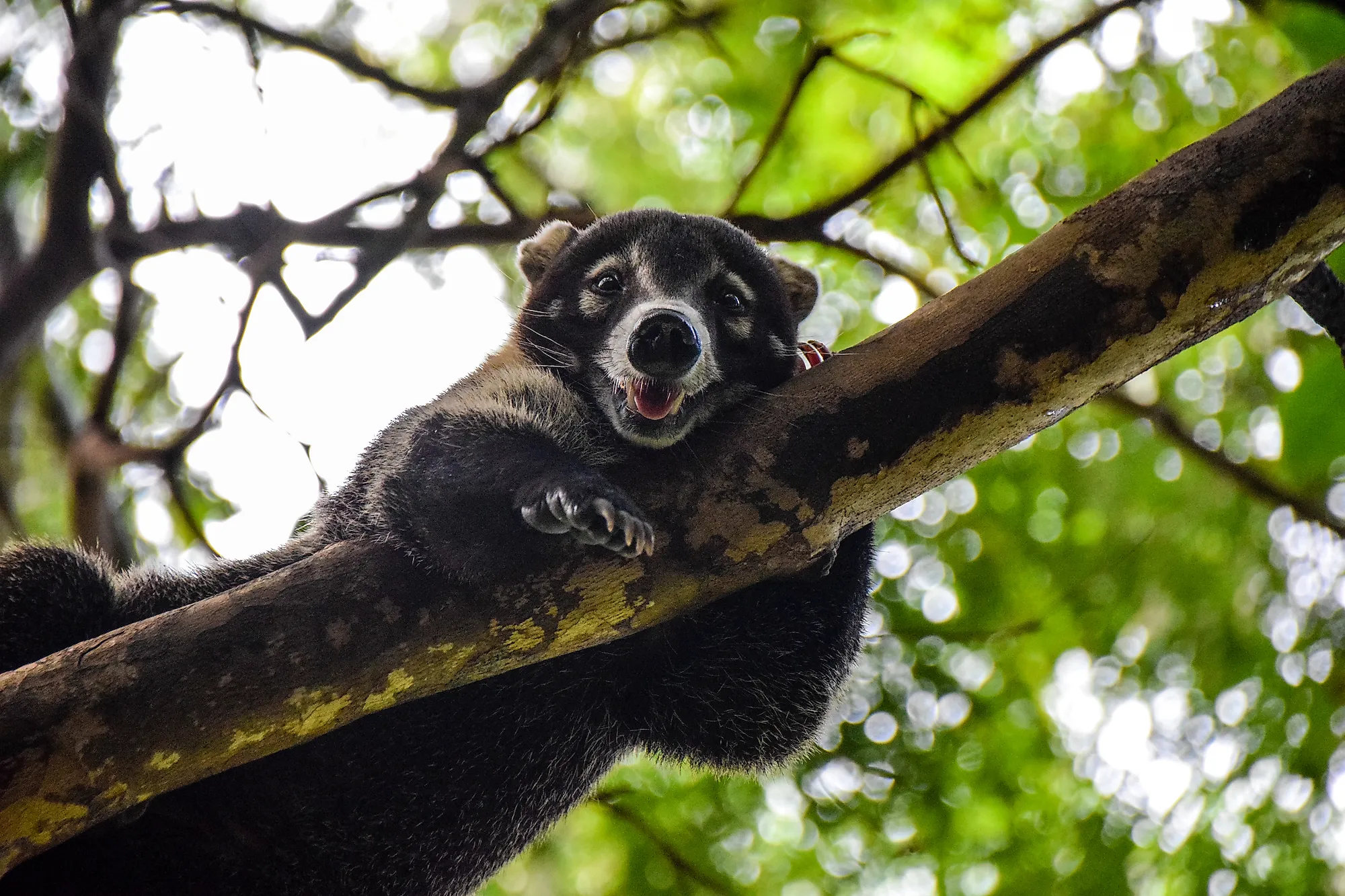
Coatimundi

The coatimundi, or white-nosed coati, is a raccoon relative that looks like someone stretched a raccoon and gave it a pig's snout and a flagpole for a tail. It weighs about thirteen pounds and runs close to three and a half feet nose to tail, most of that being tail, which it carries straight up like a banner so the troop can keep track of one another. Coatis range through the forests of the Americas and cross into the United States in Arizona and New Mexico. They are active by day, endlessly curious, and will absolutely go through your cooler.
Freshwater Jellyfish

Most people never learn that freshwater jellyfish exist until one drifts past them in a quiet lake. Craspedacusta sowerbii is a penny-sized bell, clear as glass, with a velum, the muscular rim around the underside of the bell that pulses it along. It came originally from the Yangtze basin in China and has since turned up in fresh water on nearly every continent, appearing in ponds, quarries, and reservoirs for a few weeks and then vanishing for years. It has been reported across most of the continental United States. Its sting is far too weak to bother a human, which is the only reason nobody panics.
Crested Caracara

The crested caracara is technically a falcon, though it clearly did not read the job description. Instead of stooping on prey at speed like its cousins, it walks around on long legs eating carrion and whatever else it turns up, a scavenger with a raptor's resume. It stands out with a black cap, a bare orange face, and a wingspan near four feet. In the United States it lives in Florida, Arizona, and the southern tip of Texas. It is also known as the Mexican eagle, a grand title for a bird that spends most of its day working roadkill.
Rhesus Macaque

Central Florida has wild monkeys, and it has them because of a tourism gimmick that got away from its inventor. In the 1930s a glass-bottom-boat operator named Colonel Tooey put about six rhesus macaques, a monkey native to South and Southeast Asia, on an island in the Silver River, figuring a few monkeys would add jungle atmosphere to his cruises. He had not accounted for the fact that rhesus macaques are strong swimmers. They reached the far bank within hours and never looked back. The troop around Silver Springs State Park now numbers roughly 300, and it is still spreading, having turned up in Jacksonville nearly a hundred miles away. About a quarter of them carry herpes B, which is harmless to the monkeys and genuinely dangerous to people, so the state asks visitors not to feed them. They are, all told, the most successful bad idea on this list.
Hellbender

The hellbender is a giant salamander that can reach twenty-nine inches, which makes it the third-largest salamander on earth and by far the largest in the Americas. It is the only living member of its genus, a flat-headed, wrinkle-skinned amphibian that breathes through folds in its skin and therefore insists on cold, clean, fast-moving water. It lives under rocks in streams across the eastern United States, roughly between northern Georgia and southern New York. Locals have called it the snot otter, the devil dog, and the Allegheny alligator, none of which it earned by being handsome. A creature this size hiding under your feet in a trout stream is a fine argument for watching where you wade.
Northern Snakehead

The northern snakehead is the fish that walks. It breathes air through a chamber above its gills, which lets it survive out of water for days and haul itself overland to the next pond when its own dries out. That single trick is why it picked up the nickname Frankenfish. It is native to East Asia and arrived in the United States the dumb way: in 2002 a man released two he had bought at a New York market into a Maryland pond, and by 2004 the species was established in the Potomac. It has since spread through the Chesapeake, Hudson, and Delaware drainages and jumped to the Mississippi basin in Arkansas. It is an aggressive predator with a big mouth full of teeth, and in most states the law is simple: if you catch one, do not put it back.
How Most Of Them Got Here
Run back through the list and a pattern shows up. The antelope, the rodent, the monkeys, the walking fish, the jellyfish, the sea lamprey: none of them booked their own passage. People brought them, for fur, for hunting, for tourists, or by pure accident, and the animals simply declined to leave. The genuinely native oddities, the Gila monster and the hellbender, are strange in the ordinary way that nature is strange whenever you actually look at it. So the honest version of the title is that the United States is full of animals that either evolved here and got weird or showed up uninvited and stayed. Strange is doing some work in that sentence. Actually is doing more.