What Is A Cloud Forest?
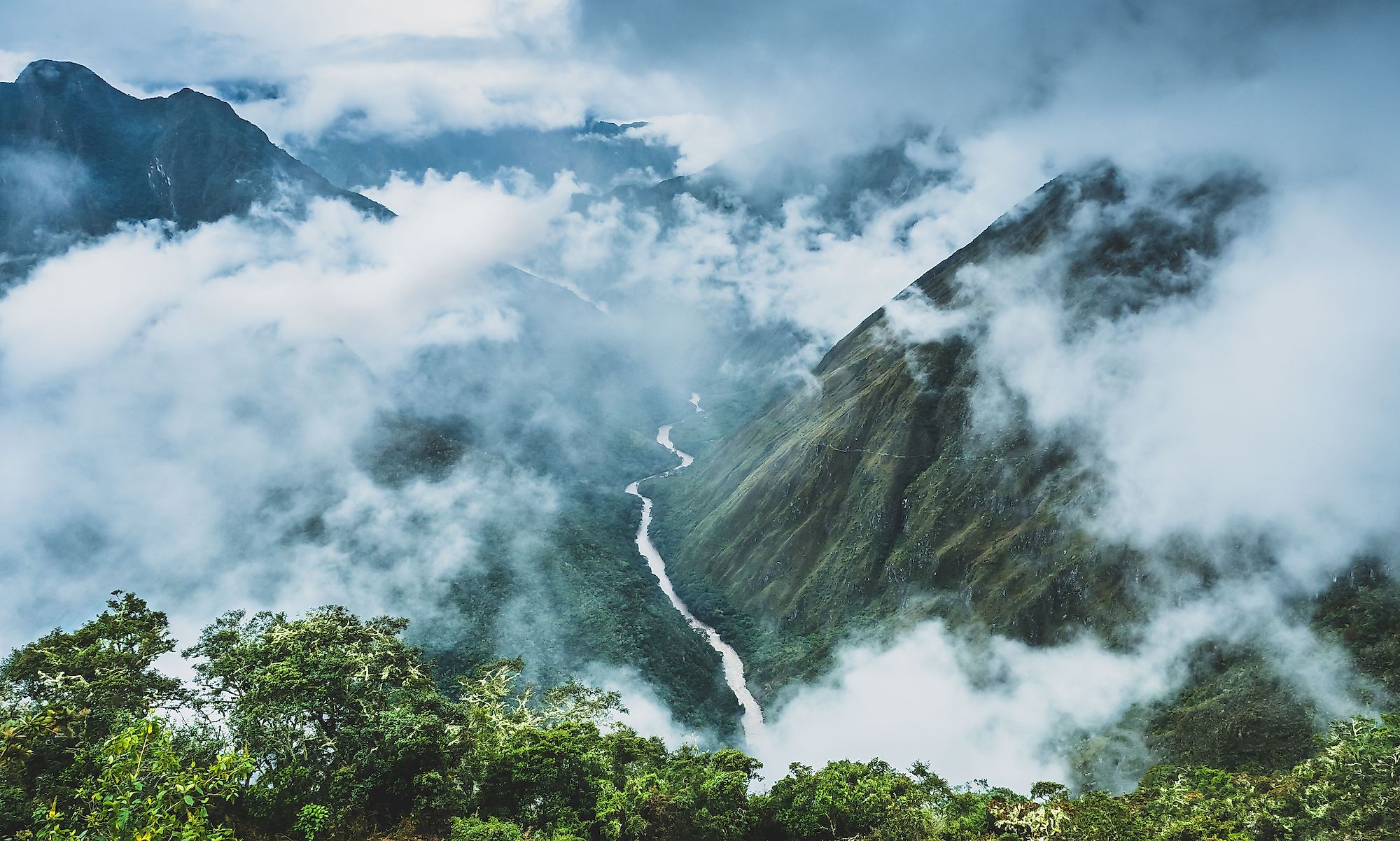
A cloud forest, or tropical montane cloud forest, is a generally tropical or subtropical mountain forest defined by persistent low-level mist and cloud sitting in or just below its canopy. The trees draw much of their water straight out of that cloud rather than from rainfall alone, an arrangement almost nothing else in the plant world depends on. These forests cover a fraction of a percent of the planet's land surface, and many of the plants and animals inside them are found nowhere else. Mount Kilimanjaro carries one, and so do the Tilarán mountains of Costa Rica and the mountainous interior of Yakushima in southern Japan. The same conditions hold on the Lamington plateau in Queensland and along the highest ridges of the southern Appalachians. Their role in biodiversity, water supply, and regional climate runs far ahead of their footprint.
Major Characteristics

Cloud forests are often mistaken for rainforests, but the way they get their water sets them apart. A rainforest depends on rainfall. A cloud forest pulls moisture directly out of the air moving through it, a process called fog interception or cloud stripping, in which leaves and thick mats of moss strip droplets out of the passing cloud and shed them onto the ground below. On some slopes that horizontal input adds a substantial share of moisture on top of what falls as rain. The result is a water supply that holds up even between storms, feeding streams, sustaining the canopy, and supporting highly specialized biodiversity.
The forests occupy a narrow altitude band, usually between about 1,000 and 2,500 meters (3,300 to 8,200 feet), where warm, moisture-laden air rising against a mountain slope cools to its condensation point and forms a near-permanent cloud belt. On small tropical islands the cloud base sits lower, and cloud forest can begin well below 1,000 meters. Altitude also reshapes the trees themselves. Cloud forest trees are markedly shorter than their lowland rainforest counterparts, and the combination of wind, cold, and waterlogged soil produces shallow root systems and stunted, heavily twisted trunks. Canopies stay low and open enough that light reaches deep into the structure, which is one reason epiphytes grow so thickly on the branches.

Temperatures stay cool and unusually stable, averaging between 8 and 20 degrees Celsius (46 to 68 degrees Fahrenheit). Constant cloud cover limits sunlight, and saturated air keeps evaporation low, so humidity in the canopy often sits near 100 percent. Those same conditions slow decomposition to a crawl. Organic matter accumulates instead of breaking down, producing deep, waterlogged, peaty soils and the dense carpets of moss that coat nearly every trunk, branch, and rock.
That combination of cool, wet isolation is what makes the wildlife so distinctive. Each cloud forest functions as an island of habitat cut off from the next by warmer, drier country, so species evolve in place and stay put. Rates of endemism run exceptionally high, and much of what lives in a given cloud forest ecosystem exists nowhere else on Earth. Spectacled bears in the Andes and the orchids and mosses crowding every available branch both depend on a microclimate that occurs in very few places.
Cloud Forests Around the World
Cloud forests account for roughly 1% of the world's woodlands, down from an estimated 11% in the 1970s, and a fraction of a percent of total land surface. They need two conditions at once, tropical or subtropical latitude and tall mountains, so they appear on every continent except Europe and Antarctica. The main concentrations lie in Central and South America, the Caribbean, eastern Africa, the mountains of Borneo and the rest of Southeast Asia, New Guinea, and the Pacific islands. Europe's only candidate is the laurel forest of the Canary Islands, which some ecologists count and others do not. Researchers also apply the term to a small number of temperate forests where cloud immersion is frequent and heavy enough, the high southern Appalachians among them.
Mount Kilimanjaro National Park

Mount Kilimanjaro National Park in Tanzania protects a forest belt that wraps the mountain between roughly 1,800 and 2,800 meters (5,900 to 9,200 feet), above the farmland on the lower slopes. Cloud forest proper occupies the upper reaches of that belt, where fog interception is heaviest and yellowwood, hagenia, and tree heath grow beneath fog-dependent mosses. Lower down, where camphorwood dominates, the forest is montane rainforest instead. The windward southern and southeastern flanks take in 2,000 to 3,000 millimeters (79 to 118 inches) of rain a year, and the cloud belt adds more on top of that. Most of the water leaving Kilimanjaro originates here, feeding the Pangani River and the irrigated farmland downstream, and fires over recent decades have destroyed roughly 150 square kilometers (58 square miles) of the cloud forest zone, cutting into that yield. The park still supports more than 150 bird species, along with colobus monkeys and a small forest elephant population that few visitors ever see.
Monteverde Cloud Forest Reserve

The Monteverde Cloud Forest Reserve covers roughly 10,500 hectares (about 26,000 acres) in the Tilarán mountains of Costa Rica, and it is the textbook case of the ecosystem. It ranks among the most intensively studied tropical forests anywhere. Established in 1972, it protects six life zones, roughly 90 percent of them primary forest. Annual precipitation reaches about 3,000 millimeters (118 inches), and because the reserve straddles the continental divide at around 1,440 meters (4,720 feet), water leaving it drains toward both the Caribbean and the Pacific. More than 2,500 plant species grow here, including over 450 orchids, and the reserve records more than 400 bird species and about 100 mammals. It was also the last known home of the golden toad, which has not been seen since 1989.
Yakushima Island

Yakushima is a near-circular island off the southern tip of Kyushu, in Japan's Kagoshima Prefecture, and its mountainous interior comes closer to cloud forest than anywhere else in the country. Mount Miyanoura rises to 1,936 meters (6,352 feet), and the high slopes sit under near-constant cloud, though ecologists more often classify the island's forests as temperate rainforest than as cloud forest proper. Rainfall passes 4,000 millimeters (157 inches) even in the lowlands and approaches 10,000 millimeters (394 inches) on the peaks. UNESCO listed the island in 1993, largely for its yakusugi, the ancient Japanese cedars (Cryptomeria japonica) growing above about 500 meters (1,640 feet). Age estimates for the largest of them, Jomon Sugi, span 2,000 to 7,200 years, a range scientists still dispute because the tree's hollow trunk makes ring counting unreliable. The moss-blanketed gorge at Shiratani Unsuikyo carries the island's best-known walking trails, and it helped inspire the forest setting of Studio Ghibli's 1997 film Princess Mononoke.
Lamington National Park

Lamington National Park occupies a plateau on the rim of an extinct volcano in Queensland, Australia, and its high ground is one of the few places in Australia the cloud forest label gets used at all. Above 1,000 meters (3,300 feet), subtropical forest gives way to cool temperate rainforest dominated by Antarctic beech (Nothofagus moorei), a Gondwanan relict at the northern limit of its range and a member of one of the plant families most closely associated with fog-fed montane forest. The species regenerates by sending fresh trunks up from the base of old ones, so while an individual trunk may run to about 2,000 years, some root systems have been dated at more than 5,000. Albert's lyrebird and the giant barred frog are among the park's endemic animals, and roughly 160 kilometers (100 miles) of walking track cross the plateau, including the 21-kilometer (13-mile) Border Track and the Toolona Creek circuit.
Appalachian Temperate Rainforest

The one temperate entry sits in the southern Appalachian Mountains, in the red spruce and Fraser fir stands that survive only above about 1,500 meters (4,900 feet) between southwestern Virginia and western North Carolina. Researchers who work on these summits call them a temperate-zone cloud forest, and the measurements back it up. The stands are immersed in cloud on roughly 65% of days a year, and cloud water deposited straight onto needles and bark supplies up to half of their annual water budget. Rainfall is heavy on its own, topping 2,000 millimeters (79 inches) at these elevations, which makes the high southern Appalachians the wettest country in eastern North America. What grows there is stunted, wind-flagged conifer over deep beds of moss and fern, holding the endemic Fraser fir and one of the richest concentrations of salamander species on Earth.
An Important Ecosystem
Cloud forests occupy a fraction of a percent of the planet's land surface, and their influence runs well past that footprint. They capture water that rainfall alone would not deliver and pass it into rivers supplying cities and farmland far downhill, and they shelter concentrations of endemic species that exist nowhere else. They are also unusually exposed. A warming atmosphere lifts the cloud base, and a cloud forest whose cloud has risen above it has nowhere to follow. Protecting the stands that remain is a water-security question as much as a conservation one, which is what makes these small, saturated forests matter to the health of the wider planet.