Geography Of The World
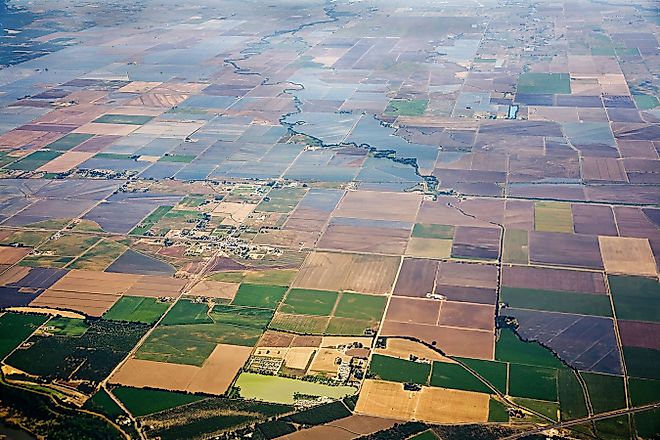
What Happens To The Central Valley If The Sierra Snowpack Fails
The Sierra snowpack held 18 percent of normal in April 2026. Past dry years show what that means for Central Valley rice fields, household wells, and salmon.
8 California Rivers With The Most Snakes
The California rivers with the most snakes, including garter snakes on the Sacramento and Cosumnes and rattlesnakes along the Tuolumne, Merced, and Kern.

The American Mountains With The Most Western Diamondbacks
No one counts western diamondbacks, but the snakes count mountains: the desert ranges where America’s most dangerous rattler dens by the dozen.

The Largest Lakes In The Rockies
Flathead Lake in Montana is the largest natural lake in the Rockies, ahead of Pend Oreille, where the Navy tests submarine designs, and Yellowstone Lake.
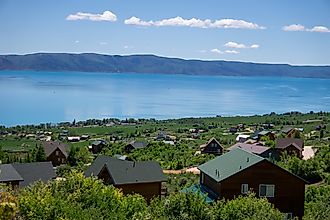
The US Valleys With The Most Rattlesnakes
Rattlesnakes concentrate in valleys from Death Valley and the Coachella to the Lower Rio Grande, the Yakima canyon and the Salt Lake foothills.
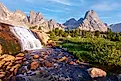
The Most Remote Mountain Range In The Lower 48
Wyoming's Wind River Range runs 100 miles along the Continental Divide, with Gannett Peak, over 1,300 lakes and a roadless interior reached on foot.
Why The Tennessee River Flows South And Then Turns North
The Tennessee River heads south into Alabama, then loops north to the Ohio River. An ancient change of course and the rock beneath it explain the long detour.
Most Alligator Filled Lakes In Texas
Texas holds roughly half a million alligators, and they cluster in knowable water: the five lakes where seeing one is closer to a schedule than a chance.
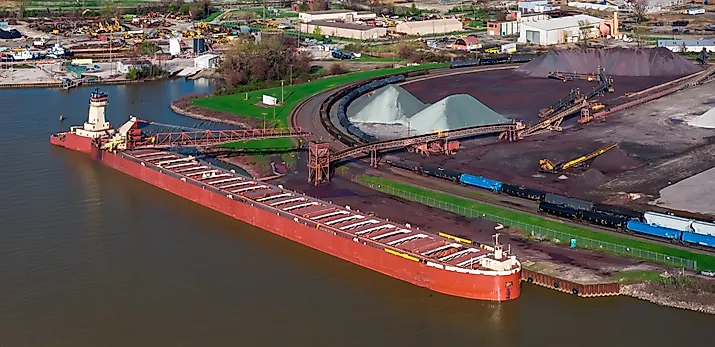
How Long It Takes To Load A Great Lakes Freighter
70,000 tons in six to twelve hours, poured in by gravity from docks loaded before the ship arrives: how fast a Great Lakes freighter really loads.
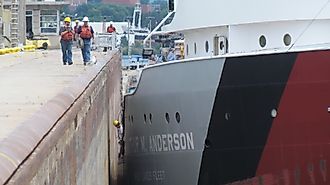
What A Great Lakes Freighter Captain Actually Earns
What a U.S. Great Lakes freighter captain earns, how 60-day stretches aboard fit the Soo Locks season, and how laker pay shaped the benchmark for pilots.
The Place In The Lower 48 Farthest From The Ocean
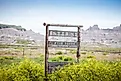
The farthest point from the ocean in the Lower 48 is a prairie field near Allen, South Dakota, about 1,025 miles from the Pacific, the continental pole of inaccessibility.
Why Great Lakes Storms Are More Dangerous Than Ocean Storms
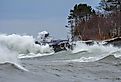
The Edmund Fitzgerald was built for the ocean and sank on a lake. The physics of why Great Lakes storms hit harder than anything at sea
The US Rivers With The Most Leeches
The US Rivers With The Most Leeches share slow, warm, weedy backwaters, led by the Upper Mississippi’s sloughs and Minnesota’s aptly named Leech Lake River.
Why Great Lakes Freighters Break In Half
Naval architects treat a ship as a beam, and the lock at Sault Ste Marie decides how long and shallow that beam has to be. Why lakers break in half.
The Most Dangerous River In The United States
A roadside sign in California counts 348 lives lost. Four more US rivers kill through cold dam releases, downward currents, undercut rock, and flash floods.
The 10 Tallest Mountains In The Sierra Nevada
Mount Whitney leads California's Sierra Nevada fourteeners, a list of 10 granite peaks first climbed between 1864 and 1921 by surveyors and mountaineers.
The Deepest Spring In The United States
Wakulla Spring near Tallahassee drops about 185 feet, the deepest freshwater spring basin in the US and the source of the Wakulla River.
The Deepest River Gorge In America
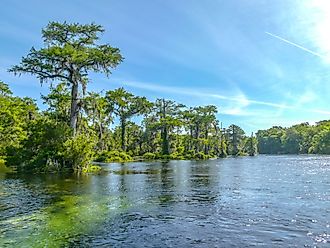
Hells Canyon on the Idaho-Oregon border drops 7,913 feet from He Devil to the Snake River, with Nez Perce history, three dams, and a wild stretch of river.
The Highest Lake In The United States
Pacific Tarn in Colorado is the highest lake in the US at 13,420 feet, the highest officially named lake in the country, beating Hawaii’s Lake Waiau.
The Most Remote River In The Lower 48
The most remote river in the Lower 48 flows more than 20 miles from any road, through grizzly country where trout still swim upstream to spawn every summer.
Which US City Uses The Most Water
A billion gallons of water go into New York City's homes, hospitals, and businesses each day, enough to fill nearly 1,500 Olympic swimming pools.

The Largest Octopus Ever Found Off The US Coast
The giant Pacific octopus is the largest recorded but the verified record is 156 pounds, not the 600 the diver claimed in the 1950s with unusable photographs.
6 Most Alligator Filled Rivers In Alabama
Six Alabama rivers where alligators gather most, from the Mobile-Tensaw Delta to the Tennessee River, in a state now home to an estimated 70,000 gators.
7 US Lakes Where Water Snakes Stay Active Into November
On some Southern lakes, water snakes and cottonmouths are still out in November, turning up along cypress paddling trails and a Florida wildlife drive.
Why Great Lakes Freighters Are So Long And So Narrow
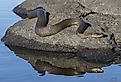
The Poe Lock is 110 feet wide and a thousand-footer is 105. The length was never the constraint. The width was, and the shape follows from it.
How Lake Superior Compares To The Biggest Lake On Every Other Continent
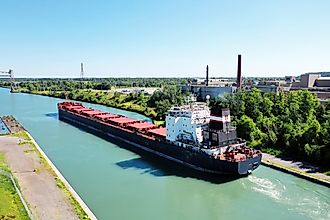
Lake Superior beats the biggest lake on almost every continent, from Africa’s Lake Victoria to Antarctica’s buried Lake Vostok, losing only to the Caspian Sea.
Where Otters Go When Rivers Freeze
River otters stay active all winter at Wyoming's Yellowstone Lake and the Red River of the North, using geothermal ice holes, open water, and beaver lodges.

How Hudson Bay Compares To The Great Lakes
Hudson Bay is five times the area of all five Great Lakes combined, and Lake Superior is deeper than it. On both measures. That is the whole comparison. (
How Great Lakes Freighters Break Through The Ice Every Winter
On the Great Lakes, Coast Guard icebreakers like the cutter Mackinaw cut tracks through winter ice so freighters can keep moving iron ore to port.
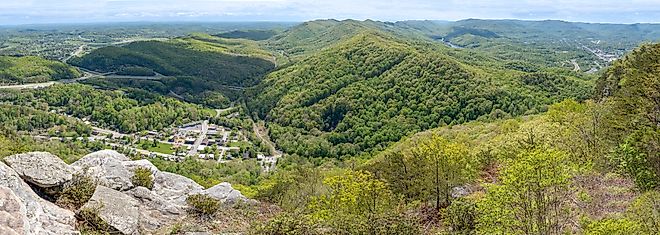
The Oldest Mountain Range In The United States
The Appalachian Mountains are the oldest mountain range in the US at about 480 million years, though Missouri and the Black Hills hold far older mountain rock.
Where Trout Go When Rivers Freeze
Where Trout Go When Rivers Freeze comes down to deep pools, spring-fed runs, and beaver ponds, where the fish barely move until the ice breaks in spring.
Why The Atlantic Ocean Is Getting Wider
Far beneath the Atlantic, a vast mountain range creates new seafloor inch by inch, slowly widening the ocean and carrying continents farther apart.
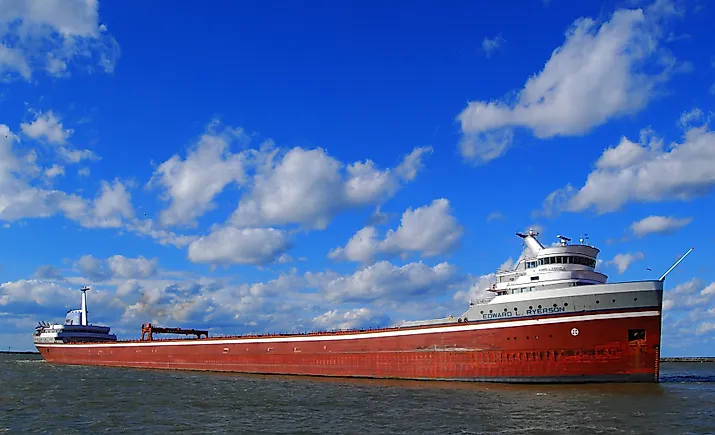
Why Great Lakes Freighters Are Painted The Colors They Are
Copper paint against shipworms made hulls red, the Great Lakes Fleet added gray and black bow stripes in 1990, and a sale often sends a laker to the paint shop.
The Clearest Spring In America
At Rainbow Springs, underwater visibility can exceed 250 feet, and passengers once watched fish through viewing windows set below the waterline of boats.
What Happens If Lake Okeechobee’s Dike Fails
The 1928 hurricane broke Lake Okeechobee's levee, killing more than 2,500 people. Here is what a failure of today's Herbert Hoover Dike in Florida could mean
Lake Powell and Lake Mead See Dramatic Rebound After Floods
Lake Powell is up 22 feet since late September. Lake Mead is up 2.7. Both are still lower than a year ago, and only snow changes that.
Why Fish Don’t Freeze In A Frozen Lake
Fish in frozen lakes survive winter in liquid water beneath the ice, where deeper water stays near 39°F and a slower metabolism helps them conserve energy.
Why The Gulf Of Mexico Is So Warm
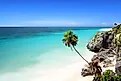
The Gulf of Mexico gets its warmth from subtropical sunlight, shallow shelves, and the Loop Current, and its surface warmed about 1.8°F between 1970 and 2020.
How Much Fuel A Great Lakes Freighter Burns In A Season
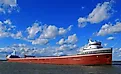
U.S. lakers average about 1.9 million gallons of fuel a season between the Soo Locks opening in March and closing in January; a gallon moves a ton 610 miles.
How The Great Salt Lake Compares To The Great Lakes
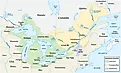
Lake Erie’s average depth is nearly twice the Great Salt Lake’s deepest point. It loses on area, loses by 640 times on volume, and is not even fresh water