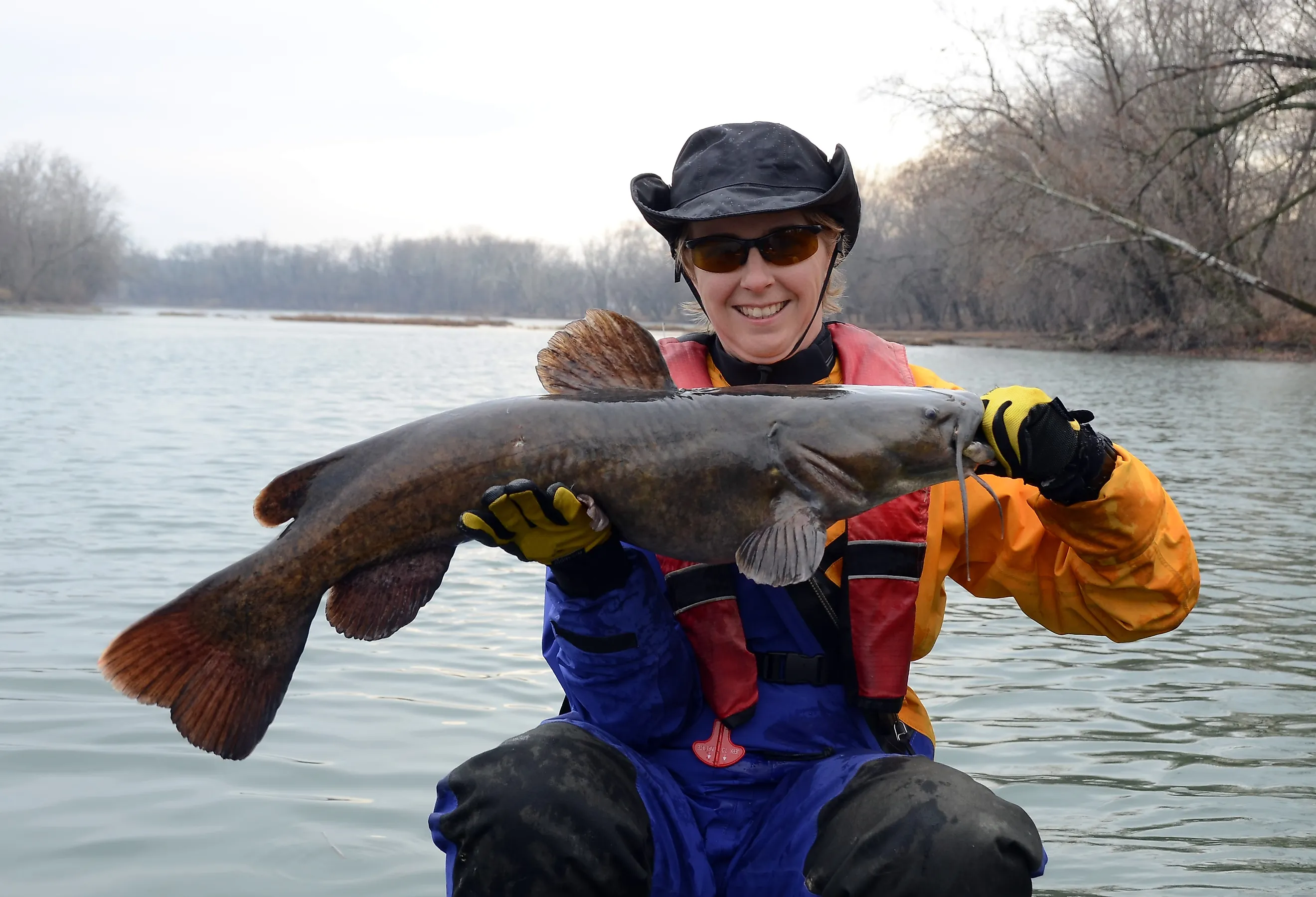
The Best Catfish Lakes In The United States
A 143-pound blue catfish came out of a reservoir on the Virginia line, and it is the biggest ever caught on rod and reel. Fish that size do not turn up just anywhere. They come from a short list of reservoirs with the right forage, the right water, and enough years of hands-off management to let a catfish grow into a monster. State biologists know exactly which waters those are, because they survey them, tag the fish, and write the harvest rules that keep the big ones swimming. The ten lakes below carry that kind of proof behind them, and between them they hold all three of the country's great sport catfish, the blue, the channel, and the flathead.
Buggs Island Lake, Virginia and North Carolina

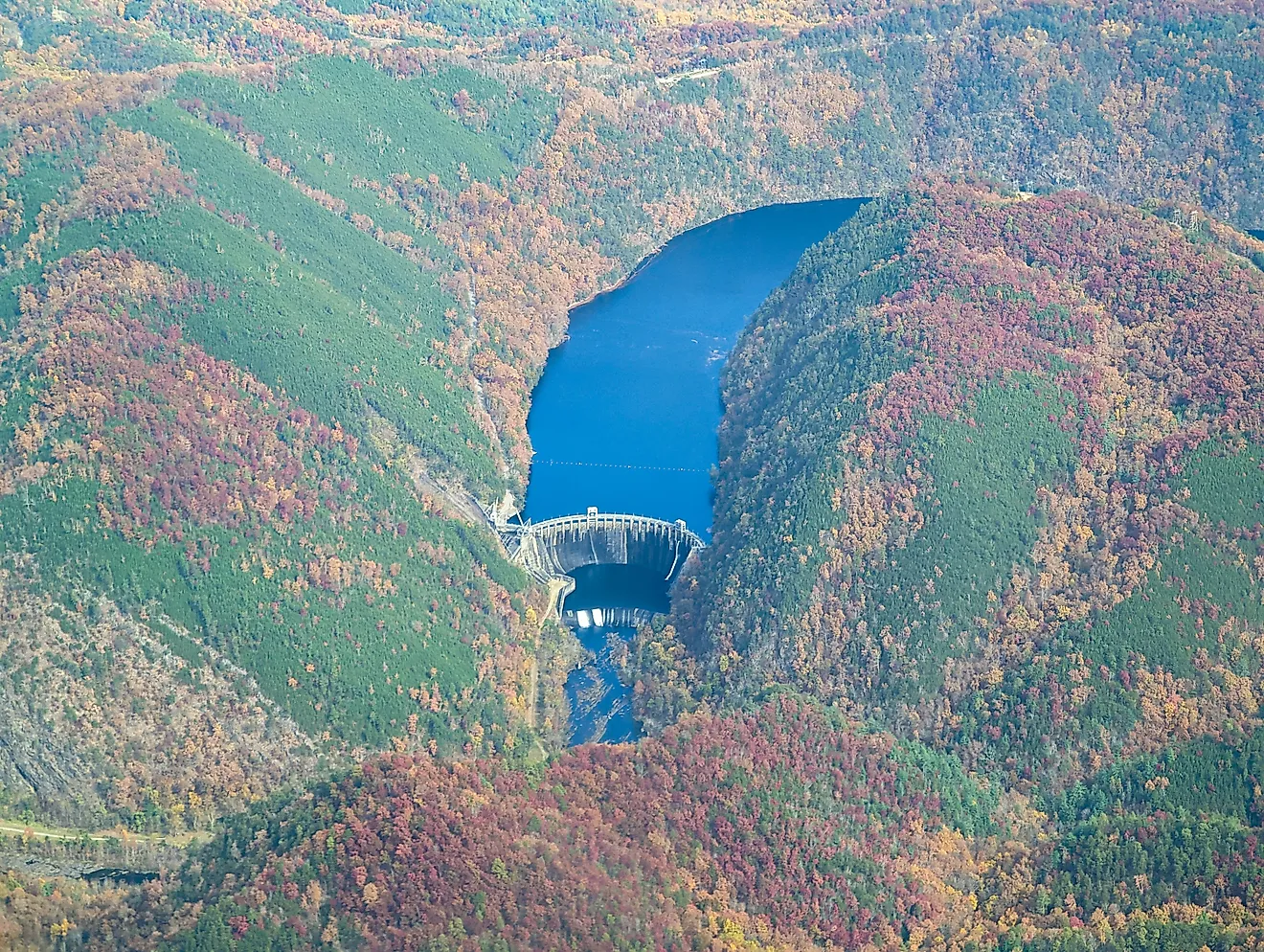
Virginia's Department of Wildlife Resources still ranks Buggs Island Lake, also called John H. Kerr Reservoir, among the country's premier blue catfish fisheries. Its 2025 reservoir report found blue catfish to be the most abundant of the lake's four catfish species, alongside channel, flathead, and white catfish. Richard Nicholas Anderson caught a 143-pound blue here on June 18, 2011, and the International Game Fish Association recognizes it as the all-tackle world record.
Buggs Island covers about 48,900 acres at full pool on the Virginia-North Carolina border, fed at its upper end by the Dan and Staunton rivers and drained below the dam by the Roanoke. Virginia DWR reports that blues in the 5- to 30-pound range remain common, with larger fish caught as well. River channels run through broad sections of open water throughout the reservoir, and blue catfish use those deep corridors to travel beside their feeding areas. The agency's observations of several size classes add current population evidence to the lake's record catch.
Wheeler Reservoir, Alabama

Wheeler Reservoir's reputation rests on a verified giant and a fishery that Alabama still rates highly. The Alabama Department of Conservation and Natural Resources describes catfishing on Wheeler as excellent, and the reservoir produced a 111-pound blue catfish that William McKinley caught on July 5, 1996. At the time, it stood as the world record for the species. Wheeler runs for roughly 60 miles along the Tennessee River, a long corridor of river channel, ledges, tributary mouths, and flats. Across changing seasons, blue catfish reach current, deep holding water, and shallow feeding areas within that stretch. The reservoir also forms one link in the larger Tennessee River chain, where flowing water connects extensive fish habitat. That verified 111-pound catch is proof the system has grown blue catfish past the 100-pound mark.
Santee Cooper Lakes, South Carolina

Lake Marion and Lake Moultrie work as one connected catfish system through the Santee Cooper project. South Carolina stocked blue and flathead catfish during the 1960s, and both species built major fisheries. The South Carolina Department of Natural Resources states that the lakes can produce some of the largest freshwater fish an angler will encounter. Current harvest rules single out the upper end of the blue-catfish population for protection.
On both lakes, an angler may keep only one blue catfish longer than 36 inches per day. That one-fish cap eases harvest pressure on the large individuals that take years to replace. Lake Marion holds extensive flooded timber, stump fields, cypress stands, and the old river channel. Lake Moultrie adds broad open water and deeper structure. Flatheads stay close to woody cover, while blue cats range widely through channels and open areas. Between those two habitats, two large-bodied catfish species find room across the connected reservoirs.
Lake Texoma, Texas and Oklahoma

Texas Parks and Wildlife lists blue, channel, and flathead catfish as abundant in Lake Texoma. One fish from the reservoir also produced unusually detailed biological evidence about how trophy blues grow. In 2004, Cody Mullennix caught a 121.5-pound blue catfish later nicknamed Splash. It became the world record at the time and remains the Texas rod-and-reel record for the species.
Researchers later aged Splash at 23 years or more, possibly about 25. A fish that survives more than two decades passes through many seasonal cycles while still gaining enough mass to reach an exceptional size. Texoma covers more than 89,000 acres and takes in the Red and Washita rivers, which feed extensive river channels and open reservoir habitat.
Texas Parks and Wildlife continues to name trophy blue catfish as one of Texoma's major fishing opportunities. Three abundant catfish species share the reservoir with a state-record blue whose estimated age topped 20 years.
Lake Tawakoni, Texas

Texas Parks and Wildlife currently rates Lake Tawakoni's catfish fishery as excellent and reports abundant blue and channel catfish. Recent reservoir management reports describe the trophy blue-catfish opportunity as excellent, and agency sampling has continued to find blue cats more abundant than channel cats. Tawakoni covers about 37,900 acres and holds large populations of gizzard and threadfin shad, two forage fishes that large blue catfish feed on heavily. State guidance treats winter as a key season for trophy blues, when anglers often target the biggest fish in deeper open-water areas. Current survey data and trophy potential line up in the same reservoir, which gives Tawakoni unusually recent evidence for both numbers and size. TPWD specifically notes that trophy blue cats are fairly common in winter.
Milford Reservoir, Kansas

Kansas gives Milford Reservoir its highest current blue-catfish rating. The state's 2026 Blue Catfish Fishing Forecast classifies Milford as excellent, and recent sampling listed a largest fish of about 59.5 pounds. The reservoir has also served as a site for direct research on blue-catfish movement and distribution. Kansas State University researchers and state biologists tracked fish there to study seasonal use of reservoir habitat.
Milford protects blue catfish between 28 and 40 inches, and every fish in that range must go back. An angler may keep only one blue measuring 40 inches or longer. Kansas monitoring recorded higher blue-catfish catch rates after the trophy-oriented regulations took effect. The slot leaves a substantial group of mature fish in the reservoir through additional growing seasons, and repeated sampling lets managers follow changes in abundance and size. Kansas managers now point to catch-rate monitoring, movement research, a protected slot, and a 2026 excellent forecast at Milford.
Truman Reservoir, Missouri

Missouri's Department of Conservation reports excellent fishing for blue, channel, and flathead catfish at Truman Reservoir, with blue cats especially abundant. Agency monitoring identified a strong 2019 blue-catfish year class, and smaller blues grew numerous enough for managers to encourage extra harvest. When young fish crowd in, they compete harder for available food, so the agency expects harvest of the smaller ones to help the survivors grow. Truman also carries a 26- to 34-inch protected slot for blue catfish. Fish in that range must be released, which holds more individuals in the lake as they approach larger sizes. The two rules set up two distinct management targets in the same population: an angler may take plentiful small blues, while the protected middle size class stays put. Missouri bases those decisions on recurring population surveys and year-class monitoring.
Pickwick Reservoir, Tennessee, Alabama and Mississippi

Pickwick Reservoir sits directly in the flow of the Tennessee River. The Tennessee Wildlife Resources Agency reports that blue, channel, and flathead catfish are all abundant, and blue cats account for the largest share of the reservoir's recreational catfish harvest.
The reservoir lies between Pickwick Landing Dam and Wilson Dam, where shifting current changes where feeding fish gather. TWRA notes that catfish hold anywhere from about 15 to 60 feet deep depending on season and water movement. Main-channel edges and other current-swept areas turn productive when water moves through the system.
TWRA describes catfish fishing as productive throughout the year. Its current guidance lists all three major sport catfish as abundant and ties their depth distribution to seasonal conditions and river flow.
Lake of the Ozarks, Missouri

Lake of the Ozarks belongs to Missouri's long-running effort to rebuild the number of large blue catfish across two major reservoirs. Fisheries surveys flagged a shortage of bigger fish, and the Department of Conservation responded with a 26- to 34-inch protected slot here and at Truman Reservoir. An angler must release blue cats within that range and may keep only two fish longer than 34 inches within the daily limit.
Current Missouri fishing reports describe good catfishing at Lake of the Ozarks and note that blue cats stay active in colder weather, winter included. The lake covers more than 50,000 acres and holds long submerged channels, deep flats, cove mouths, and steep breaks where fish roam. The management record reads as a useful measure of the fishery: biologists caught a shift in the size structure, changed the harvest rules, and kept monitoring a population that still matters to Missouri anglers.
Lake Eufaula, Oklahoma

Lake Eufaula in Oklahoma holds blue, channel, flathead, and white catfish, and the Oklahoma Department of Wildlife Conservation currently describes it as an excellent catfish fishery. Blue cats work open water and major channels; flatheads stay tight to cover such as timber; channel cats occupy a broad range of shallow and intermediate water. Four established species mean several distinct catfish fisheries within one body of water. Eufaula covers roughly 100,000 acres, with broad Canadian River arms, creek channels, flooded timber, and large shallow sections across the reservoir. That excellent rating from ODWC applies to a lake where four catfish species hold across nearly 100,000 acres, and the agency's own species list confirms all four.
What Ties These Waters Together
These ten reservoirs look nothing alike. Some run cold and deep along the Tennessee River, others spread shallow and warm across Oklahoma and Texas, and a few owe their reputations to a single record fish rather than a broad population. What links them is the combination underneath: enough forage, the right water, decades of growing time, and in most cases active management through slot limits, catch monitoring, and stocking. Grow all of that together and a reservoir can turn out catfish that outlast every challenger for years, which is why anglers keep memorizing these names.