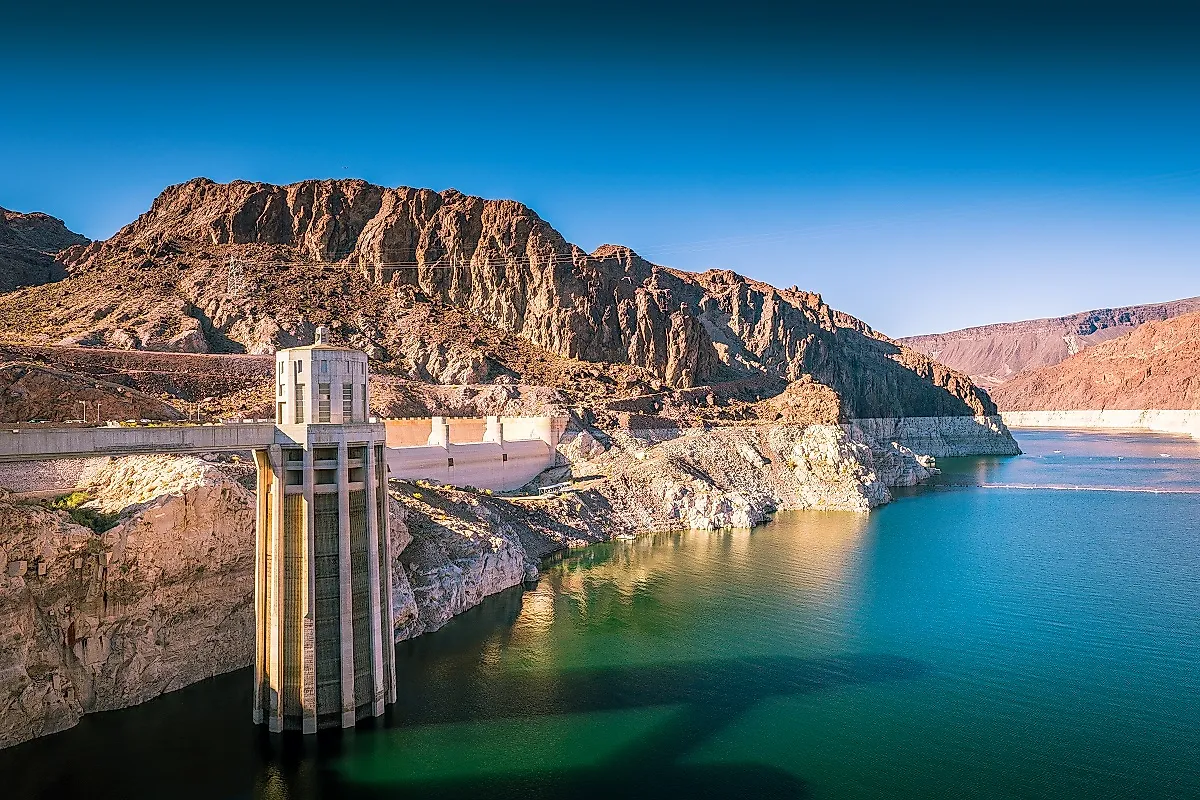
What Happens When A Reservoir Hits Dead Pool
A reservoir hits dead pool when its water level falls below the dam's lowest controllable outlet, the point at which stored water can no longer be released downstream through the normal outlet system. It does not have to run dry to get there. A reservoir at dead pool can still hold millions of acre-feet of water and span hundreds of square miles, yet become nearly useless as a water supply.
The term comes up most often around the Colorado River reservoirs Lake Mead and Lake Powell, the two largest in the United States, which sit at the center of a system supplying water to about 40 million people across seven states and northern Mexico. Neither reservoir is at dead pool today, but both have declined for a quarter-century, and in 2026 their combined storage fell to a level lower than at any point since before Lake Powell began filling behind Glen Canyon Dam in 1963.
What Is Dead Pool?

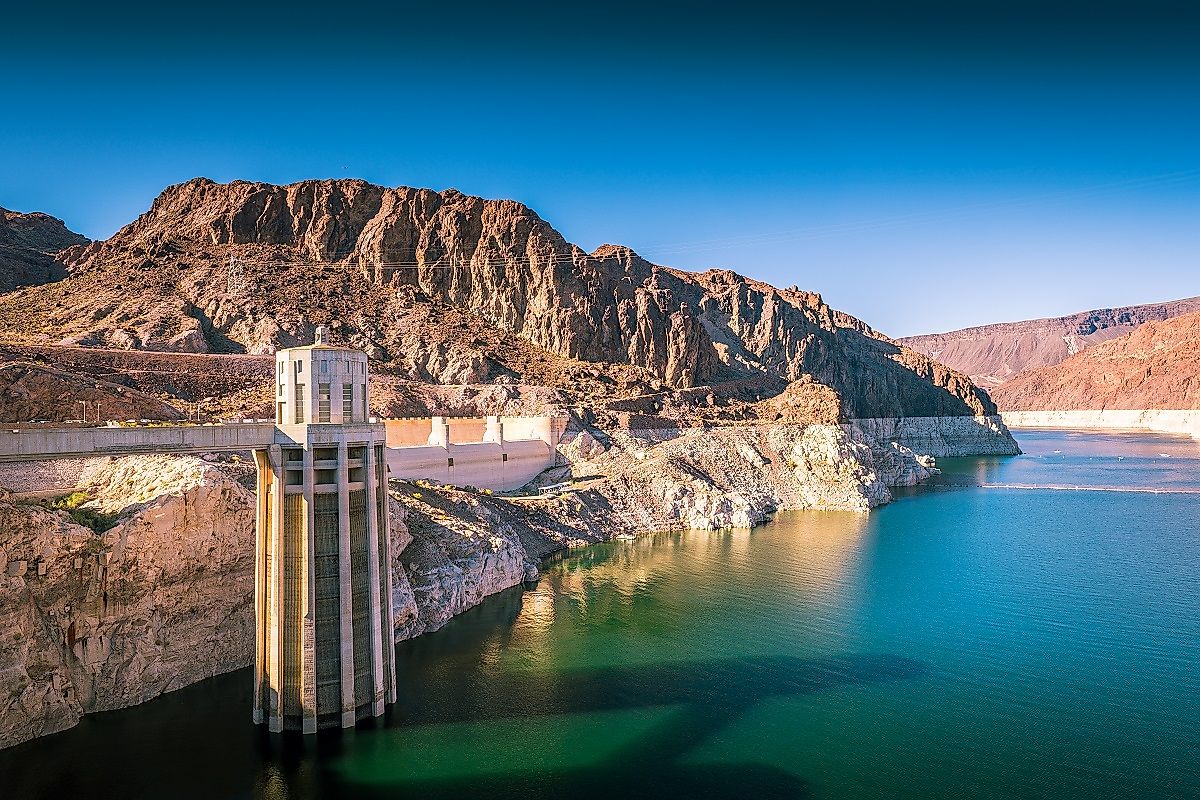
Dead pool does not mean that a reservoir is empty. Instead, it is the point at which water falls below the dam's lowest controllable outlet. The remaining water in the reservoir is in dead storage, meaning it is still physically present but cannot be released through the dam's normal operating system. A reservoir that reaches dead pool status can still contain an enormous volume of water, yet it can no longer perform one of its main functions. Lake Mead's estimated dead-pool elevation is about 895 feet (273 meters) above sea level. At that level, nearly 2.4 million acre-feet of water (roughly 780 billion gallons or 3 trillion liters) would remain behind Hoover Dam but could not be released downstream through its existing lowest outlets.
Power Generation Stops

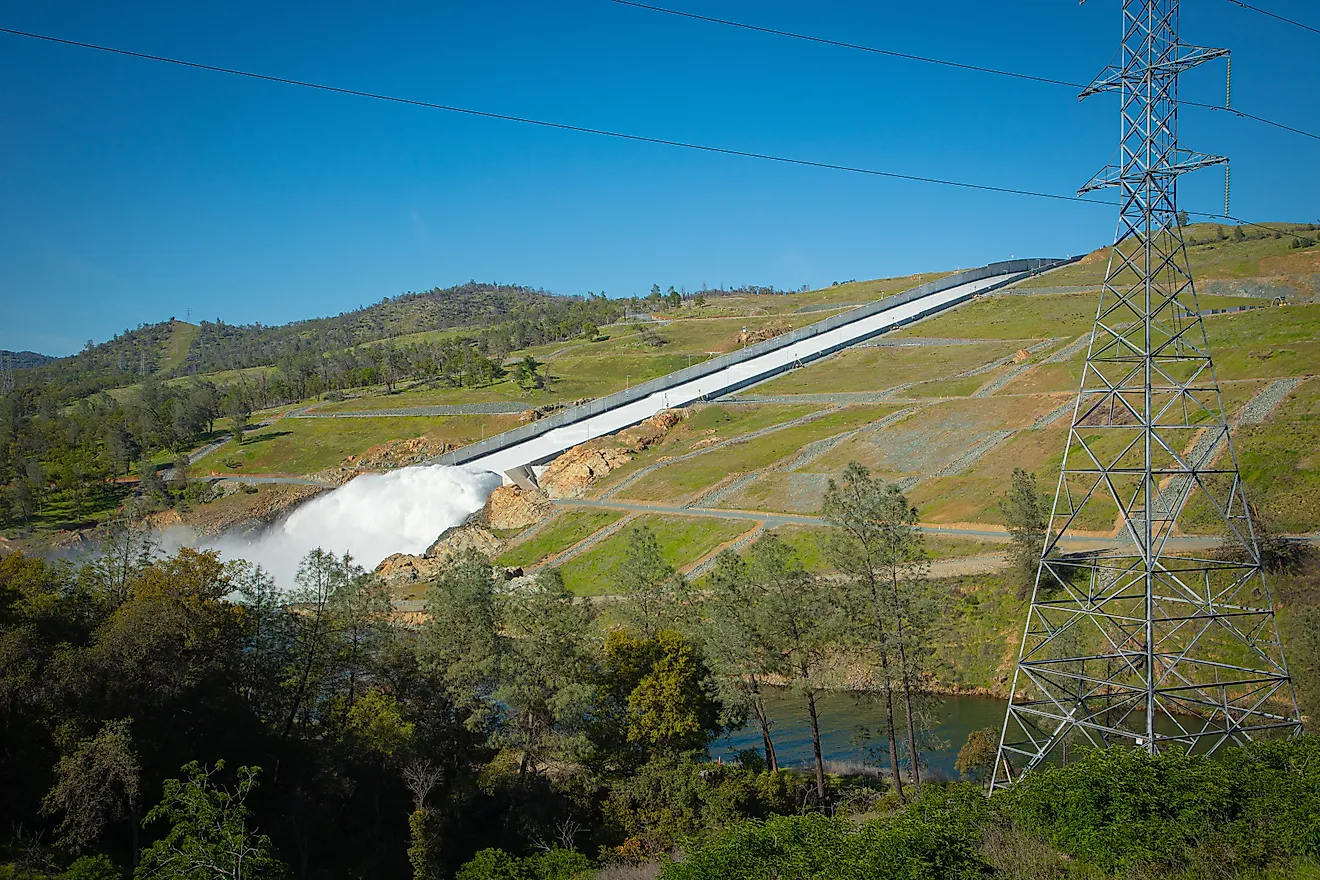
For dams that generate electricity, hydropower production can halt even before a reservoir reaches dead pool. Hydroelectric dams depend on hydraulic pressure caused by a minimum required difference in elevation between the reservoir surface and the dam's turbines. As the reservoir's water level continues to fall, the hydraulic pressure decreases to the point where the water no longer provides enough force to spin the turbines.
At Lake Mead, Hoover Dam's minimum power pool is roughly 950 feet (290 meters), about 55 feet (17 meters) above its dead pool elevation. Lake Powell has a similar setup. Glen Canyon Dam's minimum power pool is 3,490 feet (1,064 meters), compared with a dead-pool elevation near 3,370 feet (1,027 meters). A reservoir can therefore lose electricity generation while still releasing water downstream.
Water Supply Cuts

Reservoirs capture water during wet periods and release it during droughts to support cities, farms, industry, and ecosystems. At dead pool status, this critical water supply is severely limited or completely cut off. Along the Colorado River system, some water customers have developed expensive workarounds to avoid a potential dead pool. Las Vegas and southern Nevada, for example, invested billions to build a low-level intake (called the "third straw") and a deep pumping station at Lake Mead, letting the region draw water from below the reservoir's 895-foot dead pool elevation.
However, a city pumping water directly from a reservoir is different from a dam releasing water downstream. Agriculture could be especially vulnerable because irrigation systems depend on predictable water deliveries during the growing season. Farmers might leave fields unplanted, switch crops, or pump more groundwater. Those effects could spread to food processors, transportation companies, and rural economies. With more than 40 million people depending on the wider Colorado River system, a failure at one of its largest reservoirs would have dire consequences across a vast region.
Waterscape and Landscape Changes

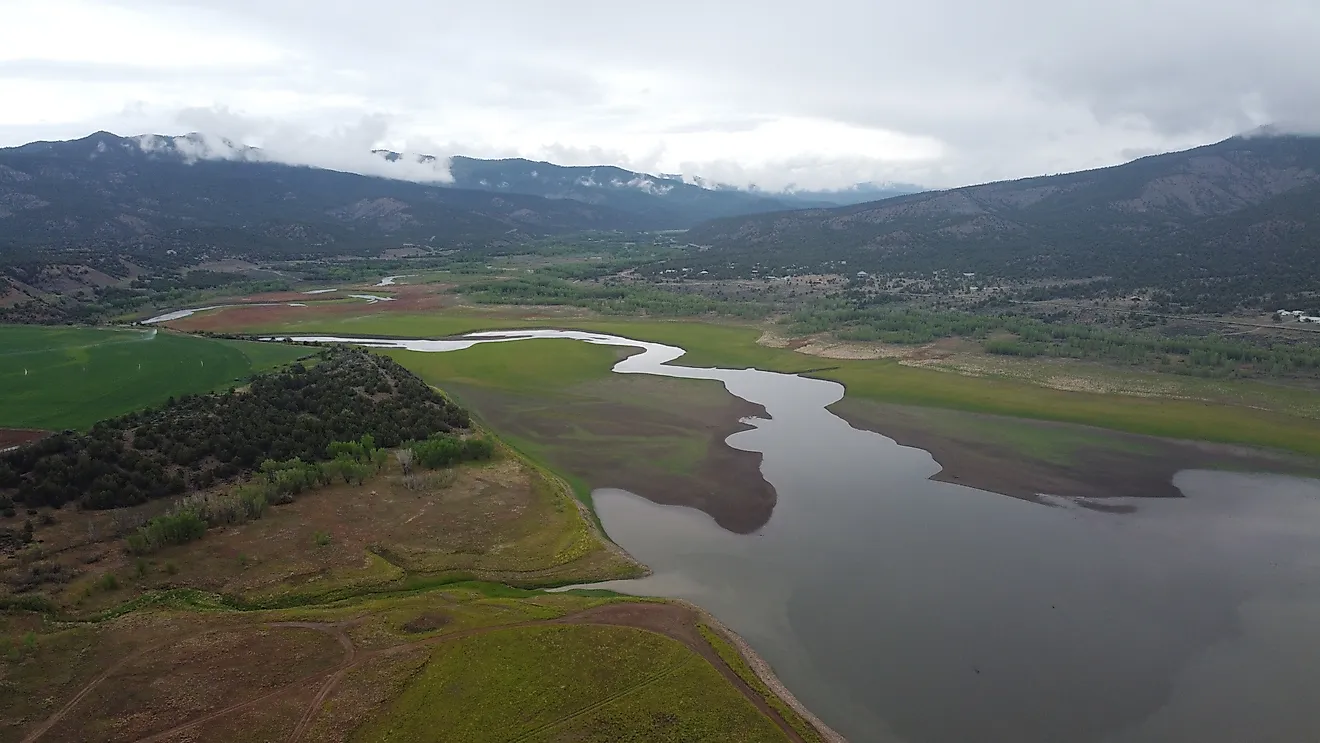
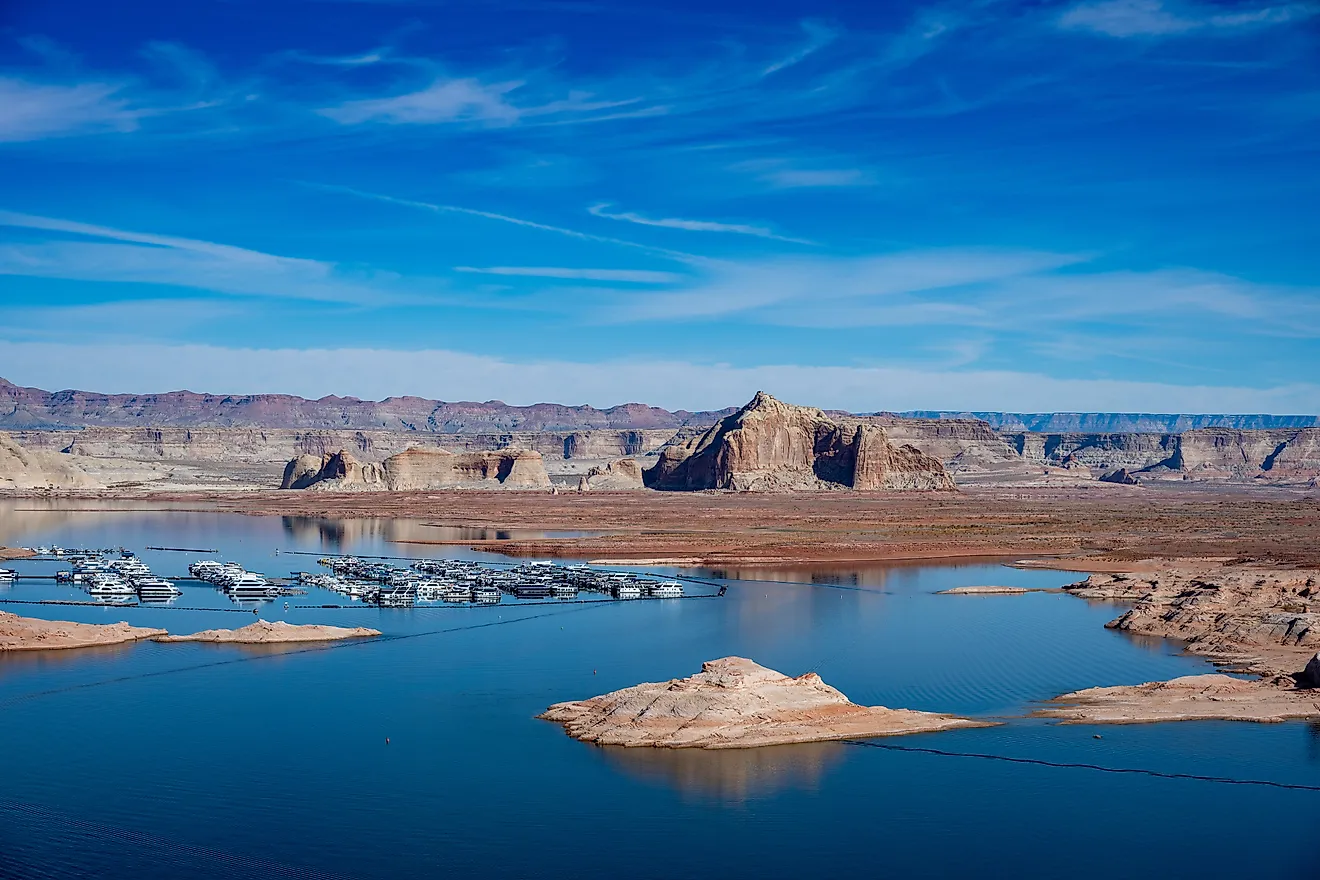
The effects of a reservoir becoming a dead pool would extend beyond water users. Reservoir releases influence river levels and a host of other ecological factors, so a major reduction in water flow could shrink wetlands, reduce fish habitats, raise water temperatures, and concentrate pollutants. The reservoir itself would also be transformed. Retreating shorelines can leave marinas stranded, boat ramps unusable, and previously submerged land exposed. Recreation-dependent communities may suffer economic losses long before a reservoir actually reaches dead pool.
Is Dead Pool Inevitable?

Dead pool is a legitimate risk for numerous reservoirs in the western US, most notably Lake Mead and Lake Powell. Their future depends on Colorado River runoff, long-term climate conditions, and the amount of water withdrawn from the system. The danger became especially apparent during the prolonged drought of the past quarter-century. In July 2026, Lake Powell sat near 3,524 feet (1,074 meters) and Lake Mead near 1,043 feet (318 meters), leaving Mead roughly 148 feet (45 meters) above its dead pool elevation. Dead pool status is not inevitable for either reservoir, but it is an ever-increasing possibility under current conditions.
Avoiding dead pool for Lake Mead and Lake Powell would require sustained reductions in water use, greater conservation and efficiency, and flexible management of releases between the two reservoirs. The seven basin states did not reach consensus on long-term operations, so the Department of the Interior adopted its own decision framework covering 2027 through 2036, with replacement operating guidelines taking effect in October 2026. Ultimately, preventing either reservoir from reaching dead pool will depend on bringing long-term water demand closer to the amount of water the Colorado River can reliably provide.
Dead Pool: A System Failure

Dead pool is a misleading term because the reservoir itself is not dead and may still contain a significant amount of water. Someone standing on its shoreline may see a lake that appears very much alive, but the crucial question is not simply how much water remains. It is whether the dam's infrastructure can still reach and move it. The crisis usually develops in stages. Falling levels first reduce hydropower, then can shut electricity generation down at the minimum power pool. If the decline continues, the reservoir eventually reaches dead pool and can no longer release its stored reserves downstream.
That makes dead pool more than another drought milestone. It marks the point at which a reservoir can still physically exist but has lost its ability to perform the functions it was designed to perform. The water remains behind the dam, but without a practical way to move it downstream, one of the region's most important pieces of infrastructure has reached its limit.