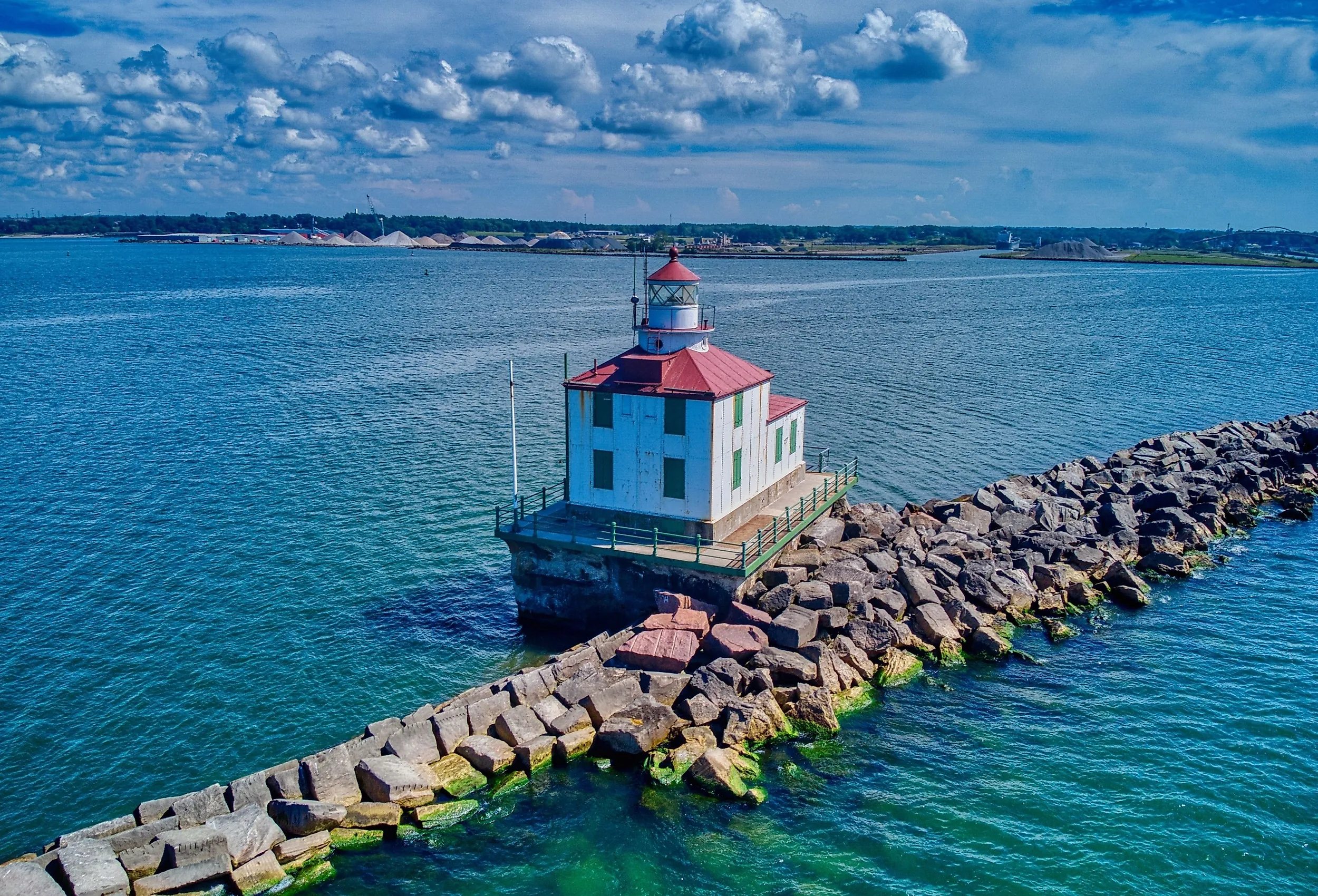
Positive Steps Taken To Clean Up The Great Lakes In The Past Decade
On the bottom of Hamilton Harbour sat one of the largest piles of toxic sediment in the Canadian Great Lakes, a century of steel-mill runoff too dangerous to dredge and haul away. So engineers did the next best thing: they built a steel vault on the harbor floor and sealed the poison inside it. That kind of ambition has defined the past decade of Great Lakes cleanup. The lakes spent more than a hundred years absorbing whatever the mills, refineries, and sewers upstream sent their way, and the bill finally came due. Undoing it has meant work most people never see, but the change is real: contaminated sites that fouled the water for generations are now coming off the federal watch list for good.changes in sediment, habitat, wastewater, and phosphorus management.
Several Great Lakes Pollution Hot Spots Have Been Delisted

The federal Areas of Concern program tracks some of the most heavily degraded places in the Great Lakes basin. Four U.S. sites left that list between 2020 and 2025. The Lower Menominee River was delisted in 2020, followed by the Ashtabula River in 2021, Rochester Embayment in 2024, and Muskegon Lake in 2025. EPA records show eight U.S. Areas of Concern had been fully delisted by late 2025, with nine more having completed the management actions required before removal.
Muskegon Lake required years of sediment and shoreline work. Federal, state, and local partners remediated more than 190,000 cubic yards of contaminated sediment, restored about 134 acres of habitat, and improved more than 6,000 feet of shoreline. The four sediment remediation projects funded under the Great Lakes Legacy Act cost about $47 million. The lake had been designated an Area of Concern in 1987 after decades of industrial use, sawmill waste, shoreline filling, and habitat destruction.
Spirit Lake Lost 1.3 Million Cubic Yards Of Impacted Material

Crews finished the Spirit Lake cleanup along the St. Louis River near Duluth in July 2024 after four years of construction. EPA and U.S. Steel spent about $186 million on the project. Work covered a former industrial site where sediments contained polycyclic aromatic hydrocarbons and metals including lead, copper, and zinc. Contractors remediated 1.3 million cubic yards of impacted sediment and soil. Around 460,000 cubic yards were dredged and placed inside two engineered disposal facilities. Another 96 acres of aquatic habitat received protective caps. Restoration crews also built a 14-acre shallow bay designed for fish spawning and added native vegetation around the site. A two-mile waterfront trail, fishing access, and a kayak launch formed part of the redevelopment. Spirit Lake lies within the St. Louis River Area of Concern, one of the largest such sites on the U.S. side of the Great Lakes.
Randle Reef's Industrial Sediment Was Sealed Away

Hamilton Harbour's Randle Reef contained one of the largest concentrations of contaminated sediment on the Canadian Great Lakes. Roughly 615,000 cubic metres of sediment held high levels of polycyclic aromatic hydrocarbons left by more than a century of industrial activity. The contaminated zone covered about 60 hectares of harbor bottom.
A C$138.9 million remediation project began in 2015 and continued through much of the past decade. Engineers built a double-walled steel containment facility directly over the worst section of the reef. Dredged sediment from nearby areas was then moved into the structure. Contaminated material remaining outside the enclosure received an isolation cap.
The Government of Canada now reports that all contaminated sediment at the site has been safely managed. The remaining phase involves placing the final environmental cap over the containment facility. Completion is scheduled for 2027 after additional structural work. Randle Reef sits inside the Hamilton Harbour Area of Concern, where sediment contamination has been one of the main barriers to eventual delisting.
The Grand Calumet Cleanup Passed Two Million Cubic Yards

The Grand Calumet River and Indiana Harbor Ship Canal run through one of the most heavily industrialized corridors in the country, along northwest Indiana's Lake Michigan shoreline. Steelmaking, petroleum refining, and other heavy industry left their sediments laden with PCBs, PAHs, metals, and other pollutants over decades. By January 2026, EPA reported that more than 2 million cubic yards of contaminated sediment had been remediated across the Area of Concern. More than 1,000 acres of habitat had also been restored, including portions of rare dune-and-swale habitat.
The next construction phase is budgeted at more than $200 million. EPA, BP Products North America, Atlantic Richfield, and the East Chicago Waterway Management District agreed to fund two additional projects expected to remove over 240,000 cubic yards of contaminated sediment from roughly 100 acres of river and canal bottom. Six of the 12 sediment projects required for the area's eventual delisting had been completed by early 2026.
Hamilton Added Tertiary Treatment To Its Main Wastewater Plant

Hamilton completed a major upgrade to the Woodward Wastewater Treatment Plant, which treats about 96 percent of the city's wastewater. The roughly C$340 million project raised the plant's final treatment to a tertiary standard and added equipment designed to cut phosphorus, ammonia, and suspended solids. The city estimates the work will cut phosphorus loading to Hamilton Harbour by about 500 tonnes over ten years. New facilities included a raw-sewage pumping station and additional systems for managing wet-weather flows. The plant's outfall is at the western end of Lake Ontario, in Hamilton Harbour, an Area of Concern where nutrient loading has long contributed to poor water quality and degraded aquatic habitat. Construction finished in 2023, tied to federal, provincial, and municipal restoration targets for the harbor.
Cleveland's Sewer Tunnels Are Capturing Billions Of Gallons

Heavy rain can overwhelm older combined sewer systems, sending a mixture of sewage and stormwater into rivers and Lake Erie. Northeast Ohio Regional Sewer District launched Project Clean Lake to cut those discharges through storage tunnels, treatment upgrades, sewer construction, and green infrastructure.
By late 2025, the large majority of the program's roughly 80 planned projects were completed or under way. The Euclid Creek, Dugway, Doan Valley, and Westerly tunnels were already operating. Several of these structures run for miles underground and hold wastewater until treatment capacity becomes available.
The sewer district says its finished projects now hold back about 2 billion gallons of overflow each year. More than $2.4 billion had been spent or awarded by early 2026. The full program is designed to reduce annual combined sewer overflow from about 4.5 billion gallons to roughly 494 million gallons, cleaner water for Cleveland's rivers and the Lake Erie shoreline.
Toronto Dug A 10.5-Kilometre Tunnel Beneath The City

Toronto's Coxwell Bypass Tunnel measures 10.5 kilometres long and 6.3 metres in diameter. Construction started in 2018 as the first stage of a much larger system designed to intercept combined sewage and stormwater before it reaches the Lower Don River, Toronto Harbour, and Lake Ontario. By March 2025, the city reported the project was about 99 percent complete. Five large shafts connecting the tunnel to the surrounding sewer network had also been completed.
The tunnel belongs to the Don River and Central Waterfront wet-weather program. Plans call for 22 kilometres of tunnels in total, along with seven storage tanks and real-time controls. During storms, the network can divert excess flows into underground storage and send the captured water for treatment once capacity opens. The broader program is aimed at more than 40 combined sewer overflow points around the Lower Don, Taylor-Massey Creek, and Toronto's inner harbor.
H2Ohio Put Nutrient Controls Across Millions Of Farm Acres

Ohio launched H2Ohio in 2019 with a large agricultural component aimed at phosphorus runoff in the Western Lake Erie Basin. Participating farmers receive support for practices such as nutrient-management planning, cover crops, manure incorporation, subsurface phosphorus placement, and controlled drainage. By 2024, another 500,000 acres had joined the program. State records placed total enrollment at 2.2 million acres and more than 3,200 farmers. About 43 percent of cropland in the Western Lake Erie Basin was enrolled.
The Ohio Department of Agriculture also began estimating phosphorus reductions associated with completed practices. Its reporting put the 2024 reduction tied to enrolled farms at roughly 420,000 pounds of phosphorus. Ohio has paired the farm program with wetland construction and restoration under the same H2Ohio initiative. Harmful algal blooms remain a recurring problem in western Lake Erie, and federal monitoring still shows the basin missing its long-term phosphorus targets in most years.
Ohio Restricted Open-Water Disposal Of Dredged Sediment

Ohio changed how sediment from Lake Erie navigation channels could be disposed of starting July 1, 2020. State law generally prohibited dumping harbor and navigation dredge directly into the lake or its direct tributaries unless the Ohio Environmental Protection Agency specifically authorizes the material as suitable. Ports and dredging agencies must now rely more heavily on confined disposal, approved beneficial reuse, beach nourishment, habitat construction, and other managed options.
The rule matters most at commercial harbors that require regular dredging to keep shipping channels open. Sediment collected in those areas can contain fine particles carrying phosphorus or legacy contaminants.
Toledo expanded confined disposal capacity for hundreds of thousands of cubic yards of dredged material each year. Other Lake Erie projects have explored using suitable sediment to build wetlands and restore shoreline habitat. Ohio also created detailed regulations for beneficial use, giving ports a route to reuse dredged material under state oversight instead of treating open-water disposal as the routine endpoint.
Great Lakes Restoration Projects Reopened Hundreds Of River Miles

Habitat restoration has become a major part of Great Lakes cleanup. NOAA reported in early 2026 that projects supported through the Great Lakes Restoration Initiative had restored more than 5,400 acres of habitat and reopened over 570 miles of rivers and streams to fish and wildlife. The agency had supported more than 100 high-priority restoration projects since the initiative began, many inside designated Areas of Concern.
The work takes different forms depending on the site. Crews have removed old barriers, rebuilt coastal wetlands, stabilized eroding shorelines, cleared industrial debris, improved spawning grounds, and reconnected fish to upstream habitat. Projects have taken place around the Detroit River, Buffalo River, Muskegon Lake, St. Louis River, and other heavily altered shorelines. Wetland projects also trap sediment and nutrients before they move farther into the lakes. NOAA credits its restoration work with contributing to improvements at numerous Areas of Concern, including locations that have since completed all required habitat-management actions.
A Basin Cleaned Up In Pieces
No single fix explains the past decade on the Great Lakes. The gains came in different forms in different places: sealed sediment at Randle Reef and Spirit Lake, tertiary treatment at Hamilton, storage tunnels under Cleveland and Toronto, and nutrient controls spread across Ohio farmland. Each addresses a distinct source, legacy contamination in one spot, storm-driven overflow in another, farm runoff in a third, which is why delisting a single Area of Concern can take three decades and a dozen separate projects. The measurable results are real, from cubic yards of sediment removed to acres of habitat reopened. So are the limits: western Lake Erie still sees harmful algal blooms most summers, and the basin continues to miss its long-term phosphorus targets. The past decade closed out some of the worst legacy sites while leaving the harder, watershed-wide problems for the next one.