Is It Legal To Collect Rainwater In Every State
Yes. It is legal in all fifty states, no state bans it, and in thirty-eight of them there are no restrictions on residential collection whatsoever. That is the entire answer, and it is a slightly deflating one given how much of the internet is convinced otherwise. Three states have rules worth knowing about, exactly one of them is genuinely restrictive, and the number of Americans who have ever been criminally prosecuted for putting a barrel under a downspout is zero. What follows is the short list of states that do regulate it, the reason any of this existed in the first place, and the story of the one man everybody cites as proof that it is illegal, who was in fact operating twenty-foot dams and had stocked one of his reservoirs with largemouth bass.
A note before the specifics. Laws change, local ordinances stack on top of state law, and your homeowners association is a separate problem entirely, which we will get to.
Colorado Has Strong Feelings About The Number Two

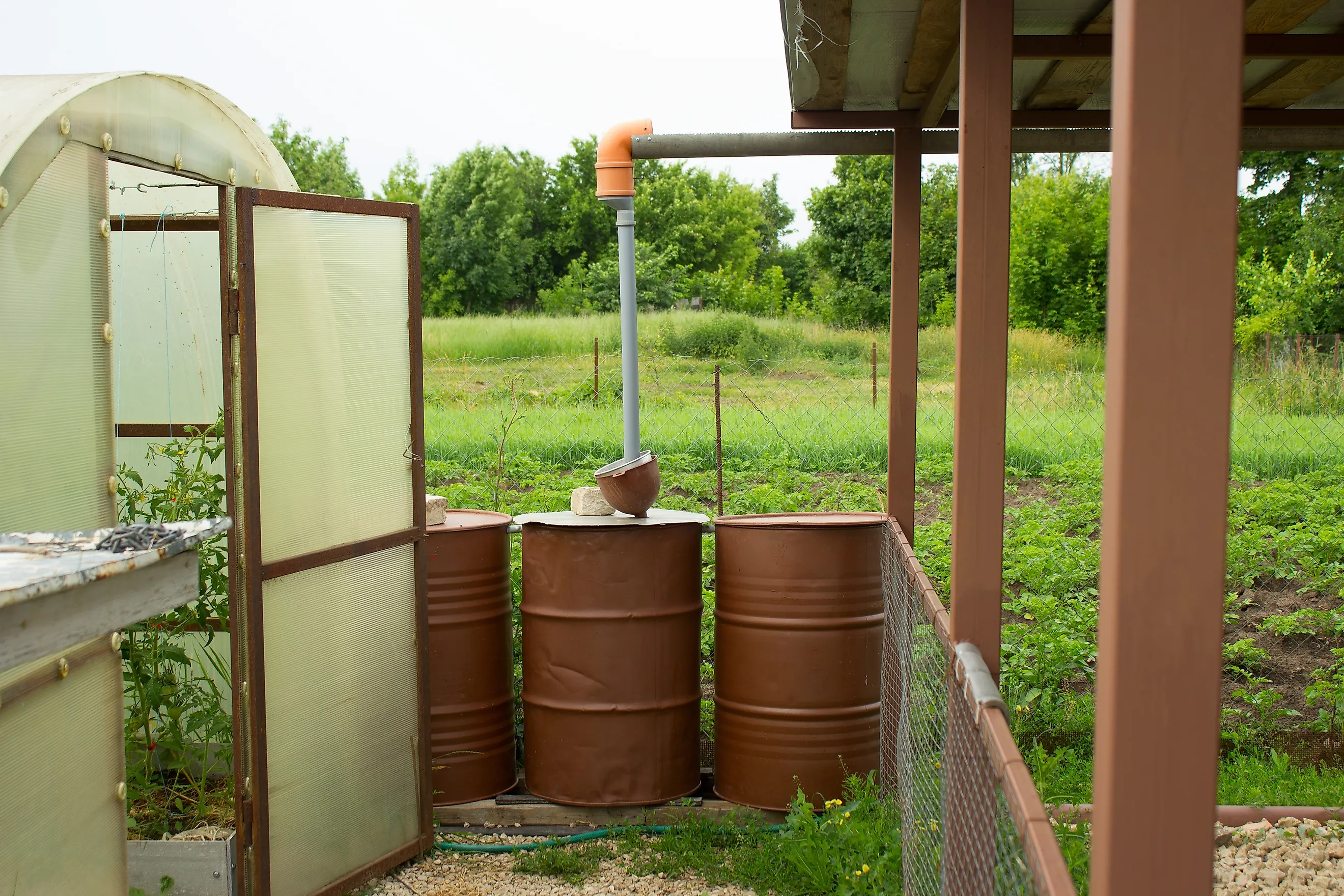
Colorado is the strictest state in the country and it is strict in an unusually specific way. Under House Bill 16-1005 and Colorado Revised Statutes section 37-96.5-103, a household may collect rainwater in a maximum of two barrels totaling no more than 110 gallons, from a rooftop, for outdoor non-potable use, on the same property.
Not three barrels. Two. The state has legislated an opinion about a quantity of buckets.
In fairness this is a dramatic liberalization. Before 2016 residential collection in Colorado was effectively banned outright, so two barrels represents genuine progress, and the legislature has been discussing raising the cap. Properties with certain well permits can already qualify for more.
Utah Would Like You To Register Your Bucket

Utah permits up to 2,500 gallons, which is more than twenty times Colorado's allowance, with one wrinkle. Anything over 100 gallons requires registration with the Utah Division of Water Rights.
The registration is free, it is done online, and it takes a few minutes. It exists so the state can track patterns rather than to stop anyone. Still, there is something quietly funny about a jurisdiction where a 90-gallon container is nobody's business and a 110-gallon container is a matter of record.
Nevada Depends On Which County You Are Standing In

Nevada legalized residential rooftop collection in 2017, which is recent enough that plenty of published advice is still out of date. Single-family homes may capture rooftop runoff for non-potable domestic use on the property.
Beyond that it gets local. Ground-level collection, commercial systems and larger volumes vary by county, and anything at genuine scale still runs into the state water rights system. In Nevada, the driest state in the country, this is not unreasonable.
Texas Went Completely The Other Direction

Texas is the anti-Colorado, and it is worth spelling out how far the state has gone.
There is no volume limit for residential collection and no state permit. Rainwater harvesting equipment is exempt from sales tax. Senate Bill 769, passed in 2011, prohibits homeowners associations from banning collection systems outright. And new state buildings are legally required to incorporate rainwater harvesting.
So there is a state where the government mandates the practice that another state rations by the barrel, and both are in the American West with water problems.
The Man Everyone Cites Had Docks And Largemouth Bass

Search this topic and within about three results you will meet Gary Harrington of Eagle Point, Oregon, who served thirty days in Jackson County Jail in 2012. The headline is always some version of man jailed for collecting rainwater. The details are considerably less sympathetic.
Harrington had built three reservoirs on his 170-acre property, held back by dams reaching roughly twenty feet, impounding an estimated 13 million gallons. That is about twenty Olympic swimming pools. He was convicted of nine misdemeanors, fined $1,500, and ordered to breach the dams and drain the ponds.
He maintained the water was for wildfire protection. He had also stocked at least one reservoir with largemouth bass and built docks around it, and told the Medford Mail Tribune that the fish and the docks were icing on the cake, the whole thing being totally committed to fire suppression.
The crucial detail, from Oregon's own Water Resources Department: rooftop barrel collection is legal in Oregon and always was. What Harrington was doing was diverting a tributary system without water rights, which is a completely different offence. He had been issued permits in 2003 and the state reversed them the same year, citing a 1925 law giving Medford exclusive rights to core water sources in the Big Butte Creek watershed. He pleaded guilty to illegal damming in 2007 and got probation. The 2012 jail sentence was for ignoring it.
The department's deputy director described him as operating in flagrant violation for more than a decade. Nobody has ever gone to jail over a rain barrel.
Why Any Of This Existed
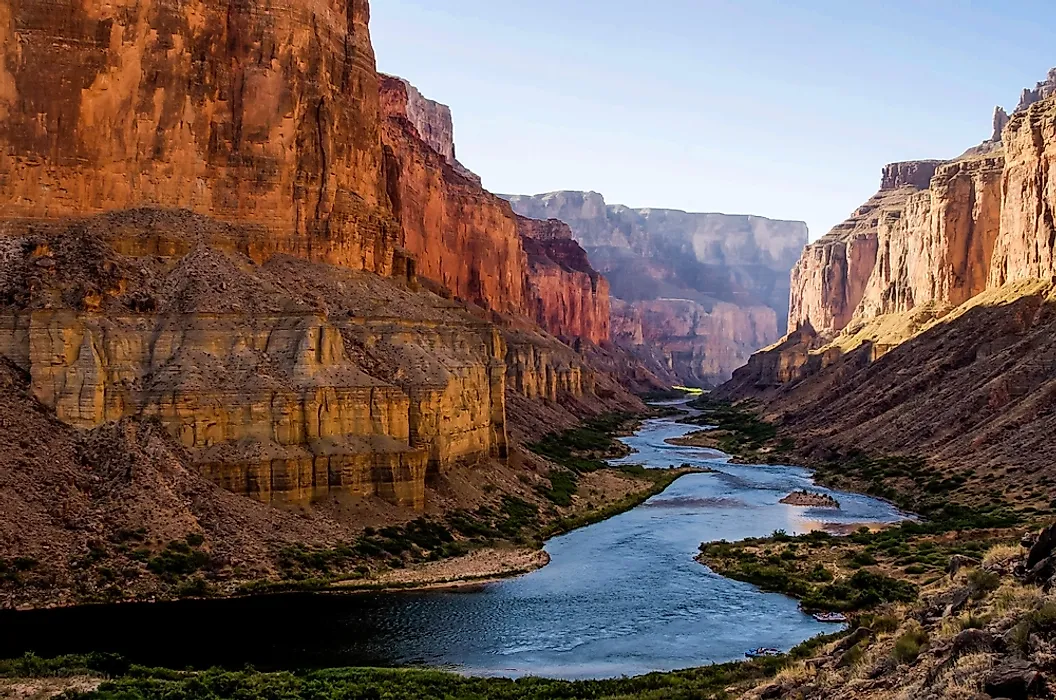
The restrictions were not invented to annoy gardeners. They come from prior appropriation, the water doctrine that governs most of the American West and operates on first in time, first in right. It is the same doctrine that left the Colorado River over-allocated.
Under that system, water is a public resource allocated to whoever established a claim earliest, and those claims are senior to yours regardless of whose land the water falls on. Oregon declared all water in the state publicly owned in 1909. The legal reasoning that followed was that rain landing on your roof is water that would otherwise have reached a stream, so capturing it is diverting streamflow that already belongs to a downstream rights holder.
Your roof, in other words, was legally construed as a tributary.
What changed is measurement. Studies eventually demonstrated that residential rain barrels have a negligible effect on downstream flow, which is precisely why Colorado, the state most committed to the theory, legalized them in 2016.
Your HOA Is The Actual Threat
Here is the practical inversion. In most of the country your state has no opinion about your rain barrel and your homeowners association absolutely does.
HOAs can generally restrict or prohibit collection systems on aesthetic grounds, and in most states nothing stops them. A handful of states, Texas and Florida among them, have passed laws specifically preempting HOA bans. Everywhere else, the covenant wins.
The odds that a governing body objects to your barrel are real. It is simply far more likely to be seven neighbours on a landscaping committee than the state water engineer.
Several States Will Now Pay You
The trend has fully reversed. Water districts in California, Colorado, New Mexico and elsewhere offer rebates in the range of $35 to $200 per barrel, some hand them out free during drought years, and various municipalities discount stormwater fees for properties that reduce runoff.
The logic is straightforward municipal arithmetic. Paying residents to capture rain is cheaper than building the infrastructure to supply them with more, which is the same calculation that made restriction look sensible a century ago, run in the opposite direction.
No state has added a new restriction since 2019. Several expanded collection rights between 2023 and 2025.
The Short Version
Put a barrel under your downspout anywhere in the United States and you are fine.
If you live in Colorado, stop at two barrels and 110 gallons. If you live in Utah and want more than 100 gallons, spend four minutes registering online. If you live in Nevada, ring your county. If you want a large cistern, Oregon and Washington will want a permit somewhere above the thousand-gallon mark, and most other states will want a look at the plans.
Then check your HOA covenant, which is the only part of this process with a realistic chance of stopping you. And do not drink it without treatment, because it ran off a roof that birds have been using.