The Largest Lakes On Every Continent
One of these lakes sits under two miles of Antarctic ice and no one has ever laid eyes on it. Another fills the crater of a supervolcano. A third holds a fifth of the planet's unfrozen fresh water. These are the largest freshwater lakes on each of the seven continents, measured by surface area. Saltwater bodies are out, which is why Australia's Lake Eyre, the Caspian Sea, and South America's Lake Maracaibo do not appear. The seven that made the cut are listed in alphabetical order by continent.
Africa: Lake Victoria (26,828 mi2 / 68,800 km2)

Lake Victoria is one of Africa's Great Lakes, and its footprint straddles three countries: Tanzania, which holds 49 percent of the lake's surface area, Uganda (45 percent), and Kenya (six percent). It formed about 400,000 years ago through a combination of tectonic activity, crustal downwarping, and the damming of westward-flowing rivers, and it ranks as the second largest freshwater lake in the world, behind Lake Superior. Lake Victoria is relatively young and shallow. Sediment cores show it has completely dried up at least three times in its history because of global ice ages and drought. It last dried out about 17,000 years ago and refilled roughly 14,700 years ago. The lake is the primary reservoir and headwaters for the White Nile, where the water begins a journey thousands of miles northward through Sudan and Egypt to reach the Mediterranean Sea. It provides drinking water for millions of people. It also sustains a massive fishing industry, and the people who work it harvest more than one million tons of fish annually, generating hundreds of millions of dollars in export revenues.
Antarctica: Lake Vostok (4,000 mi2 / 10,000 km2)
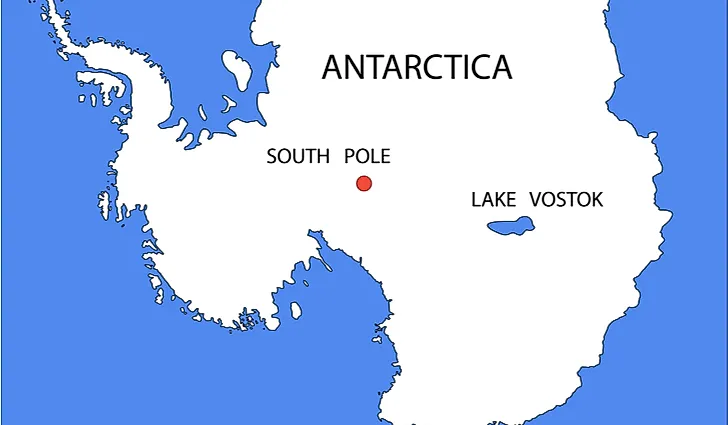
Nobody has ever seen Lake Vostok, yet it sits there, buried 2.5 miles (four kilometers) beneath the East Antarctic Ice Sheet. Comparable in surface area to Lake Ontario, Vostok reaches a maximum depth of 3,300 feet (1,000 meters) and holds about 1,300 cubic miles of liquid fresh water. Geothermal heating from the Earth's crust and immense pressure from the overlying ice sheet, which significantly lowers the freezing point of water, keep it liquid. Stretching 150 miles (240 kilometers) in length and 30 miles (50 kilometers) in width, Vostok sits in a deep tectonic depression that began to form around 60 million years ago when shifting plates cracked the bedrock. As the Antarctic climate cooled dramatically around 34 million years ago, and again 14 million years ago, ice sheets expanded and eventually sealed the water off from the outside world. The lake's water carries an oxygen concentration about 50 times higher than normal surface fresh water and sits in complete darkness. Because of its location, its biodiversity remains a mystery, but some water samples have revealed thousands of DNA sequences and microbial species, a sign that minerals from the bedrock rather than sunlight power a thriving food web there.
Asia: Lake Baikal (12,200 mi2 / 31,500 km2)

Located in southeast Russia, Lake Baikal is not only the world's deepest lake at 5,387 feet (1,642 meters), but also the oldest, formed roughly 25 million years ago. It is so deep that it holds roughly 20 percent of the planet's unfrozen surface fresh water, making it the largest lake by volume, more than all of North America's lakes combined, including the Great Lakes. With a surface area of 12,200 square miles (31,500 square kilometers), it contains around 5,600 cubic miles (23,000 cubic kilometers) of fresh water, fed by more than 330 rivers and streams. The Selenga, Barguzin, and Upper Angara rivers provide the majority of the water. It also continues to slowly deepen. Lake Baikal sits on the Baikal Rift Zone, an active continental rift where the Earth's crust is pulling apart, so the rift valley grows wider and deeper over time. This is one of the deepest active rifts on Earth, with up to five miles of sediment accumulated at the bottom. Its deep, oxygen-rich waters and millions of years of isolation have produced a biological wonderland, and more than half of its 2,500-plus recorded plant and animal species live nowhere else, including the Baikal seal, the only seal that lives exclusively in fresh water.
Australia/Oceania: Lake Taupō (238 mi2 / 616 km2)
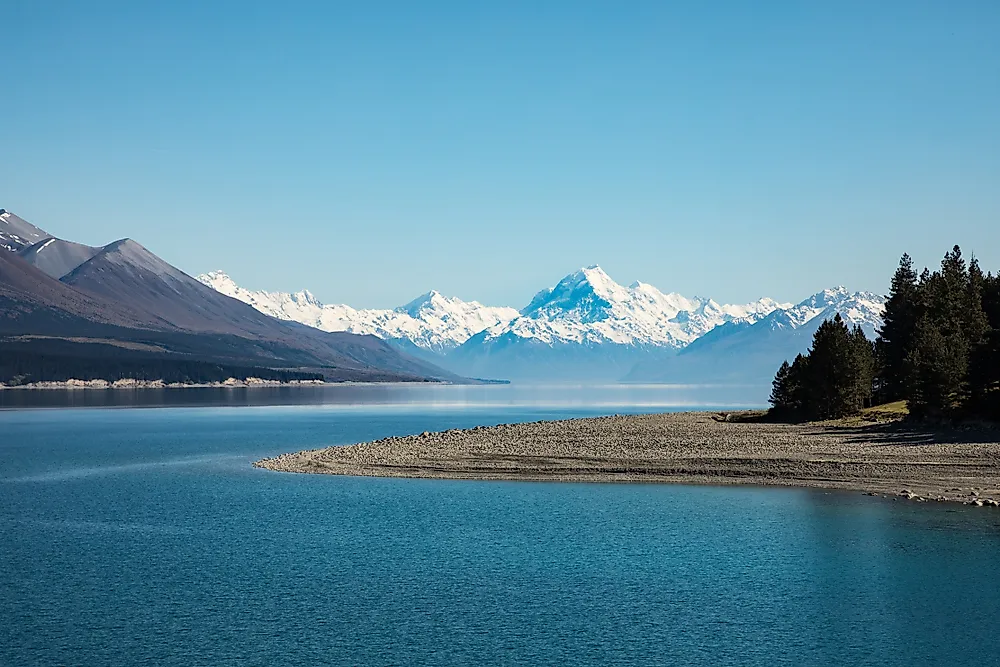
Located in the center of New Zealand's North Island, Lake Taupō is famous for its crystal-clear waters, its trout fishing, and a remarkably violent and explosive geological history. When you stand on its shores, you are not just looking at a lake. You are looking at the flooded caldera of the Taupō Volcano, one of the most active supervolcanoes on Earth. Lake Taupō took shape about 25,000 years ago during the massive Oruanui eruption, which ejected so much magma that the ground beneath it collapsed, creating a basin that eventually filled with water. That event stands as the largest known eruption on the planet in the last 70,000 years. More than 30 streams and rivers feed into Taupō, but it has only one outlet, the Waikato River, New Zealand's longest. Hydroelectric gates built at its mouth control the water level, and the lake works as a critical reservoir for a network of eight downstream hydroelectric stations that produce a large portion of the North Island's renewable electricity.
Europe: Lake Ladoga (6,700 mi2 / 17,700 km2)

Located in northwestern Russia just 25 miles east of St. Petersburg, Lake Ladoga is the largest lake situated entirely in Europe and the 14th largest freshwater lake in the world, comparable in size to Lake Ontario. It is a vast, cold, and historically significant body of water that behaves more like an inland sea than a freshwater lake. Ancient glaciers carved it out thousands of years ago. Thousands of rivers and streams feed the lake, but its three primary tributaries are the Volkhov, Svir, and Vuoksi rivers. The lake drains through one single river, the short but high-volume Neva. It also holds more than 650 islands, mostly scattered across its deep, rocky northern coast. Lake Ladoga proved vital to human survival during World War II. During the Siege of Leningrad (1941 to 1944), Nazi German and Finnish forces completely cut off the city of Leningrad (now St. Petersburg) by land, and the lake gave the city its only link to the outside world by way of a treacherous ice road.
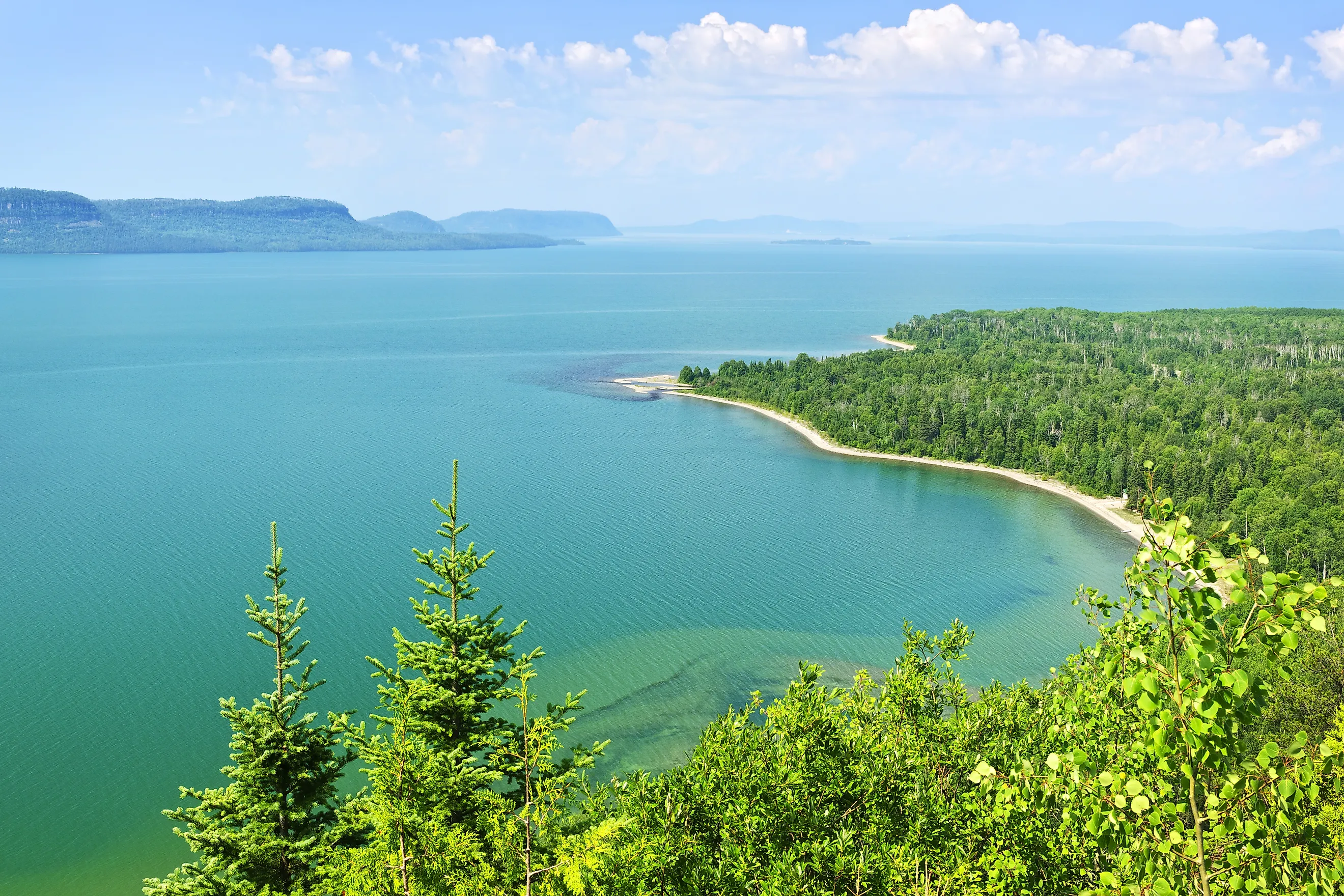
North America: Lake Superior (31,700 mi2 / 82,100 km2)

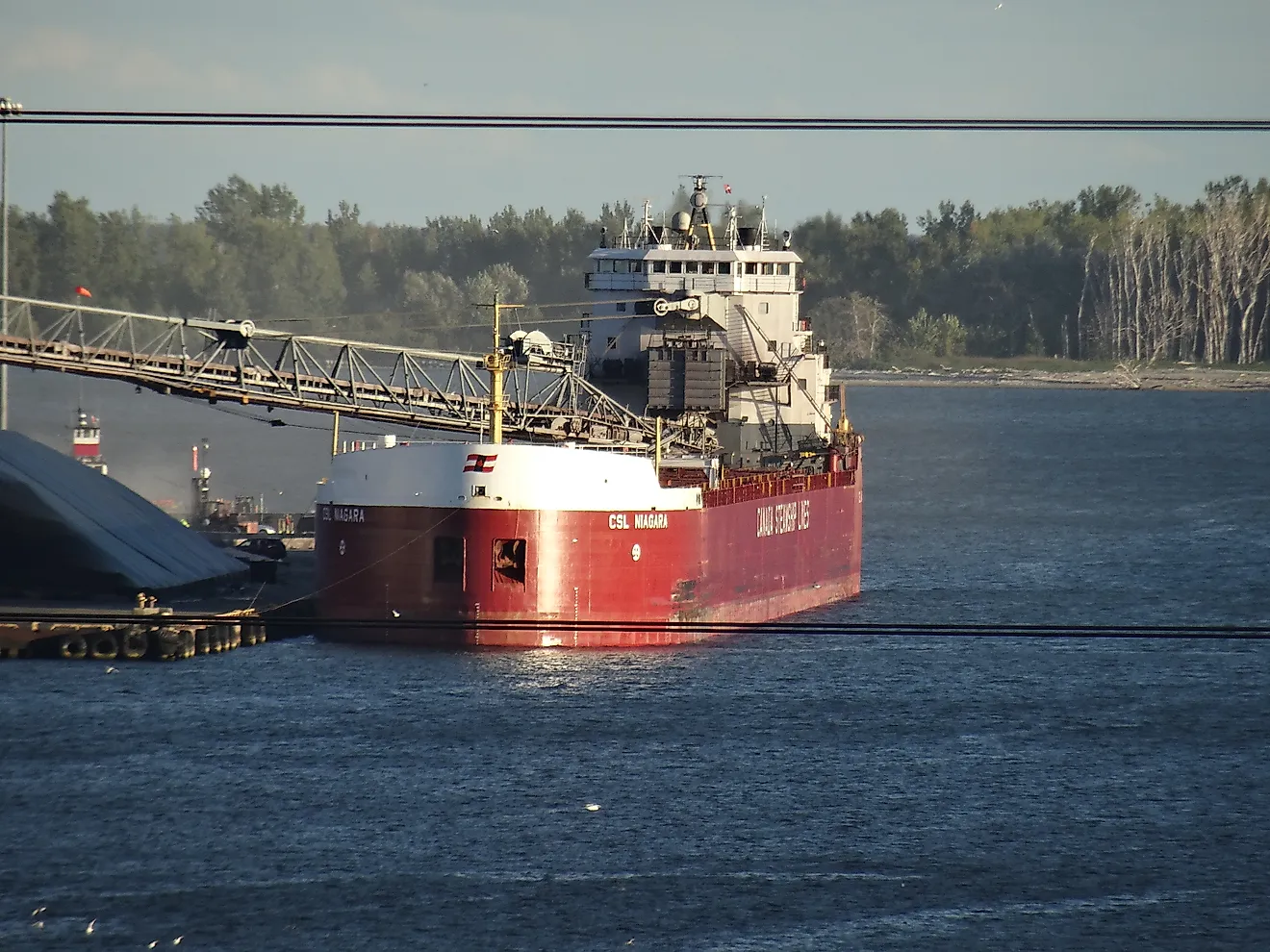
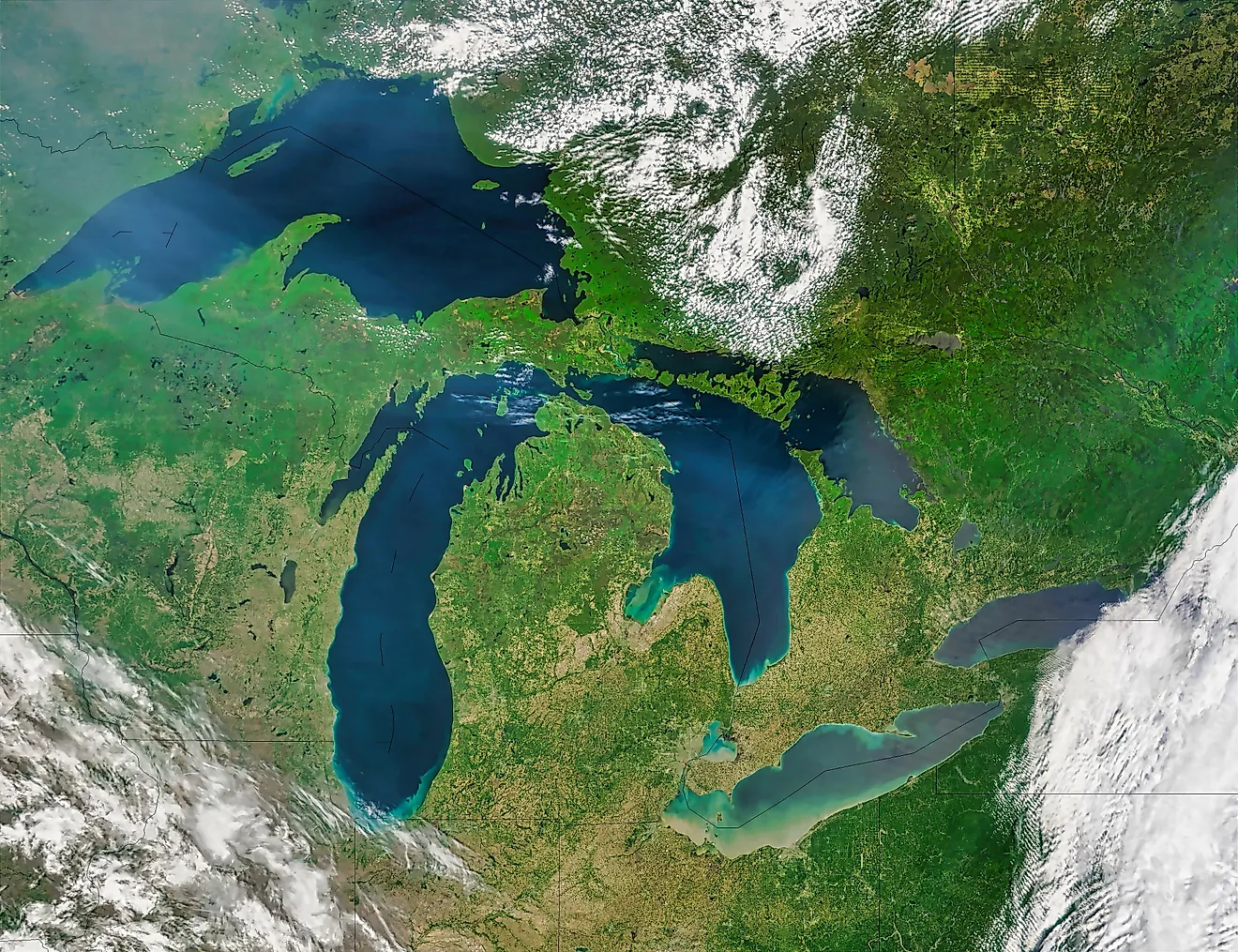
Lake Superior is the largest freshwater lake in the world by surface area, with a footprint covering 31,700 square miles and a shoreline stretching 2,726 miles. It contains 2,900 cubic miles of freshwater, more than all the other Great Lakes combined with three additional Lake Eries. If it were theoretically emptied out, that water would cover both North and South America one foot deep. Its geological formation is fascinating. Around one billion years ago, tectonic forces began to pull apart in what is now the Great Lakes basin, trying to rip the North American continent in two. That rifting ultimately failed, but the tectonic activity left deep chasms that eventually filled with soft materials like shale and soil around the older rock, creating vast networks of river valleys. Glaciers advanced and retreated numerous times and carved out the softer bedrock. The final glacial era, the Wisconsin glacial period, left the footprint of Lake Superior and the other Great Lakes as we know them today. When the glaciers retreated for the last time around 10,000 years ago, the meltwater filled the basins and formed the Great Lakes. Today, a regional economy built on manufacturing, mining, energy, and shipping surrounds it, and the ports, mills, and freighters along its shores employ many thousands of workers across the neighboring states and provinces.
South America: Lake Titicaca (3,232 mi2 / 8,372 km2)

Lake Titicaca is the largest freshwater lake in South America, and it also holds the title of the highest commercially navigable lake in the world, at an altitude of 12,507 feet (3,812 meters). Set high in the Andes Mountains, the lake straddles the border between Peru to the west and Bolivia to the east. Beyond its role as a modern commercial asset, Lake Titicaca held deep spiritual significance for the Incan civilization. To the Inca, it was the sacred center of the universe, the place where the creator god Viracocha emerged from the depths to make the sun, the moon, and the stars. Today the Isla del Sol, on the Bolivian side, holds more than 80 Inca ruins and draws pilgrims as a major sacred site. Titicaca is incredibly deep, with a maximum depth of 932 feet (284 meters), and five major river systems plus glacial meltwater from the surrounding mountains feed it.
Seven Lakes, Seven Stories
Lakes are much more than water trapped in a basin. To the Inca, Lake Titicaca was a sacred place at the center of the universe, while for modern communities, Lake Superior and Lake Victoria drive regional economies that supply jobs and drinking water to enormous numbers of people. Russia's Lake Baikal holds roughly 20 percent of the world's fresh water thanks to its incredible depth and volume, while Lake Ladoga served as a lifeline for the residents of Leningrad during World War II. The size of their footprints makes each one the largest on its continent, but their importance to the people and ecosystems that depend on them matters just as much.