The Cargo Great Lakes Freighters Carry The Most
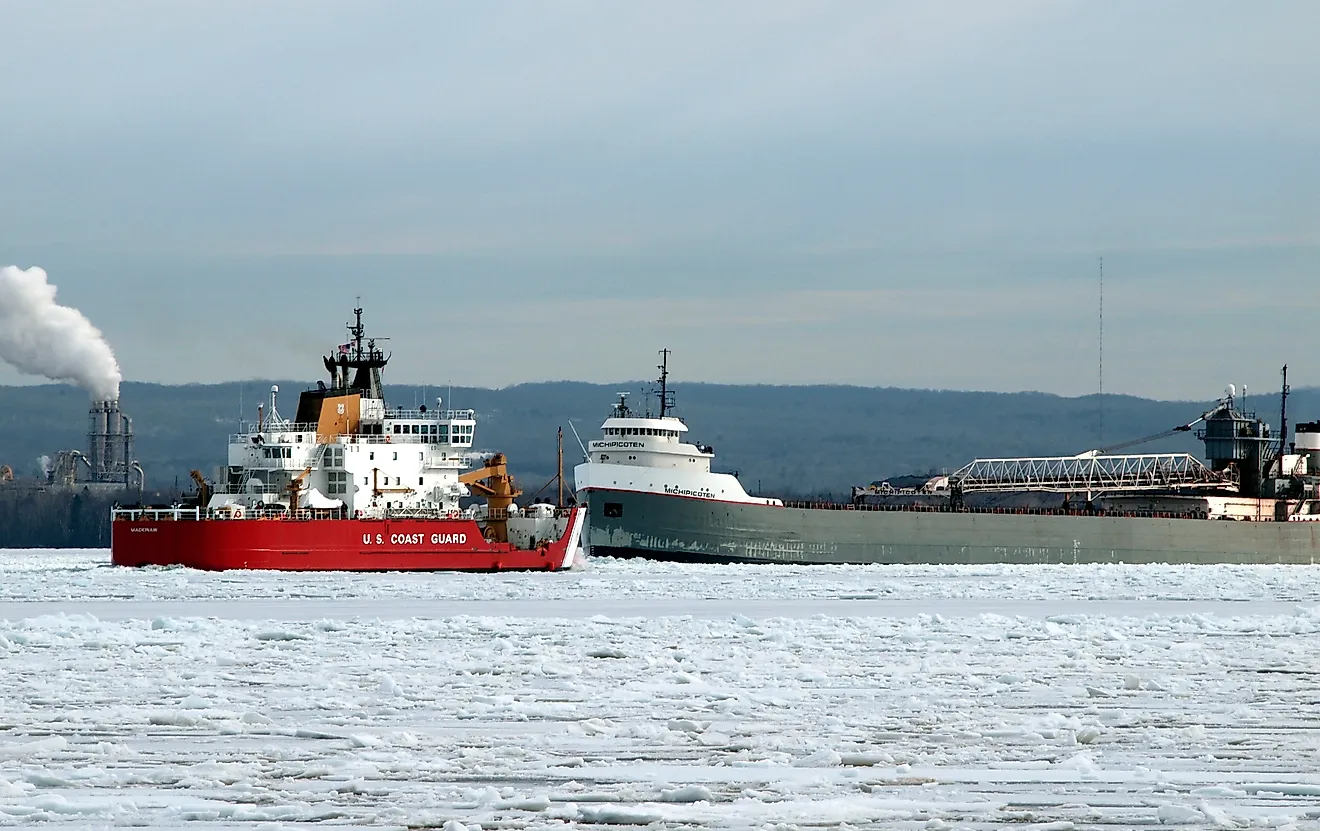
The massive cargo ships of the Great Lakes transported 71.3 million short tons (64.7 million metric tonnes) of freight in 2025, and iron ore was by far the largest category at 39.1 million short tons (35.5 million metric tonnes), comprising most of America's supply. Known as lakers, these massive ships can exceed 1,000 feet (305 m) in length. The largest are actually too big to pass through the Welland Canal, the waterway linking Lake Erie and Lake Ontario, and instead operate on the upper four Great Lakes. Smaller-sized vessels can pass through the canal. By moving enormous quantities of iron ore, lakers help supply the Midwest steel industry and remain an important part of the industrial supply chain.
Why Iron Ore?

Iron ore is a basic raw material needed to make steel. A large portion of the iron ore used by American steelmakers comes from mining regions around Lake Superior, especially Minnesota’s Mesabi Range and Michigan’s Upper Peninsula. The logistics issue is that the mines and the steel mills are often hundreds of miles apart. Instead of moving millions of tons of material by truck, which would require enormous amounts of fuel and create heavy traffic, companies can load the ore onto large freighters and move it by water.
From Ore to Taconite Pellets

A substantial amount of the iron ore shipped on the Great Lakes is processed into small, round taconite pellets. Taconite is a low-grade iron-bearing rock that is crushed and processed to concentrate its iron content before the material is formed into pellets. The resulting pellets are well suited to bulk transport and use in steelmaking.
After processing, the pellets are moved to ore docks and loaded into a freighter’s large cargo holds. The biggest lakers can carry more than 70,000 short tons (63,500 metric tonnes) in a single trip, delivering the material to facilities where it will eventually be turned into steel. A single laker can take tens of thousands of tons of cargo on one voyage. Moving that same amount by road would require hundreds of trucks, while rail transportation would require several long trains and extensive coordination.
Water Efficiency

Water transportation is especially useful for materials such as iron ore, limestone, and coal because these products are heavy but do not require individual packaging. Ships can load them directly into their cargo holds and unload them at specialized docks. Water transportation is also highly fuel-efficient compared with moving the same amount of freight by road. This makes the Great Lakes an effective delivery route for industries that constantly need enormous quantities of raw materials.
Origin and Destination

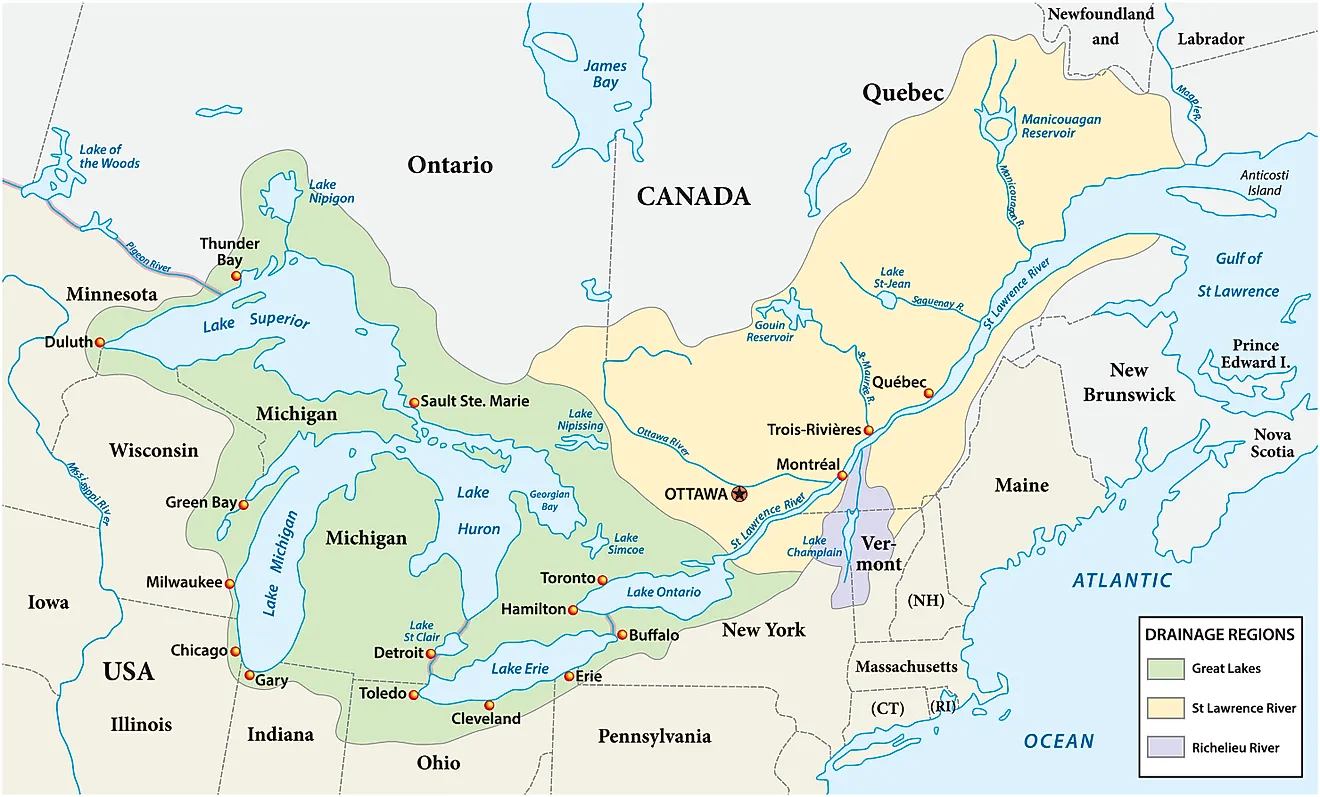
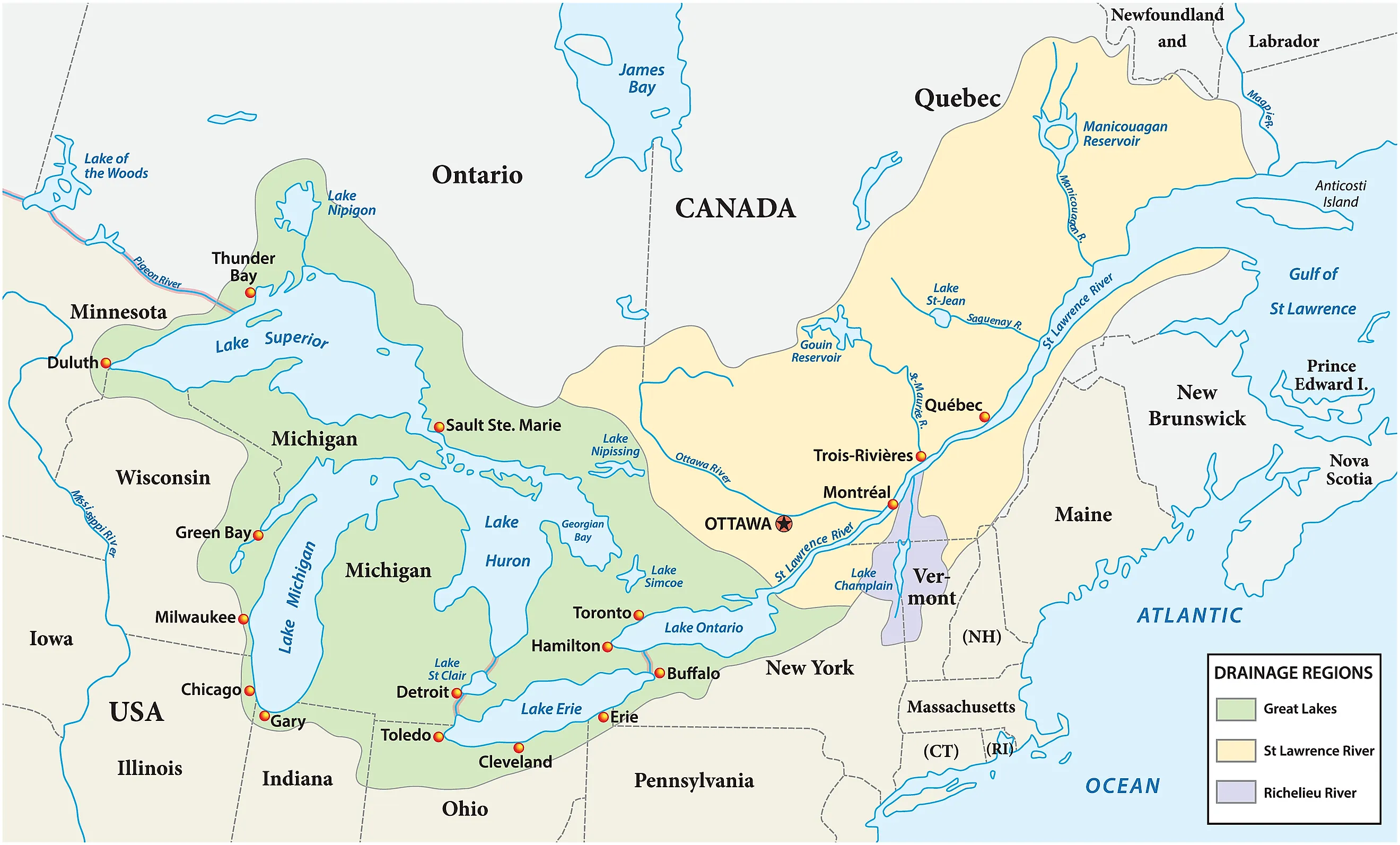
Minnesota supplies much of the iron ore shipped through the Great Lakes, with Duluth-Superior acting as a major transportation hub on the Minnesota-Wisconsin border. Iron ore pellets from Minnesota’s mines are often moved by rail to ports along Lake Superior, where they are loaded onto large freighters that transport them through the Great Lakes to industrial areas farther east and south.
Michigan’s Upper Peninsula also has a long history of iron mining and continues to contribute to the trade. The active Tilden Mine near Ishpeming produces iron ore pellets that are moved by rail to the port at Marquette. Lake freighters then carry iron ore through the system toward major steelmaking centers in Indiana, Michigan, and Ohio.
How Iron Ore Voyages Work

A typical voyage might begin with a freighter arriving at a Lake Superior port. The vessel loads thousands of tons of taconite pellets before heading east. The ship passes through the Great Lakes system and eventually reaches an industrial port near a steel-producing region.
Once it has reached its destination, unloading equipment removes the pellets from the cargo holds. Many Great Lakes freighters are self-unloaders equipped with conveyor systems that can discharge cargo without relying entirely on shoreside equipment. The ship can then return toward Lake Superior, often in ballast, to load another shipment, creating a continuous cycle that keeps raw materials moving throughout the region.
Limestone, Coal and Other Cargo

Limestone is another major bulk commodity carried by Great Lakes freighters. U.S.-flag lakers moved about 20.1 million short tons (18.2 million metric tonnes) of limestone in 2025, making it the second-largest cargo category behind iron ore. In steelmaking, limestone can be used as a flux to help remove impurities. It is also widely used in cement manufacturing and construction. Large quarries in Michigan help meet this demand by supplying limestone to industrial facilities throughout the Great Lakes.
Great Lakes freighters also transport coal, with U.S.-flag vessels carrying about 6.5 million short tons (5.9 million metric tonnes) in 2025. Much of the coal shipped on the lakes is used for electricity generation, while a smaller share serves metallurgical and industrial purposes. Although coal’s role in the region has declined over time, it remains part of the bulk shipping industry. Other cargoes include cement, salt, and sand. Because these products are heavy, relatively inexpensive per ton, and required in large quantities, transporting them by water is especially practical.
Why They Matter
Great Lakes freighters may not receive as much attention as massive ocean container ships, but their job is equally important for many industries around the lakes. They move enormous quantities of essential materials along a transportation route that has served the region for generations.
Iron ore remains the defining cargo of the U.S.-flag Great Lakes fleet, accounting for the majority of America's supply. In 2025, lakers carried nearly twice as much iron ore by weight as limestone, the next-largest cargo category. These ships connect Lake Superior mining regions with steelmaking centers elsewhere in the Great Lakes while also carrying stone, coal, and other bulk materials needed by industries and communities across the region.