How Much Water Lake Mead Has Lost, Measured In Great Lakes
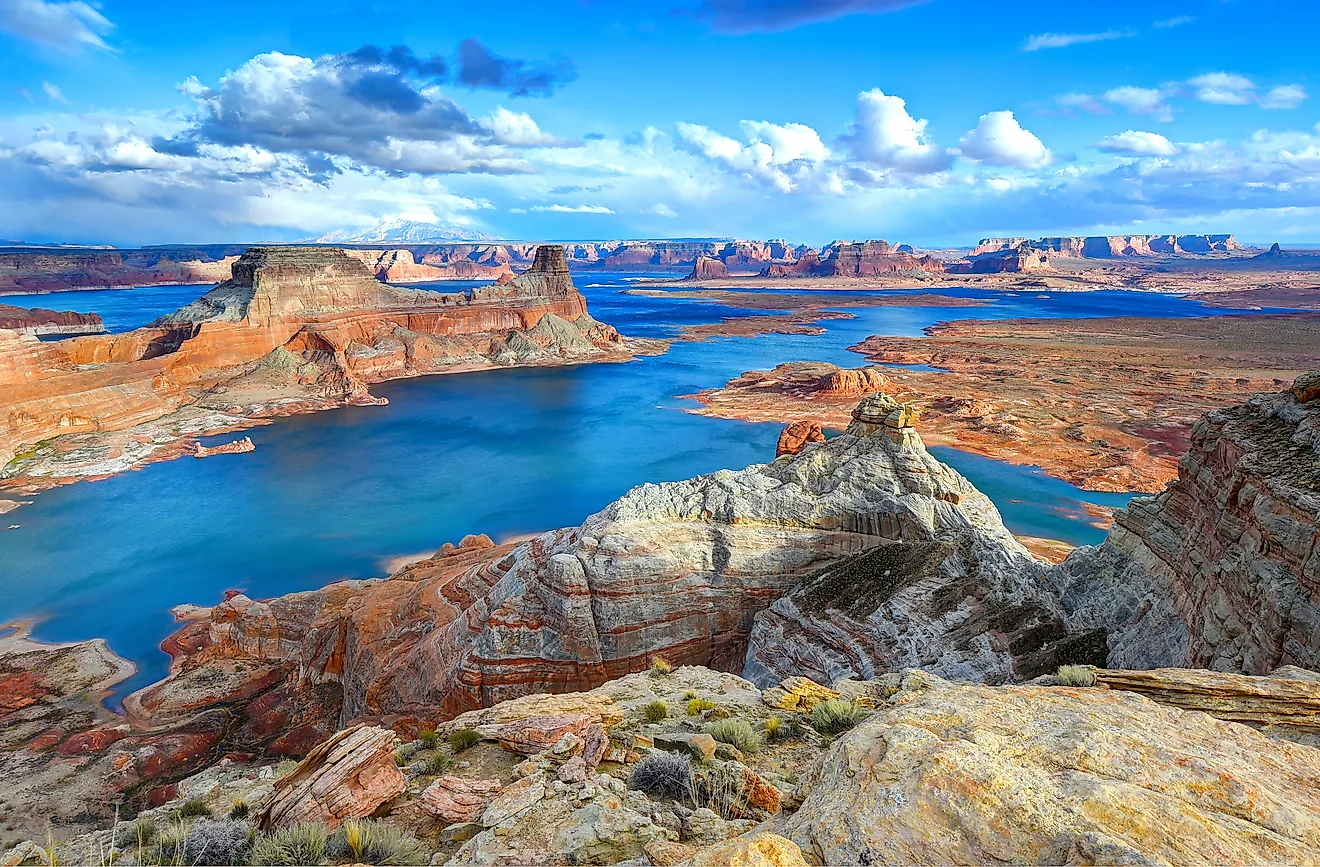
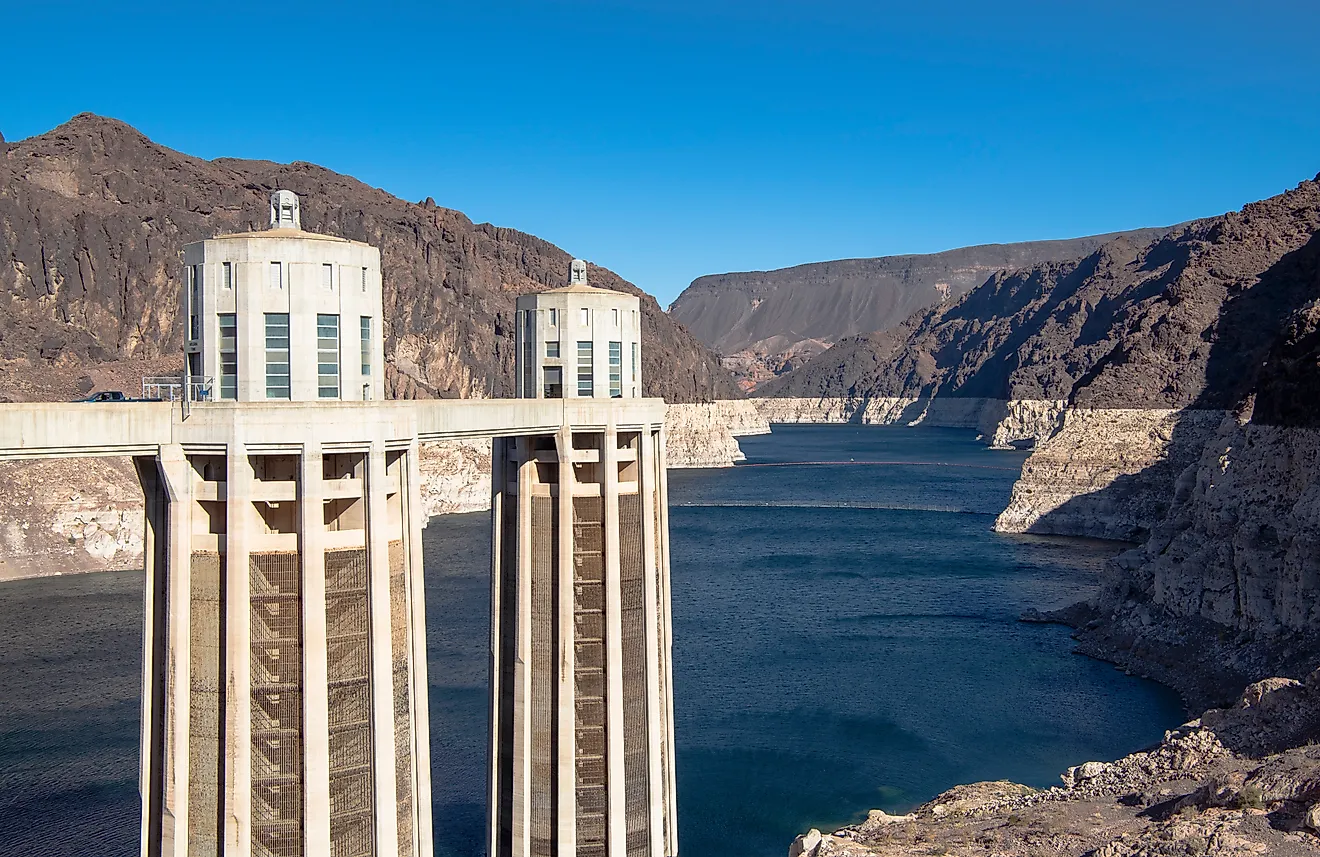
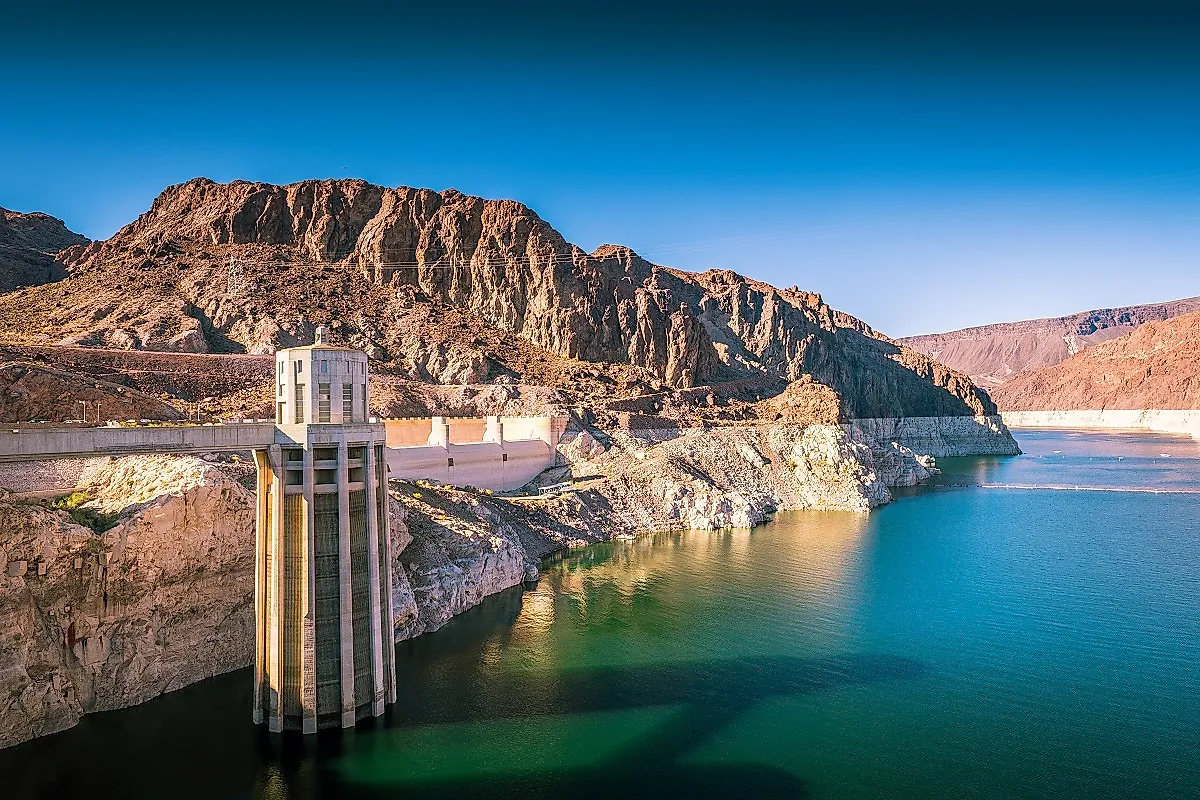
The white "bathtub ring" around Lake Mead has become one of the most alarming images in America, a ghostly line of bleached rock showing exactly how much water the country's largest reservoir has surrendered to drought. It is a genuine emergency. But here is a fun and slightly mind-bending way to grasp the scale: what if we measured Lake Mead's staggering losses using the biggest freshwater yardstick on the continent, the Great Lakes? The answer is surprising, a little humbling, and it flips almost everyone's expectations. Let's run the numbers.
How Much Has Lake Mead Actually Lost?

Let's start with the raw damage. When completely full, Lake Mead holds nearly 29 million acre-feet of water, which works out to roughly 9.3 trillion gallons stacked up behind the Hoover Dam. That is an almost unimaginable amount. The problem is that Mead has not been anywhere near full in a very long time. Battered by a multi-decade megadrought and relentless demand from cities and farms, the reservoir sank to around 25 percent of capacity by August 2026, its lowest level since the lake first filled in the 1930s. That leaves a deficit of roughly 20 million acre-feet compared to a full reservoir. In gallons, Lake Mead is short about 6.5 trillion of them. By any normal standard, that is a catastrophic, jaw-dropping volume of missing water. So surely that adds up to at least a Great Lake or two, right? Not even close.
Now Meet The Great Lakes

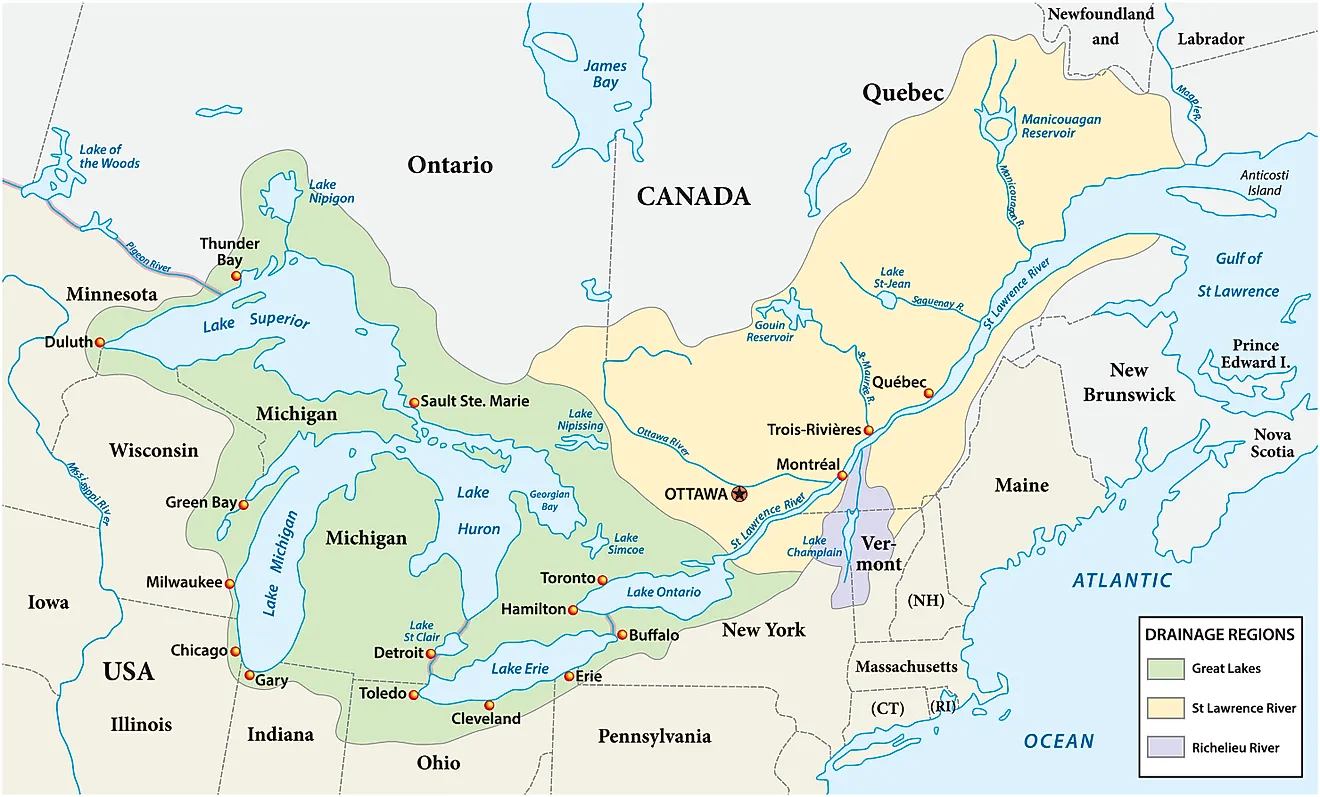
To understand why, you have to appreciate that the Great Lakes are not really lakes in any normal sense. They are inland freshwater seas. Together, Lake Superior, Michigan, Huron, Erie, and Ontario hold about 5,439 cubic miles of water, which is roughly 6 quadrillion gallons. That is about one-fifth of all the fresh surface water on the entire planet and around nine-tenths of the United States' supply. Lake Superior by itself accounts for more than half of that, holding some 2,900 cubic miles, and the rest is split among Michigan at 1,180 cubic miles, Huron at 850, Ontario at 393, and Erie, the runt of the litter, at 116. To make the comparison work, we need a common unit, so remember this: a single cubic mile of water equals about 1.1 trillion gallons. Keep that number in your back pocket, because it is about to make Lake Mead look very, very small.
So, How Many Great Lakes Has Mead Lost?

Here comes the reveal. Lake Mead's roughly 6.5-trillion-gallon shortfall converts to just under 6 cubic miles of water. Now compare that to Lake Erie, the smallest of the Great Lakes by volume, which holds 116 cubic miles. That means everything Lake Mead has lost equals only about 5 percent of Lake Erie. Put another way, you would have to drain Lake Mead's entire deficit into Erie roughly 20 times over just to fill that one lake. Stack Mead's losses against the Great Lakes combined, at 5,439 cubic miles, and the reservoir's entire deficit amounts to barely one-tenth of one percent of the total. It would take around 900 Lake Mead losses to fill all five Great Lakes. Against mighty Lake Superior, Mead's loss is a rounding error of about two-tenths of a percent. The number terrifying the American Southwest would practically vanish if you poured it into the Midwest.
And It Is Not Just Lake Mead

Widen the lens and the picture only holds up. Lake Mead's upstream twin, Lake Powell, has been drained just as hard, and together the Colorado River's two great reservoirs have lost roughly 33.5 million acre-feet of stored water since the year 2000. That works out to about 10.9 trillion gallons, or nearly 10 cubic miles. And yet even that, the combined collapse of the two largest reservoirs in the United States over a quarter of a century, still adds up to less than 9 percent of little Lake Erie, and under two-tenths of one percent of the Great Lakes as a whole. NASA has estimated that once you include the groundwater the region has frantically pumped to cover the shortfall, the Southwest has lost around 13.7 trillion gallons since 2002. It is a genuinely historic drying-out. Measured against the freshwater seas of the north, it is still a puddle.
Then Why Is Losing Mead A Catastrophe?

If the volume is so small by comparison, why does Lake Mead's decline make national headlines while Lake Erie's fortunes rarely do? Because water is not just about how much exists, it is about where it sits and who depends on it. Lake Mead and the Colorado River that feeds it are the beating heart of the arid Southwest, supplying water to roughly 40 million people across seven states and northern Mexico, plus millions of acres of farmland that grow a huge share of the nation's winter vegetables. Las Vegas alone draws about 90 percent of its water from the reservoir. In a desert, even a comparatively modest store of water is the difference between a thriving city and an empty one. So while Mead holds a tiny fraction of the Great Lakes' volume, it is doing an outsized, life-or-death job in a place with almost no other options.
Why We Cannot Just Pipe It West

This raises the question everyone eventually asks: if the Great Lakes hold oceans of water and the Southwest is desperate, why not just build a pipeline and move some over? It sounds simple, but it collapses on contact with reality. Moving that much water more than 1,500 miles would mean pumping it thousands of feet uphill over the Rocky Mountains, an energy bill so enormous it would rival the water crisis itself. The cost would run into the hundreds of billions of dollars, and much of the water would evaporate along the way. On top of all that, it is essentially illegal. The Great Lakes Compact, signed by eight states in 2008, specifically bans large-scale diversions of water out of the Great Lakes basin, precisely to stop thirsty regions from siphoning the lakes dry. So the water may look tantalizingly abundant on a map, but it is going to stay right where it is. Grand schemes to move northern water south have been floated for the better part of a century, from ambitious mid-1900s plans to reroute entire rivers across the continent, and every single one has died on the same rocks: staggering cost, brutal physics, and fierce political opposition from the regions being asked to give up their water. Even if such a pipeline somehow existed, the amount it could realistically deliver would be a trickle next to what the West already overdraws each year. The hard truth is that engineering can move a river a few hundred miles, but it cannot cheaply haul an ocean's worth of water across a continent and over a mountain range.
The Real Lesson In The Numbers

So what does measuring Lake Mead in Great Lakes actually teach us? Mostly, it is a lesson in geography over gallons. The United States is fantastically rich in fresh water, but almost all of it sits in the wrong place for the people who need it most. The Great Lakes cradle a fifth of the world's surface fresh water in a cool, rainy region that already has plenty, while the fastest-growing corner of the country tries to run entire cities on a desert reservoir that, by Great Lakes standards, is barely a puddle. Lake Mead's loss is both enormous and tiny at the same time, depending only on where you are standing. It is a rounding error to a Michigander and an existential threat to a Nevadan. And that gap, more than any single number, is the real story of water in America. The crisis was never really about how much water we have. It has always been about where it is, and who is left standing in the dry spots.