Why The Salton Sea Is Turning Toxic
California's largest lake was created by accident, and more than a century later, keeping it from turning into an even greater environmental disaster is proving enormously difficult. The Salton Sea almost feels as if it were horribly fated. It lacks a natural outlet, which means that decades of salt and pollutants have accumulated, as declining inflows push its shoreline to retreat. It is estimated that the sea has lost over a third of its volume in the past 25 years. As the water continues to disappear, increasingly salty habitats and exposed lakebeds threaten wildlife and nearby communities in California. The question now goes beyond why the Salton Sea is shrinking to what realistic solutions remain.
How Was the Salton Sea Formed?

The Salton Sea was formed by accident. In 1905, the Colorado River broke through the Alamo Canal and flowed uncontrollably into a dry basin in the Sonoran Desert. The Salton Sea is an endorheic lake, meaning water enters it but has no outflow. Water, therefore, leaves the lake through evaporation. Floodwater continued to fill the Salton Sea until February 1907, when the Southern Pacific Railroad closed the river breach.
Most inflow that reaches the sea today is from the Whitewater, New, and Alamo Rivers within the Imperial and Coachella Valleys, and the city of Mexicali across the border in Mexico. This discharge contains approximately 4 million tons of dissolved salts annually. With no natural outlet, salts accumulate as water evaporates, and the Salton Sea is now more than twice as salty as the ocean.
Why Is the Salton Sea Shrinking?

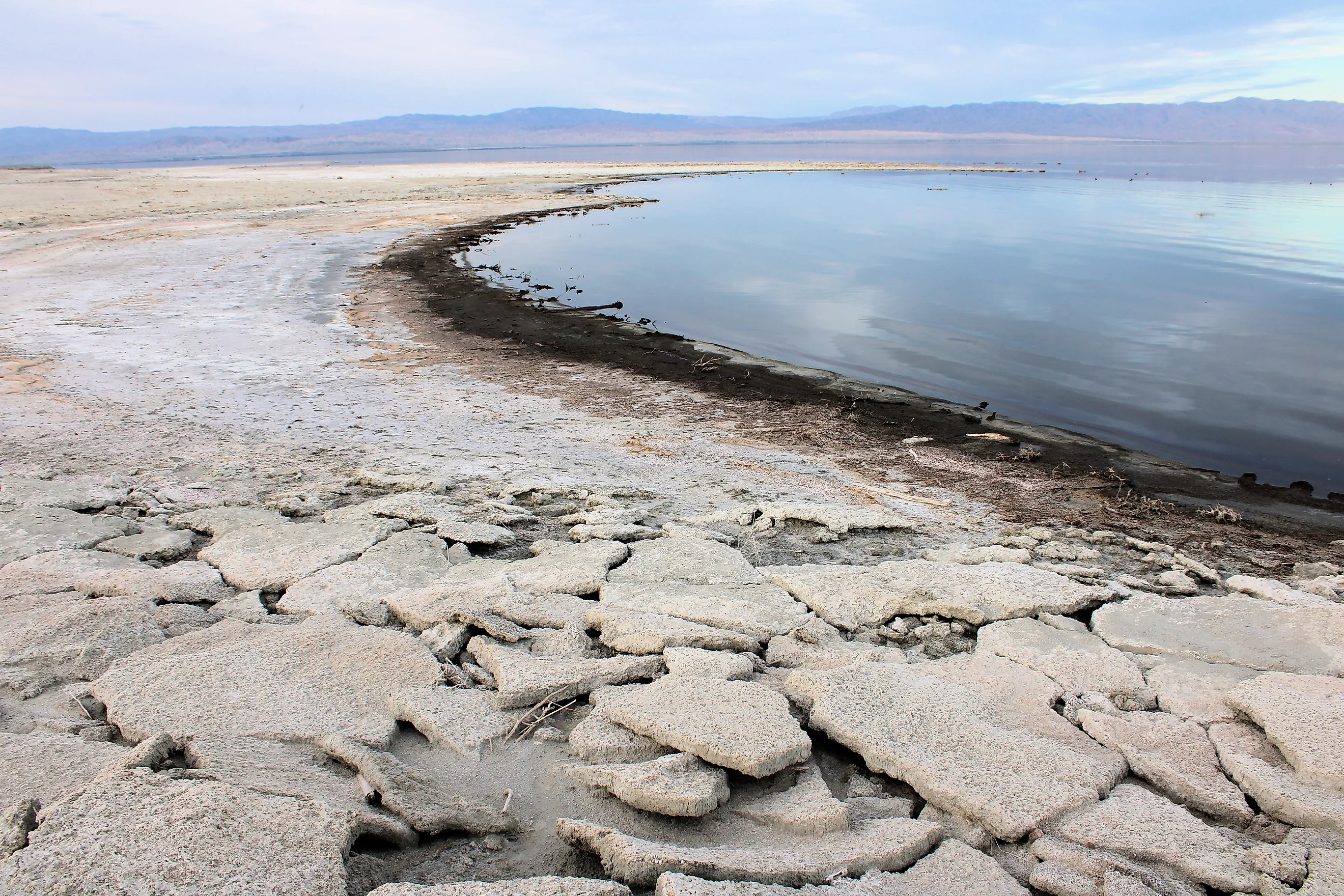
The Salton Sea is shrinking primarily because less water now flows into it, with agricultural conservation and Colorado River water transfers reducing the runoff that historically sustained the lake. As some of its volume evaporates, the pollutants and salts carried in the water from the agricultural runoff become increasingly concentrated. The lake's shoreline retreats, exposing large tracts of dry lake bed coated in salt, which is released in dust storms.
Effects of the Salton Sea Turning Toxic

The Salton Sea problem is a triple-threat disaster that reaches the regional economy, local ecosystems, and human health. In the 1950s and 1960s, the Salton Sea was a popular recreational destination for boating, fishing, and birdwatching. In the early 1970s, rising water levels flooded some of the tourist infrastructure. At the same time, the rising salinity threatened the fishery and contributed to eutrophication and odor problems, causing tourism to decline throughout the 1980s.
Major algal blooms occurred in the 1990s, resulting in mass die-offs of millions of fish and birds. The Salton Sea is a major stop on the Pacific Flyway for over 400 species of birds. Outbreaks of avian cholera have also caused large-scale bird deaths, particularly among waterfowl and seagulls during their winter migration, with the potential to kill them quickly. Decreasing water levels and increased salinity have also reduced the lake's ability to support the fish and invertebrates that birds rely on for food.

The toxic dust that is blown up from the exposed lake bed is linked to respiratory issues in humans. Dust levels in the Coachella Valley routinely exceed national standards. Research has found unusually high rates of asthma among children in communities near the Salton Sea. One study from the University of California, Riverside, found that coarse particulate matter from the Salton Sea was associated with a nearly 25 percent increase in the risk of respiratory-related hospitalizations during times of algal blooms. The chemical-laced dust affects roughly 650,000 people in nearby communities. In addition to asthma and respiratory issues, residents also experience headaches, nosebleeds, and other health problems.
Can the Salton Sea Recover?

Proposals pitched over the years to restore the Salton Sea have included a network of ponds on 30,000 acres of exposed lake bed, shipping saltwater in from the Sea of Cortez, and diverting farm runoff to the sea through a new canal. Others called for a desalination plant next to the sea to draw down its salinity, or for paying Imperial County farmers not to plant their fields so that more Colorado River water reaches the sea instead. Many of these large-scale plans have faced concerns over cost, water availability, and feasibility. Current efforts instead focus on suppressing dust and restoring habitat around the shrinking shoreline, while state and federal agencies evaluate longer-term strategies for managing the sea.
Saving the Salton Sea

The Salton Sea transitioned from an accidental creation to a brief stint as a desert oasis and eventually an environmental disaster. Its future now depends on whether California can manage the shrinking shoreline, control hazardous dust, restore viable habitat, and develop a sustainable long-term plan for the sea. Restoring the Salton Sea would not only revive a dying ecosystem but also boost the economy and protect neighboring communities from toxic dust storms.