The Sea Creatures That Outlived The Dinosaurs
Each spring, armored horseshoe crabs crawl onto beaches along the US Atlantic Coast. Farther offshore, sharks patrol coastal waters while sea turtles return to their nesting grounds along the Southeast shore. Their ancestors occupied Earth's oceans before the asteroid strike ended the age of dinosaurs 66 million years ago. These animals are sometimes called living fossils, but that term can be misleading. No modern species has remained completely unchanged for hundreds of millions of years. Evolution continued as older species disappeared and new ones emerged. What survived were major branches of the animal family tree, sometimes retaining features visible in ancient fossils.
Horseshoe Crabs Were Ancient Before Dinosaurs Appeared

Horseshoe crab ancestors lived long before the first dinosaurs appeared approximately 230 million years ago, and their evolutionary history extends back about 445 million years. During that immense span, their relatives endured several mass extinctions.
Despite their name, horseshoe crabs aren't true crabs. They're arthropods more closely related to spiders and scorpions. A hard shell protects the animal as it searches the seafloor for worms, mollusks, and other small prey. Its long tail, called a telson, helps it turn upright if waves flip it over.

Four horseshoe crab species remain. Three live in Asia, while the Atlantic horseshoe crab inhabits the Atlantic and Gulf coasts of North America. The world's largest spawning concentration gathers in Delaware Bay. Migrating shorebirds depend on the eggs for food, including red knots traveling toward Arctic breeding grounds.
Sharks Survived Five Major Mass Extinctions

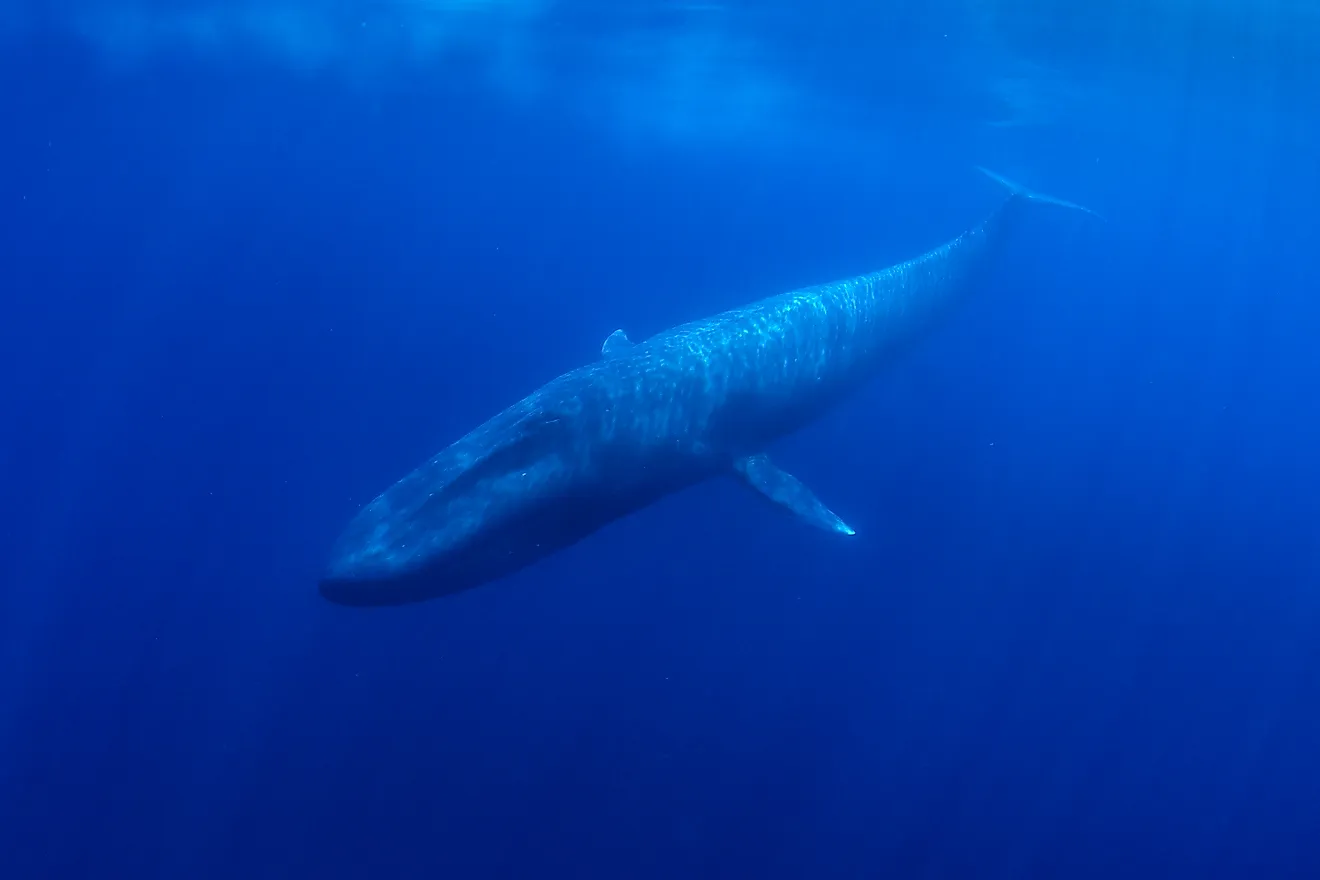
The earliest known sharks appeared more than 400 million years ago, before dinosaurs, flowering plants, and recognizable trees. Sharks subsequently passed through all five major mass extinctions, although many individual groups vanished.
Their variety may help explain that record. Sharks occupy environments ranging from shallow estuaries to the deep sea. Depending on the species, they may eat plankton, fish, or marine mammals. This diversity made it less likely that one environmental disaster would eliminate every kind of shark.

Their bodies also contain effective adaptations. Skeletons made from cartilage are lighter than bone, rows of replacement teeth prevent broken teeth from becoming a permanent handicap, and electroreceptors detect electrical signals created by other animals.
The asteroid impact 66 million years ago devastated marine food webs. Sharks with specialized diets were among the casualties, but others survived and expanded into ecological roles left vacant by extinct predators. The sharks now found off every US coast are the products of that long history.
Nautiluses Carry Their Own Buoyancy System

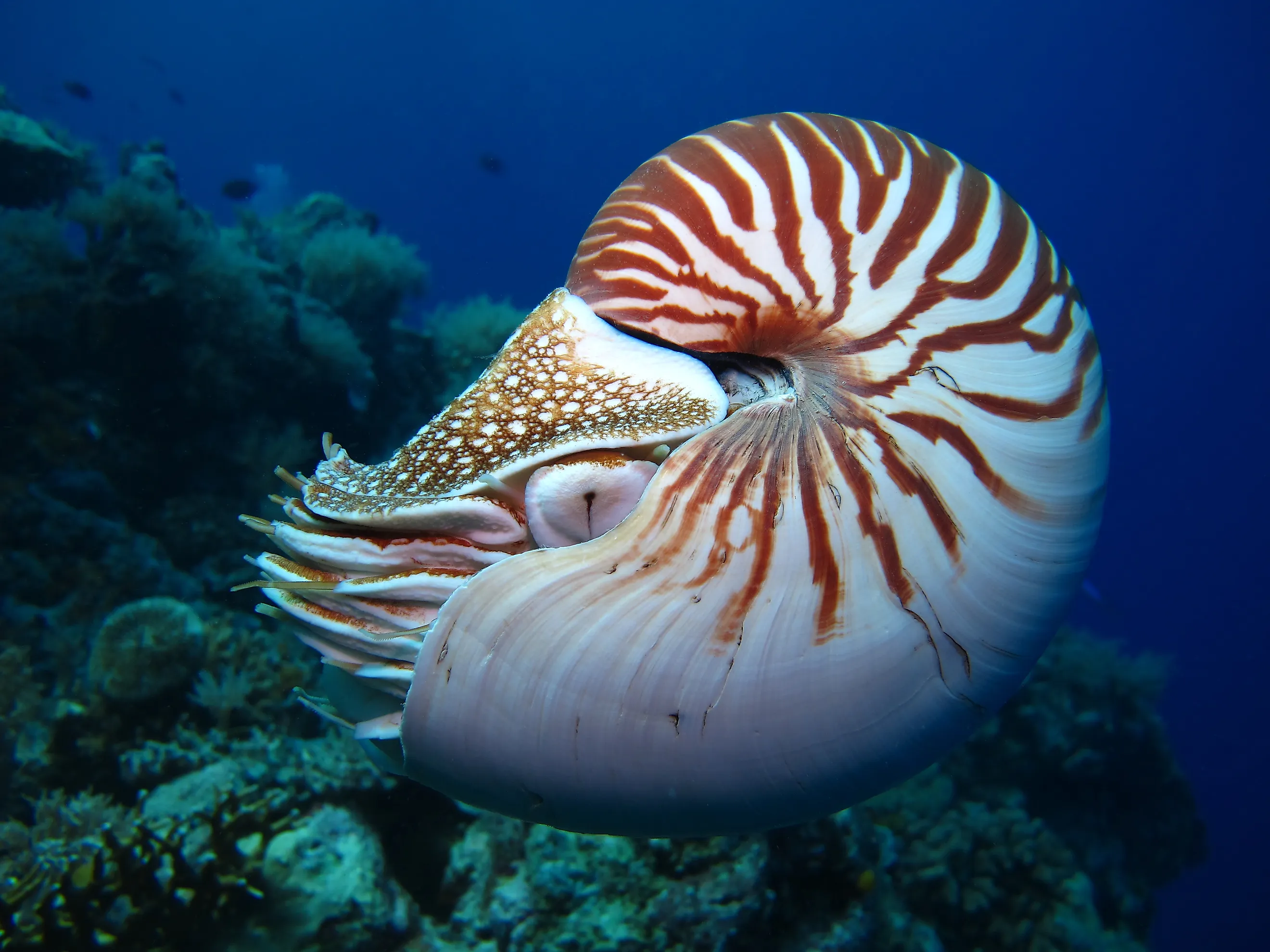
A nautilus appears almost designed for a prehistoric ocean. Its soft body rests inside a striped spiral shell, while dozens of slender appendages surround its mouth. Its history is connected to nautiloids that first arose hundreds of millions of years ago.
Nautiloids once existed in many shapes and sizes. They shared prehistoric oceans with ammonites, a separate group of shelled cephalopods that became abundant during the dinosaur age. The asteroid-driven extinction eliminated the ammonites, but ancestors of today's nautiluses survived.

The nautilus shell is both armor and a buoyancy device. Inside are sealed chambers connected by a tube called the siphuncle. As the animal grows, it moves into a larger chamber and closes the old one behind it. Adjusting the gas and fluid within those spaces allows it to move vertically without constantly swimming.
Modern nautiluses inhabit tropical Indo-Pacific waters rather than US coastal waters. They often move between deeper reef slopes and shallower feeding areas, continuing to use a chambered-shell design that has proved successful through enormous changes in the oceans.
The Coelacanth Returned From Extinction

Until 1938, coelacanths seemed to belong entirely to the fossil record. Scientists knew these lobe-finned fishes had appeared more than 400 million years ago, but the available fossils suggested they had vanished by the end of the Cretaceous Period.
That assumption collapsed when a fishing boat brought an unfamiliar fish into port in South Africa. Museum curator Marjorie Courtenay-Latimer recognized its unusual features, and the specimen was identified as a coelacanth.

Scientists now recognize two living species. These large fish generally shelter in deep underwater caves during the day and emerge at night to feed. Their paired fins contain bones and muscles and move in an alternating pattern resembling four limbs.
Coelacanths aren't the direct ancestors of land animals. However, they belong to the lobe-finned fishes, the larger evolutionary group that also produced the ancestors of amphibians, reptiles, birds, and mammals. Their unexpected rediscovery demonstrated how much of the deep ocean remained unknown to science.
Sea Turtles Crossed the End-Cretaceous Boundary

Fully marine turtles emerged during the Cretaceous Period. By about 120 million years ago, some had developed flipper-shaped limbs and streamlined bodies suited to the open ocean. They swam alongside ammonites, mosasaurs, and other animals that disappeared when the dinosaur age ended.
Sea turtles survived that upheaval and spread through the oceans afterward. Their ancestors may have benefited from inhabiting different environments and eating a range of foods. The ability to reduce their metabolism when necessary could also have helped during periods of scarcity.

Six sea turtle species occur in US waters. Loggerheads nest extensively in Florida and other southeastern states. Leatherbacks cross both the Atlantic and Pacific oceans, while Kemp's ridleys inhabit the Gulf of Mexico and sometimes nest along the Texas coast.
In these migrations, the prehistoric past meets familiar American beaches. A female may travel thousands of miles before crawling ashore, digging a nest, and depositing her eggs in the sand.
How Did These Animals Survive Mass Extinctions?

The asteroid strike near present-day Mexico sent dust, soot, and debris into the atmosphere. Sunlight declined, photosynthesis slowed, and food webs collapsed. Approximately three-quarters of Earth's species disappeared.
There was no universal survival formula. Flexible diets helped animals use whatever food remained. Wide geographic ranges reduced the chance that every population would experience the same conditions. Slow metabolisms lowered energy requirements, and animals in deep water, sediment, coastal shelters, and freshwater may have found some protection there.
Luck also mattered. Each surviving group lost numerous species along the way. The animals alive now descend from those that happened to possess helpful traits, occupy safer locations, or find enough food as global conditions deteriorated.
Ancient Survivors Face Modern Pressures

Enduring ancient extinctions doesn't make an animal immune to rapid change. These groups now face accidental capture in fishing gear, habitat destruction, and changing ocean conditions.
Horseshoe crabs are harvested for bait and biomedical purposes. Nautiluses are collected for their decorative shells despite growing and reproducing slowly. Sharks are caught intentionally or as bycatch, while coelacanths can become entangled in deep-water fishing gear.

Sea turtles may mistake plastic for food, become trapped in fishing equipment, or lose nesting habitat to coastal development. Artificial lights can also draw hatchlings away from the ocean. These pressures are developing faster than many species can adapt, making their prehistoric endurance no guarantee of future survival.
The Dinosaur Age Never Entirely Disappeared
Non-avian dinosaurs vanished 66 million years ago, but the oceans still hold survivors from much older chapters of Earth's history. Horseshoe crabs gather along the US coast while sharks patrol every ocean. Nautiluses regulate their chambered shells, coelacanths hide in deep caves, and sea turtles return to sandy beaches.
Their history is one of repeated loss, adaptation, and survival. In each of them we can see a link to vanished oceans, and a reminder that even the planet's most durable animals can eventually disappear.