The US Lakes Where Anglers Spend The Most Money
Anglers spent nearly $1.75 billion chasing fish on Lake Erie in one year. A fishing rod costs maybe thirty dollars. The rest of the money is spent on boats, fuel, guides, tournaments, and lakefront property. No agency ranks lakes by that spending. The numbers here come from separate economic studies of the biggest fishing waters. The totals show where American anglers pour real money into a day on the water.
Lake Erie, Ohio, Pennsylvania, Michigan, and New York

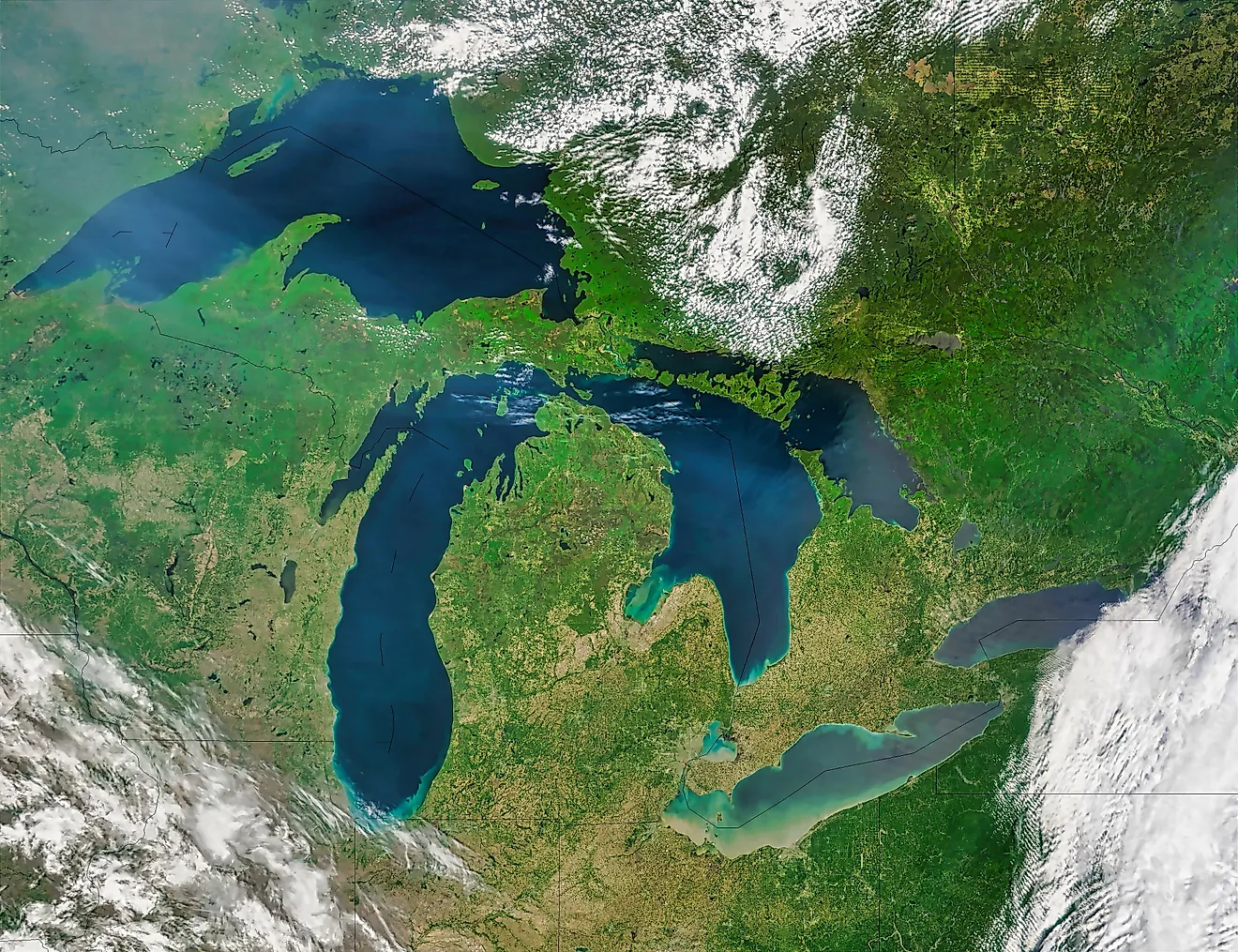
The largest documented figure in the research belongs to Lake Erie. The Great Lakes Fishery Commission estimated $1.7468 billion in U.S. angler spending during 2020, including about $1.186 billion associated with Ohio fishermen. Approximately 566,500 American anglers recorded more than 15.3 million fishing days. Among those surveyed, 63% fished for walleye and sauger, 51% for yellow perch, and 30% for steelhead. Western-basin ports such as Port Clinton and Sandusky sit beside some of the lake's busiest walleye water, and anglers out of Erie, Pennsylvania, and western New York work major steelhead fisheries.
Equipment made up most of the bill. American Lake Erie anglers spent about $1.239 billion on fishing equipment and related purchases, compared with $300.6 million in trip expenses and $207.6 million tied to fishing real estate. The commission calculated average annual expenditure of $2,813 per Lake Erie angler across the United States and Canada. Ohio anglers averaged $3,688, and spent more than $205 per person on boat launching, mooring, and fuel.
Lake Michigan, Illinois, Indiana, Michigan, and Wisconsin

About 353,800 anglers fished Lake Michigan in 2020, putting in more than 8.6 million days on the water. Their estimated spending reached $757.3 million across the four bordering states. Michigan accounted for roughly $315 million, Wisconsin $233.5 million, Illinois $95.2 million, and Indiana $73.6 million. Among surveyed anglers, 48% fished for salmon and 36% for yellow perch, while 34% each pursued steelhead and lake trout.
Boat purchases came to approximately $264.2 million of Lake Michigan spending. Vehicles accounted for $204.9 million, fishing equipment another $75.9 million, and fishing-related real estate about $195.2 million. The Great Lakes Fishery Commission calculated average annual expenditure of $2,692 per angler, with Indiana fishermen averaging approximately $3,387.
Those expenditures are spread among very different fishing ports. Charter captains run salmon boats out of Milwaukee and Racine into Wisconsin waters, Sturgeon Bay opens onto Green Bay and northern Lake Michigan, and Ludington ranks as a major Michigan salmon port. Chicago anglers can launch within the country's third-largest city and still pursue perch, salmon, trout, and smallmouth bass.
Lake Superior, Michigan, Minnesota, and Wisconsin

U.S. anglers spent approximately $300 million on Lake Superior in 2020, according to the Great Lakes Fishery Commission. Minnesota anglers accounted for about $126.8 million, Michigan anglers $106.8 million, and Wisconsin anglers $66.4 million. Roughly 94,000 American anglers recorded more than 1.5 million fishing days. Half of surveyed fishermen pursued lake trout, 40% salmon, and 39% walleye or sauger. Equipment purchases came to $177.6 million, fishing-related real estate to $81.7 million, and boat fees and fuel alone to about $11.5 million. Minnesota anglers averaged $3,817 in annual Lake Superior expenditure, the highest state average on the lake. Duluth sits beside productive lake trout and salmon water at the western end. Bayfield opens onto the Apostle Islands, and Grand Marais sits among the Minnesota communities working the North Shore.
Lake Huron, Michigan

Michigan fishermen spent an estimated $261.7 million on Lake Huron in 2020. Canadian spending raised the whole-lake figure to $348.8 million, but the American total alone ranks Huron among the country's highest documented fishing expenditures. The commission counted 78,369 U.S. anglers. Of those surveyed, 59% fished for walleye and sauger, 49% for yellow perch, 31% for black bass, and another 31% for northern pike.
Fishing-related property made up $92.3 million of American spending, more than any other single category. Boat purchases came to $62.7 million, vehicles $45.7 million, and total trip expenses $34.2 million. Average annual expenditure came to about $3,340 per U.S. angler. Saginaw Bay is one of Michigan's best-known walleye waters, and boaters out of Alpena reach northern Lake Huron and the Thunder Bay area.
Lake Ontario, New York

New York anglers generated approximately $244.7 million in Lake Ontario fishing expenditures in 2020. More than 228,000 fishermen recorded around 4.8 million fishing days on the American side. Among surveyed anglers, 44% fished for salmon, 37% for black bass, 33% for steelhead, and 30% for yellow perch. Spending included $139.9 million on equipment, $59.5 million on trips, and $45.3 million connected with fishing real estate. Boat purchases came to $66.2 million by themselves. Oswego is a major salmon and trout port near the lake's southeastern shore, charter captains run a large fleet out of Rochester, and anglers at Henderson Harbor reach bass, pike, walleye, and perch near the eastern end. Canadian anglers added almost $98 million, taking total fishing expenditure around the entire lake to roughly $342.3 million.
Lake St. Clair, Michigan

Lake St. Clair covers only a fraction of the area of the Great Lakes, yet 62,176 U.S. anglers generated an estimated $207.6 million in 2020. They accumulated roughly 1.2 million fishing days. Among surveyed anglers, 53% fished for walleye and sauger, 43% for yellow perch, and 36% for black bass. Bass fishing alone came to approximately 328,000 angler-days, and walleye and sauger to about 436,000.
The Great Lakes Fishery Commission recorded $107.3 million in equipment expenditures around the American portion of the lake. Fishing-related real estate came to $73.2 million and trip expenses to $27.2 million. Average annual expenditure worked out to roughly $3,340 per fisherman.
Lake St. Clair is also one of the country's best-known smallmouth bass destinations. The shallow lake between Lake Huron and Lake Erie contains extensive flats, channels, weed beds, and current around the St. Clair River and Detroit River connections. Muskie anglers form another group on the lake, carrying specialized rods, heavy tackle, large lures, and boats capable of covering open water.
Lake Champlain, New York and Vermont

Research cited by the Lake Champlain Basin Program estimated that 88,961 anglers generated $81.7 million in fishing-related nondurable expenditures in 1991. They recorded more than 5.14 million angler-days. New York residents accounted for $43.3 million of the spending and Vermont residents $33.7 million. About 83% of expenditures occurred during open-water fishing, while ice fishing supplied the remaining 17%.
Anglers spent more on lake trout than on any other open-water species examined in the underlying research. Champlain also supports populations of landlocked Atlantic salmon, smallmouth and largemouth bass, northern pike, walleye, and yellow perch. Anglers reach urban shoreline in Burlington on the Vermont side, and fish out of Plattsburgh and communities farther south on the New York side. The $81.7 million estimate is much older than the Great Lakes figures and covers nondurable spending rather than every category used in the 2020 commission study, so it documents scale without offering a direct dollar-for-dollar comparison.
Lake Pleasant, Arizona

Anglers at Lake Pleasant spent $71,087,428 in direct fishing expenditures in Arizona's 2013 statewide angling study, one of the largest individual-waterbody totals in the report. After multiplier effects were applied, researchers calculated an economic impact of $88.7 million, 1,441 jobs, and more than $4 million in state tax revenue. A separate Arizona angler survey found that 14.2% of active fishermen had visited Lake Pleasant during 2013. The reservoir sits roughly 35 miles northwest of central Phoenix, within driving distance of the state's largest metropolitan area, and its waters contain striped bass, white bass, largemouth bass, crappie, bluegill, channel catfish, and flathead catfish. Maricopa County maintains boat ramps and recreational facilities around the lake, and organized tournaments put additional boats on the reservoir through the year.
Lake Texoma, Texas and Oklahoma

Texas and Oklahoma researchers followed Lake Texoma anglers for two years between December 2018 and November 2020. The study estimated $46 million in regional angler spending during 2019 and another $42.1 million during 2020. Fishermen made close to 250,000 trips to the reservoir annually despite the second survey year overlapping the COVID-19 pandemic.
Much of that activity centers on striped bass. Texas Parks and Wildlife reported that Texoma anglers catch more than one million stripers in a typical year and harvest roughly half of them. The reservoir is one of the rare inland American waters where striped bass reproduce naturally in sufficient numbers to sustain a major fishery.
The economic importance is not new. A 1990 study measured $25.6 million in Lake Texoma fishing expenditures, with striped bass accounting for much of the activity. By 2019, measured spending had climbed to $46 million. Denison and Pottsboro sit close to major marinas on the Texas shore, and resorts and launches ring the Oklahoma side of the 89,000-acre reservoir.
Lake Havasu, Arizona and California

Arizona's 2013 fishing study placed direct expenditures associated with Lake Havasu at $43,581,558. Researchers calculated nearly $54 million in total economic impact after multiplier effects and associated fishing activity with 917 jobs. Estimated state tax revenue exceeded $2.1 million. Lake Havasu City sits directly on the eastern shore, within immediate reach of marinas, launch ramps, hotels, restaurants, and tackle shops.
The reservoir's fish habitat has been deliberately improved. A multi-agency program involving federal and state agencies installed extensive artificial habitat and completed shoreline-access projects, supported by more than 150,000 volunteer hours during its first decade. Anglers now work the rocky coves and shoreline structure throughout the reservoir for largemouth bass, smallmouth bass, striped bass, redear sunfish, and catfish. An earlier 2001 analysis had already estimated more than $30 million in annual local economic benefit from recreational fishing.
Sam Rayburn Reservoir, Texas

Sam Rayburn's 2007-2008 fishing survey recorded 405 tournaments and 25,396 tournament participants in a single year. Anglers spent $31.9 million during the study period, and tournament fishermen were responsible for $23.7 million, or 74% of that total. One three-day tournament drew 3,892 competitors and made up roughly one-fifth of all measured angler expenditures for the year. Entry fees came to $5.8 million, automobile operation cost anglers $5.2 million, and boat operation another $3.9 million. Researchers calculated the fishery's annual economic value at $46.7 million when consumer surplus was included. The 114,000-acre reservoir has numerous multi-lane ramps, large parking areas, tournament weigh-in facilities, lodging, and restaurants built to handle heavy fishing traffic. Its flooded timber, creek channels, and hydrilla keep it a regular destination for largemouth bass tournaments.
Lake Fork, Texas

An economic valuation conducted during 2014 and 2015 estimated $18.8 million in annual direct fishing-trip expenditures at Lake Fork. Texas Parks and Wildlife later cited an overall fishery value of $38.4 million. The reservoir's attraction is unusually easy to document: an 18.18-pound largemouth caught there in January 1992 remains the Texas state record. Anglers at Lake Fork have entered a disproportionate share of the fish in the state's ShareLunker trophy-bass program.
Texas has stocked more than 15.5 million Florida largemouth bass into Lake Fork while managing the reservoir specifically for trophy fishing. Six large tournaments studied during 2015 and 2016 drew 7,923 participants and generated about $4.7 million in direct spending. Tournament entry fees exceeded $1 million, vehicle and boat fuel added approximately $1.08 million, and lodging accounted for about $829,000. Anglers working the standing timber, creek channels, and submerged structure around the reservoir therefore support measurable spending well beyond the boat ramp.
What The Spending Reveals
The dollar figures line up along a clear divide. The Great Lakes account for the heaviest totals, with vast fisheries and large surrounding populations, so even average per-angler spending scales into hundreds of millions across several states. The southern and western reservoirs reach comparable prominence through a different route, concentrating money into tournaments, trophy-bass management, and destination trips that pull anglers from well beyond the nearest county. Lake Erie and Lake Fork sit at opposite ends of that spectrum, one a multistate inland sea and the other a stocked East Texas impoundment, yet both turn fishing into a measurable piece of the regional economy.