The American Towns Built Directly Below A Dam
Roughly 16,745 American dams carry a high-hazard-potential rating, which is a bureaucratic way of saying that if the structure fails, people downstream will die. That count has grown about 20 percent since 2012, and the main driver is not crumbling concrete. It is construction. Subdivisions, schools and highways kept getting built into valleys that were empty when the dam went up, and a dam gets reclassified as high hazard when someone moves in below it. The average American dam is now 64 years old, roughly 2,522 of the high-hazard ones sit in poor or unsatisfactory condition, and the American Society of Civil Engineers gave the whole category a D-plus in 2025.
These are the towns living with that arithmetic, some of which have already found out what it means.
Oroville, California

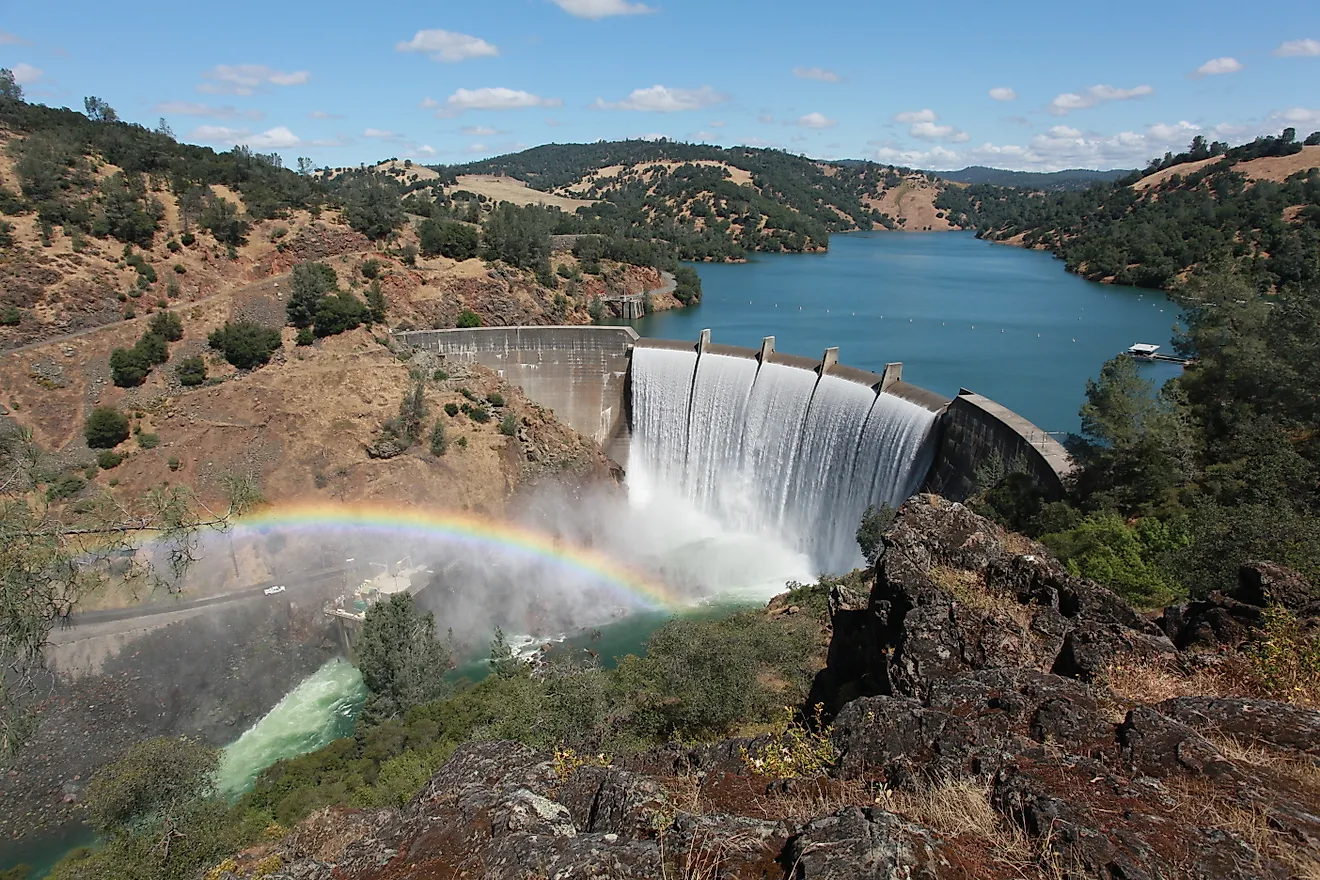
Oroville sits below the tallest dam in the United States. The earthfill structure on the Feather River stands 770 feet, was completed in 1968, and holds back the second-largest reservoir in California.
In February 2017, after five years of drought ended in a run of atmospheric rivers, the main spillway developed a crater and the emergency spillway began eroding at its base. Officials concluded the emergency spillway might fail outright and ordered an evacuation. About 188,000 people left in a matter of hours.
The dam held. The repair bill ran past $1 billion, one of the most expensive dam rehabilitation projects ever undertaken. Worth being precise about what happened, since it is often described loosely: the dam itself never failed, and the crisis was in the spillways that carry water around it.
California's exposure is unusual. Of 1,534 dams in the National Inventory, 875 are rated high hazard, the largest share of any major state.
Midland And Sanford, Michigan

The clearest modern picture of what a failure actually looks like came in May 2020, and it involved two dams rather than one.
After days of heavy rain, the Edenville Dam on the Tittabawassee River gave way. The water that escaped overwhelmed the Sanford Dam downstream, which failed in turn, and the combined flood ran into Midland, Michigan. Around 10,000 people were evacuated. Sanford's small downtown was largely destroyed.
The regulatory history is the part worth knowing. Edenville had had its federal hydropower license revoked in 2018 over the owner's failure to increase spillway capacity, which meant the dam was already known to be inadequate for a large flood before the flood arrived.
Rexburg And Sugar City, Idaho

On June 5, 1976, the newly built Teton Dam in eastern Idaho failed while its reservoir was filling for the first time. The wall of water went down the Teton River toward Sugar City and Rexburg.
Sugar City, directly in the path, was effectively destroyed. Rexburg took severe damage. Eleven people died, a low toll for a failure that size, largely because there was enough warning to move people out.
Both towns were rebuilt in place, below the same river valley. The dam was not.
Johnstown, Pennsylvania

This is the benchmark against which every other American dam failure is measured, and it remains the worst.

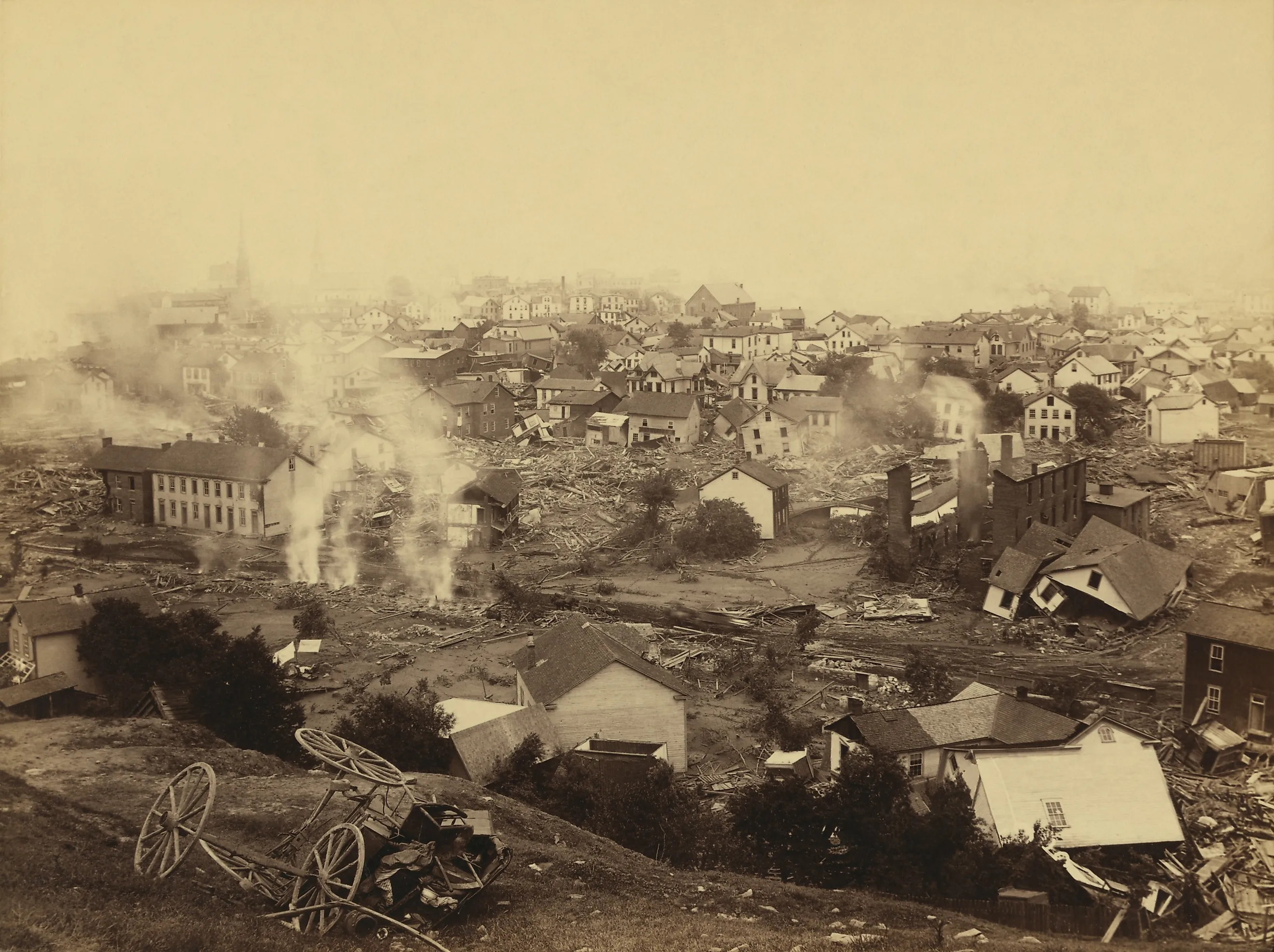
On May 31, 1889, the South Fork Dam upstream of Johnstown collapsed after heavy rain. More than 2,200 people died in the flood that followed. The dam had been modified by a private hunting and fishing club that had lowered the crest and blocked the spillway with screens, and the maintenance failures were understood locally well before the collapse.
Johnstown, in Pennsylvania, is still there. It has since been given extensive flood control works of its own, which is the usual American answer to this problem: not moving the town, but building more infrastructure to protect it.
Rapid City, South Dakota

The 1972 Black Hills flood killed 238 people, making it one of the deadliest flash floods in American history, and Canyon Lake Dam sits in the middle of the story.
An extraordinary rainfall event dropped enormous volumes on the hills above Rapid City. Debris clogged the Canyon Lake Dam spillway, the dam failed, and the release added to a flood already running through developed neighborhoods along Rapid Creek.
What Rapid City did afterward is genuinely unusual. Rather than rebuild the floodplain, the city converted much of it into a greenway of parks and golf courses. It remains one of the few American examples of a town responding to a flood by permanently removing buildings from the path of the next one.
Page, Arizona

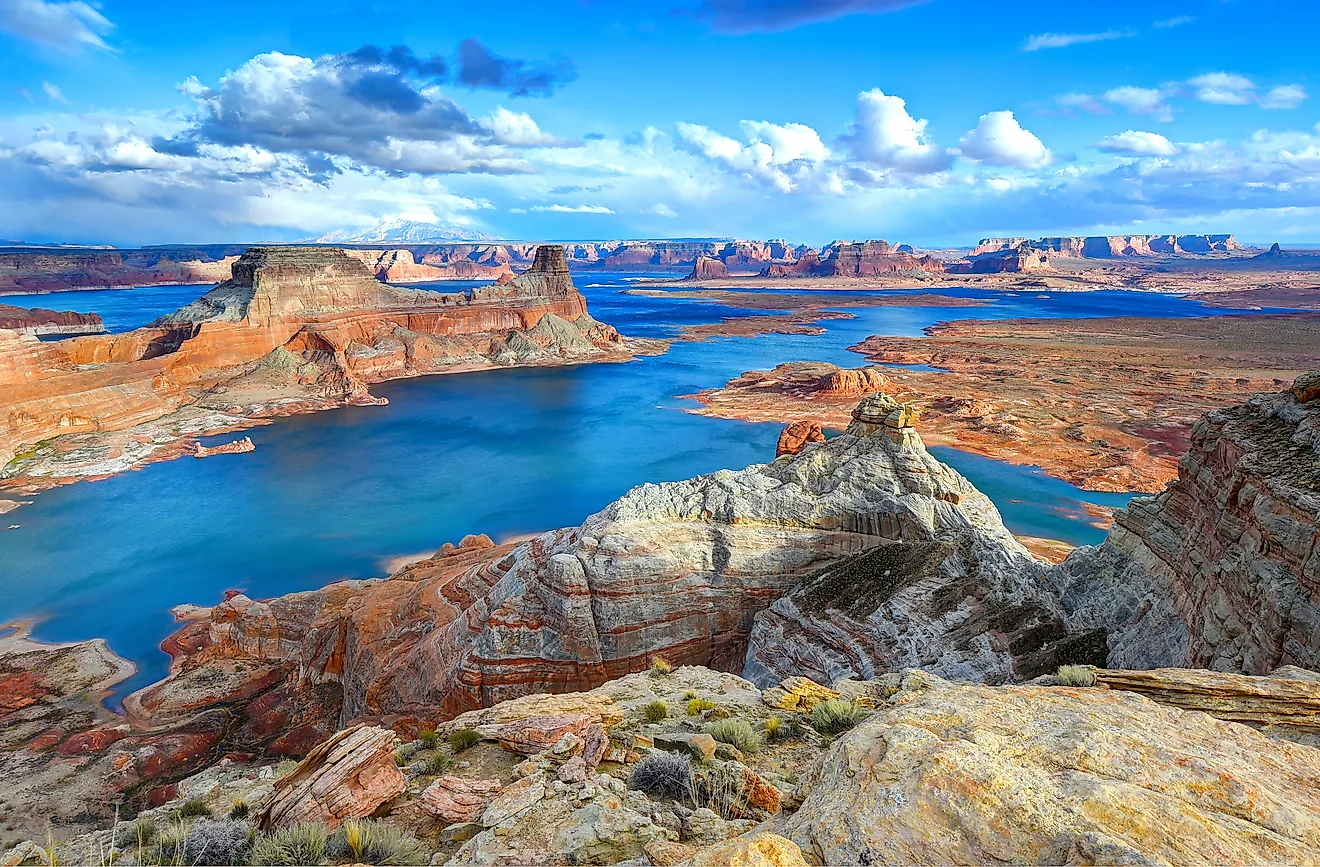
Page, Arizona, exists because of Glen Canyon Dam. The town was built in 1957 as a construction camp for the workers who put the dam up, which makes it one of the rare American communities that arrived after the dam rather than before it.
It sits above the dam crest rather than in the direct inundation path, so it is not the same category of risk as Oroville. It is included here because it illustrates the pattern in reverse. Almost everywhere else, the town came first and the hazard rating followed the growth. Page was the growth.
Why The Number Keeps Climbing

Three trends are stacking, and the first is the counterintuitive one.
Development is reclassifying dams faster than engineering is fixing them. A hazard rating describes what is downstream, not the condition of the structure, so a perfectly sound dam becomes high hazard the moment a subdivision goes in below it. That is most of the 20 percent increase since 2012.
Age is the second. By 2025 about seven in ten American dams had passed 50 years old, and many were designed to rainfall assumptions that no longer hold. A 2025 study in Nature Communications examining 33 large dams found rising probabilities of critical overtopping, with the highest risks in Texas, Kansas and California.
Money is the third and it is the binding constraint. ASDSO priced repairs to the nation's non-federal dams at $165.2 billion in 2024, with $37.4 billion of that for non-federal high-hazard structures alone. Many dams are privately owned by people who cannot fund a rehabilitation and cannot afford to remove the dam either.
What Living Below One Actually Means

Two things are worth separating, because they get conflated constantly.
A high-hazard rating is not a prediction of failure. It is a statement about consequences, and plenty of high-hazard dams are in excellent condition and inspected regularly. The dams that warrant concern are the roughly 15 percent rated poor or unsatisfactory, and that condition rating is public.
The practical questions for anyone living below one are narrow. Does the dam have a current Emergency Action Plan, meaning a mapped inundation zone and a notification procedure? When was it last inspected and what was the condition rating? Who owns it, since federal and state-regulated dams get more oversight than private ones? All of that sits in the National Inventory of Dams, and it is searchable by the public.
Oroville held. Edenville did not, and it had been flagged years in advance. The difference between those two outcomes was mostly attention paid before the water arrived.