The Year America Promised Away More Colorado River Water Than Exists
In November 1922, seven western states and the federal government gathered near Santa Fe, rolled up their sleeves, and carved up the Colorado River like a Thanksgiving turkey. It was a genuinely impressive feat of negotiation. It also contained one small, catastrophic flaw: they promised out more water than the river actually has. Not by a rounding error, either, but by billions of gallons a year. A century later, 40 million people are still living with the consequences of that spectacularly optimistic math. Here is the story of the year America wrote a check the river could never cash.
The Big Deal of 1922

The agreement was the Colorado River Compact, signed on November 24, 1922, and chaired by a rising political star named Herbert Hoover, then Secretary of Commerce and not yet president. Rather than let the states sue each other over the river for the next fifty years, a Colorado lawyer floated a tidier idea: split the water by treaty. So the negotiators divided the basin in two at a spot in northern Arizona called Lee Ferry, handing the Upper Basin states of Colorado, Utah, Wyoming, and New Mexico a guaranteed 7.5 million acre-feet of water a year, and the Lower Basin states of Arizona, Nevada, and California another 7.5 million. That is 15 million acre-feet, and a 1944 treaty later promised Mexico an additional 1.5 million. Grand total on paper: about 16.5 million acre-feet, every single year, forever.
They Measured the River on Its Best Days

Here is where the wheels come off. To divide up the water, the negotiators first needed to know how much water there was, so they looked at the flow records from the previous couple of decades and concluded the river carried around 16.5 to 18 million acre-feet a year. Which would have been fine, except for one hilarious and disastrous coincidence: the early 1900s happened to be one of the single wettest stretches the Colorado River had seen in roughly 500 years. Tree-ring studies later revealed the truth. The men of 1922 had essentially wandered up to the river during the best decade of its life, caught it showing off, and assumed that was just how it always behaved. They locked those bloated numbers into law and went home feeling great about it.
The River Never Had That Much Water

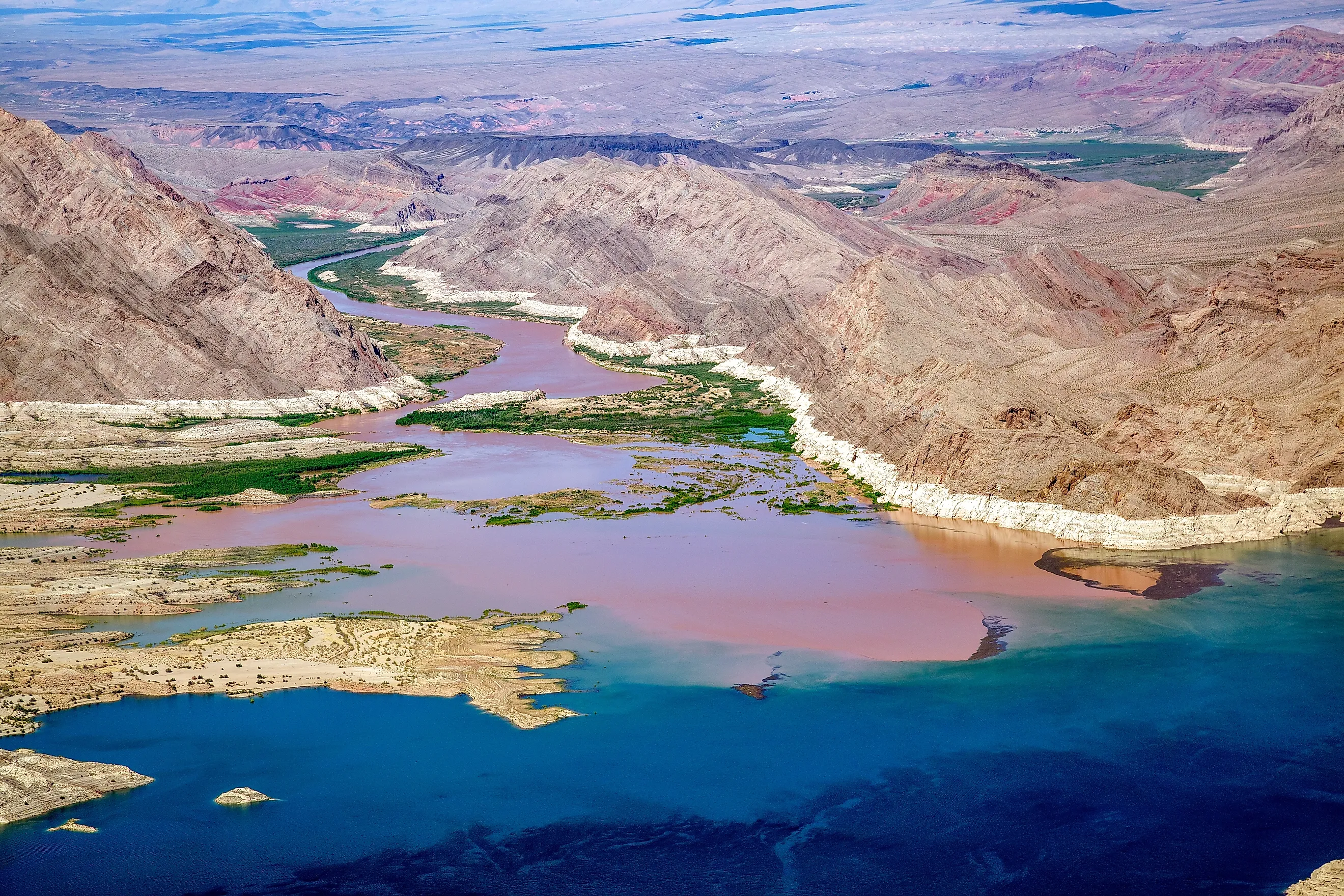
In reality, the Colorado's long-term natural flow averages closer to 14.6 million acre-feet a year, and since the year 2000, gripped by a brutal climate-fueled megadrought, it has averaged a meager 12.5 million. Line the numbers up and the problem is almost comically clear: the paperwork calls for handing out about 16.5 million acre-feet from a river that typically supplies well under 15, and lately closer to 12. Every year, in other words, the collective promises exceed the actual water by a couple million acre-feet. Water experts have a polite technical name for this: the "structural deficit." A less polite name would be an IOU written in disappearing ink. The overdraft has been quietly draining Lake Mead and Lake Powell for decades, which is exactly why those famous white "bathtub rings" keep growing.
Somebody Did Try to Warn Them

The maddening part is that this was not some unforeseeable surprise. Decades before the compact, the explorer John Wesley Powell, the one-armed Civil War veteran who first boated through the Grand Canyon, had loudly warned that the arid West simply did not contain enough water to support the grand settlement and farming dreams people had for it. He urged planners to organize the region around its actual water supply. He was largely brushed aside as a pessimist standing in the way of progress. There is also a serious injustice baked into the 1922 deal that is no laughing matter: the 29 Native American tribes of the basin, whose water rights had already been affirmed by the Supreme Court in 1908, were left out of the negotiations almost entirely, an omission the region is still grappling with today.
The Hundred-Year Hangover

And so we arrive at the present, nursing a hangover a century in the making. That original over-promise, made worse by relentless growth and a deepening drought, has pushed the entire system to the edge. Lake Mead and Lake Powell, the two largest reservoirs in the country, have plunged to historic lows, threatening the drinking water and electricity of tens of millions of people across the Southwest. The Colorado, once a mighty river, now so exhausted that it usually dries up before reaching the sea in Mexico. The seven states are now locked in tense, high-stakes negotiations to rewrite the rules and finally match their promises to reality. It is a hard, serious problem with no easy fix, and it all traces back to a room in 1922, where a group of confident people looked at a river during its rainiest years and generously divided up water that was never really there.