The Great Lakes Fish That Live Longest
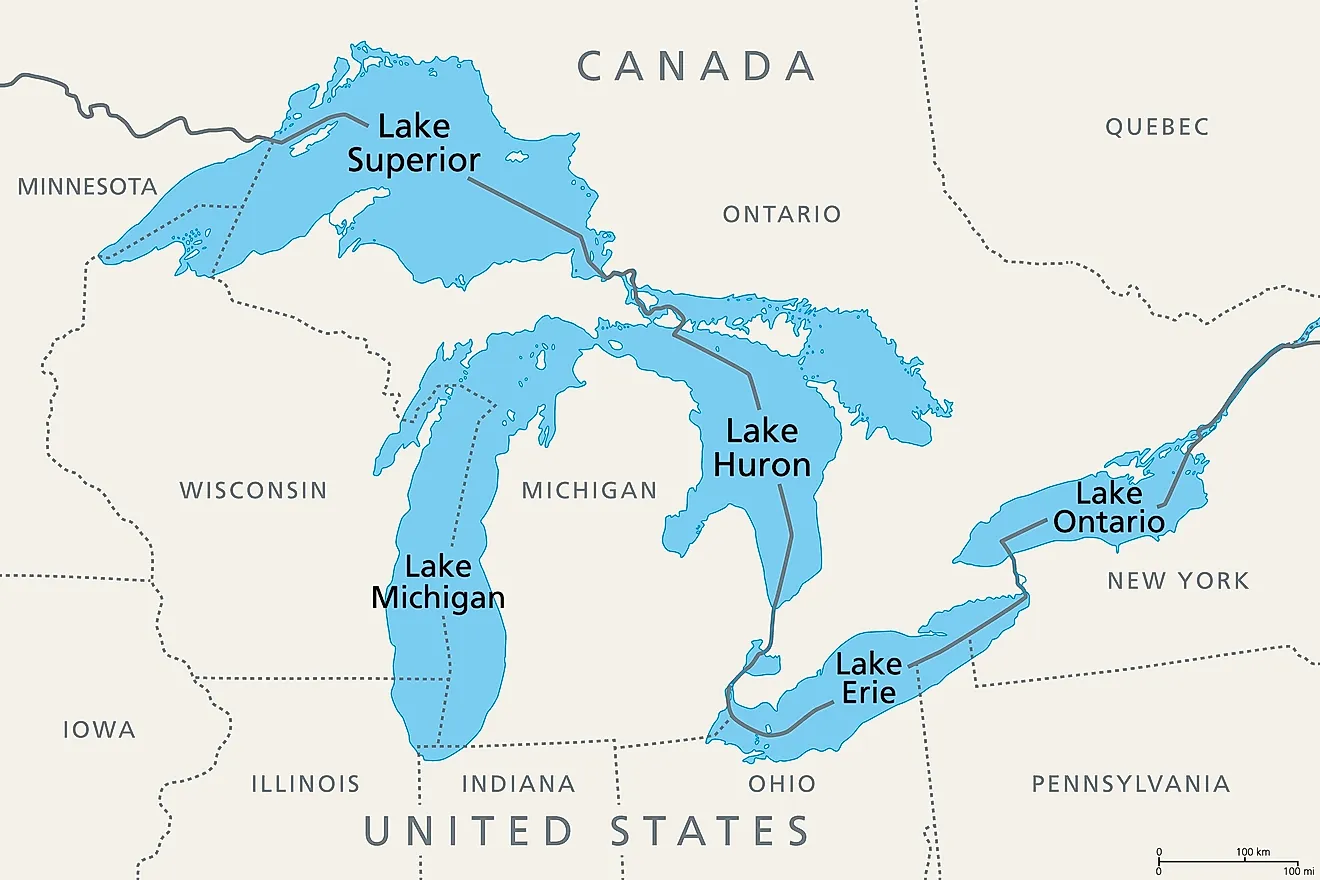
A lake sturgeon swimming in Lake Superior today could have hatched before the Civil War. Some Great Lakes fish live past 100, and a few carry biological records that reach deeper still, locked inside otoliths that preserve a year-by-year account of a life. The species below are ranked by the highest reported or modeled age located for each one, with observed, estimated, and validated ages distinguished where the evidence allows. Because a record-setting individual was not always caught inside the five lakes, each entry keeps a species-wide maximum separate from a Great Lakes record or estimate wherever the evidence allows.
Lake Sturgeon: 150+ Years

A lake sturgeon can make a human lifetime look brief. The US Fish and Wildlife Service gives 150 years as the traditional maximum and says adults commonly live 50 to 100 years. A 2026 Journal of Fish Biology study pushed the upper boundary considerably higher. Researchers used 44 years of capture-mark-recapture data to estimate adult growth after maturity in five Laurentian Great Lakes populations: Black Lake and the Sturgeon River in Michigan, the Menominee River, the St. Clair River, and Lake Winnebago. Working backward from average annual growth increments, the models produced adult age estimates of 90 to 279 years for males and 99 to 427 years for females. Those are modeled ages rather than counted growth rings, so 150 years remains the safer figure for an observed maximum.
The slow reproductive schedule makes those numbers important to Great Lakes management. Fish and Wildlife Service data show that lake sturgeon may not reproduce until they are 10 to 30 years old and spawn intermittently after maturity. Commercial harvests sharply reduced populations in the late nineteenth and early twentieth centuries, while dams blocked access to spawning and nursery habitats. Restoration, therefore, operates on an unusual time scale: a juvenile released into a Great Lakes tributary may need decades before contributing regularly to reproduction, yet could remain alive well into the next century.
Bigmouth Buffalo: 148 Years

The 148-year-old bigmouth buffalo reported in 2025 hatched around the era when Alexander Graham Bell was demonstrating the telephone. Researchers working in Saskatchewan's Qu'Appelle watershed aged 173 fish collected between 2018 and 2024, using thin-sectioned otoliths and multiple independent readers. More than 90% of that sample was older than 75 years. The oldest individual came from Last Mountain Lake and was still alive when the study appeared in Ecology and Evolution. Only one year class has been recruited successfully in the watershed since 1955, showing how exceptional adult survival can carry a population through long stretches of reproductive failure. Earlier radiocarbon work had already validated otolith aging in this species.
The record fish came from Saskatchewan, not a Great Lake. USGS GLANSIS confirms bigmouth buffalo within the Great Lakes system. Records cover Lake Erie, Lake Michigan, Lake Ontario, and Saginaw Bay in Lake Huron. More recent records place the species in Green Bay and the western basin of Lake Erie. The 2025 researchers now rank bigmouth buffalo as the eleventh-longest-lived vertebrate among more than 66,000 species assessed, an unusual position for a warm, shallow-water fish.
Freshwater Drum: 71 Years

Freshwater drum exposed a major weakness in traditional fish aging. A 2009 Transactions of the American Fisheries Society study compared scales, spines, and sagittal otoliths from Wisconsin's Lake Winnebago system. Bomb radiocarbon dating validated otolith growth increments to at least 52 plus or minus two years, while scales and spines proved unreliable after age two. The oldest fish in that study was 58 years old.
An older published maximum of 71 years sits above it, and the Lake Winnebago authors cited that record as the species-level ceiling. The two figures are not equivalent. The 58-year specimen carries radiocarbon validation behind it, while the 71-year record rests on otolith counts alone, which is why both belong in any honest account of how long a drum can live.
The Great Lakes connection is direct. The radiocarbon paper describes freshwater drum as exceptionally long-lived relative to most Great Lakes fishes, and the species has been studied extensively in Lake Erie. In the warm western basin, an adult drum can carry a year-by-year archive inside its otolith long after its scales have stopped giving researchers a trustworthy age.
Lake Trout: Up To 70 Years

Drop past the warm surface layer of a Great Lake, and lake trout enter their preferred water. The US Fish and Wildlife Service says the species commonly occupies lakes deeper than 50 feet and may occur beyond 200 feet. It also reports a species maximum of 70 years in some Canadian lakes. Great Lakes numbers run lower. A 2025 restoration update uses a regional figure of up to 50 years, and the oldest lake trout aged from a Great Lakes otolith came in at 62 years. Seventy is the biological ceiling for a species native throughout the lakes, not a proven Great Lakes specimen.
Longevity shaped the scale of the restoration effort. The Fish and Wildlife Service reports that lake trout were nearly gone from the Great Lakes by the 1960s after overharvest and sea lamprey predation, with remnant populations surviving in Lake Superior and a small part of Lake Huron. Sea lamprey control and decades of stocking followed. The agency now describes Lake Superior lake trout as fully recovered and reports increasing natural reproduction in Lake Michigan and Lake Huron, giving long-lived adults repeated chances to contribute to rebuilding populations.
Common Carp: Up To 64 Years

Common carp entered the Great Lakes as an introduced species and became a permanent part of the fish community. USGS GLANSIS describes them as widespread, reproducing, and overwintering at self-sustaining levels in all five Great Lakes. The 2025 Ecology and Evolution study that produced the 148-year buffalo also noted that otolith aging has been validated in common carp, and that a Minnesota study reported longevity of up to 64 years.
In the Saskatchewan watershed examined in the study, carp reached their asymptotic body size about twice as fast as bigmouth buffalo and lived roughly one-third as long, despite both being large-bodied freshwater fishes. Carp there also recruited steadily through the post-1958 water-control era, while bigmouth buffalo managed a single successful year class in the same period. The comparison separates body size from longevity and shows how a fish with a 64-year ceiling can hold a very different population structure from a species approaching 150.
Quillback: 52 Years

Quillback occur naturally across the Great Lakes and St. Lawrence River basin, according to the US Geological Survey. The Great Lakes Fishery Commission records them throughout the lakes except Lake Superior, including localized Lake Michigan populations. The species' half-century lifespan has emerged most clearly through otolith studies conducted in several North American watersheds.
A 2025 Aquaculture, Fish and Fisheries study aged 117 quillback from thin-sectioned otoliths and found a maximum of 51 years. Every fish came from Wisconsin Department of Natural Resources surveys on the Lower Wisconsin River in 2023 and 2024. The 52-year species record comes from Manitoba, reported in an unpublished 1987 thesis that leaned on fin rays rather than otoliths, so it is the weaker of the two numbers. Otolith work has since produced maxima of 51 years in Wisconsin, 49 in Colorado, and 44 in Minnesota. Agreement between readers was close enough in the Wisconsin sample to give those ages real weight.
That sample also showed how many older fish can hide in a population nobody studies. After preferentially collected small quillback were excluded, the median age was 20 years. The record belongs to a broader discovery in Carpiodes: the same study found maximum ages beyond 50 years in all three carpsucker species examined, including 56 years for both the highfin and the river carpsucker. A quillback moving through a Great Lakes tributary can therefore belong to an age class more often associated with much larger freshwater fish.
Lake Whitefish: At Least 50 Years

Lake whitefish have a radiocarbon-backed lifespan measured in half-centuries. A 2019 Marine and Freshwater Research study validated otolith-section aging with bomb radiocarbon and found longevity of 50 years in Nunavut's MacAlpine Lake and 49 years in Ontario's Lake Simcoe. The work also confirmed that scales and other older methods can seriously underestimate whitefish age after roughly five to eight years. Great Lakes populations make regular seasonal movements between deep and shallow water, including a return toward shallower spawning areas in fall and early winter.
A long whitefish life can span a major ecological shift on the lake floor. USGS research links dreissenid mussel invasions in the Great Lakes with declines in Diporeia, once an abundant high-energy prey, and with reduced growth and condition in several whitefish populations. Another USGS study found that whitefish themselves can consume large quantities of dreissenid mussels in Lakes Michigan and Huron. A fish approaching 50 can therefore live through measurable changes in both the abundance and the identity of its benthic food.
American Eel: Up To 42 Years

A 42-year-old American eel in Ontario has spent most of its life preparing for a single ocean-bound spawning migration. Ontario's recovery strategy says northern eels are generally larger, slower-growing, and older than populations farther south, with individuals reaching 42 years. It identifies the upper St. Lawrence River and Lake Ontario fish as a distinctive group dominated at maturity by large, old females with especially high reproductive value. Their route begins in the Sargasso Sea, continues into freshwater as juveniles, and ends with mature eels heading back toward the Atlantic.
Ontario records the species from Lake Ontario watersheds and as far inland as Algonquin Park, but now lists it as endangered. Dams reduce access to habitat, while hydroelectric turbines can kill adults during downstream migration. Few Great Lakes fish spend four decades growing in freshwater before attempting a spawning journey that reconnects Lake Ontario with the Atlantic Ocean.
Channel Catfish: Up To 40 Years

The National Park Service gives 40 years as the highest recorded age for channel catfish anywhere. Michigan's Department of Natural Resources, which deals directly with Great Lakes populations, reports individuals up to 24 years and says channel catfish live in every Great Lake except Superior. Lake St. Clair and Lake Erie support particularly important regional fisheries. Forty years is the species-wide maximum, while 24 years is the stronger figure for the Great Lakes themselves.
Their habitat differs sharply from the cold depths favored by lake trout. Michigan DNR describes adult channel catfish resting in deep river pools around logjams or rocks during daylight, then moving into shallower water at night. Males build nests in secluded cavities in late spring or early summer and remain to guard the eggs after females leave. Individuals in productive water can exceed 30 inches, giving southern Great Lakes bays and connecting rivers a fish capable of combining substantial size with more than two decades of documented regional survival.
Bowfin: Up To 33 Years

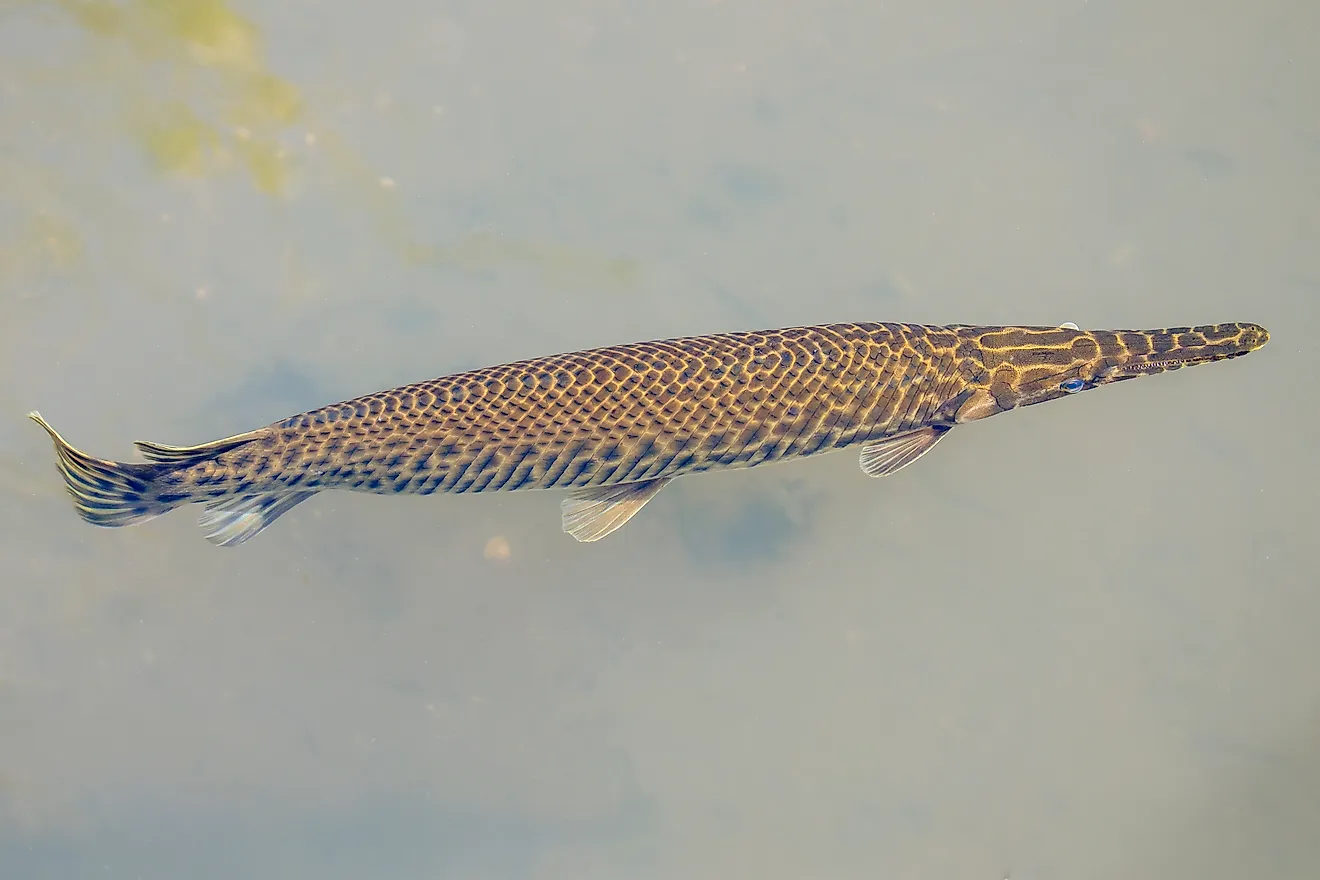
In Georgian Bay and other vegetated Great Lakes waters, bowfin represent an old evolutionary branch with surprisingly long individual lives. USGS places their native range squarely in the St. Lawrence and Great Lakes drainage, while a 2022 Journal of Fish Biology study notes that their lineage extends back more than 250 million years.
The lifespan estimate jumped in 2022 when researchers examined thin-sectioned otoliths from 81 Minnesota bowfin across 11 populations. Ages ran between two and 33 years, and 28% of the sample exceeded the previously reported maximum for wild bowfin. The oldest three fish were estimated at 30 to 33 years. Otolith mass also explained more variation in estimated age than body size did, helping show why a large fish is not automatically an old fish.
The authors kept one important caution attached to 33 years. They counted presumed annual increments and called for direct age validation, so the figure remains an otolith-based estimate. Known captive bowfin have reached roughly 20 to 30 years, which makes the result plausible without turning an estimate into a certainty. For Great Lakes wetlands, the study raises the likely lifespan of a native predator long treated as far shorter-lived.
Muskellunge: Up To 30 Years

A muskellunge in the Niagara River can spend three decades at the top of the food web. A Journal of Great Lakes Research study on Buffalo Harbor and the Niagara River cites a maximum lifespan of 30 years and reports Great Lakes maturity at about four to five years. The research identifies coastal wetlands as critical spawning and nursery habitats and documents extensive wetland losses around heavily developed portions of the basin. Long adult life has direct management value because these fish occur at naturally low densities and take years to reach reproductive age.
Anglers have also changed how long a captured fish is likely to remain in the population. A Fisheries Research study reported release rates above 97% among specialized muskellunge anglers in the United States and Canada. On Lake St. Clair, Lake Erie, or the Niagara River, a trophy fish may represent decades of survival supported by habitat protection and an overwhelmingly release-oriented fishery.
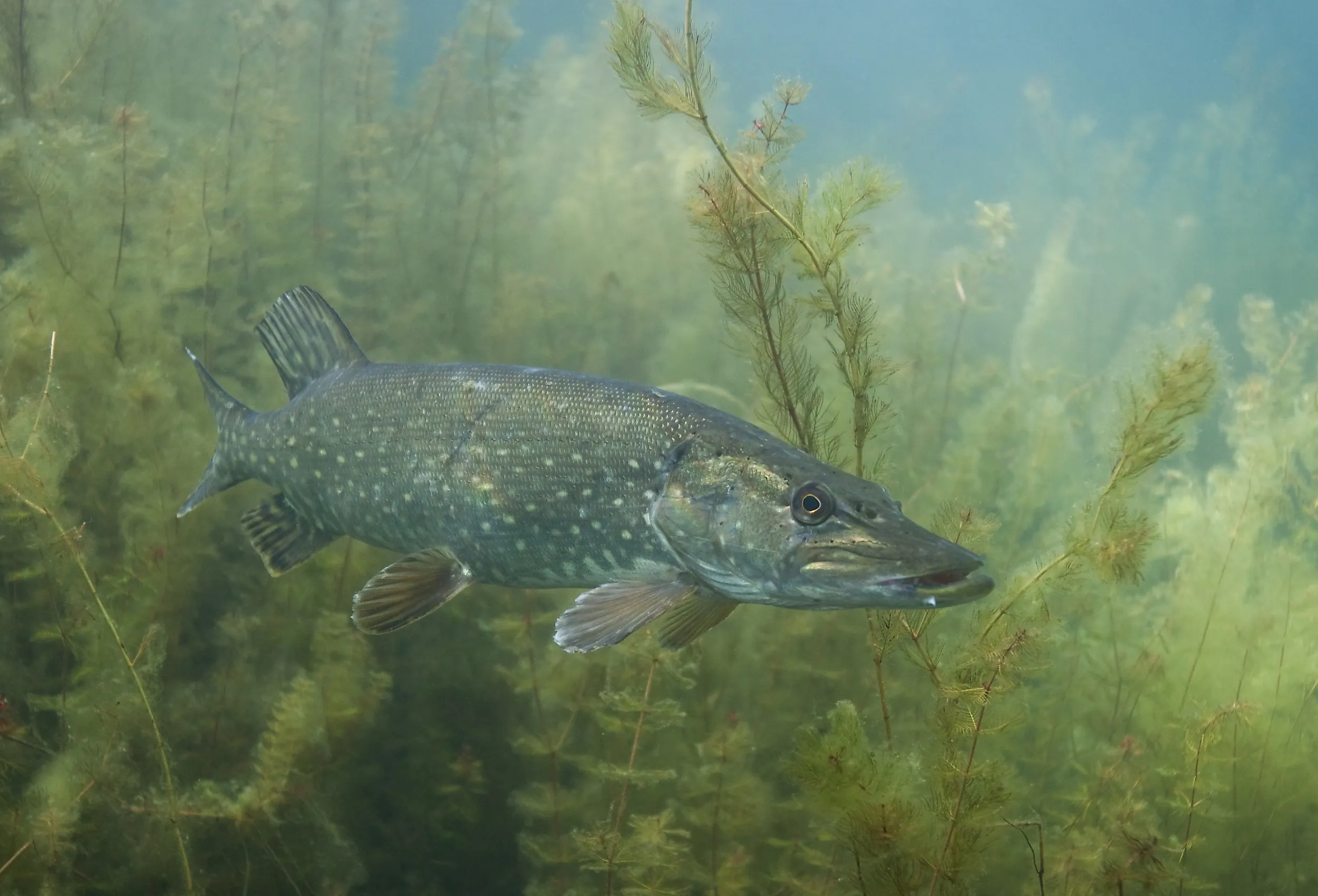
Northern Pike: Up To 30 Years

FishBase lists a 30-year species-wide maximum for northern pike, drawn from a 1968 German reference that names neither a locality nor an aging method. That makes it an unverified report rather than a firmly established record. Regional agency data are more conservative. Michigan DNR gives an average lifespan of six to eight years and says some pike reach 15, which is the number that describes an ordinary Great Lakes pike.
Their spring calendar is tightly tied to Great Lakes wetlands. US Fish and Wildlife Service information says pike in the region generally spawn in April or May after ice leaves, moving into shallow tributaries or flooded marshes. Females scatter sticky eggs into vegetation, and adults return to deeper water afterward. Michigan's management material identifies shoreline and spawning habitat protection as critical for maintaining viable populations. A northern pike that reaches exceptional age has passed through repeated wetland spawning seasons, while each new year class still depends on the shallow vegetated habitat along the lakes and their tributaries.
Walleye: Up To 29 Years

Twenty-nine years is the oldest reported walleye age listed by the US Fish and Wildlife Service. The agency also identifies walleye as native to the Great Lakes and Mississippi River drainage basins and describes them as flexible habitat users, occupying clear or turbid water in rivers and lakes. Adults feed mainly on other fish.
Western Lake Erie gives that life history its clearest Great Lakes setting. USGS researchers have studied walleye spawning reefs there and documented the fish community feeding on incubating walleye eggs. An individual entering its twenties survives across many spawning seasons while weak and strong recruitment years pass through the population around it, which is why a fish usually discussed through annual harvest numbers is also a multi-decade animal. Nearly three decades is far below sturgeon or bigmouth buffalo, yet it still gives walleye one of the longest known lifespans among the Great Lakes' familiar game fish.
Reading A Basin By Its Oldest Fish
The Great Lakes fish that live longest turn the basin into a record of overlapping generations. Lake sturgeon and bigmouth buffalo can survive for well over a century, while drum, trout, carp, and whitefish may persist for decades. Some maximum ages come from outside the five lakes, and the evidence ranges from validated otoliths to modeled estimates. Even so, these lifespans show why habitat loss, harvest, and restoration can leave effects that unfold across generations.