How Many Undiscovered Species Are In The Sea?
Scientists cannot say exactly how many species remain undiscovered in the sea. Fewer than 250,000 marine species have been formally identified, while NOAA estimates that the ocean may contain 700,000 to 1 million species, excluding most microorganisms. Roughly two-thirds of those species may remain undiscovered or undescribed, and broader estimates place the number still unknown as high as nearly 2 million. Microbial diversity remains even harder to quantify.
The uncertainty reflects the enormous limits of ocean exploration. As of April 2026, only 28.7% of the global seafloor had been mapped with modern high-resolution sonar. Mapping is not the same as seeing what lives there: researchers have visually observed less than 0.001% of the deep seafloor, an area roughly the size of Rhode Island. Some unknown species may inhabit remote trenches and underwater mountains, while others are already sitting unidentified in museum collections. Scientists formally accept nearly 2,000 new marine species each year, yet the known inventory remains only a fraction of the estimated total.
How Much of the Sea has Actually Been Mapped?

As of April 2026, NOAA update, 28.7% of the global seafloor has been surveyed using modern high-resolution sonar. This figure has risen sharply in recent years, largely thanks to Seabed 2030, an international project working to produce a complete map of the ocean floor by the end of the decade. US waters are ahead of the global figure, but with roughly 56% of the nation's seafloor mapped to modern standards, about 44% still lacks modern high-resolution coverage. Mapping the shape of the seafloor is a far easier task than surveying what actually lives on it: NOAA estimates that humans have visually observed less than 0.001% of the deep seafloor, an area roughly the size of Rhode Island, in an ocean where more than 90% of the volume sits below 200 meters. NOAA Ocean Exploration prioritizes poorly known deep waters and the US Exclusive Economic Zone, and makes the resulting data publicly available for science and resource management.
How Many Species are Actually Down There?

Nobody has an exact number, which is motivation to keep looking. NOAA summarizes estimates of roughly 700,000 to 1 million marine species (mostly animals, and excluding most microorganisms). About two-thirds of those, or roughly 470,000 to 670,000, are still undiscovered or undescribed. A 2011 PLOS Biology study estimated about 2.2 million marine eukaryotic species and suggested that roughly 91%, or about 2 million, remained undescribed; microbial diversity was far harder to quantify. Even NOAA's more conservative range means several hundred thousand kinds of ocean life have simply never been cataloged. The Ocean Census, an international alliance of taxonomists and museums, identified 1,121 new marine species in a single year between mid-2025 and mid-2026. More than half of those came not from new expeditions but from specimens already sitting unidentified in museum collections and university freezers.

Among the Ocean Census finds were vividly striped ribbon worms that may possess potent chemical defenses; toxins from related nemerteans have been investigated for possible applications involving Alzheimer's disease and schizophrenia. The finds also included a transparent polychaete documented as the first bristle worm to live symbiotically inside a glass sponge; bioluminescence occurs in some polychaetes but was not established for this new species. An unnamed species may already have been collected or partly studied, but a formal description makes it easier to connect reliable information about its biology, distribution, ecological role, and conservation status. That's why a decade-old find can still make news: the giant Hawaiian sponge wasn't just an updated size record, it was a data point about how little baseline information exists for US marine sanctuaries that policymakers are actively deciding how to manage.
Strange and Mysterious New Finds

In 2015, a NOAA remotely operated vehicle descended roughly 7,000 feet into the Pacific within Papahānaumokuākea Marine National Monument off the Hawaiian Islands. Its cameras encountered a glass sponge measuring approximately 12 feet long and 7 feet tall. The car-sized specimen exceeded the previous record holder, a cloud sponge off Canada, by a wide margin. Researchers could not determine its age, but its exceptional size and the longevity of some other massive sponges suggest it may be centuries or even millennia old.
Papahānaumokuākea produced another remarkable find a decade later. Researchers described a new red alga called Gloiocladia laukuamoo from specimens collected between 2013 and 2019 and formally published in October 2025. Its Hawaiian name, developed with the monument’s Native Hawaiian Cultural Working Group, refers to the sawtooth pattern of its blades. The species inhabits the mesophotic “twilight zone” roughly 180 to 280 feet below the surface.

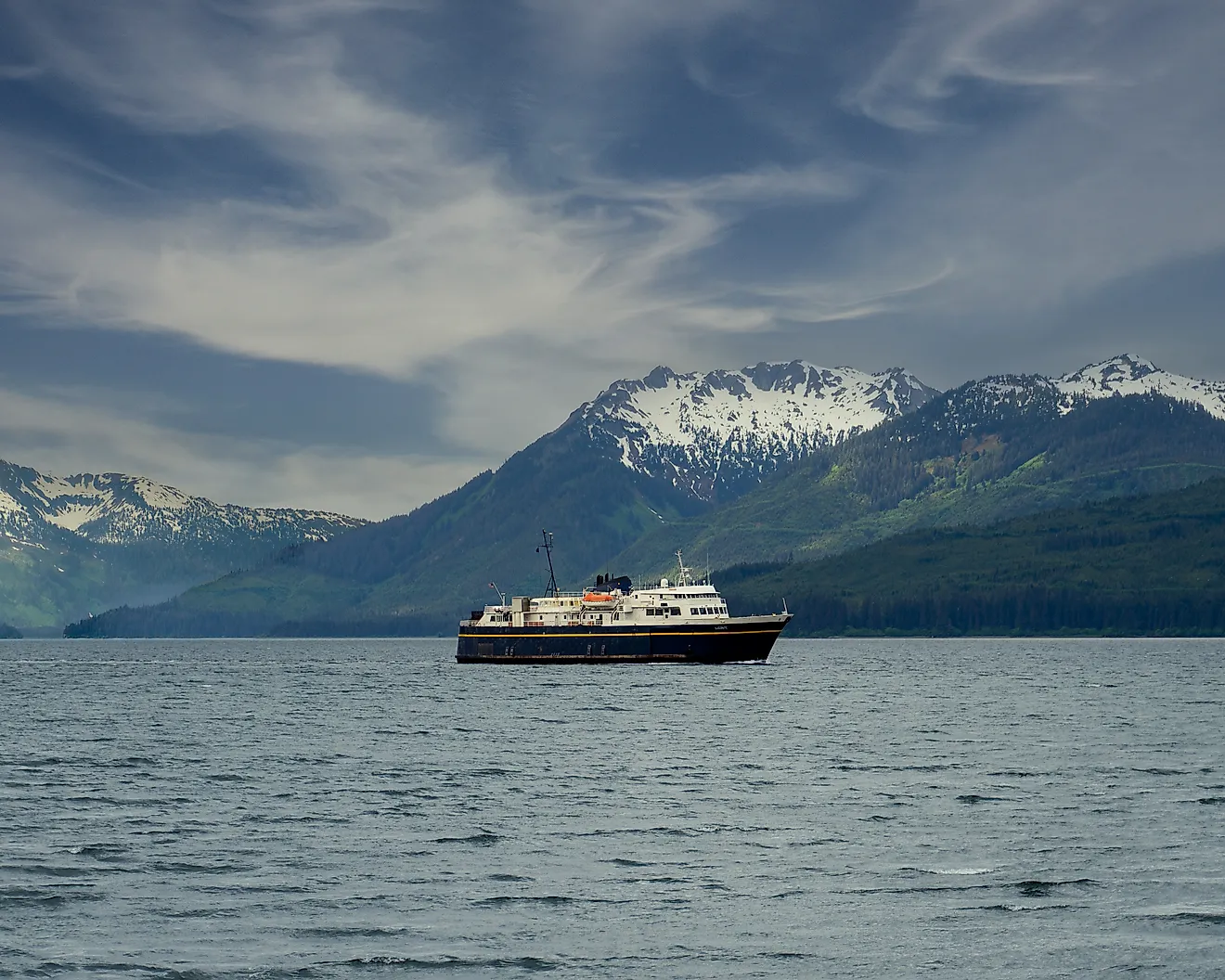
Another surprise emerged off Alaska’s Aleutian Islands in the summer of 2025. Scientists aboard the research vessel Atlantis sent the submersible Alvin nearly two miles down during a NOAA-backed expedition. They found the seafloor covered so densely with corals and sponges that lead ecologist Amanda Demopoulos told public radio station KUCB that “you couldn’t see a rock.” Some coral colonies approached seven feet in height, indicating that conditions had supported their growth for many years.
These discoveries do not reveal how many species remain unknown, but they show why estimates remain so broad. Even in well-funded US waters, researchers continue to encounter unexpected organisms and ecosystems in places that have rarely been examined closely.
The Mariana Trench and Its Mysteries

No discussion of ocean mysteries gets far without the Mariana Trench. Its deepest point, Challenger Deep, sits just outside the southwestern boundary of the Mariana Trench Marine National Monument. Established in 2009, the monument protects submerged lands along the US Exclusive Economic Zone off Guam and the Northern Mariana Islands, and the deepest spot inside it is the Sirena Deep. The depth of Challenger Deep has been measured several times over the years, with figures that have drifted depending on the equipment and the survey. For reference, a peer-reviewed 2021 study backed by NOAA's Office of Coast Survey settled on 35,876 feet (10,935 meters) below sea level, with a margin of error of just a few meters. By July 2022, 27 people had reached Challenger Deep, more than the 12 who walked on the Moon. Its organisms endure pressures that full-ocean-depth vehicles withstand with specially engineered hulls, such as Limiting Factor's 90-millimeter titanium sphere. Among the trench’s strangest discoveries is the Mariana snailfish (Pseudoliparis swirei), a pale scaleless species formally described in 2017 after specimens were collected nearly 8,000 meters down, while amphipods and other invertebrates survive even closer to Challenger Deep.
The Ocean isn't Shrinking
The best estimates suggest that roughly half a million to nearly 2 million marine species remain undiscovered or formally undescribed. That range excludes much of the ocean’s poorly quantified microbial diversity, which could push the true total much higher. Most future discoveries will probably not be whales or other large animals swimming off Cape Cod. They are more likely to be sponges, algae, worms, crustaceans, corals, and microorganisms inhabiting deep or remote environments. Some have already been collected and are waiting in museum drawers or laboratory freezers for taxonomists to recognize them.
Hawaii’s enormous sponge, Alaska’s coral gardens, and the specialized organisms of the Mariana Trench show why the estimate remains so broad. Only 28.7% of the seafloor has been mapped with modern high-resolution sonar, and less than 0.001% of the deep bottom has been visually observed. Until scientists can examine more of that immense habitat, the answer will remain an estimate measured not in dozens or thousands but in hundreds of thousands and perhaps millions.