The US Rivers With The Most Fish Species
Ask where American rivers hold the most fish and the answer is not the Mississippi, not the Columbia, and not anything in the West. It is a cluster of unglamorous, mostly unfamous rivers in Tennessee and Alabama, and the concentration there is not a regional quirk but a global one. The Tennessee River Basin alone contains populations of at least half of all described freshwater fish species in North America, along with half the continent's crayfish, mussels and freshwater snails. One 284-mile river in Middle Tennessee holds 151 fish species and gets ranked alongside the Amazon. And a single Alabama river packs 135 species into a drainage smaller than Delaware. Here is where the numbers actually land, and why the Southeast won this contest so decisively.
One note on counting. Total species, species per river mile and species per square mile of drainage give three different winners, and all three are worth knowing.
The Tennessee River Basin Is In A Category Of Its Own

Start with the basin rather than any single river, because the basin figure is the one that reframes everything.
Research published in PeerJ describes the Tennessee River Basin as one of the most important regions for freshwater biodiversity anywhere on the globe, and quantifies it: the basin currently holds populations of at least half of the described diversity of extant North American freshwater fishes, crayfish, mussels and gastropods.
Half of a continent's freshwater fish species, in one river system, in one corner of the American South.
The basin has also lost members. Northern pike and northern madtom have been extirpated from it, and the harelip sucker, once found here, is extinct worldwide. Bell Cave in Colbert County, Alabama holds one of the most intact Pleistocene freshwater fish deposits in North America, which is how researchers know what used to be in the water.
The Duck River, Tennessee

If you want a single river, this is the one, and it is not a close call.
The Duck runs 284 miles across Middle Tennessee, making it the longest river contained entirely within the state, and it supports 151 fish species. Add more than 50 species of freshwater mussels, 22 aquatic snails and around 500 aquatic plants and you get what the Nature Conservancy, the state, and American Rivers all separately call the most biodiverse river in North America.
The stronger claim is the per-mile one. The Duck carries more fish species per river mile than any other river on the continent, which is the measure that removes the advantage of simply being long.
It is free-flowing along most of its length, which is the single biggest reason it kept what other Southeastern rivers lost.
Why The Duck Is So Rich

Three things line up, and they are worth understanding because they explain the whole region.
Geology comes first. The river cuts through limestone, shale and sandstone in sequence, producing a mosaic of bottom types, gradients and water chemistry across a short distance. More habitat types means more niches means more species.
Then climate history. The Southeast was never glaciated. While ice sheets scraped the northern half of the continent clean and reset its rivers roughly 15,000 years ago, these systems sat undisturbed for millions of years, and species kept accumulating and diverging.
Then isolation. Separate tributaries in this karst landscape function as separate evolutionary islands, which is why so many of these fish exist in one drainage and nowhere else.
The Cahaba River, Alabama

The Cahaba wins on density, which is arguably the most impressive category on this page.
It drains only 1,818 square miles of Alabama, an area smaller than Delaware, and holds 135 freshwater fish species. That makes it the most species-rich river system of its size in North America by a wide margin, and at least 18 of those fish are endemic, existing in this one river and nowhere else on Earth.
The rest of the inventory is just as concentrated. Historically 48 freshwater mussel species, 32 snail species with 10 found nowhere else, and at least 17 crayfish species.
It flows past Birmingham, which makes it one of the few global biodiversity hotspots with a metropolitan area upstream of it.
The Coosa River, Alabama

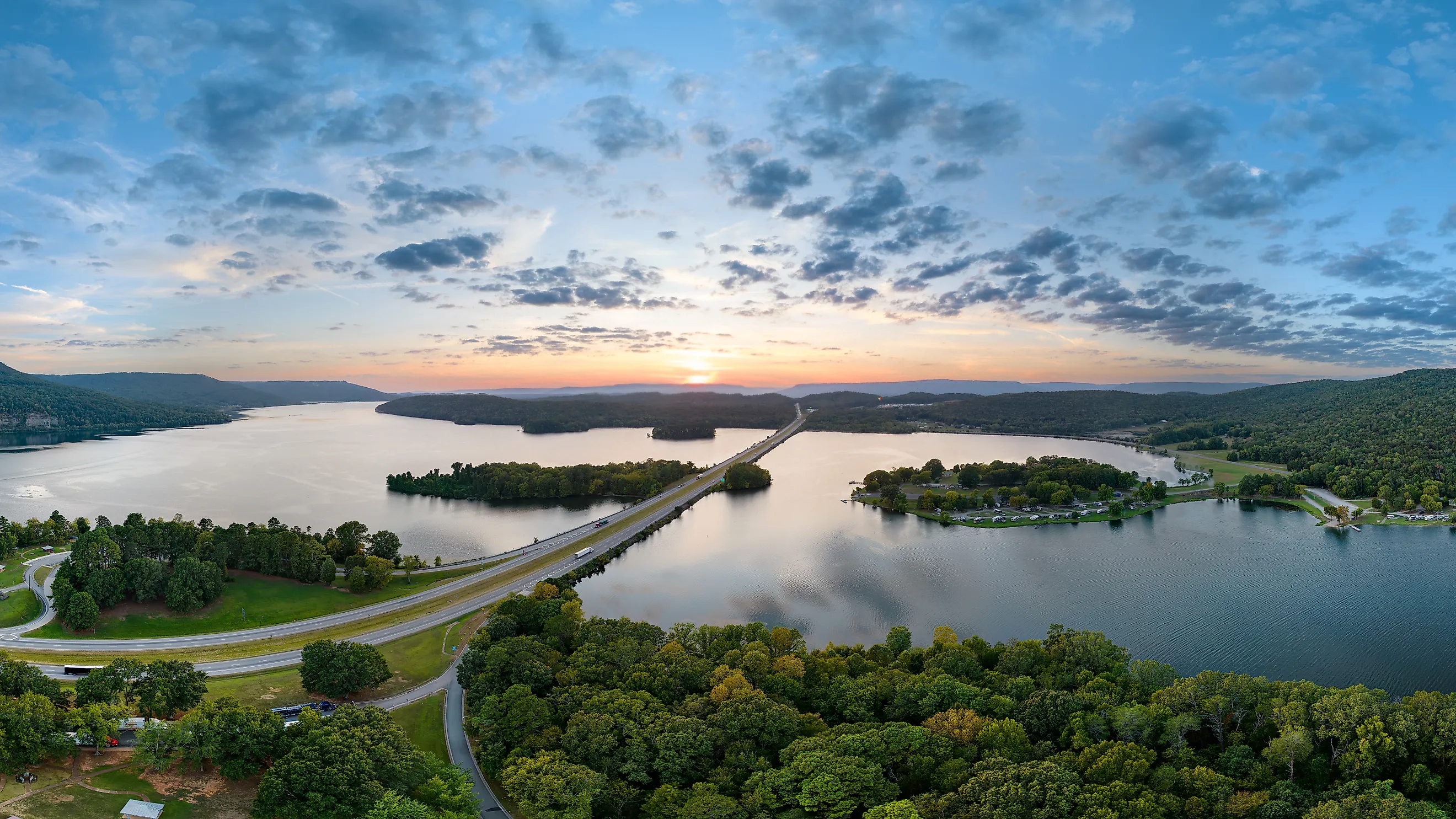
The Coosa holds 147 fish species, the highest count of any single river system in the Mobile Basin and second only to the Duck among individual American rivers.
It is also the cautionary tale of the group. The Coosa was dammed extensively through the twentieth century, and the resulting loss of shoal habitat drove what is often described as the largest extinction event in modern North American history, concentrated in snails and mussels rather than fish.
The 147 figure is what survived that.
The Mobile Basin As A Whole
Zoom out from the Coosa and Cahaba and the regional picture is extraordinary.
The Mobile Basin comprises eight river systems draining most of Alabama plus parts of western Georgia, eastern Mississippi and southeastern Tennessee. The whole basin holds roughly 242 fish species.
Individual systems within it range from 123 species in the upper Tombigbee to the Coosa's 147. The Mobile-Tensaw Delta at the bottom of it all holds more than 130 freshwater and marine species where the system meets the Gulf.
For comparison, that single basin holds more fish species than most countries.
Why Not The Mississippi
The obvious objection is that the Mississippi drains 40 percent of the continental United States, so surely it wins on volume.
It does hold a great many species, and the Tennessee is one of its tributaries, so the Tennessee's diversity is technically Mississippi diversity. But the main stem itself is a large, turbid, heavily engineered channel, and big muddy rivers support fewer specialists than clear, structurally complex ones. Diversity in that basin is concentrated in the tributaries, and the richest tributaries are in the Southeast.
Size of drainage turns out to be a poor predictor. Habitat variety per mile is a good one.
The Western Rivers Are The Opposite
Run the same question in the West and the numbers collapse, which is the most useful contrast available.
The Colorado River, draining an enormous arid basin across seven states, historically held only around a dozen or so native fish species. What it lacks in count it makes up for in strangeness: a very high proportion of those fish are endemic, evolved in isolation for a river that runs warm, silty and unpredictable.
Cold, steep, geologically young western rivers simply do not accumulate species the way warm, stable, ancient southeastern ones do. The Southeast had time and habitat. The West had neither.
Almost All Of It Is At Risk

The uncomfortable pattern is that the most diverse rivers in the country are also among the most threatened.
American Rivers named the Duck one of America's Most Endangered Rivers in 2024, with excessive water withdrawal as the stated reason. It supplies drinking water for around 250,000 people in Middle Tennessee and supports roughly 150,000 recreational users a year, and those demands are growing against a fixed amount of flow.
The Coosa already lost its shoal fauna to dams. The Cahaba runs downstream of a major city. And the species most at risk are almost never the ones anyone fishes for. They are darters, madtoms, shiners and chubs, small fish with tiny ranges, which is precisely what makes them vulnerable.
The Answer, By Measure

Three defensible answers, depending on what you asked.
Most species in a single river: the Duck in Tennessee, at 151, and it holds the per-mile record too. Most species in a single basin: the Tennessee, holding roughly half of North America's freshwater fish diversity. Most species relative to drainage size: the Cahaba in Alabama, with 135 species in 1,818 square miles and 18 of them found nowhere else.
All three are within a few hundred miles of one another. If you want to see more kinds of freshwater fish than anywhere else on the continent, you do not go to a famous river. You go to Middle Tennessee and central Alabama and look closely at the gravel.