Why Whales Don't Live In The Arctic Year-Round
Each autumn, Alaska's northern waters undergo a dramatic change. Gray whales begin traveling toward Mexico, many humpbacks leave for Hawaii, and ice spreads across the Chukchi and Beaufort seas. Yet the Arctic doesn't become empty. Bowhead whales and belugas remain in the broader Arctic and sub-Arctic region, moving between feeding areas and openings in the ice. The question isn't why all whales leave the Arctic. It's why certain species visit mainly during the productive summer while others survive there throughout the year. The answer involves food, sea ice, and the demands of raising a calf.
Alaska's Seasonal Whale Migration

Whales found near Alaska don't follow a single migration pattern. Gray whales and humpbacks make journeys spanning thousands of miles, while bowheads and belugas generally travel within the northern marine environment.
Gray whales feed in the Bering and Chukchi seas before following the North American coast to Mexico. Many humpbacks spend part of the year around Alaska and then head toward Hawaii or Mexico. Both species use northern waters primarily as feeding grounds.
Bowheads follow the changing ice edge between the Bering, Chukchi, and Beaufort seas. Belugas may enter coastal bays and river mouths during part of the year before returning to deeper offshore habitats. These species still migrate, but their routes respond to local ice, currents, and prey rather than carrying them into tropical regions.
Why Arctic Summers Attract Whales

The Arctic's main attraction isn't its temperature. It's its food. As daylight returns and sea ice retreats, microscopic algae multiply in and beneath the ice. Long summer days then help fuel blooms of phytoplankton, which form the base of the marine food web. These organisms support zooplankton, krill, fish, and bottom-dwelling animals that become prey for whales. The National Snow and Ice Data Center describes sea ice as a foundation of the polar food web.
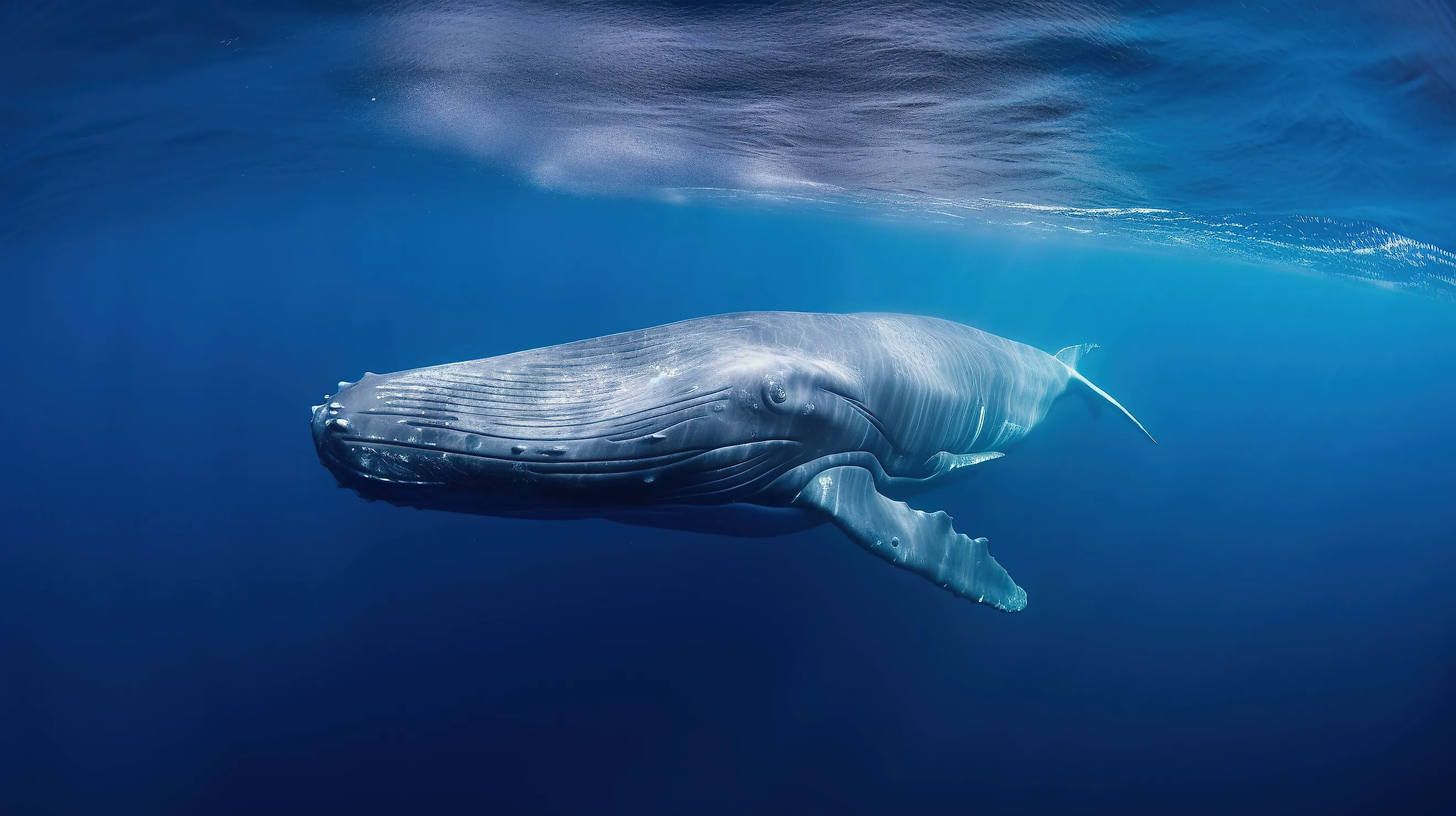
Different whales exploit this seasonal abundance in different ways. Humpbacks consume krill and schooling fish. Bowheads filter copepods, krill, and other small animals through their baleen. Gray whales often roll onto their sides and suction prey from seafloor sediments. Summer feeding allows migratory whales to accumulate energy reserves. That stored fat can sustain them during their long journeys and through months in which they may eat very little.
What Changes When Winter Arrives

Winter doesn't eliminate life from Arctic waters, but it makes food less predictable. The region receives little or no sunlight during part of the season, limiting photosynthesis. Some prey move, disperse, or become harder to reach. A feeding ground that supported numerous whales during summer may no longer offer enough concentrated food to make staying worthwhile.
The frozen surface creates another problem. Whales are mammals and must breathe air, regardless of how long they can remain underwater. Expanding sea ice can separate patches of open water, close a familiar route, or leave a whale beneath ice it cannot break.
Long cracks in sea ice and persistent areas of open water serve as important breathing corridors. However, winds and currents can shift the ice quickly. Whales that misjudge the distance to another opening risk drowning. Entrapments can occur when belugas or other whales become confined to shrinking holes. For species adapted to open water, leaving is usually safer than navigating an increasingly frozen habitat with declining feeding opportunities.
Why Many Whales Travel to Warmer Waters
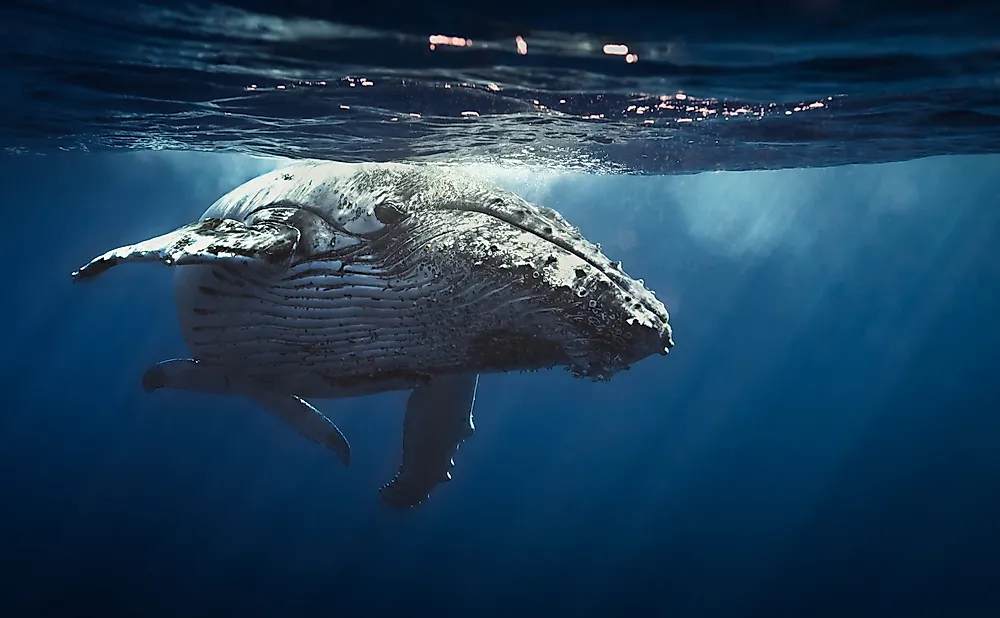
Adult whales don't necessarily migrate south because the Arctic is too cold. Blubber provides powerful insulation, and migratory species routinely feed in frigid water. Their southern destinations are more closely associated with reproduction.
Humpbacks commonly mate and give birth in warm, relatively shallow water. NOAA Fisheries reports that some North Pacific humpbacks travel approximately 3,000 miles between Alaska and Hawaii, completing the journey in as few as 28 days.
Newborn calves don't yet have the substantial blubber reserves of adults. Warmer water may help them conserve energy that can instead support rapid growth. Sheltered, ice-free areas also remove the immediate danger of finding breathing holes. Scientists have proposed other advantages, including reduced exposure to killer whales in certain breeding regions, although no single explanation applies to every species.
Warm breeding waters aren't always rich feeding grounds. Many baleen whales fast or eat relatively little while migrating and breeding. Mothers support themselves and produce energy-rich milk using reserves accumulated farther north.
The Whales That Stay in the Arctic
Bowhead whales are the Arctic's most striking permanent residents. They live almost exclusively in Arctic and sub-Arctic waters and possess blubber that can reach approximately 1.6 feet in thickness. Their reinforced skulls allow them to break through relatively thin ice to breathe.
Instead of migrating to the tropics, Alaska's bowheads move between the Beaufort, Chukchi, and Bering seas as ice and prey conditions change. NOAA's Alaska ecosystem reporting notes that bowheads commonly winter near the ice edge in the northern Bering Sea before following recurring fractures northward in spring.
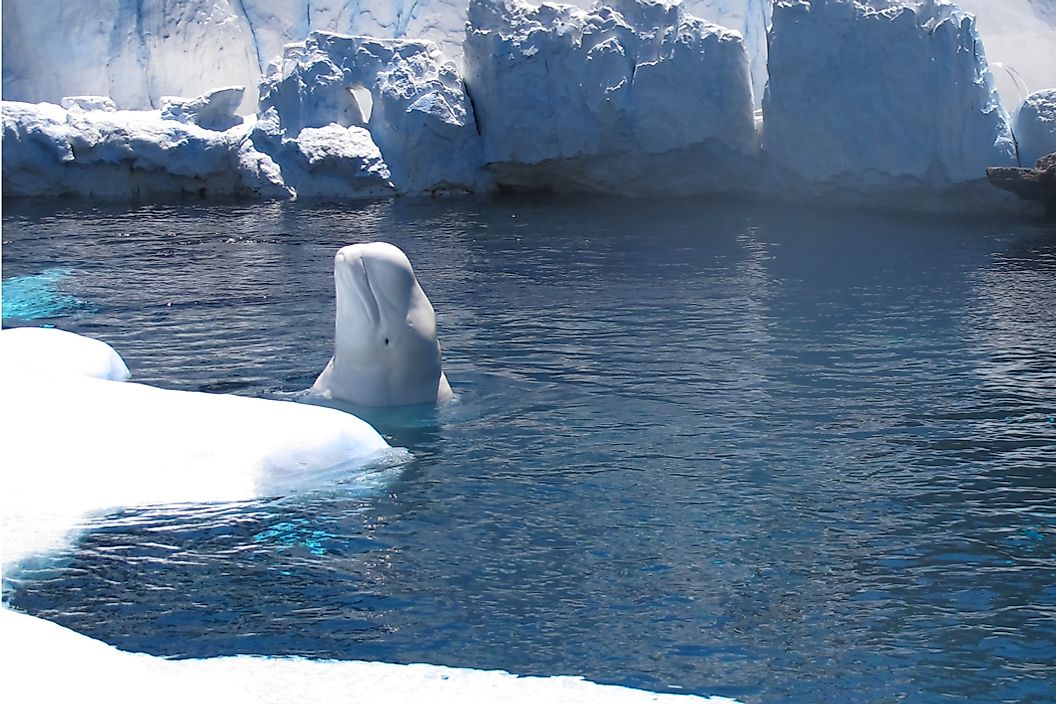
Belugas also inhabit Arctic and sub-Arctic waters throughout the year. Their lack of a tall dorsal fin makes swimming beneath ice easier, while a flexible neck helps them maneuver. Different beluga populations follow different routes. Some remain close to Alaska, while others travel considerable distances between seasonal habitats.
Narwhals are another year-round Arctic species, although they're associated mainly with waters near Canada, Greenland, and Russia rather than Alaska. During winter, they can occupy areas covered by dense pack ice, repeatedly returning to limited openings to breathe.
These whales can survive Arctic winter, but they don't remain stationary. Staying in the region requires movement and detailed familiarity with ice, currents, and seasonal prey.
Migration Is Becoming Less Predictable

The distinction between seasonal visitors and Arctic residents is becoming less clear. Sea ice forms later and retreats earlier in many areas, extending the open-water season. A 2024 scientific review found that changes in ice, water temperature, and prey are affecting the movements of marine animals across Arctic and sub-Arctic ecosystems.
In 2019, researchers recorded unusually late bowhead activity in the western Beaufort Sea. NOAA reported that the whales delayed their fall movement past northern Alaska while favorable feeding conditions persisted. Beluga migration timing has also shifted in association with later freeze-up.
Longer access doesn't necessarily mean better conditions. Warming can change where fish and zooplankton concentrate, reducing food in established feeding areas. NOAA has linked the condition and reproductive success of eastern North Pacific gray whales to changing prey and sea-ice conditions in the Bering and Chukchi seas.
Declining ice may also allow killer whales to travel farther north. Meanwhile, longer open-water seasons can expose Arctic whales to more ships, fishing gear, and underwater noise.
The Arctic Is Not One Uniform Habitat
It can be misleading to say whales live in the Arctic because the region contains several connected but distinct environments. The Beaufort and Chukchi are marginal seas of the Arctic Ocean, while the Bering Sea lies farther south and belongs to the Pacific. Ice coverage, depth, currents, and food supplies differ across all three.
A bowhead wintering near the Bering Sea ice edge and summering in the Beaufort may travel thousands of miles without undertaking a tropical migration. Similarly, one beluga population may remain near the coast while another travels far offshore. Whale behavior must be understood by species and often by individual population.
The Arctic's Visitors and Permanent Residents
Many whales leave northern waters because winter reduces dependable feeding opportunities and makes access to air more dangerous. Warmer, ice-free breeding areas can also give newborn calves a more forgiving start. For humpbacks and gray whales, those benefits outweigh the cost of migration.
Bowheads, belugas, and narwhals follow a different strategy. Their bodies and behavior allow them to survive among shifting ice, but even they move with the seasons. The Arctic doesn't lose its whales each winter. Its summer visitors depart, leaving behind specialists capable of navigating one of the ocean's most demanding habitats.