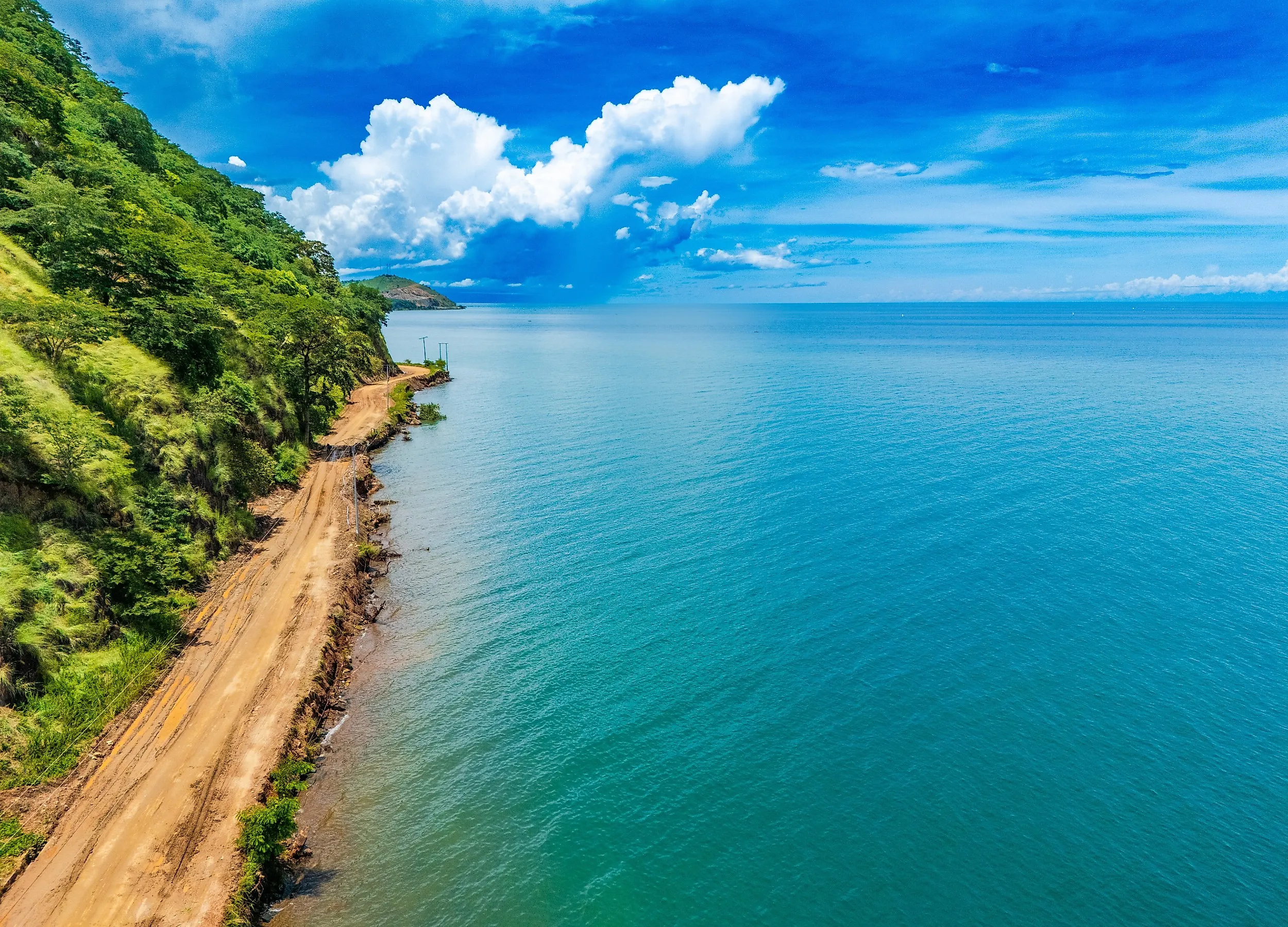
How Lake Tanganyika Holds Almost As Much Water As All Five Great Lakes
Lake Tanganyika in eastern Africa has a water volume of 4,500 cubic miles, meaning it holds almost as much water as all five of the Great Lakes in North America. It's the second-largest freshwater lake in the world by water volume, topped only by Lake Baikal in Russia. Its enormous volume reflects its deep fault-bounded basins, which formed as continental crust stretched along the western branch of the East African Rift.
Lake Tanganyika is one of the world's ancient lakes, although its structural basins formed at different times, and the oldest central basin is estimated to be 9 to 12 million years old. A comparison with the Great Lakes reveals how Lake Tanganyika's geography, geology, and wildlife make it exceptional.
How Much Water is in the Great Lakes

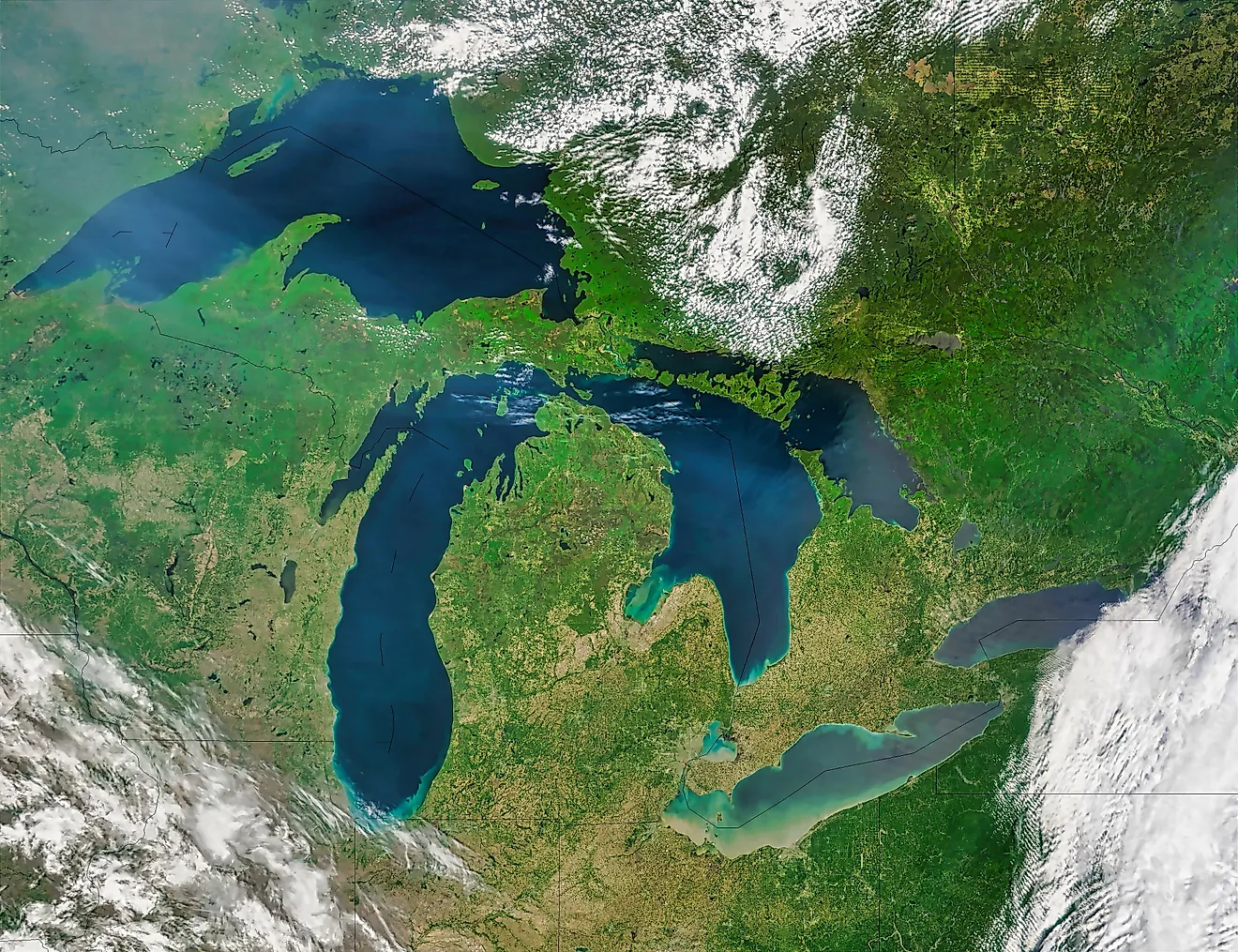
If all the Great Lakes were combined, they would have a water volume of 5,439 cubic miles, which is 939 more than Lake Tanganyika.
Of the Great Lakes, Lake Superior has the most water volume at 2,900 cubic miles, followed by Lake Michigan at 1,180 cubic miles. All of the other Great Lakes have under 1,000 cubic miles, with Lake Huron at 850, Lake Ontario at 393, and Lake Erie at 116.
If measured based on the total amount of surface freshwater on Earth, the Great Lakes contain close to 20% of all surface freshwater. However, in terms of surface area, the Great Lakes are much larger than Lake Tanganyika. Lake Superior, Lake Huron, and Lake Michigan are all larger than Lake Tanganyika at 31,700, 23,000, and 22,300 square miles, respectively. Lake Superior in particular is the largest freshwater lake in the world by surface area, and the second largest lake in the world if the brackish Caspian Sea is included.
Geography and Features of Lake Tanganyika

Lake Tanganyika has a surface area of 12,700 square miles, making it larger than Lake Erie and Lake Ontario, which have surface areas of 9,910 square miles and 7,340 square miles, respectively. It is the second-largest by surface area of the African Great Lakes, topped by the 26,828-square-mile Lake Victoria.

However, it does break one major record. It is the longest freshwater lake in the world, at 418 miles (673 kilometers) long. The lake is fairly narrow, however, with an average width of 31 miles. It borders four eastern African countries: Burundi to the north, the Democratic Republic of the Congo to the west, Zambia to the south, and Tanzania to the east.

Lake Tanganyika is Africa's deepest lake and the world's second-deepest freshwater lake after Lake Baikal, reaching about 4,820 feet (1,470 meters). It also has an immensely long retention time of 5,500 years. The commonly cited 5,500-year retention time is an estimated average flushing period rather than a literal deadline by which every drop of lake water would be replaced.
The lake's major inflowing rivers include the Malagarasi, Ruzizi, and Kalambo, while its principal outlet is the Lukuga River. Near Lake Tanganyika's southeastern end, the Kalambo River plunges approximately 221 meters (725 feet) at Kalambo Falls before continuing toward the lake.
Geology of Lake Tanganyika

Lake Tanganyika belongs to a small group of ancient lakes whose long histories have enabled exceptional biological diversification. Published estimates place the formation of Lake Tanganyika's central basin at 9 to 12 million years ago, its northern basin at 7 to 8 million years ago, and its southern basin at 2 to 4 million years ago. It formed due to tectonic activity in the Great Rift Valley, also known as the East African Rift System.
The East African Rift is a complex divergent boundary between the Nubian and Somalian plates, with deformation also distributed across several intervening microplates. This pull creates a rift valley. This is why the lake is so deep. It shares this attribute with Lake Baikal in Russia, which was also created through plate tectonics.
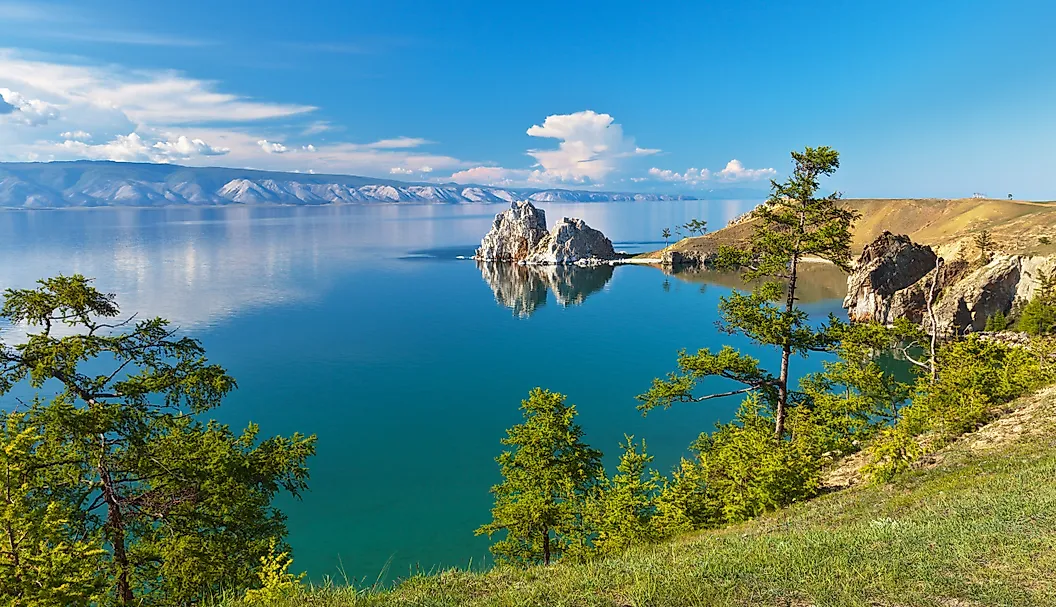
Along parts of Lake Tanganyika's western shore, steep rift escarpments rise as much as 2,000 meters (6,562 feet) above the shoreline. Farther north near Lake Kivu, Mount Kahuzi and Mount Biega are extinct volcanoes within the Mitumba Mountains.
Lake Tanganyika is strongly stratified, but winds mix its upper waters and drive seasonal upwelling. The depth of its oxic-anoxic boundary varies, and fish and most oxygen-dependent animals occur mainly above it while microbial communities persist below.
Wildlife

Lake Tanganyika is best known for its large variety of cichlid fish species, with 250 species of cichlid fish that are endemic to the lake. Cichlids are a freshwater fish family that are mainly found in tropical and subtropical areas. Tanganyikan cichlids display diverse social and parental-care systems, with cooperative group breeding occurring in only some lineages.

Cichlids have a diverse range of colors in the lake, such as the blue and purple Aulonocranus dewindti or the greenish Astatotilapia burtoni. These cichlids are popular both as pets and for fish farming.
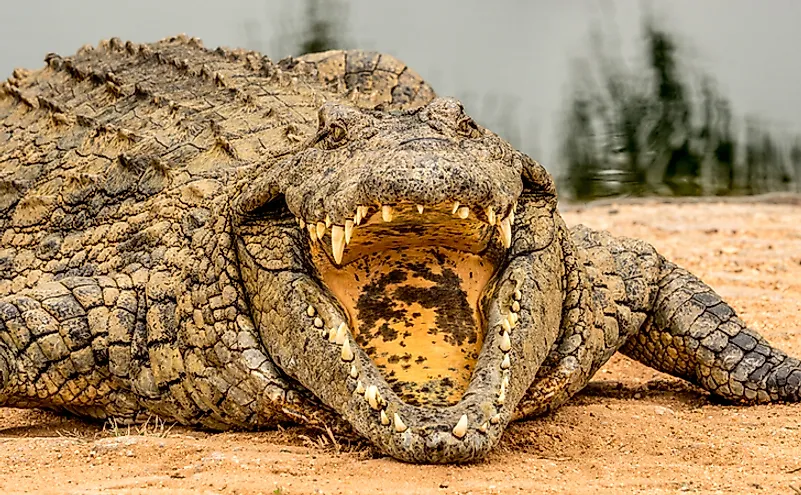
Nile crocodiles are among Lake Tanganyika's apex predators, averaging about 16 feet and 500 pounds, although exceptionally large animals can approach 20 feet and 1,650 pounds. These creatures will eat anything they can kill, including fish, zebras, small hippos, and even other crocodiles. They are intensely protective of their nests as well.
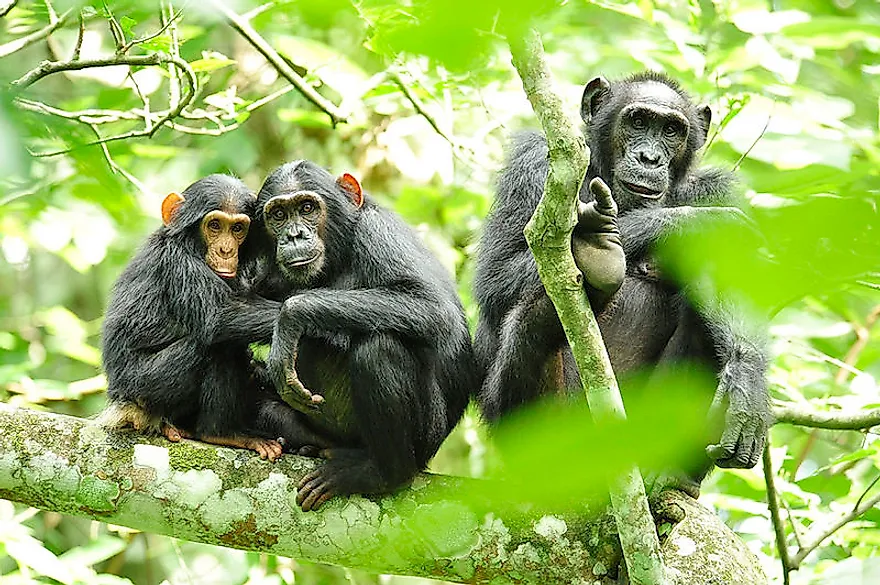
In the Mahale Mountains National Park alongside Lake Tanganyika, one can find large groups of chimpanzees. Farther north on Lake Tanganyika's eastern shore, Gombe Stream National Park is where Jane Goodall began her chimpanzee research in 1960 and documented chimpanzee toolmaking and tool use.
The Importance to Humans

The Lake Tanganyika Basin is home to more than 10 million people, and a World Bank estimate placed the number directly dependent on the lake's fish production at about one million. Fisheries that operate in this lake take home up to 200,000 tons of fish annually, and employ 100,000 people. These fish make up a significant percentage of the food for people living in the immediate basin.
Lake Tanganyika faces threats including overfishing, pollution, sedimentation, habitat loss, and rising water temperatures. Invasive plants have a negative impact as well.
Population growth in the basin is also increasing the risk of contamination of the waters, which can lead to the death of fish and illnesses in those who rely on the lake. Overfishing is another issue, as it puts strain on the fish population.
The Forgotten African Great Lakes

Lake Tanganyika is part of the African Great Lakes in the Great Rift Valley, which are often overshadowed by the Great Lakes in North America. This shouldn't be the case, as these lakes are very important in terms of geology and ecology, as they represent some of the oldest, largest, and deepest lakes on Earth. Alongside Tanganyika, Lake Malawi and Lake Victoria round out the region's giants. Lake Tanganyika, after all, holds almost as much water as all the North American Great Lakes combined. As with the North American Great Lakes, protecting Lake Tanganyika will require sustained efforts to reduce pollution, manage invasive species, and support the millions of people living throughout its basin.