The Coldest Ocean On Earth
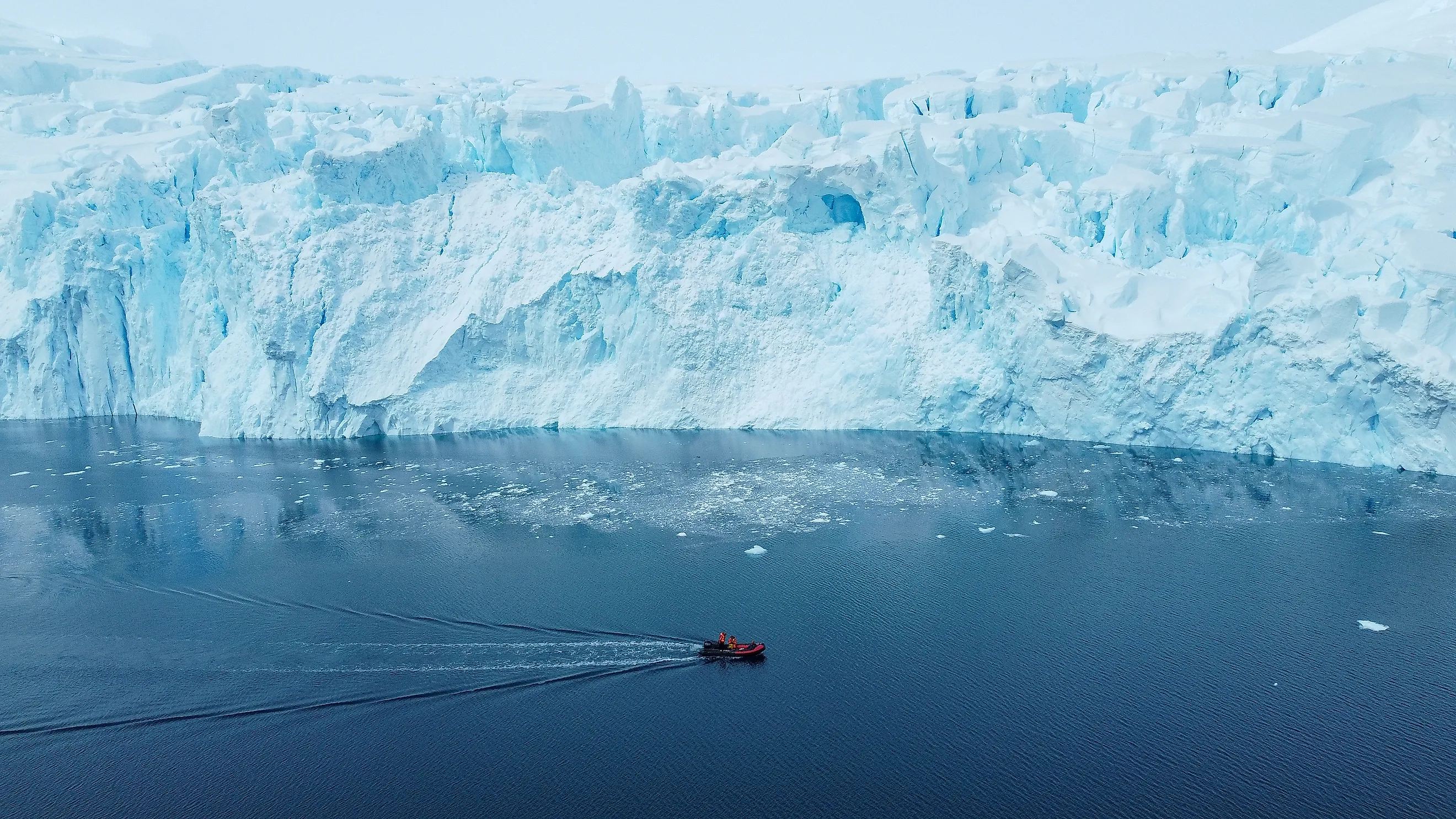
The Southern Ocean is the coldest in the world. Located on the shores of the continent of Antarctica, it regularly freezes over, especially between 55 and 65 degrees south latitude. The surface temperature ranges between 28 and 50 degrees Fahrenheit. The Southern Ocean isn't only the coldest ocean on Earth. It is also the windiest. Also, unlike other oceans, it was only recently recognized as an ocean in its own right.
The newest categorized ocean

The Southern Ocean has been recognized by different organizations at different times. It often sparked debate because some argued that it was simply a cold mixture of waters from the Indian Ocean, Pacific Ocean, and Atlantic Ocean.
However, scientists have noted differences between the Southern Ocean and the other oceans, including its currents, temperature, and salt content. In 1937, the International Hydrographic Organization recognized the Southern Ocean, but removed this designation in 1953 due to controversy from its member nations.
In 1999, the National Oceanic and Atmospheric Administration officially acknowledged the Southern Ocean and proposed boundaries between the coast of Antarctica and 60 degrees South Latitude. It sent this proposal to the IHO, but it made no ruling either way.
In 2021, the U.S. Board on Geographic Names recognized the Southern Ocean, and National Geographic followed suit in June 2021 in celebration of World Ocean Day.
Features of the Southern Ocean

The Southern Ocean is the second smallest ocean in the world, at 8,479,000 square miles. The smallest ocean in the world is the Arctic Ocean, located on the opposite pole from the Southern Ocean.
The Southern Ocean's surface waters are often less salty than those of other oceans, though its salinity patterns are complex. When seawater freezes, most of the salt is forced out of the forming ice into the water below, a process known as brine rejection, so the sea ice itself is comparatively fresh. Melting sea ice and glaciers, along with precipitation, can then freshen surface waters in some regions.
The ocean contains 17,226,000 cubic miles of salt water, with an average depth of 10,728 feet and a maximum depth of 24,382 feet off the South Sandwich Trench. What also sets the Southern Ocean apart is its borders. While the other oceans are limited by continental landmasses, the Southern Ocean is limited by a single strong current, the Antarctic Circumpolar Current.
This current began forming 34 million years ago as Antarctica split off from South America. It flows eastward in a circle around Antarctica at around 60 degrees South latitude. It is heavily impacted by winds and is sometimes referred to as the West Wind Drift.
How strong are the currents in the Southern Ocean?

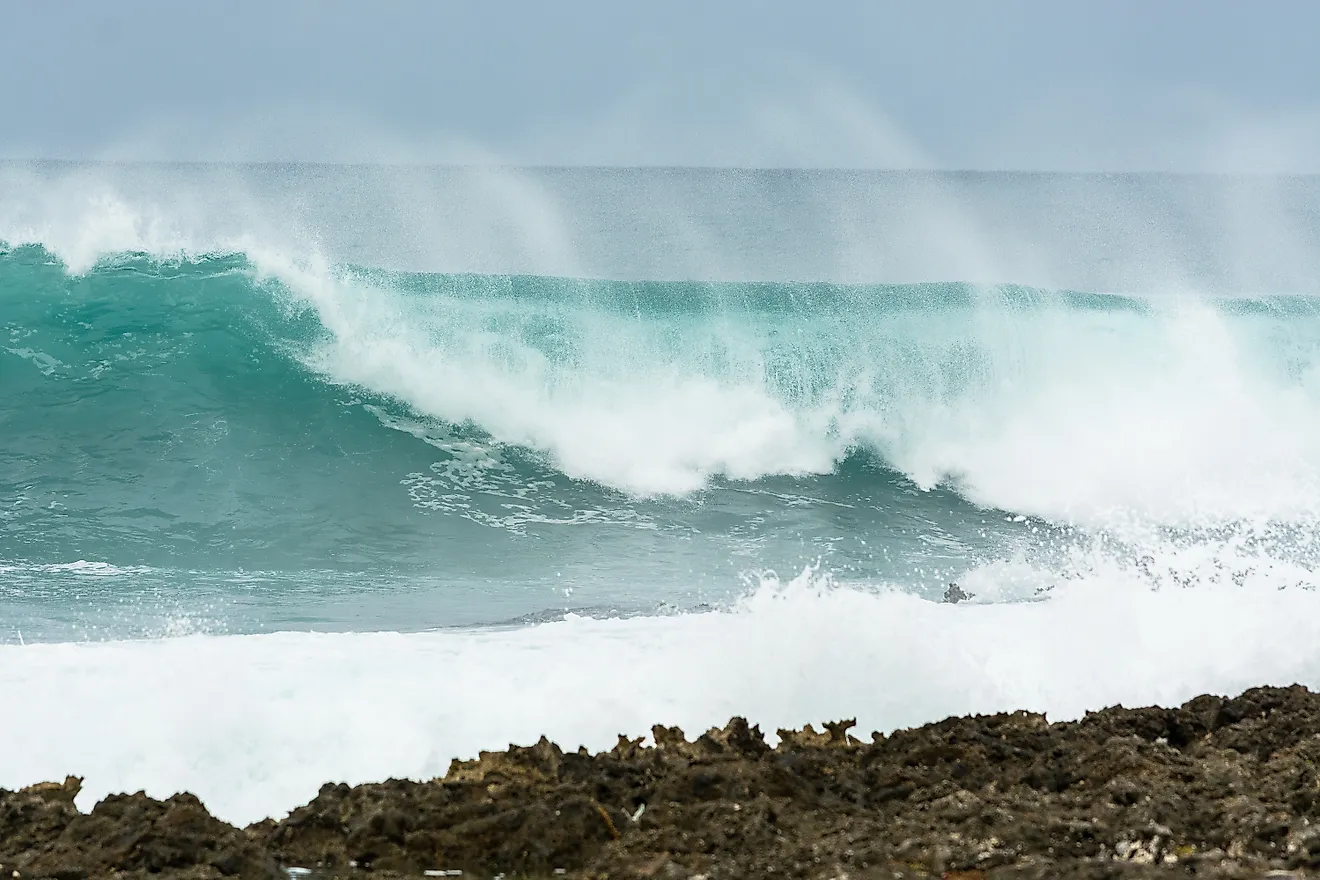
The westerly winds drive the Southern Ocean to a very fast speed for ocean waters, at as much as 2 knots, which is close to 2.3 miles per hour. The wind and storms contribute to powerful waves that are larger than anywhere else on Earth.
One reason why this current is so strong is that it isn't interrupted by any landmasses, meaning wind can travel across it unimpeded. In addition, the Southern Ocean can experience earthquakes due to seismic activity.
During the winter, waves can reach as large as 33 feet tall, but data suggests that ocean waves can reach more than 100 feet tall. One such passage to the Southern Sea that is especially treacherous is the Drake Passage, more commonly known as the Drake Shake for how many waves and storms hit the passage between South America and the Southern Ocean.
The Drake Passage is the point where the Atlantic, Pacific, and Southern Oceans meet, and you can see waves as large as 65 feet high. Some scientists argue that the Drake Passage could store significant amounts of carbon dioxide, keeping Antarctica cooler. Since the Drake Passage opened as Antarctica drifted apart from South America, it allowed the Antarctic Circumpolar Current to develop, cutting Antarctica off from warmer ocean waters and contributing to it being such a cold continent.
Wildlife
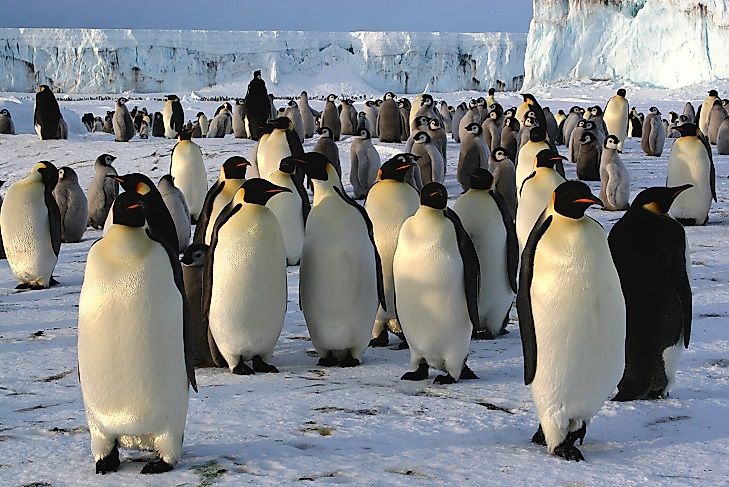
The Southern Ocean is a harsh, cold ocean, but its oxygen-rich waters support many types of wildlife both within the waters and on the shores of it in Antarctica.
One of the most common fish species in the Southern Ocean is the Antarctic cod, which can survive the icy waters. They are part of a complex food chain that begins with plankton, which are fed by nutrients that flow up to the surface from the upwelling currents.
These plankton are in turn eaten by krill, which provide nutrients for fish, whales, and seals. Phytoplankton blooms cause massive increases in krill right near the surface, which can sometimes give off a red color.
The Southern Ocean's most iconic creatures are penguins. 18 species of penguins live around the world, with seven native to Antarctica and the Southern Ocean. These include chinstrap penguins, macaroni penguins, rockhopper penguins, king penguins, Adelie penguins, gentoo penguins, and the emperor penguin. The Emperor Penguin is the largest in the Southern Ocean, growing up to 4 feet tall and weighing up to 99 pounds. They can swim at fast speeds, up to about 9 miles per hour.
Another unique feature of penguins is that male emperor penguins can produce a substance similar to milk to feed young when females are out hunting at sea.
The Southern Ocean's role in carbon dioxide absorption

The Southern Ocean plays a crucial role in absorbing carbon dioxide into its deep waters. The Southern Ocean is particularly good at this thanks to a combination of its cold water, powerful overturning circulation, strong winds, and biological activity. It accounts for up to 40% of the CO2 absorbed by the world's oceans.
The amount of carbon dioxide it can absorb depends on how much carbon rises to the surface of the water. Some scientists have argued that stronger winds will bring more of this water to the surface, thus reducing the ability of the Southern Ocean to absorb emissions.
However, other scientists argue that there is no sign of this happening, in part due to another impact of global warming, melting glaciers and sea ice. This both adds freshwater to the Southern Ocean and increases the density stratification between the surface and the deeper waters, making it more difficult for that carbon dioxide to rise to the surface.
The Southern Ocean is unique on every level
With its frigid temperatures, vast amounts of sea ice, and strong westerly winds, the Southern Ocean is unique in many areas. Even its name itself sets it apart, as it is only slowly set apart as a unique ocean from the Atlantic, Pacific, and Indian Oceans. However, the National Ocean Service does point out that, technically speaking, there is only 1 world ocean, which covers 71% of the world's surface.
The reason behind the division is driven by geography, currents, features of each ocean, and, of course, political considerations. To this day, the Southern Ocean plays an important role in politics as nations struggle to determine what impact global climate change has on the Southern Ocean and what actions to take regarding that change. What is beyond question is that the Southern Ocean is a truly remote and unusual body of water, defined less by land and more by the currents that surround a singular frozen continent.