How Many Seas Are There In The World?
Earth has 81 seas when smaller seas within larger ones are treated as parts of the larger sea. Counting those subdivisions separately brings the total to 168. The Mediterranean, for example, contains the Adriatic and Aegean, each with its own name and geographical boundaries. The smaller total counts only the largest named sea in each hierarchy. Neighbouring seas remain separate, and seas that overlap without one containing the other retain their own entries.
The 168 named waters include seas and regional marine basins identified in hydrographic classifications, national geographical sources and marine research. Some carry other names, including Hudson Bay and the Gulf of Mexico. Alternative names for the same water body count once. Lakes, including the Caspian Sea and Dead Sea, are excluded. Seas shared by continents appear in each continental total but count only once worldwide.
The Seas Of North America

North America has 22 seas and regional marine basins, rising to 27 when contained subdivisions receive separate entries. Many lie in the Arctic. Alaska faces the Bering, Chukchi and Beaufort seas. The Lincoln Sea lies between northern Canada and Greenland, while the Prince Gustaf Adolf Sea occupies part of the Canadian Arctic Archipelago. Greenland belongs geographically to North America, bringing its surrounding seas into the continental total.
Farther south, the Caribbean Sea and Gulf of Mexico form the larger American Mediterranean Sea. Together, they contribute one entry to the smaller total and three to the detailed total. On Mexico's Pacific coast, the Gulf of California and Sea of Cortez are two names for the same sea.
Canada adds marine waters whose names can obscure their classification. Hudson Bay contains James Bay and Wager Bay, while Foxe Basin remains a neighbouring basin. The broader Gulf of Maine includes the Bay of Fundy. The Great Lakes belong to a different category. Superior, Michigan, Huron, Erie and Ontario are freshwater lakes. The EPA's description of them as "inland freshwater seas" reflects their scale; it does not make them subdivisions of the ocean.
Offshore, the Slope Sea occupies waters between the continental margin and Gulf Stream. The Sargasso Sea is associated with North America through Bermuda and its western North Atlantic setting. Ocean currents define its outer limits, with no mainland coast enclosing it.
North America's Seas And Their Subdivisions
| Sea or marine basin | Additional subdivisions counted separately |
|---|---|
| American Mediterranean Sea | Caribbean Sea; Gulf of Mexico |
| Baffin Bay | - |
| Beaufort Sea | - |
| Bering Sea | - |
| Chukchi Sea | - |
| Foxe Basin | - |
| Greenland Sea | - |
| Gulf of Alaska | - |
| Gulf of California | - |
| Gulf of Maine | Bay of Fundy |
| Gulf of Paria | - |
| Gulf of St. Lawrence | - |
| Hudson Bay | James Bay; Wager Bay |
| Iceland Sea | - |
| Irminger Sea | - |
| Labrador Sea | - |
| Lincoln Sea | - |
| Prince Gustaf Adolf Sea | - |
| Salish Sea | - |
| Sargasso Sea | - |
| Slope Sea | - |
| Wandel Sea | - |
| Total | 22 without contained subdivisions; 27 with subdivisions included |
Number Of Seas On Other Continents
Seas frequently cross continental boundaries. The Mediterranean borders Europe, Africa and Asia, while the Bering Sea borders both Asia and North America. Shared waters bring the combined continental figures to 99 without contained subdivisions and 199 with them included. Counting each shared sea only once gives the worldwide totals of 81 and 168. Continental associations include islands and offshore waters as well as mainland coastlines.
Europe

Europe's deeply indented coastline accounts for 21 seas and regional marine basins, or 55 with their named subdivisions included. The Mediterranean contains the Adriatic, Aegean, Ionian and Tyrrhenian seas, among others. Within the Aegean lie the Sea of Crete, Myrtoan Sea and Icarian Sea. Smaller names appear along Croatia's coast, where the Karin and Novigrad seas occupy enclosed basins connected to the Adriatic. Nearby, the Vir Sea surrounds parts of Vir Island.
The broader Baltic Sea includes the Bothnian Sea, Archipelago Sea, Åland Sea, Belt Sea and Kattegat. The Cantabrian Sea forms part of the Bay of Biscay, while the Wadden Sea belongs to the North Sea. Other neighbouring waters remain separate, including the English Channel, Irish Sea and Celtic Sea. Farther north lie the Norwegian and Barents seas. Novaya Zemlya's European geographical position places the Kara Sea in both the European and Asian totals.
Europe's Seas And Their Subdivisions
| Sea or marine basin | Additional subdivisions counted separately |
|---|---|
| Baltic Sea | Archipelago Sea; Belt Sea; Bothnian Bay; Bothnian Sea; Gulf of Bothnia; Gulf of Finland; Gulf of Riga; Kattegat; Väinameri; Åland Sea |
| Barents Sea | Pechora Sea |
| Bay of Biscay | Cantabrian Sea; Mer des Pertuis |
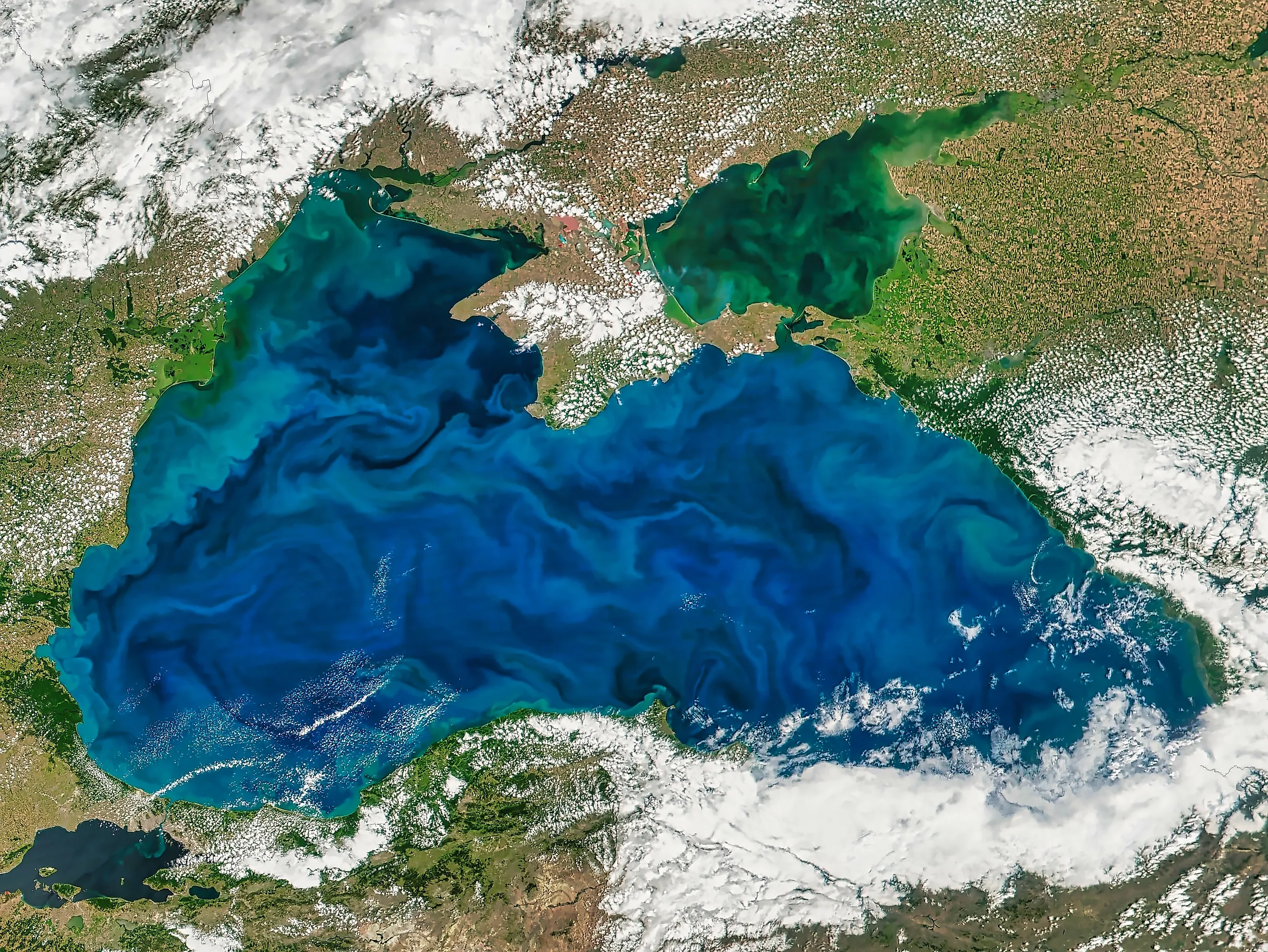
| Black Sea | - |
| Celtic Sea | Iroise Sea |
| Clyde Sea | - |
| English Channel | - |
| Greenland Sea | - |
| Iceland Sea | - |
| Irish Sea | - |
| Irminger Sea | - |
| Kara Sea | - |
| Malin Sea | - |
| Mediterranean Sea | Adriatic Sea; Aegean Sea; Alboran Sea; Balearic Sea; Catalan Sea; Icarian Sea; Ionian Sea; Karin Sea; Karpathian Sea; Levantine Sea; Libyan Sea; Ligurian Sea; Myrtoan Sea; Novigrad Sea; Sea of Crete; Sea of Sardinia; Thracian Sea; Tyrrhenian Sea; Vir Sea |
| North Sea | Wadden Sea |
| Norwegian Sea | - |
| Sea of Azov | - |
| Sea of Marmara | - |
| Sea of the Hebrides | - |
| Skagerrak | - |
| White Sea | - |
| Total | 21 without contained subdivisions; 55 with subdivisions included |
Asia
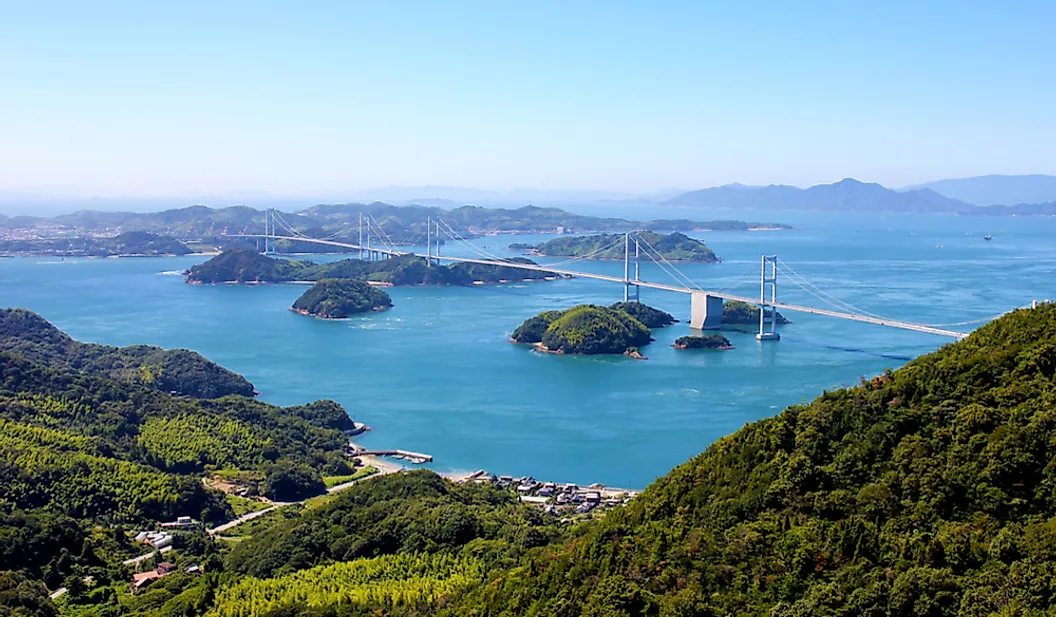
Long island chains divide the waters off eastern and southeastern Asia into numerous seas. Asia has 26 seas and regional marine basins without contained subdivisions, rising to 73 when those smaller waters receive separate entries. The broad Australasian Mediterranean Sea encompasses the South China Sea and archipelagic waters extending towards the Timor and Arafura seas. Its subdivisions include the Java, Banda, Flores, Celebes and Sulu seas.
Japan contributes many smaller seas that rarely appear on general world maps. The Seto Inland Sea contains Aki-nada, Iyo-nada, Hiuchi-nada and Harima-nada, among other named waters. The Ariake and Yatsushiro seas remain separate neighbouring seas off western Kyushu. Larger basins farther offshore include the Sea of Japan, East China Sea, Yellow Sea and Philippine Sea.
Southern Asia borders the Arabian and Andaman seas, Bay of Bengal, Persian Gulf and Gulf of Oman. Along Siberia's Arctic coast, the Laptev and East Siberian seas occupy broad, shallow continental shelves.
Asia's Seas And Their Subdivisions
| Sea or marine basin | Additional subdivisions counted separately |
|---|---|
| Andaman Sea | - |
| Arabian Sea | - |
| Ariake Sea | - |
| Australasian Mediterranean Sea | Arafura Sea; Aru Sea; Bali Sea; Banda Sea; Bohol Sea; Camotes Sea; Celebes Sea; Flores Sea; Gulf of Bone; Gulf of Thailand; Gulf of Tomini; Gulf of Tonkin; Halmahera Sea; Java Sea; Luzon Sea; Molucca Sea; Natuna Sea; Samar Sea; Savu Sea; Seram Sea; Sibuyan Sea; South China Sea; Sulu Sea; Timor Sea; Visayan Sea |
| Bay of Bengal | - |
| Bering Sea | - |
| Black Sea | - |
| Chukchi Sea | - |
| East China Sea | Amakusa-nada Sea; Gotō-nada Sea |
| East Siberian Sea | - |
| Gulf of Aden | - |
| Gulf of Oman | - |
| Kara Sea | - |
| Kashima-nada Sea | - |
| Laccadive Sea | - |
| Laptev Sea | - |
| Mediterranean Sea | Aegean Sea; Icarian Sea; Levantine Sea |
| Persian Gulf | - |
| Philippine Sea | Enshū-nada Sea; Hyūga-nada Sea; Kumano-nada Sea; Uwa Sea |
| Red Sea | Gulf of Aqaba; Gulf of Suez |
| Sea of Japan | Genkai Sea; Hibiki-nada Sea |
| Sea of Marmara | - |
| Sea of Okhotsk | - |
| Seto Inland Sea | Aki-nada Sea; Bingo-nada Sea; Harima-nada Sea; Hiuchi-nada Sea; Itsuki-nada; Iyo-nada Sea; Mizushima-nada Sea; Suō-nada Sea |
| Yatsushiro Sea | - |
| Yellow Sea | Bohai |
| Total | 26 without contained subdivisions; 73 with subdivisions included |
Africa

Much of Africa faces the Atlantic or Indian Ocean directly, with relatively few separately named seas along its coast. Five seas and regional marine basins qualify without contained subdivisions: the Mediterranean, Red Sea, Arabian Sea, Gulf of Aden and Gulf of Guinea. Including subdivisions raises the total to nine. The Mediterranean contributes the Alboran, Libyan and Levantine seas along the northern coast. The Red Sea separates northeastern Africa from the Arabian Peninsula, while its Gulf of Suez extends between mainland Egypt and the Sinai Peninsula. The neighbouring Gulf of Aqaba lies on Sinai's Asian side and belongs to Asia's total.
Africa's Seas And Their Subdivisions
| Sea or marine basin | Additional subdivisions counted separately |
|---|---|
| Arabian Sea | - |
| Gulf of Aden | - |
| Gulf of Guinea | - |
| Mediterranean Sea | Alboran Sea; Levantine Sea; Libyan Sea |
| Red Sea | Gulf of Suez |
| Total | 5 without contained subdivisions; 9 with subdivisions included |
South America
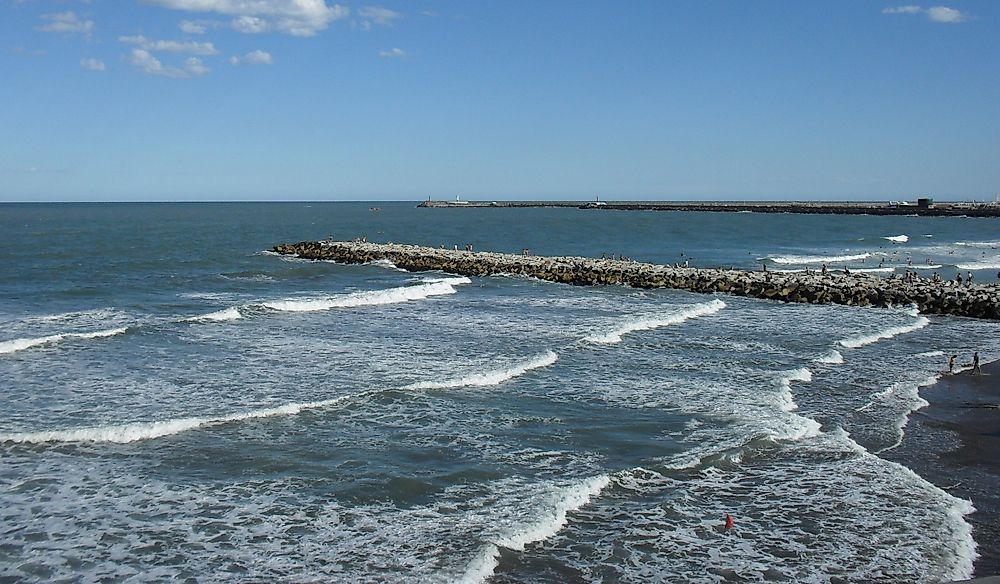
The Argentine Sea covers continental-shelf waters east of Argentina, with no enclosing island chain along its outer edge. The Argentine Navy distinguishes this geographical sea from the country's legally defined maritime jurisdiction. It is one of five seas and regional marine basins associated with South America, increasing to six when contained subdivisions are included.
Along the northern coast, the Caribbean belongs to the larger American Mediterranean Sea. The Gulf of Paria lies between Venezuela and Trinidad. Southern Chile's islands shelter the Chiloé inland sea on the Pacific coast. Beyond the continent's southern tip, the Scotia Sea occupies waters within the island arc extending towards Antarctica and belongs to both continental groupings.
South America's Seas And Their Subdivisions
| Sea or marine basin | Additional subdivisions counted separately |
|---|---|
| American Mediterranean Sea | Caribbean Sea |
| Argentine Sea | - |
| Chiloé Inland Sea | - |
| Gulf of Paria | - |
| Scotia Sea | - |
| Total | 5 without contained subdivisions; 6 with subdivisions included |
Australia And Oceania
The Tasman Sea separates Australia from New Zealand, while the Coral Sea lies northeast of Australia. Together with waters around New Guinea and the Pacific islands, they contribute to an Oceanian total of nine seas and regional marine basins. The Bismarck and Solomon seas border New Guinea, and the Koro Sea lies among Fiji's islands. The Philippine Sea reaches Pacific island groups as well as Asia.
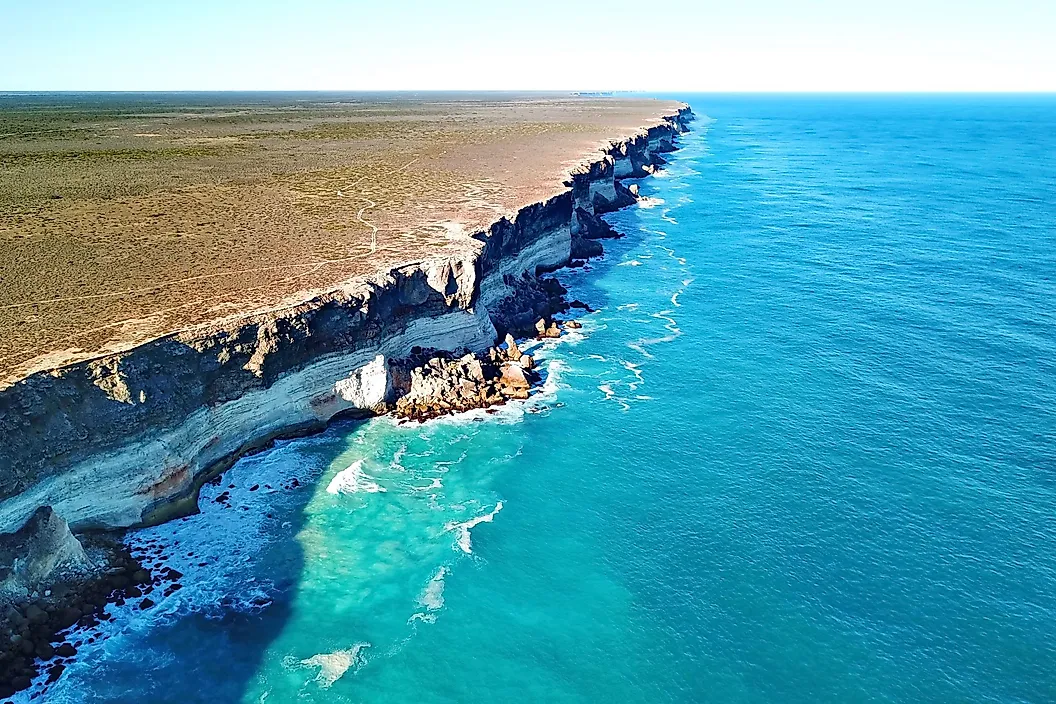
Some Australian waters qualify without carrying "Sea" in their names. The Great Australian Bight occupies a broad marine region along the southern coast. Bass Strait is a shallow shelf sea between Tasmania and the mainland. It remains separate from the neighbouring Tasman Sea.
Including contained subdivisions raises Oceania's total to 15. The broad Australasian Mediterranean Sea contributes the Arafura, Aru, Halmahera, Seram and Timor seas, along with the Gulf of Carpentaria. Several of these waters are shared with Asia. The continental division places all of New Guinea in Oceania and the Indonesian islands farther west in Asia.
Seas And Subdivisions Of Australia And Oceania
| Sea or marine basin | Additional subdivisions counted separately |
|---|---|
| Australasian Mediterranean Sea | Arafura Sea; Aru Sea; Gulf of Carpentaria; Halmahera Sea; Seram Sea; Timor Sea |
| Bass Strait | - |
| Bismarck Sea | - |
| Coral Sea | - |
| Great Australian Bight | - |
| Koro Sea | - |
| Philippine Sea | - |
| Solomon Sea | - |
| Tasman Sea | - |
| Total | 9 without contained subdivisions; 15 with subdivisions included |
Antarctica

Antarctica has 11 seas without contained subdivisions and 14 with them included. The Weddell Sea and Ross Sea are among the best-known, alongside the Bellingshausen and Amundsen seas off West Antarctica. Around East Antarctica lie the Somov, Dumont d'Urville, Mawson, Davis and Cooperation seas. The Scotia Sea extends towards South America and appears in both continental totals.
The difference between 11 and 14 comes from the King Haakon VII Sea. Its broad geographical extent encompasses the Lazarev, Riiser-Larsen and Cosmonauts seas. Counting those three separately raises the total by three. The Weddell remains a separate entry because partial overlap does not make it a contained subdivision. These names identify regions of the Southern Ocean, with boundaries that follow different geographical naming conventions.
Antarctica's Seas And Their Subdivisions
| Sea or marine basin | Additional subdivisions counted separately |
|---|---|
| Amundsen Sea | - |
| Bellingshausen Sea | - |
| Cooperation Sea | - |
| Davis Sea | - |
| Dumont d'Urville Sea | - |
| King Haakon VII Sea | Cosmonauts Sea; Lazarev Sea; Riiser-Larsen Sea |
| Mawson Sea | - |
| Ross Sea | - |
| Scotia Sea | - |
| Somov Sea | - |
| Weddell Sea | - |
| Total | 11 without contained subdivisions; 14 with subdivisions included |
The Mediterranean Contains Smaller Seas
A swimmer on Italy's Adriatic coast is swimming in the Mediterranean at the same time. The Adriatic extends between the Italian Peninsula and the Balkans, while the Tyrrhenian lies on Italy's opposite side. Both have their own geographical boundaries within the larger Mediterranean basin. The Mediterranean contributes one entry when its subdivisions are combined, or 20 when its 19 named subdivisions receive separate entries.
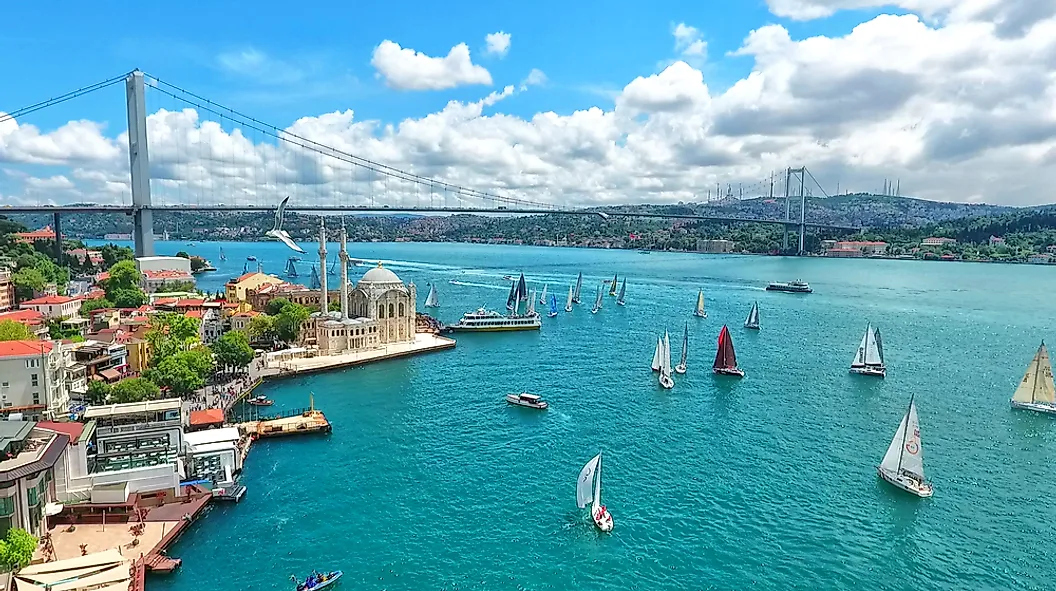
Farther east, the Aegean connects through the Dardanelles to the Sea of Marmara. At Istanbul, in Turkey, the Bosporus links Marmara with the Black Sea. The Sea of Azov lies beyond the Black Sea. These neighbouring seas retain separate entries: a connection through a strait does not place one sea inside another. The narrow straits themselves remain connecting waterways.
The Seven Seas Changed With The Map

The familiar "seven seas" is a historical expression whose meaning changed across cultures and centuries. Historical interpretations included the Persian Gulf and the landlocked Caspian. European versions also included the North Sea and the Baltic. Some counted the Atlantic, applying "sea" to an entire ocean.
A modern interpretation reaches seven by dividing both the Atlantic and Pacific into northern and southern portions. Adding the Indian, Arctic and Southern oceans brings the total to seven ocean regions. That arrangement does not count individual seas such as the Caribbean or Bering.
The Sargasso Sea Has No Land Boundary

Ocean currents form the outer boundary of the Sargasso Sea. Bermuda lies within the region, but no coastline encloses it. The Gulf Stream marks its western side, while other Atlantic currents define its northern, eastern and southern limits. As those currents shift, the sea's boundaries move.
The name comes from Sargassum, brown seaweed that floats at the surface. Some species spend their entire lives afloat and reproduce without attaching to the seabed. Young sea turtles find food and shelter among the floating mats. NOAA identifies the Sargasso as the exception to the usual association between seas and surrounding land. It contributes one entry to both the 81-sea and 168-sea totals.
The Caspian And Dead Sea Are Lakes
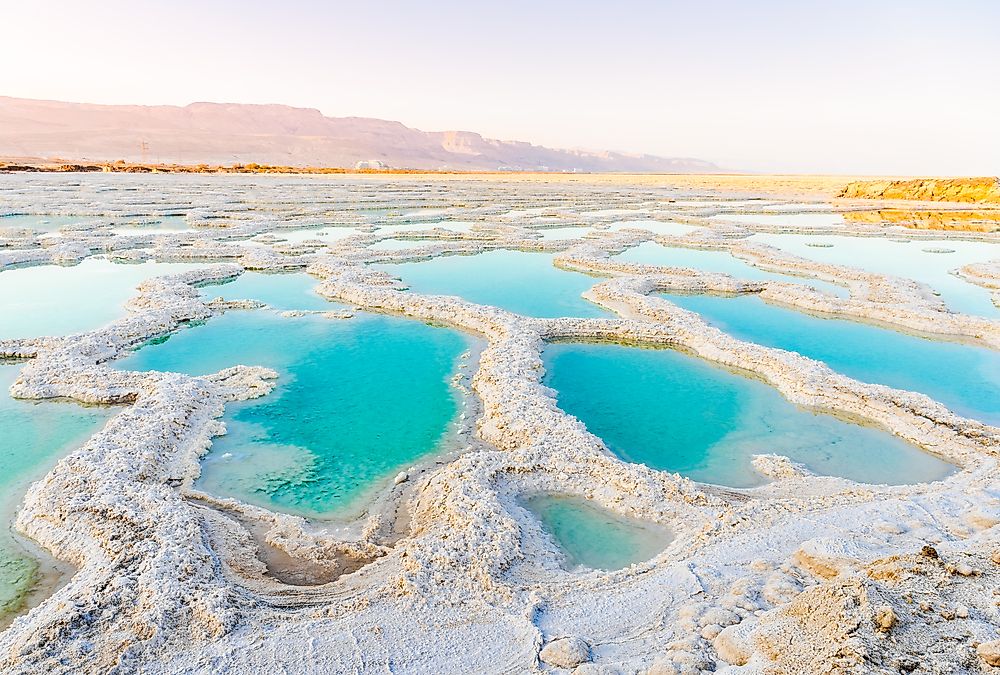
The Caspian Sea is the world's largest lake by surface area. Its enormous size and saline water have long supported its description as a sea, but it has no natural outlet to the ocean. Rivers supply its water, with the Volga contributing the largest share. Evaporation accounts for most of the water leaving the basin.
The Dead Sea is another saline lake. The Jordan River flows into it, and no outlet carries its water onward to the ocean. California's Salton Sea is also a lake. All three retain their familiar names, but none qualifies as an ocean-connected marine sea.
Two Ways To Count The Seas

The difference between 81 and 168 is 87 named subdivisions. Combining each with its largest containing sea produces the smaller total. Giving each subdivision a separate entry produces the larger one. Neighbouring seas remain separate under both approaches, and partial overlap does not establish containment.
Names alone do not determine which waters qualify. Hudson Bay, whose shores include Manitoba, is a marine basin despite its name. The Caspian is a lake despite being called a sea. Both totals exclude lakes and oceans, count alternative names once, and count shared seas only once worldwide.
Number Of Seas By Continent
| Continent or region | Without contained subdivisions | With subdivisions included |
|---|---|---|
| North America | 22 | 27 |
| Europe | 21 | 55 |
| Asia | 26 | 73 |
| Africa | 5 | 9 |
| South America | 5 | 6 |
| Australia and Oceania | 9 | 15 |
| Antarctica | 11 | 14 |
| Worldwide total, counting shared seas once | 81 | 168 |