How Long A Great Lakes Freighter Lasts Before It Is Scrapped
A Great Lakes freighter can spend 50 years hauling cargo, and rebuilding can keep some ships working into their eighties. There is no fixed age at which these vessels, known as lakers, go to scrap. The Lee A. Tregurtha, built in 1942, remains in Interlake Steamship's fleet more than eight decades later.
Fresh water helps preserve the steel, while owners replace equipment needed to keep cargo moving between Great Lakes ports. Eventually, another major repair must be weighed against what the ship can earn hauling freight. Its final delivery can precede its arrival at a scrapyard by years, and a useful cargo hull can sometimes keep working after its own engines stop.
Fresh Water Gives The Hull More Time

The Great Lakes' fresh water is less corrosive to a steel ship than ocean water. That gives owners more opportunity to keep an older hull in service through repeated repairs. Rust still develops, and sections of worn steel need replacing. Winter layup provides a regular opportunity for that work, when ships tie up between sailing seasons.
In January 2025, U.S. fleet operators announced nearly $150 million in maintenance spending across the Great Lakes region. Welders would install new steel while engineers serviced or replaced propulsion equipment. Electricians would upgrade electronics aboard the ships. After roughly nine and a half months of operation, much of the sailing crew could take leave while engineers and shipyard workers prepared the vessels for spring. Most of the U.S. laker fleet is too large to pass through the Seaway locks, so its major repair work takes place at facilities within the Great Lakes.
An Old Ship Can Have Much Newer Machinery

The Lee A. Tregurtha has a 1942 construction date and a diesel propulsion plant installed in 2006. Its alterations go well beyond the engine room. Built as a World War II tanker, it was widened and lengthened before entering Great Lakes service in 1961. A further extension in 1976 brought it to 826 feet. Workers inserted a 96-foot section into the middle of the vessel, increasing how much cargo it could carry.
In 1978, it became a self-unloader, equipped to transfer cargo ashore without depending on dockside unloading machinery. The later diesel conversion replaced the steam plant that had powered it through the 2005 season. Exhaust-gas scrubbers followed in 2016. Those systems use sprays to remove sulfur and particles from engine exhaust.
A Major Repair Can Decide The Final Year

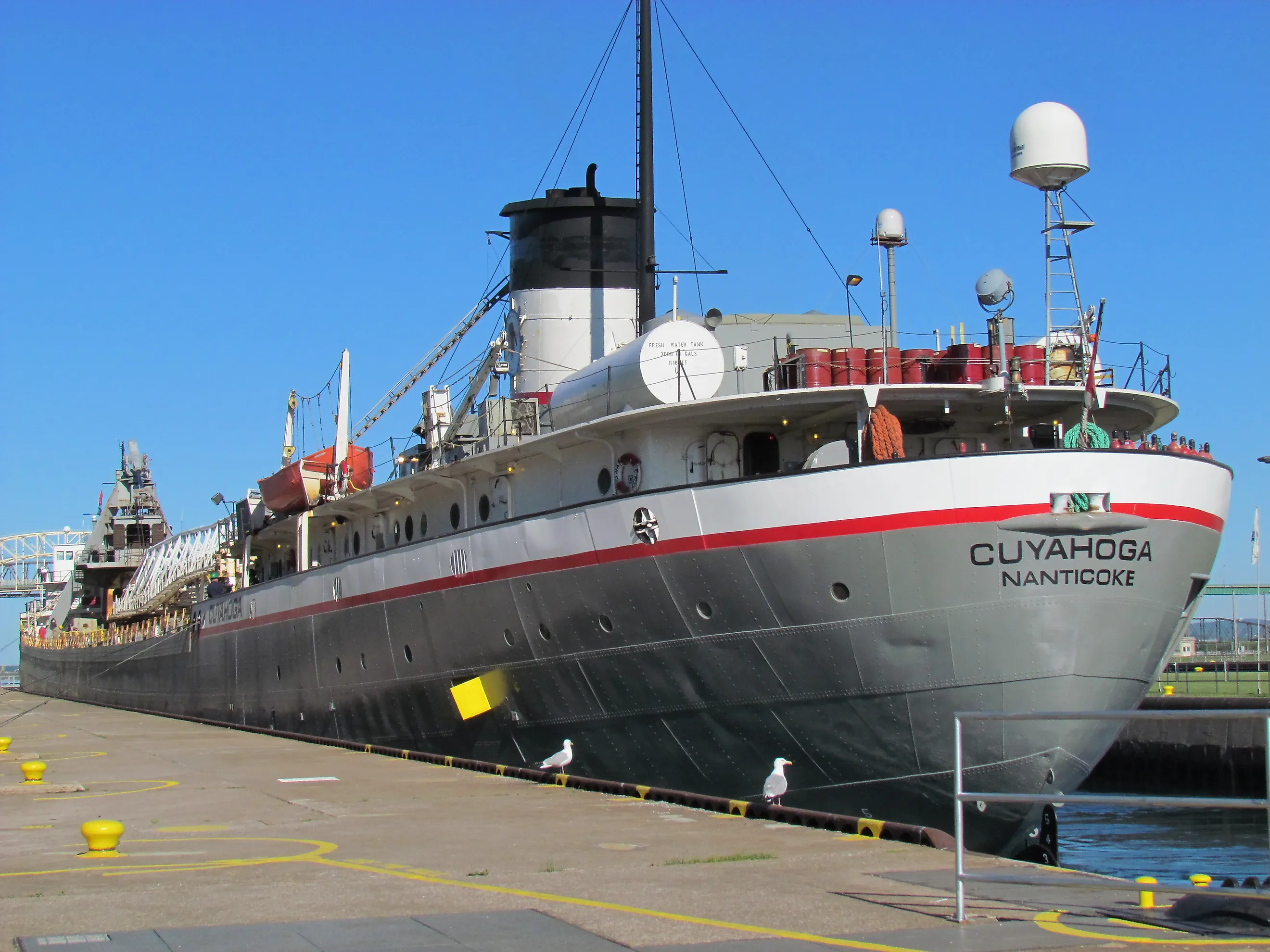
The Cuyahoga reached its eighties before a fire ended its working career. Built in Lorain, Ohio, in 1943, it later operated under the Canadian flag. An engine-room fire in 2023 was followed by repairs and a return to service that same year.
On March 15, 2024, the ship was undergoing maintenance in Ashtabula, Ohio, when fire broke out in a cargo hold. The crew and repair workers evacuated without injuries. The vessel had been preparing to leave for a scheduled drydock inspection in Erie, Pennsylvania, two days later. Instead, the damage left it a constructive total loss: repairs were judged economically impractical.
In July 2025, it was towed across Lake Erie to Marine Recycling Corporation's yard in Port Colborne, Ontario. The Cuyahoga reached the recycling yard at about 82 years old, more than a year after the fire ended its working career.
Some Freighters Keep Working As Barges

Scrapping is only one possible outcome when a ship stops sailing under its own power. The St. Marys Challenger was launched in 1906 and lasted until 2013 as a self-propelled freighter, about 107 years. It had already changed jobs, having been converted from an ore carrier into a cement carrier during the 1960s. Over the winter of 2013 to 2014, workers converted it into a barge so it could continue carrying cement with a tug providing propulsion. The steamer had required 25 people to operate it; the tug-and-barge arrangement required 11. Its forward pilothouse was removed and preserved. Visitors can now step inside it at the National Museum of the Great Lakes in Toledo, where it became part of a permanent exhibit opened in 2025.
Once an owner sends a freighter to Port Colborne for dismantling, the work begins with an inspection for hazardous materials. Marine Recycling Corporation's technicians sample substances aboard each vessel for laboratory testing and develop a plan for removing its wastes. Residual fuel and oil need handling, as does any asbestos found aboard. Equipment worth keeping can be returned to the ship's owner during dismantling. The company supplies recovered metal to Canadian steel mills and foundries, keeping records of what happens to the vessel's contents. Its contracts with owners ensure the ship will be recycled, closing off the possibility of selling it for another cargo-carrying career.