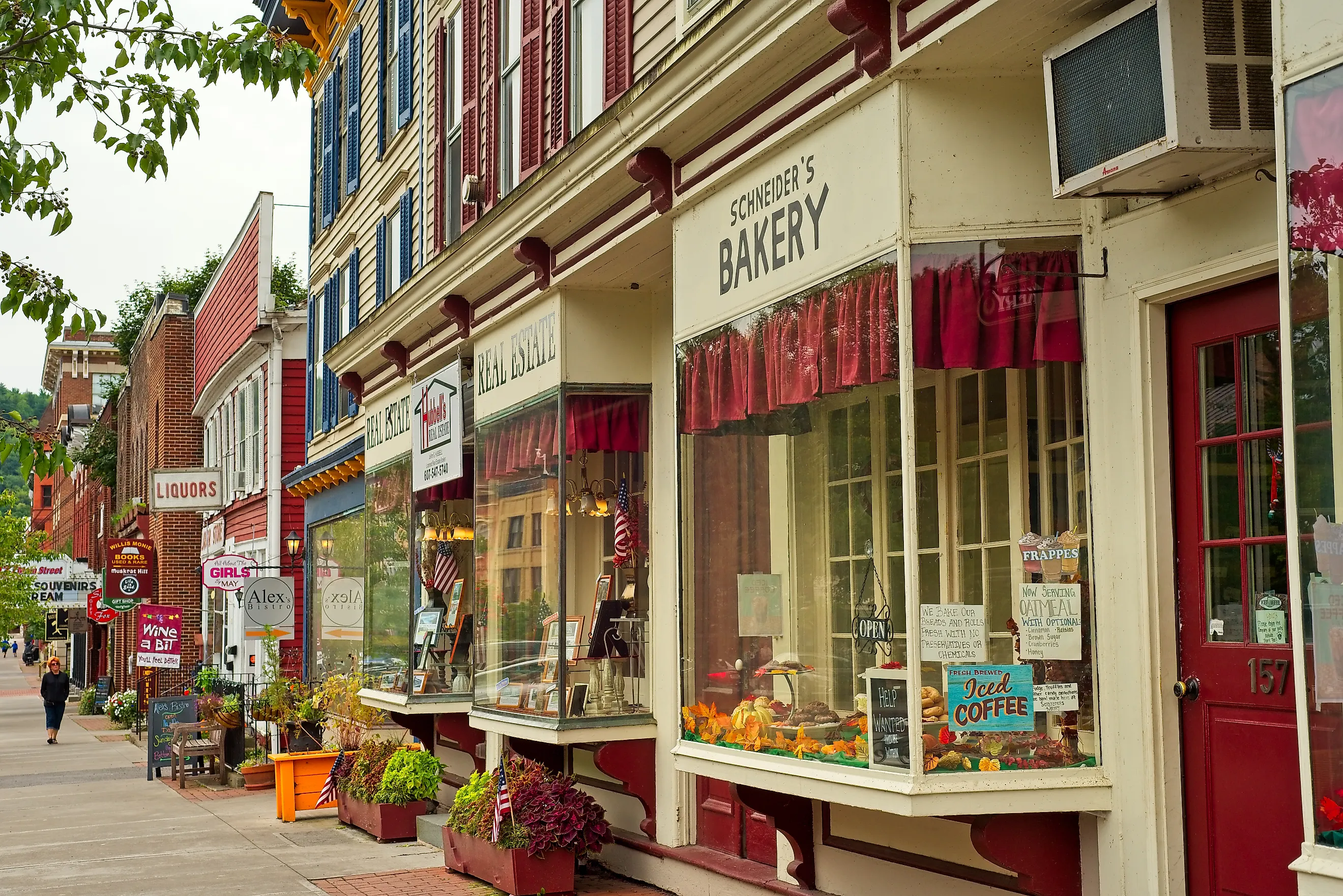
7 Upstate New York Towns Where Time Stands Still
Upstate New York is full of places where the past is living and working alongside the present. Glens Falls has the last original canal left in New York State, with nine miles of towpath along it. Near Cooperstown stands what is billed as the oldest covered bridge in America, which people still walk across, and Hammondsport runs a 1924 tour boat on Keuka Lake every summer. Corning made the glass for Thomas Edison's light bulbs, and its glassblowers still work the furnace in front of visitors every day. Skaneateles has a museum in an 1899 creamery, and up in Lewis County the village library sits in the carriage house of a lumber baron's estate. These are seven Upstate New York towns where time stands still, spread between the Hudson and the Finger Lakes.
Glens Falls

The Hudson River, which the Mohicans called Muhheakunnuk, or "the river that flows two ways," runs through Glens Falls in a rocky gorge. The Park Theater faces City Park from Park Street, and it originally opened in 1911 as the first movie theater in town. The nonprofit that runs it now books touring music, jazz nights, album listening sessions and improv, with a bar inside the building. On Glen Street, the Chapman Museum fills the 1867 DeLong House with local history and photographs by Seneca Ray Stoddard, who photographed the region 150 years ago. Its staff lead a haunted downtown walking tour each October. Over on Warren Street, the Hyde Collection hangs Old Master and American paintings inside the founders' 1912 villa, with modern galleries attached for rotating shows. Under the Cooper's Cave Bridge, a platform takes you to the cave James Fenimore Cooper wrote about in The Last of the Mohicans. At Overlook Park, the Feeder Canal towpath runs nine miles east and is regarded as the state's last remaining original canal.
Lyons Falls

Lyons Falls stands at the confluence of the Moose River and the Black River, a village between the Adirondacks and the Tug Hill Plateau. The falls that gave the place its name powered mills for more than a century, and the water still turns the Lyons Falls Mill hydro station below the junction of the two rivers. The best look at the falls is from the two canoe launches, Upper Lyons Falls above the drop and Lower Lyons Falls below it. Riverside Park spreads along the east bank on Laura Street, where the farmers market sets up under the pavilion on Tuesday afternoons from June into October. The village floods a skating rink in the same park during winter. The village library is in the carriage house of the Gould Mansion on High Street, and it hosts open mic jams, a Lego club and cookbook swaps. Down on lower McAlpine Street, Basin Park is the old basin of the Black River Canal, which carried more than 100 locks across 35 miles before it was abandoned in 1926. That canal fed the Erie system and opened northern New York to trade, and the Black River Trail scenic byway now follows much of the same valley north out of Rome.
Harrisville

Harrisville is a hamlet in the Town of Diana, on the West Branch of the Oswegatchie. It gets its name from settler Foskit Harris, who was offered two acres of land and the waterfall on the river, and who built a sawmill and a gristmill on that water. Main Street is still the center of town, with the Harrisville Free Library at the heart of it. South of town, Bonaparte's Cave State Forest covers 1,435 acres of ledges and small caves where, by local telling, Napoleon's brother Joseph once hid from assassins, and the North Mud Pond Trail runs through it. Off North Shore Road, Lake Bonaparte covers 1,248 acres with a state boat ramp and almost 12 miles of shoreline, home to smallmouth bass, northern pike and brown trout. Joseph Bonaparte, once the king of Spain, called it the Lake of Diana before it took his name. Washington Street leads out to Sand Bay State Forest and the sandy shore along the lake's southern edge. Every August, the hamlet's Community Days start with a race from Depot Street.
Cooperstown

Cooperstown sits at the foot of Otsego Lake, where the Susquehanna River starts. The novelist James Fenimore Cooper nicknamed the water Glimmerglass in his Leatherstocking Tales. The National Baseball Hall of Fame opened its doors on Main Street in 1939, and its plaque gallery and three floors of exhibits remain a hit attraction. A block behind the storefronts, Doubleday Field hosts games from April to October, free to watch, and the Friends of the Field run hour-long tours. Along the lake road, Fenimore Farm and Country Village is a village of buildings moved here from the 1790s through the 1840s, staffed by costumed interpreters. Stops include a working blacksmith shop, the 1797 Lippitt farmhouse and the infamous Cardiff Giant in the main barn. Across the road, the Fenimore Art Museum is located in a 1933 mansion built on land Cooper once farmed. At the north end of the lake, guided tours run through the nearly 50 rooms of Hyde Hall, and the Hyde Hall Covered Bridge, finished in 1825, is billed as the oldest covered bridge still standing in America.
Skaneateles

Skaneateles sits at the north end of Skaneateles Lake. The lake is 16 miles long, 300 feet deep and the fifth largest of the Finger Lakes. Genesee Street runs through downtown, and the Sherwood Inn faces the water on the west end, restored room by room and still serving patrons in the tavern. On Hannum Street, the Skaneateles Historical Society runs its museum in the 1899 creamery where 200 farmers once brought their milk. The collection includes locally built rowboats, carriages, wooden toys and Lightning No. 1. Down at the lakefront, Mid Lakes Navigation operates a 50-minute narrated cruise seven days a week. The company has delivered mail to shoreside camps by boat since 1968, one of the few in the country that still does. Clift Park has a public pier and a row of benches along the shore. North of the village, the Charlie Major Nature Trail follows the grade of the old Skaneateles Short Line Railroad for about a mile along the creek. It crosses three wooden bridges and passes the ruins of the dams and mills the trains once served.
Hammondsport

Hammondsport sits at the south end of Keuka Lake, a Y-shaped lake and the third largest of the Finger Lakes. Shethar Street borders the Village Square, only a block from the water. It has a gazebo in the middle and free music on Thursday evenings in July and August. The storefronts around it include antique dealers, boutiques and the Village Tavern, which still pours drinks at a century-old bar. South of the village on Route 54, the Glenn H. Curtiss Museum has a reproduction of the 1908 June Bug, a 1913 flying boat and a Jenny from 1917. Volunteers rebuild aircraft in the restoration shop where anyone can watch. Curtiss grew up in Hammondsport and built his machines here, which is why the village calls itself the cradle of aviation. On Pleasant Valley Road, the Finger Lakes Boating Museum has six galleries with more than 100 boats built in the region. From June through October, it runs the Pat II, a tour boat from 1924, out of the dock at Depot Park. On Middle Road, Dr. Konstantin Frank began planting European vinifera vines in 1957, pioneering the grapes in the Eastern United States, and some of those rows are still in production. Today, Dr. Konstantin Frank Winery, run by the fourth generation of the family, pours guided tastings among the vines on the slope above the lake.
Corning

Corning sits along the Chemung River, and after a flood wrecked downtown in 1972, the city rebuilt its storefronts rather than replace them. Market Street now runs brick-paved past more than 100 shops and galleries, with Centerway Square halfway along it. The Corning Museum of Glass calls itself the world's largest glass museum, and master glassblowers work the furnace in its Hot Shop through the day. On Cedar Street, the Rockwell Museum shows American art inside Corning's former city hall, with guided tours on second Saturdays. The Palace Theatre still shows films on one screen on West Market Street. On West Pulteney Street, guided tours visit the 1796 Benjamin Patterson Inn at Heritage Village, including a look at the kitchen with a working open hearth and the tap room where travelers once did business. Every Memorial Day weekend, GlassFest closes Market Street for glass demonstrations, live music and fireworks over the river.
Where The Past Still Works
History is alive in these seven towns. In a single day you can tour a mansion, ride an old boat, watch glass being blown and eat in a historic tavern. Whether you're walking a canal towpath, catching a show in a theater from 1911 or looking down a row of vines planted in the 1950s, these are some of the places where Upstate New York has made sure to retain elements of its past. Natural beauty and history sit side by side across Upstate New York.