How Much Power Hoover Dam Loses For Every Foot Lake Mead Drops
The Bureau of Reclamation's working figure is 5.7 megawatts for every foot Lake Mead falls. It is a real number, it comes from the agency's own engineers, and for most of the reservoir's range it describes what happens. It is also badly misleading, because the loss is not a smooth slope. At elevation 1,035 feet there is a cliff where most of Hoover Dam's turbines have to shut down, and crossing that single foot costs roughly 922 megawatts. One foot at that elevation does the damage of about 162 feet anywhere else. As of early October, Lake Mead was sitting 2.76 feet above it.
Why Elevation Equals Electricity
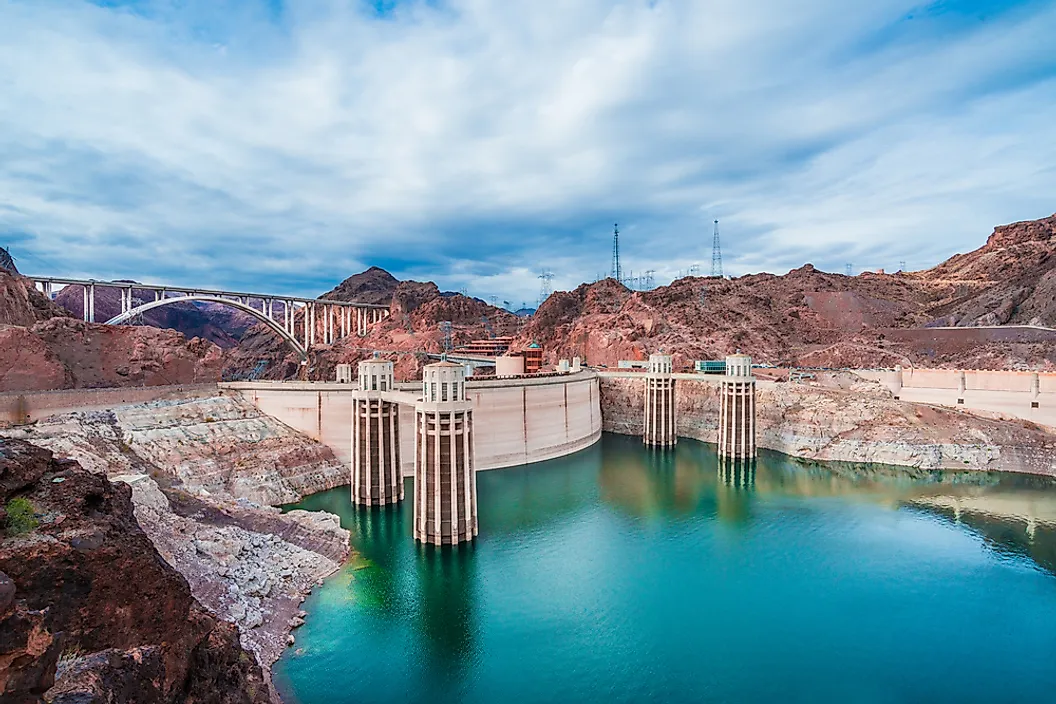
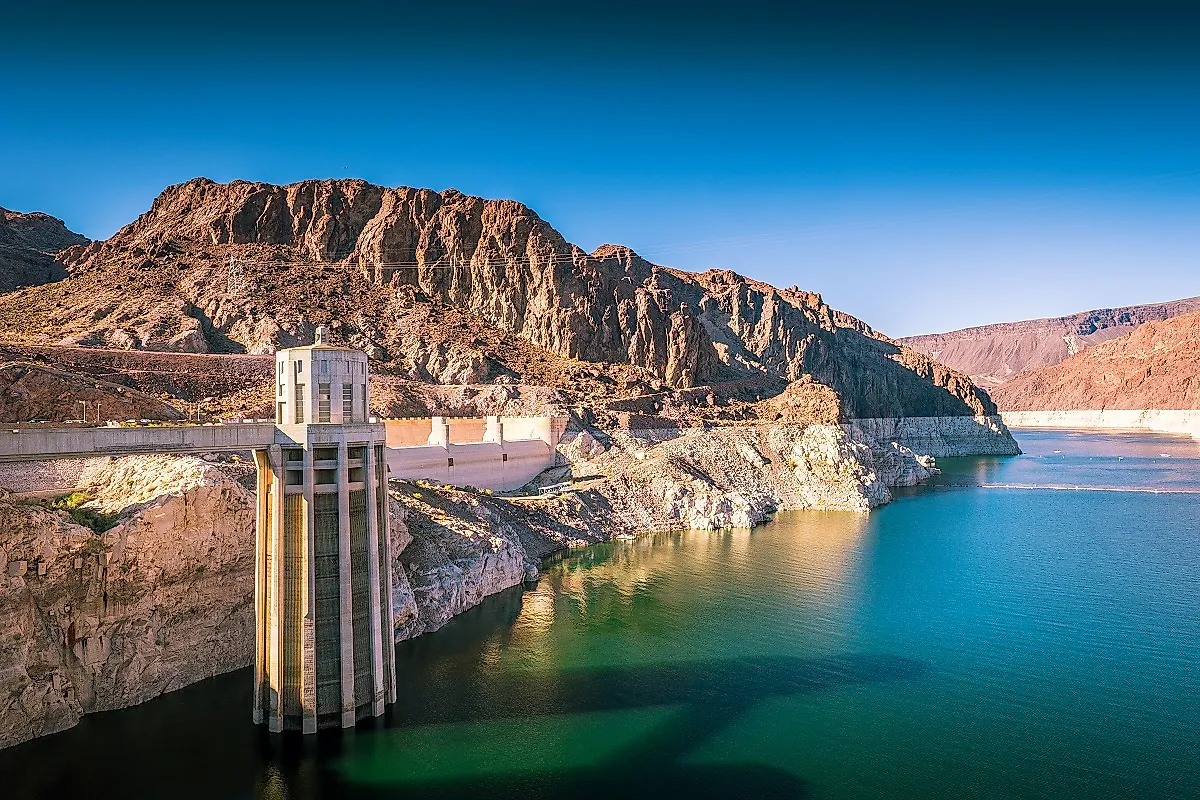
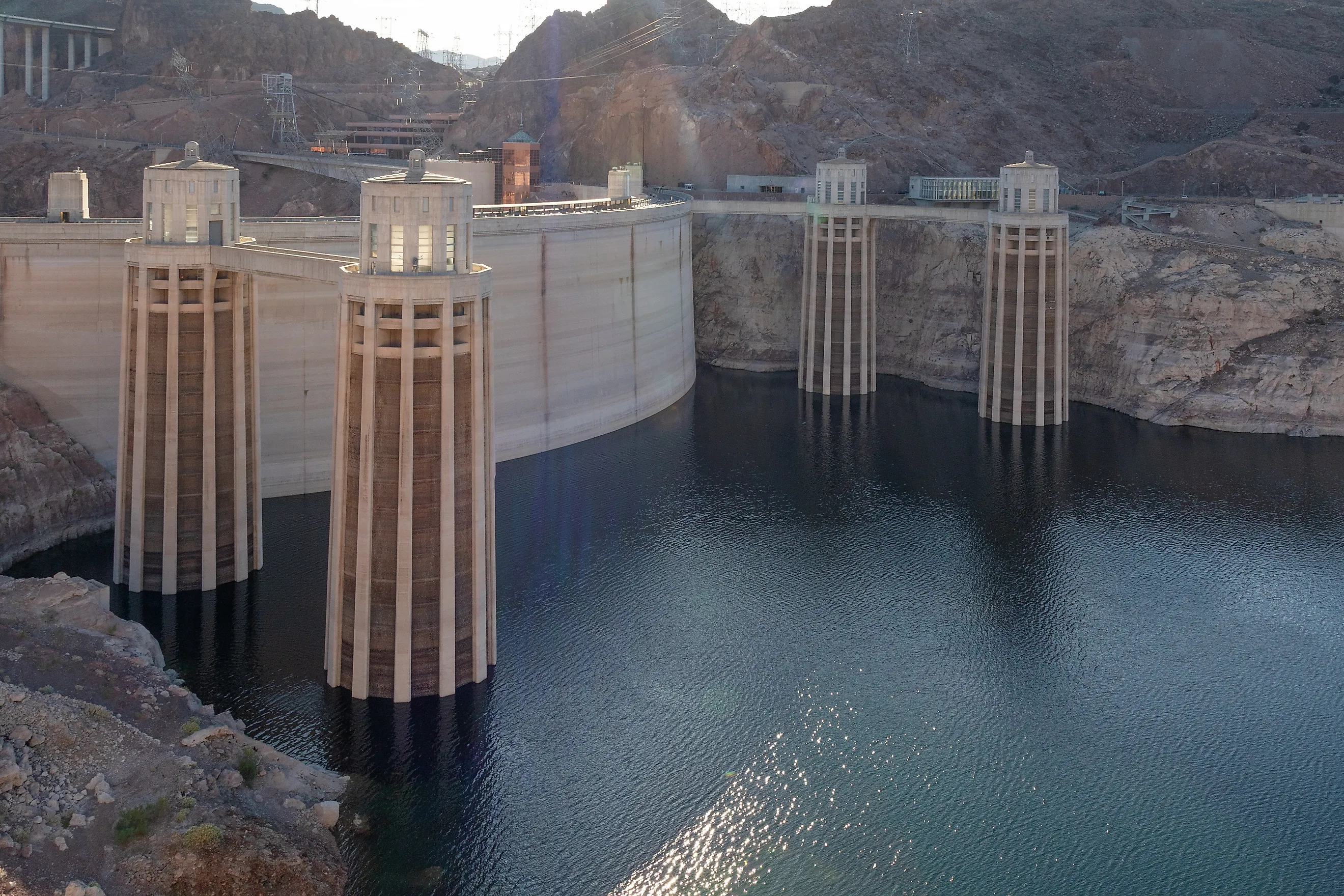
A hydroelectric dam does not run on water so much as on the weight of water stacked above the turbines. That vertical distance is called hydraulic head, and at Hoover it reaches about 590 feet when Lake Mead is full. The pressure that head produces is what spins the machinery, so every foot the reservoir falls means slightly less pressure and slightly less electricity from each gallon passing through.
Hoover's installed capacity at full pool is 2,080 megawatts, roughly equivalent to a large coal or nuclear station. That figure assumes a full lake, and the lake has not been full since 2000.
The 5.7 Megawatt Rule

The per-foot number comes from Reclamation and has been in circulation for years. Every foot of elevation loss reduces the dam's power potential by about 5.7 megawatts. Over ten feet that is 57 megawatts, over a hundred feet it is 570, and it holds reasonably well through the ordinary operating range where all the turbines are running.
It is a useful rule of thumb for small movements. It stops working entirely at one specific elevation.
The Cliff At 1,035 Feet

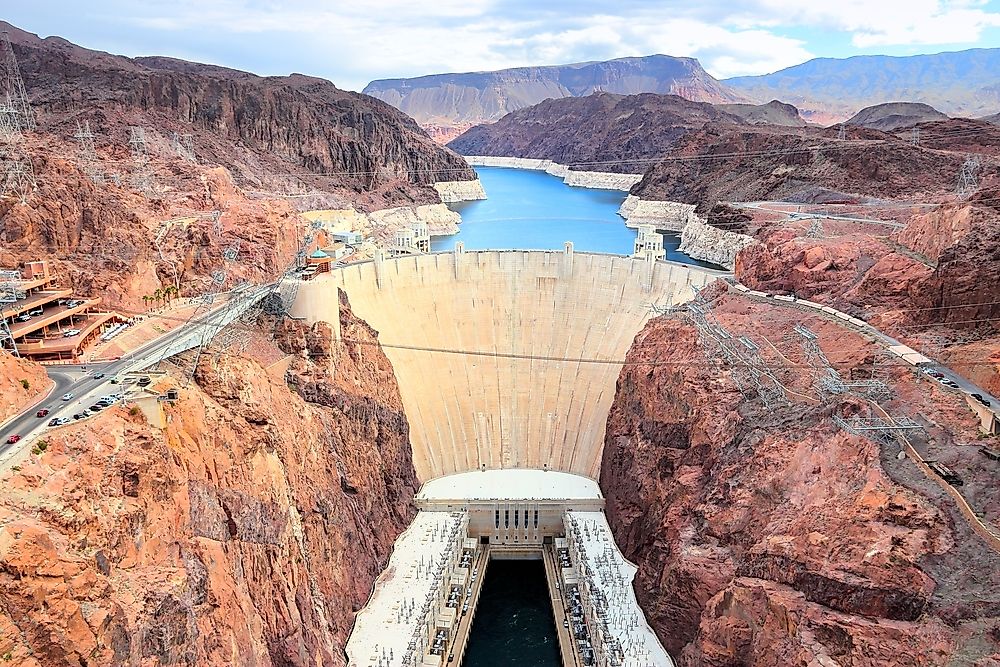
Hoover runs seventeen main turbines, and twelve of them are the original design. Those older machines suffer severe cavitation damage when the reservoir drops below 1,035 feet, so they have to come offline.
The result is not a gentle taper. Reclamation's figures put current capacity at around 1,304 megawatts and capacity below 1,035 feet at 382, which is a drop of 922 megawatts and a cut of roughly 70 percent at a single threshold.
Divide that 922 megawatts by the 5.7 per foot rate and you get 162 feet. The dam loses as much capacity crossing one foot at 1,035 as it would losing 162 feet anywhere in the normal range.
Five Machines Carry The Rest

What keeps the dam generating at all below that line is a small group of newer machines. Between 2011 and 2016 Reclamation spent about 42 million dollars installing five wide-head turbines designed to run efficiently at low head and resist the cavitation that wrecks conventional runners. Those five can operate down to 950 feet.
One complication matters right now. One of the five has been offline, and Reclamation has not given an estimate for its return, which reduces the low-water capacity the dam can actually deliver.
Three More Are Being Installed

The response is funded and underway, and it changes the size of the cliff rather than removing it. On May 21 Reclamation announced it would spend 52 million dollars on three additional wide-head turbines, also capable of generating down to 950 feet. Once they join the existing five, the capacity cut when Mead drops below 1,035 feet falls from 70 percent to 58.
Still a severe reduction, but the difference between those two percentages is several hundred megawatts, which is the entire justification for the spending.
Where The Lake Is Now
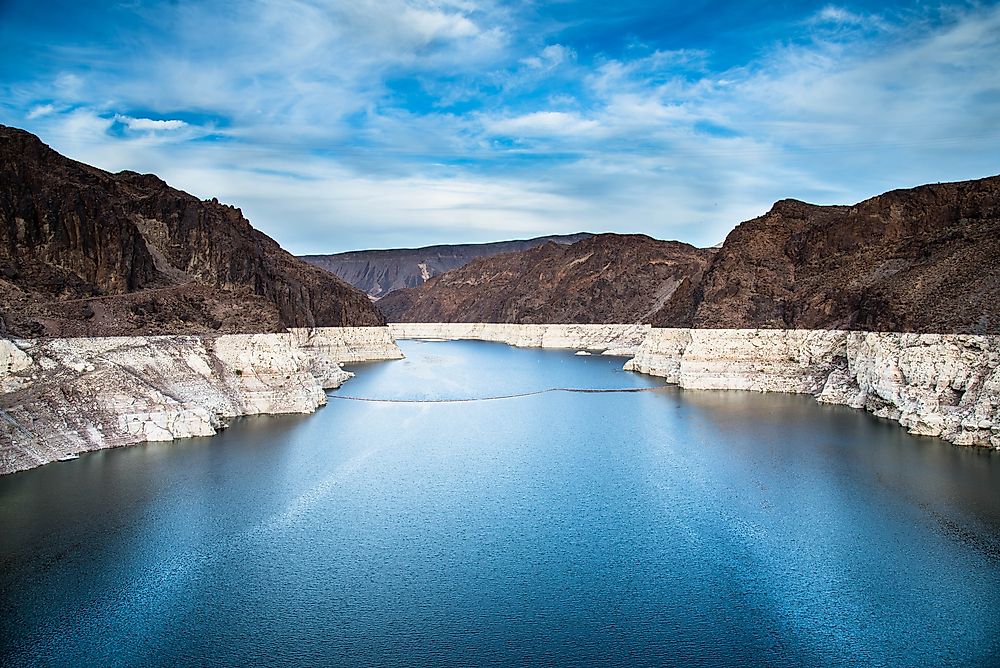
In June 2026 Lake Mead sat at 1,050 feet and was dropping about a foot every five days, which put the 1,035 threshold within reach that summer.
By early October the reservoir was near 1,037.8 feet, which leaves a margin of under three feet above the cliff. At the June rate of decline that margin would be gone in a fortnight, though the autumn slowdown in deliveries has flattened the curve considerably.
Reclamation's own monthly projections have put the chance of dipping below 1,035 in spring 2027 at around 10 percent.
Half The Output Is Already Gone

Before any of that cliff arrives, the dam has already lost an enormous amount of generation to the slow version of the same process.
Hoover's output today runs 40 to 50 percent below what it produced in 2000, the last year Lake Mead was effectively full. That decline happened gradually, through the 5.7 megawatts per foot mechanism, across a quarter century.
Nobody experienced it as a crisis, which is the useful thing about it. An enormous reduction in a major power plant's output can occur over decades without anybody noticing a blackout.
Who Actually Notices
Hoover's power goes out under long-standing contracts rather than onto an open market, and the smallest customers are the most exposed. Lincoln County Power District in eastern Nevada took all of its electricity from Hoover until about 2005 and now takes roughly 70 percent. Its general manager has said plainly that the district is concerned about Mead dropping further. Larger utilities in California, Arizona and Nevada can absorb a shortfall by buying elsewhere. A small rural district has less room.
Solar additions have cushioned part of the gap, which is why the decline has not produced the consequences the raw numbers might suggest.
Capacity Is Not The Same As Generation

One distinction keeps these figures honest, because the headline number overstates what the dam actually produces. Hoover's capacity factor is about 18 percent, meaning it generates nowhere near its nameplate rating most of the time. It is operated as a peaking plant, spinning up when demand spikes and easing off otherwise, because that flexibility is the most valuable thing a hydro plant offers a grid.
So losing capacity does not remove a constant 2,080 megawatts from the system. It removes the ability to deliver power quickly at the moment the grid most needs it, which is a different loss and in some ways a worse one.
The Short Answer

Hoover Dam loses about 5.7 megawatts of capacity for every foot Lake Mead drops, and that figure is accurate right up until the reservoir reaches 1,035 feet, at which point twelve turbines shut down and roughly 922 megawatts go at once.
The useful way to hold both numbers is that the per-foot rate describes the slow erosion that has already cost the dam half its output since 2000, while the cliff describes what is waiting less than three feet below where the lake is sitting today.