The Largest Lakes Entirely Inside One US State
Most of the country's biggest lakes sit across more than one state, and a few reach the ocean. A smaller set belongs to a single state alone, and some of them are enormous. The largest is Iliamna Lake in Alaska, a body of water wider than some countries. Reservoirs are left out here because they are artificial rather than natural. That rule excludes Lake Sakakawea and its 609 square miles (1,577 square kilometers). The following list ranks ten of the largest natural lakes contained entirely within a single state by their surface area.
Iliamna Lake, Alaska - 1,150 square miles (3,000 square kilometers)

Iliamna Lake is both the largest lake entirely within Alaska, and the second largest freshwater lake entirely within the United States. It has a total surface area of 1,150 square miles (3,000 square kilometers). It is located in southwestern Alaska, near Lake Clark National Park and Preserve to the north, and Katmai National Park and Preserve to the south. Iliamna Lake drains through the Kvichak River into Bristol Bay and the Bering Sea. The largest returns of Sockeye salmon of any lake on Earth spawn here, and the lake holds the only freshwater seal population in the United States, one of only five in the northern hemisphere.
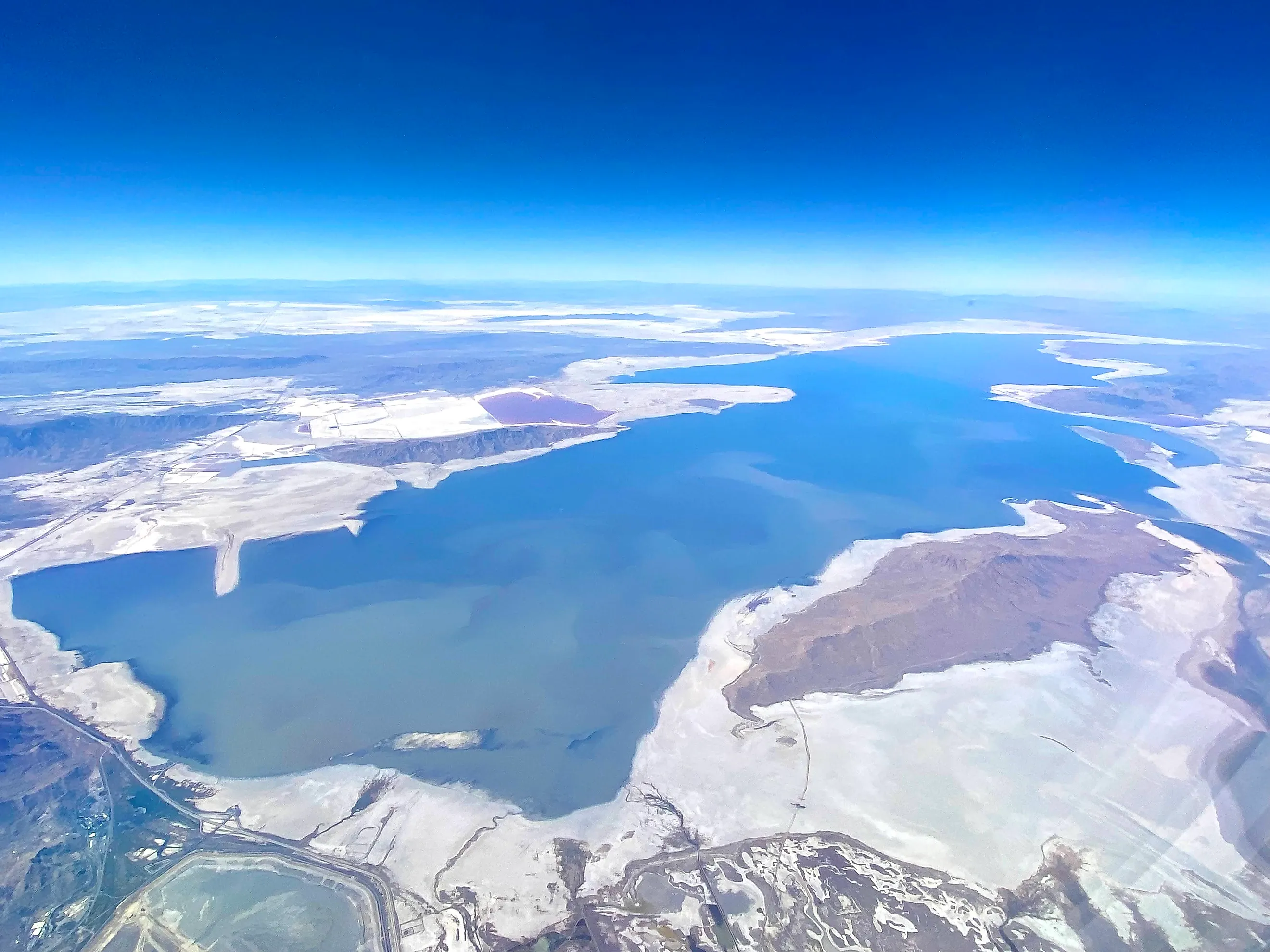
Great Salt Lake, Utah - 888 square miles (2,300 square km)

The Great Salt Lake had a record surface area of 3,330 square miles (8,547 square kilometers) in 1986. It fluctuates greatly in size, primarily due to rates of evaporation and the flow of the Bear, Weber, and Jordan Rivers that feed it. At its lowest levels in 2022, it had a total surface area of 888 square miles (2,300 square kilometers). Lake levels shift from highs during spring runoff and drop to lows in October and November, causing the surface area to periodically change throughout the year. Brine shrimp thrive in the salty water, and each year as many as 12 million migratory birds from 339 species stop to rest, feed, and breed on the shrimp.
Lake Okeechobee, Florida - 730 square miles (1,900 square km)

Lake Okeechobee is located in southeastern Florida, at the northern edge of the Everglades. Although once part of the prehistoric Pamlico Sea, it is now the third-largest freshwater lake entirely within the United States, covering an area of 730 square miles (1,900 square km), making it bigger than London. Although a natural lake, 140 miles (225 kilometers) of levees were constructed around the lake to regulate water levels and prevent flooding after the Great Miami Hurricane in 1926 and the Okeechobee Hurricane in 1928. Despite the work done on the lake, it is home to around 30,000 American Alligators.
Lake Pontchartrain, Louisiana - 630 square miles (1,631 square kilometers)

Lake Pontchartrain in southeast Louisiana covers a total area of 630 square miles (1,631 square kilometers). Since it connects to Lake Borgne and the Gulf of Mexico through a narrow passage called the Rigolets, it is more of a tidal lagoon with brackish waters. Due to this, the lake is inhabited by both freshwater and marine fish, as well as waterfowl, shore birds, and sea birds. However, the salinity can be significantly reduced by floodwaters from the Mississippi River. The longest continuous bridge over water in the world, Lake Pontchartrain Causeway, crosses over Lake Pontchartrain, linking Mandeville to Metairie (a suburb of New Orleans).
Red Lake, Minnesota - 427 square miles (1,106 square kilometers)

Red Lake is separated by a peninsula into Upper Red Lake and Lower Red Lake. Together, they make the largest lake entirely within Minnesota, with an area of 427 square miles (1,106 square kilometers). The lake drains into the Red River of the North, which then flows towards Canada and Hudson Bay. Almost all of the lake lies within the Red Lake Indian Reservation, home of the Red Lake Band of Chippewa. The marshy, forested shores form habitat for boreal wildlife, including deer, bear, and wolves.
Lake Winnebago, Wisconsin - 206 square miles (533 square kilometers)

Unlike many of the lakes on this list, which are in remote wilderness settings, the largest lake in Wisconsin has many settlements on its shores, such as Oshkosh, Neenah, Menasha, and Fond du Lac. Lake Winnebago covers an area of 206 square miles (533 square kilometers) and provides drinking water for over 250,000 people. The two primary inflowing rivers are the Wolf River and the Fox River. During spring and fall migration, waterfowl such as swans, ducks, and geese gather on the water. During the winter, bald eagles are known to congregate near open water on Lake Winnebago and along the Fox River.
Flathead Lake, Montana - 197 square miles (510 square kilometers)

Flathead Lake is not only the largest lake entirely within Montana, but it is both the largest natural freshwater lake west of the Mississippi and the largest natural freshwater lake in the western United States outside of Alaska. The lake was formed by glacial damming of the Flathead River. It is encompassed by the Mission Range on its eastern shore and by the Salish Mountains on its western shore. The surrounding peaks are home to grizzly bears, wolves, and elk, while thousands of migratory birds utilize its wetlands, and finally, the waters are home to bull and westslope cutthroat trout.
Pyramid Lake, Nevada - 188 square miles (487 square kilometers)

Pyramid Lake is the last remnant of the ancient Lake Lahontan. It was formed approximately 2.6 million to 11,700 years ago, making it one of the oldest and largest lakes in North America. Its total area of 188 square miles (487 square kilometers) is sandwiched between the Lake Range and the Virginia Mountains. The Truckee River enters Pyramid Lake, but water does not naturally flow out of it. The lake has no outlet, making it endorheic and creating a saline ecosystem. The lake's ecosystem is home to the world's largest Lahontan cutthroat trout, one of the largest colonies of American white pelicans, and the endangered cui-ui fish, which occurs only in the Truckee River and in Pyramid Lake.
Moosehead Lake, Maine - 120 square miles (310 square kilometers)
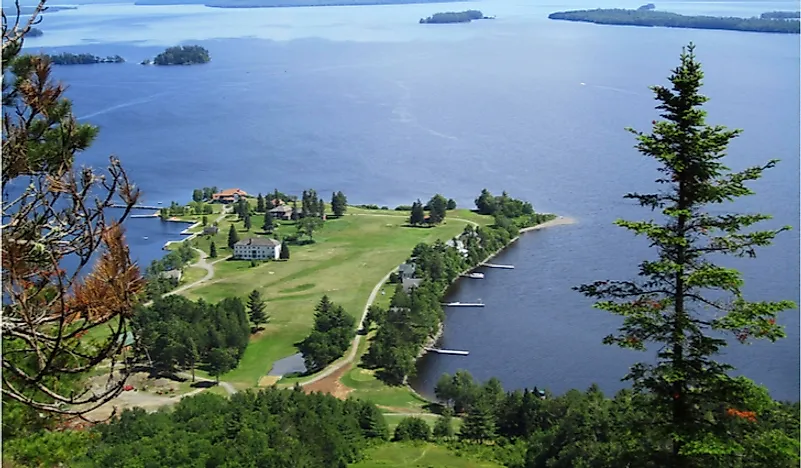
When viewed from the summit of Mount Kineo on its eastern shore, it is said that Moosehead Lake resembles the head of a moose or a crouching moose. Moosehead Lake is situated in the heart of the Maine Highlands, covering a total area of 120 square miles (310 square kilometers), making it the largest lake entirely within Maine. The rugged shoreline of the lake lacks development due to the prevalence of so many coves. The vast expanse of forest surrounding the lake is home to approximately 3,000 to 4,000 moose, the densest population of anywhere in the continental United States.
Upper Klamath Lake, Oregon - 96 square miles (248 square kilometers)

Upper Klamath Lake is the largest body of freshwater west of the Rocky Mountains. It sits entirely within the boundaries of Oregon, covering an area of 96 square miles (248 square kilometers). It lies east of the Cascade Mountains at an elevation of 4,139 feet (1,261 meters). The lake is fed by the Williamson and Sprague Rivers, and is the headwaters of the Klamath River. The forested uplands, marshlands, and open water form nesting and rearing grounds for waterfowl, including American white pelicans and several species of heron. Bald eagles and ospreys also nest nearby and can often be seen fishing in the lake.
The Largest Single-State Natural Lakes in the United States
Pyramid Lake is the remnant of ancient Lake Lahontan. Flathead Lake was carved by glaciers. Lake Okeechobee, although natural, has been engineered to combat flooding. The largest single-state natural lakes appear in drastically different landscapes, but that does not make them desolate bodies of water devoid of life. Each lake supports a broad array of wildlife suited to freshwater, brackish water, and saline water.