The US Rivers With The Most Water Moccasins
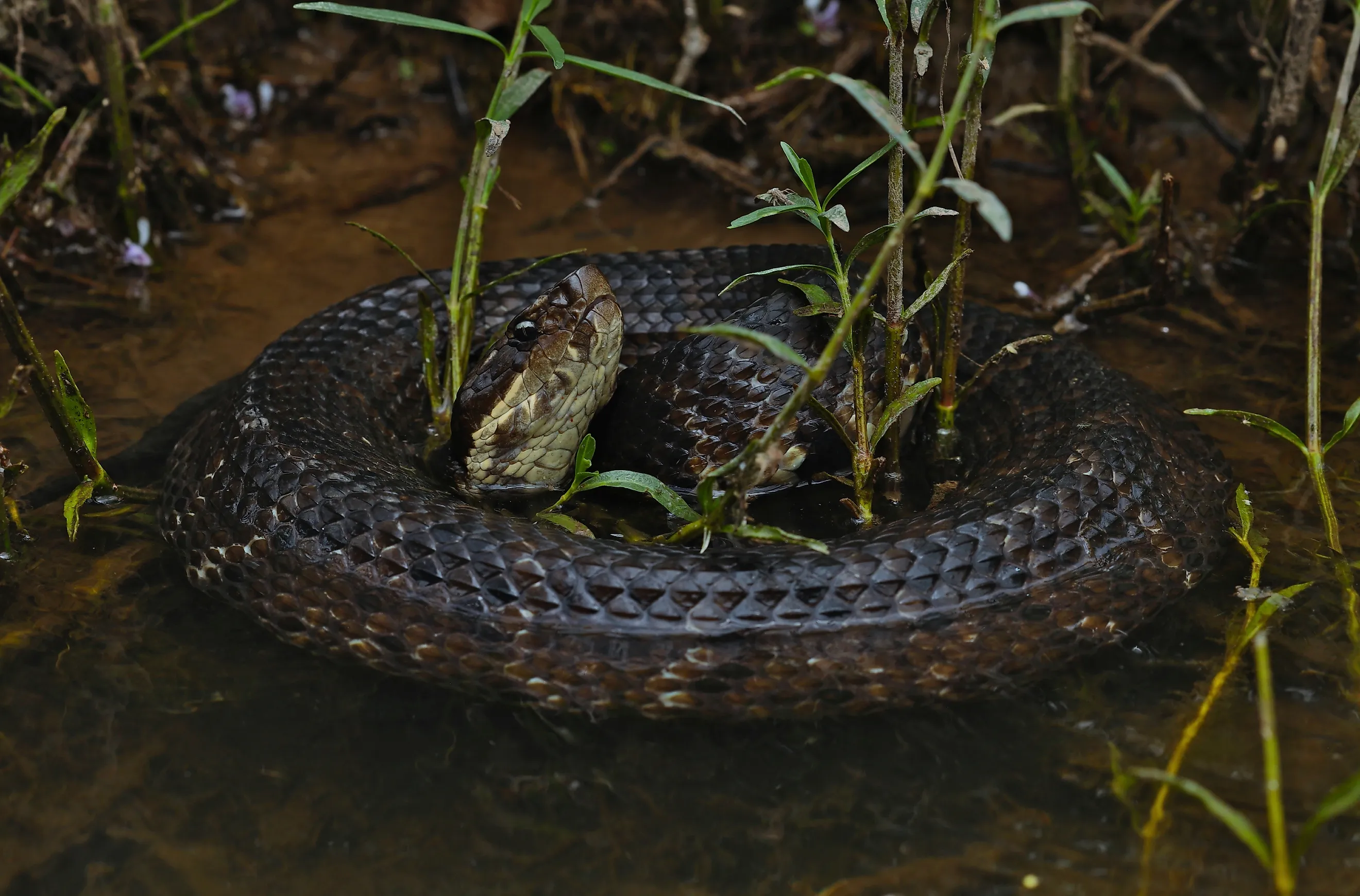
Water moccasin and cottonmouth are two names for the same animal, Agkistrodon piscivorus, and only one of them is reliable. Cottonmouth means this species and nothing else. Water moccasin gets applied loosely to several harmless watersnakes that share the same rivers, which is why a lot of reported sightings are nothing of the kind. With that sorted, the actual answer: the rivers with the most cottonmouths are slow, warm, Southern, and lined with the cypress knees, log jams and overhanging banks the species hunts from. The Atchafalaya leads, and it is not close.
What Makes A River Good For Them

Cottonmouths are the most aquatic venomous snake in North America, and they want a very particular kind of water. Slow or still is essential, because a fast river gives a hunting snake nothing to work with. Structure matters just as much: cypress knees, submerged logs, root tangles and undercut banks provide both ambush positions and cover. The food has to be there, which in practice means frogs, fish and small mammals in quantity. And the winters have to be mild enough that the species can get through them.
Put those four together and you have described the lower Mississippi valley and the Gulf and South Atlantic coastal plains, which is exactly where the cottonmouth lives.
The Atchafalaya, Louisiana

The Atchafalaya Basin is the largest wetland and swamp in the United States, covering roughly a million acres of bottomland hardwood, cypress-tupelo swamp and bayou in south-central Louisiana.
Everything on the list above is present here at enormous scale. The river braids into bayous and backwater, cypress stands provide continuous structure, the prey base is extraordinary, and the climate is subtropical. If you wanted to design a cottonmouth landscape from scratch, you would build the Atchafalaya.
It is also the clearest demonstration that this is a habitat story rather than a river story. The snakes are not in the main channel. They are in the swamp the river made.
The Pearl River, Mississippi And Louisiana

The Pearl forms much of the Mississippi and Louisiana border and spreads into the Honey Island Swamp near its lower end, which is among the most intact river swamps in the country.
Honey Island is roughly 70,000 acres of bottomland hardwood and cypress, a good portion of it a permanently protected wildlife area. It is close enough to New Orleans to be the swamp most visitors actually see, which makes it the place where tourists most often encounter the species.
The guides will point them out. The snakes will be doing exactly what cottonmouths do, which is sitting motionless on a log looking like part of the log.
The Suwannee, Florida And Georgia

The Suwannee runs about 246 miles from the Okefenokee Swamp in Georgia down to the Gulf, and the top end of it is the whole point. Okefenokee is a 400,000-acre peat bog and one of the largest intact freshwater wetlands in North America, and the Suwannee is its principal outflow. A river that begins inside a swamp that size carries swamp conditions a long way downstream.
The Suwannee itself is a blackwater river, tannin-stained and slow, with limestone banks, springs and overhanging vegetation. Cottonmouths use the vegetated margins rather than the open channel, which is where paddlers meet them.
The Neches, Texas

East Texas is the western edge of the cottonmouth's range, and the Neches is the river that defines it. The Neches runs through the Big Thicket, a biological crossroads where southeastern swamp, eastern forest, central plains and southwestern desert ecosystems meet, producing an unusual concentration of species in a small area. The river's bottomland sloughs and oxbows are classic cottonmouth water.
West of here the habitat thins out quickly, and the species gives way to other snakes. The Neches is close to the end of the line.
The Ouachita, Arkansas And Louisiana

The Ouachita changes character completely along its length, which makes it a useful illustration of where cottonmouths actually live. In the Arkansas highlands it is a clear, relatively quick river running out of the Ouachita Mountains, and that upper stretch is not prime habitat. By the time it reaches Louisiana it has slowed into a broad, warm lowland river with oxbows, backwaters and bottomland forest on both sides.
The snakes are concentrated in that lower half. Same river, two entirely different propositions depending on gradient.
The Apalachicola, Florida
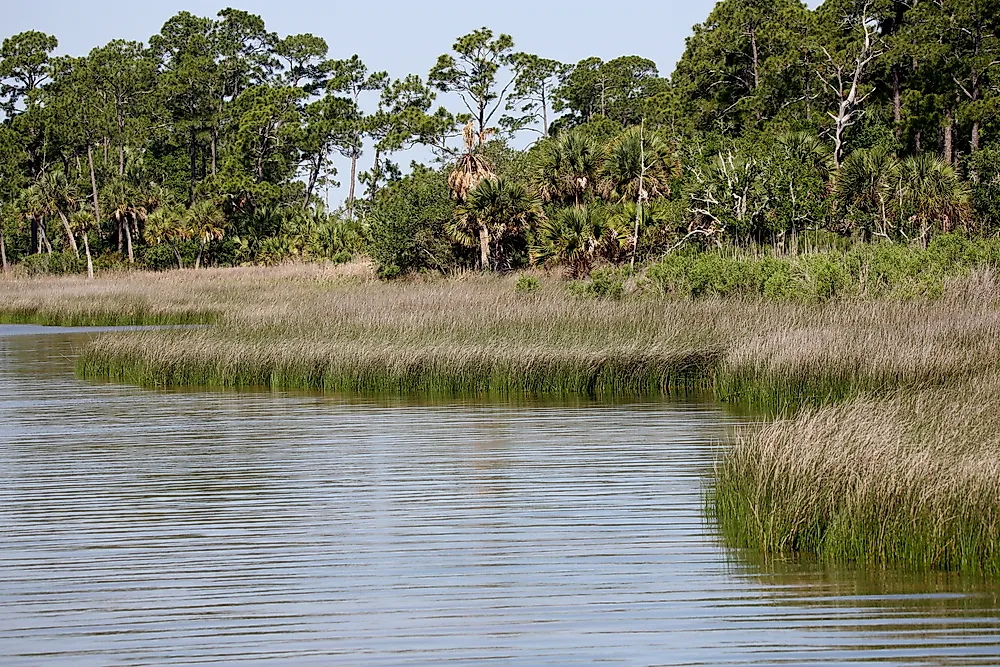
The Apalachicola carries more water than any other river in Florida and runs through one of the most biologically diverse regions in North America.
Its floodplain is the largest in the state, a broad belt of bottomland hardwood and tupelo-cypress swamp that floods seasonally and drains slowly. That flooding regime constantly creates the shallow backwaters and isolated pools where cottonmouths hunt most efficiently.
The panhandle also sits at the heart of the species' range rather than at an edge, which matters for density.
Most Of What People See Is Not One

This belongs in any article on the subject, because it changes how every sighting should be read.
Harmless watersnakes of the genus Nerodia occupy the same rivers, swim the same water, bask on the same logs and are far more numerous. They also get called water moccasins across much of the South, which is how the confusion propagates.
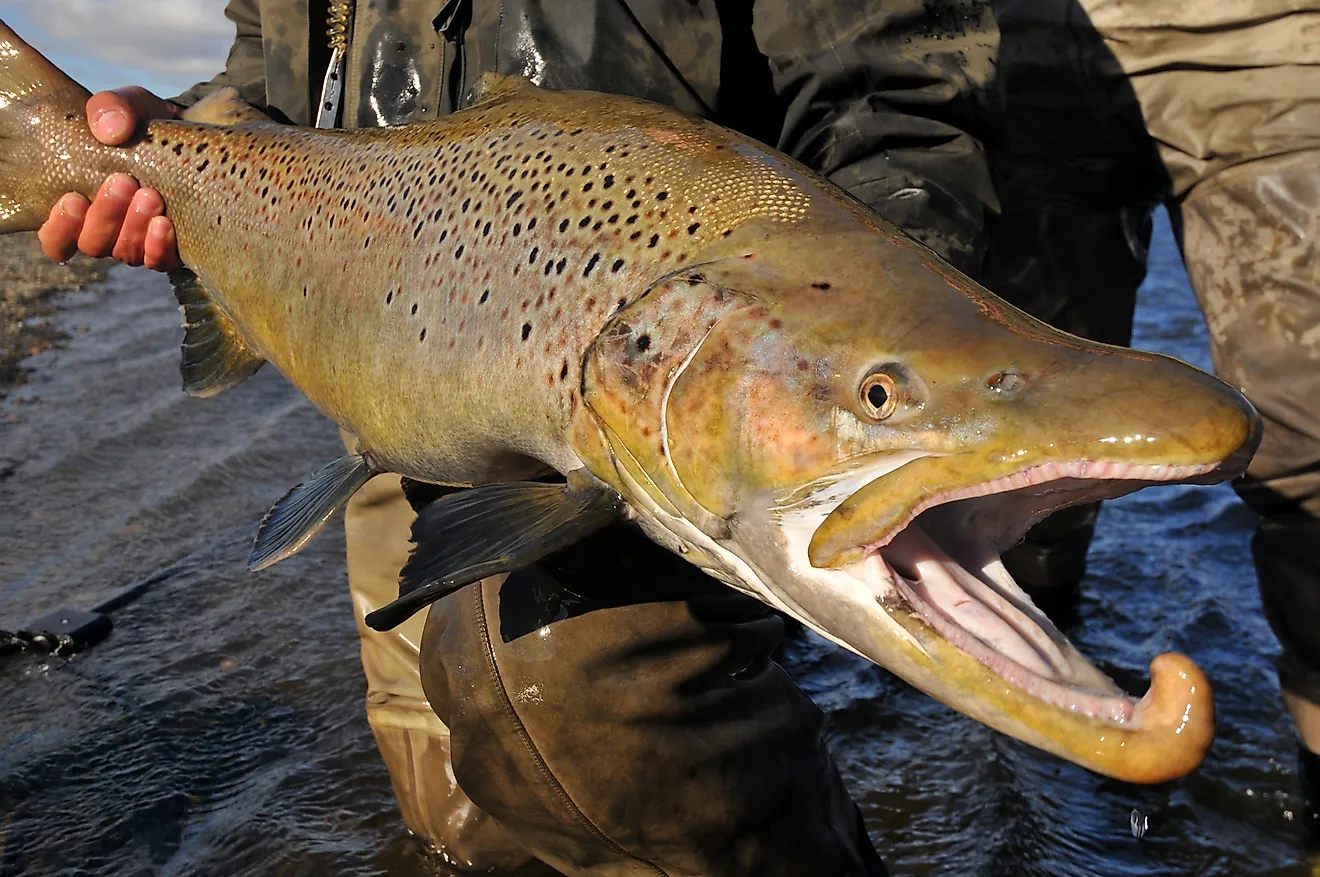
The practical distinction is behavioral rather than anatomical. A watersnake disturbed on a log usually drops into the water and swims away fast. A cottonmouth is more likely to hold its ground and gape, showing the white mouth lining that gives the species its better name.
What The Gape Actually Means

The display is a warning rather than a threat, and it may be the most misread animal behavior in the Southeast. A gaping cottonmouth has noticed you and is asking you to go away. The full defensive sequence runs through gaping, tail vibration, body flattening and the release of a foul musk before any strike, and university herpetology resources are explicit that the species usually tries to escape or deter rather than bite.
An animal running four separate warnings is not looking for a confrontation. It is trying very hard to avoid one.
Where On The River They Are

Knowing the specific spots is more useful than knowing the river, because distribution along any waterway is uneven. They favor the margins rather than open water: log jams, cypress knees, undercut banks, floating vegetation mats and the shallow backwaters off the main channel. On a sunny day in spring or autumn they bask on logs and low branches overhanging the water, which is why paddlers meet them at eye level more often than swimmers meet them at all.
The practical approach is to look before grabbing a branch or stepping onto a log, give any snake on the bank a wide berth, and remember that a boat passing a basking snake is in no danger whatsoever.
The Short List
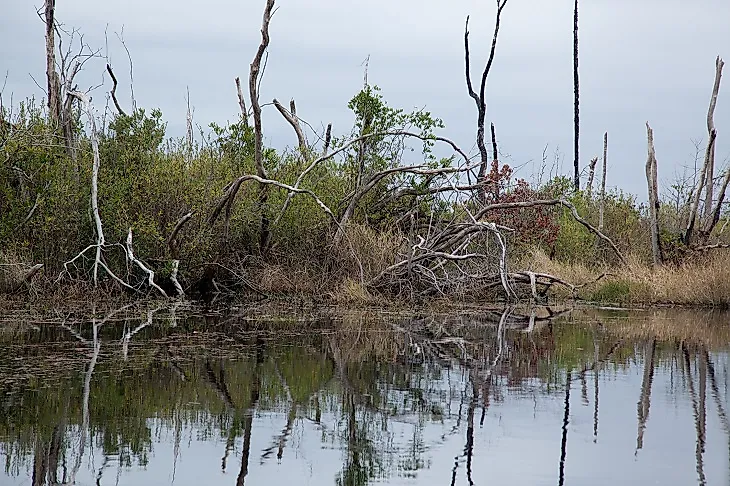
The Atchafalaya leads on sheer scale of habitat, followed by the Pearl and its Honey Island Swamp, the Suwannee draining the Okefenokee, the Apalachicola and its enormous floodplain, the lower Ouachita, and the Neches at the western edge of the range.
What they share is not the river so much as what the river built beside itself. Cottonmouths are a swamp animal that happens to live along rivers, and the rivers with the most of them are simply the ones that made the most swamp.