The Largest Animal That Has Ever Lived
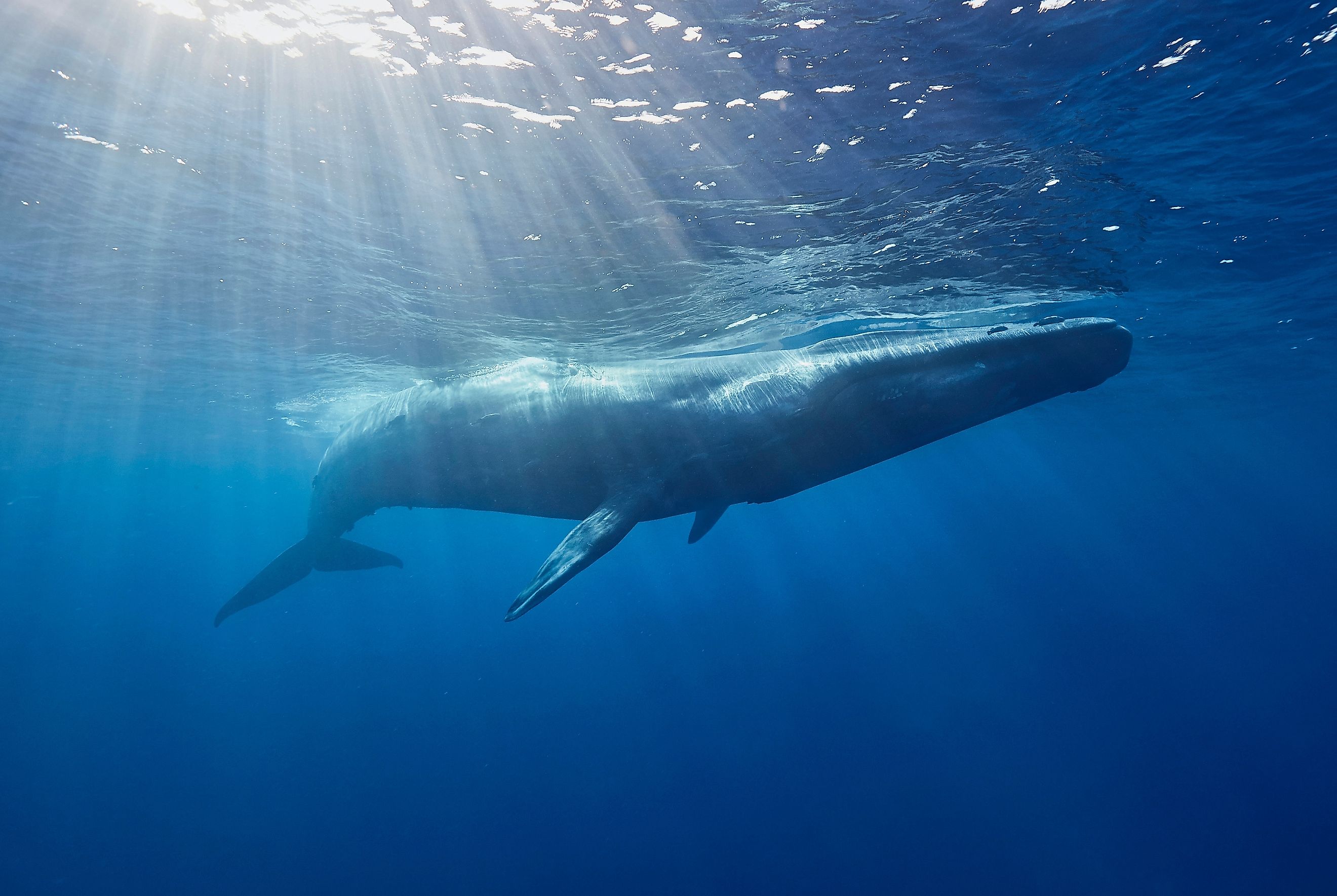
The largest animal known to have ever lived on Earth does not walk on land, and it never roamed the prehistoric skies. It swims. The blue whale (Balaenoptera musculus) is a biological anomaly, a creature of such immense scale that it dwarfs the greatest dinosaurs of the Mesozoic Era. Sauropods like Argentinosaurus and Patagotitan reached impressive lengths, but their mass estimates are capped at around 70 to 80 tons. A blue whale can reach 200 tons (400,000 pounds), the combined weight of roughly thirty-three fully grown African elephants. Its tongue alone weighs as much as an entire elephant, and its heart, at about 400 pounds, is the size of a large residential refrigerator.
This magnitude is not merely a matter of linear growth but of volumetric explosion. A standard NBA basketball court is 94 feet long; a mature blue whale extends well beyond the baseline, with the largest recorded specimen measuring 110 feet. The aorta, the main artery carrying blood from the heart, has a diameter of roughly nine inches. These dimensions are possible only because of the buoyancy of the ocean.
Evolutionary Giants and the Oceanic Advantage

The evolutionary path to this size was driven by a shift in diet and ocean chemistry. Millions of years ago, ancestors of the blue whale were smaller, toothed predators. As the Earth cooled and the Antarctic ice sheets formed, the ocean circulation changed. Upwelling currents began to concentrate vast swarms of krill, tiny shrimp-like crustaceans, into dense patches. Natural selection favored whales that could filter-feed, engulfing millions of these creatures in a single gulp. The blue whale's baleen plates, made of keratin similar to human fingernails, act as a massive sieve. A 2021 study in Nature, built on tags deployed on 321 baleen whales, found that an adult in the eastern North Pacific takes in roughly 16 tons of krill on a feeding day, close to a tenth of its own body weight and about three times what earlier metabolic models had assumed.
This abundance of food allowed the species to grow beyond the limits of any other land animal, exploiting a resource base that is global in scale yet localized to specific, nutrient-rich zones. A land animal the size of a blue whale would buckle under its own weight, unable to breathe or circulate blood. The ocean negates that constraint. The water supports the whale's mass, allowing its heart to pump blood horizontally through a body that acts as a single suspended unit.
Feeding Grounds and American Waters

The scale of the blue whale is tethered to the productivity of specific coastal currents, including those washing against the North American shoreline. In these zones, the physical geography of the seafloor forces cold water to the surface and creates the dense krill blooms required to sustain a 200-ton animal. The waters off California, particularly within the Monterey Bay National Marine Sanctuary, serve as a critical feeding ground for the eastern North Pacific population. Here, the upwelling supports a food supply so dense that sightings are not uncommon for observers on the shoreline or aboard charter boats. The rhythmic spout of a blue whale, shooting 30 feet into the air, is a distinct signature against the coastal fog. Further north, the Gulf of Alaska and the waters around the Aleutian Islands provide similar sustenance.
The species ranges through four of the five recognized oceans, with the Arctic the standing exception. Despite that range, the whale lives in the upper water column where its prey aggregates. Foraging dives off California regularly reach about 1,000 feet, and most feeding happens well above that, within the sunlit top 600 feet. The largest animal that has ever lived does not depend on the volume of the deep ocean but on the thin surface layer where sunlight penetrates, and currents converge.
The Acoustic Scale of a Leviathan

The sheer size of the blue whale necessitates a communication system capable of spanning ocean basins. Vision is limited in the deep and often murky waters where these animals feed, so they rely on sound as their primary sense. Blue whales produce low-frequency calls with an intensity that is powerful enough to travel hundreds of miles through the ocean's deep sound channel. Roger Payne and Douglas Webb calculated in the early 1970s that in a quieter, pre-industrial ocean, calls at these frequencies could have carried across an entire ocean basin.
This acoustic network is a direct function of the whale's biology. Baleen whales do not possess vocal cords as humans do. Instead, they generate sound using a specialized laryngeal sac and cartilaginous structures that move air between the lungs and those sacs, producing the low-frequency, high-amplitude waves required to penetrate the dense medium of the ocean. That ability lets isolated individuals find mates across open water, a feat impossible for any land animal of similar size. The ocean is not a barrier for the blue whale but a medium of connection, a place where sound carries much farther than light.
The Unrivaled Scale of the Blue Whale
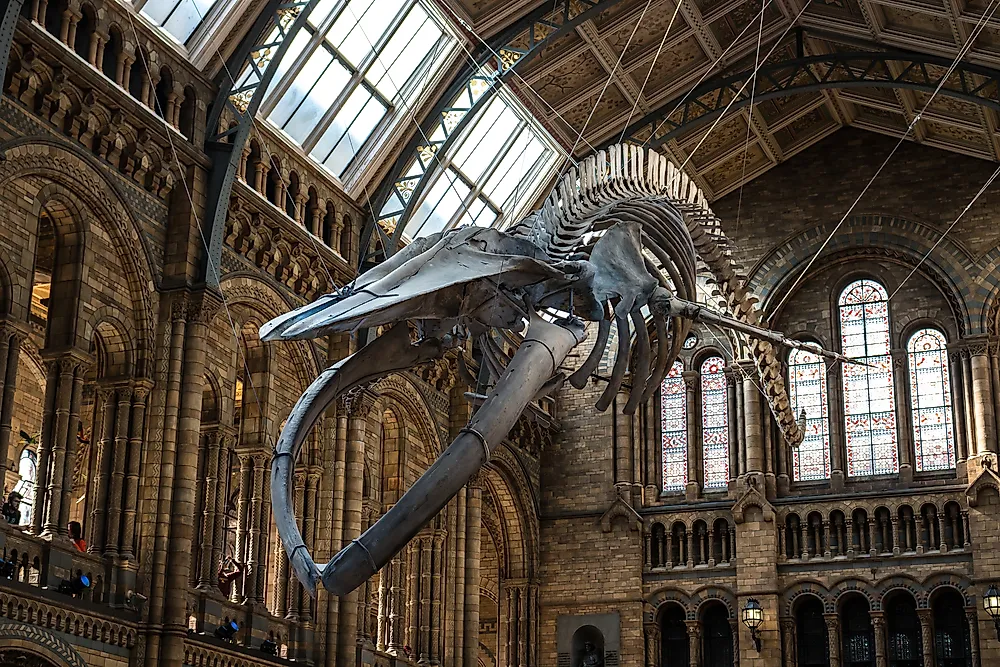
The blue whale sets the current maximum for biological mass in Earth's history. Sauropods like Argentinosaurus reached comparable lengths, but their estimated mass of 70 to 80 tons is less than half that of a mature blue whale, and no marine reptile or prehistoric mammal in the fossil record has been shown to exceed it. The distinction rests on method: fossil masses are modeled from the volume of preserved bone, while living whales have been weighed directly. The most serious recent challenge to that record came in 2023, when a Nature paper estimated the extinct Peruvian whale Perucetus colossus at 85 to 340 metric tons. A 2024 reassessment in PeerJ, by researchers at UC Davis and the Smithsonian, revised the likeliest figure down to about 60 to 70 tons and concluded the animal did not approach a blue whale.
That supremacy in size is sustained by a biological efficiency. Filter feeding lets the whale bypass the energy losses inherent in predatory food chains. By taking krill directly from the base of the trophic pyramid, it reaches a calorie return that no land herbivore or carnivore can match. A single lunge can engulf up to 100 tons of water and prey, supplying the energy required to maintain a 200-ton frame.
The Future of the Earth's Largest Animal

The blue whale's presence at the Antarctic ice edge and in the coastal upwellings of California indicates an ecosystem that still supports massive biomass, but that balance is precarious. The species relies entirely on the density of krill swarms, which are sensitive to changes in ocean temperature and acidity, and NOAA continues to list it as endangered under the Endangered Species Act. As ocean conditions shift, the stability of those food sources faces real uncertainty. Still, the blue whale remains the benchmark for animal size on Earth, a measure of what the ocean can support and what land-based ecosystems cannot.