The Rivers Where Sturgeon Still Spawn
Sturgeon are older than the dinosaurs, and they are still spawning in rivers scattered across the United States. On the Hudson, biologists have logged eggs, larvae, juveniles, and full-grown adults in the same stretch of water. On Wisconsin's Wolf River, the spawning run comes so close to shore that onlookers can watch six-foot fish thrash in the shallows. On Florida's Suwannee, crews have scooped sticky eggs straight off the limestone riverbed. Some of these rivers are household names and some you have never heard of, and what sets each one apart is proof: not a lone giant cruising upstream, but hard evidence that sturgeon are breeding and the next generation is on its way.
Kennebec River, Maine

Atlantic sturgeon still reach well into Maine's Kennebec River to reproduce. NOAA Fisheries records spawning-condition adults, larvae, young-of-year fish, and juveniles in the system, with larvae documented roughly 53 to 76 river kilometers (about 33 to 47 miles) upstream. That is much stronger evidence than an occasional adult passing through the estuary. A major stretch of migratory habitat opened on the Kennebec when Edwards Dam was removed in 1999. NOAA identifies newly accessible reaches farther upstream as potential spawning habitat, opening more freshwater with suitable current and bottom conditions to migrating adults. Spawning generally falls between spring and midsummer here, when adults returning from coastal waters move inland. For a species capable of spending years at sea before making another breeding run, finding several life stages in the same river is about as satisfying as field evidence gets.
Hudson River, New York

Research on the Hudson has assembled an unusually complete picture of the Atlantic sturgeon life cycle. NOAA has documented eggs, larvae, young-of-year fish, juveniles, and adults throughout different reaches of the river. Known spawning activity occurs in spring and early summer, including areas around Hyde Park and farther north near Catskill.
After hatching, young sturgeon remain in freshwater and brackish sections of the Hudson rather than immediately heading for the Atlantic. Surveys have found juveniles around Newburgh, Haverstraw Bay, and other parts of the estuary. That spread of age classes lets scientists follow the population well beyond the brief spawning event itself. Adults arrive from coastal waters, eggs and larvae appear upriver, and growing fish turn up downstream later.
The river's importance is especially striking given the history of the species. Atlantic sturgeon once supported a major commercial fishery here before severe declines led to fishing closures. Today's spawning population is protected, and the Hudson remains one of the strongest surviving breeding systems for Atlantic sturgeon on the East Coast.
Delaware River, Pennsylvania, New Jersey, and Delaware

The Delaware once produced so many Atlantic sturgeon that the fish supported a major nineteenth-century caviar industry. The modern population is only a fraction of that historic abundance, yet spawning has survived. NOAA records adults moving into the tidal freshwater Delaware during spring and early summer, with eggs and larvae found in the system and young fish occupying stretches between Deepwater, New Jersey, and areas farther upstream toward Trenton. Juveniles have been caught repeatedly around Marcus Hook as well. A 2014 mark-recapture analysis estimated several thousand juvenile Atlantic sturgeon in the river, although the estimate carried substantial uncertainty. The fish are sharing this corridor with ports, shipping traffic, bridges, and one of the country's most developed estuaries. Vessel strikes remain a documented threat, so each confirmed year class matters. The Delaware is still producing young Atlantic sturgeon in water that has supported the species for centuries.
James River, Virginia

Atlantic sturgeon in Virginia's James River do not all follow one spawning calendar. Researchers have identified both spring and fall spawning activity, an unusual pattern that becomes more common in the southern part of the species' range. NOAA records eggs, larvae, young-of-year fish, juveniles, and adults in the James, with spawning concentrated in freshwater reaches below Richmond.
The two seasonal runs also use different portions of the river. Spring activity has been documented farther downstream, while fall migrants move toward reaches closer to the fall line. Acoustic tracking has helped researchers follow those movements when the fish themselves remain invisible beneath turbid water. Young sturgeon later appear in downstream nursery habitat before eventually moving toward Chesapeake Bay and the Atlantic. Several independent lines of evidence therefore converge on the James: mature fish arriving on schedule, reproductive activity in freshwater, and young fish turning up after the adults have left.
Pamunkey River, Virginia

One female Atlantic sturgeon helped remove much of the uncertainty around the Pamunkey River. Researchers captured her in post-spawning condition during the fall, direct evidence that reproduction had taken place in this York River tributary. NOAA has tracked Atlantic sturgeon far upstream in the Pamunkey, where freshwater conditions are far better suited to eggs than the saltier lower York. Very young Atlantic sturgeon have also been found within the wider York system. The population remains small, which makes each confirmed spawning record useful to biologists trying to map exactly where these fish still reproduce in Chesapeake Bay tributaries. Nearby rivers sometimes produce tantalizing detections of mature adults without equally strong proof of spawning. The evidence from the Pamunkey has crossed that line. A female arrived, released her eggs, and was caught after the event.
Cape Fear River, North Carolina

Researchers in North Carolina have found something much harder to argue with than an upstream-moving adult: Atlantic sturgeon eggs. Surveys in the Cape Fear River have collected eggs during the spring spawning period while mature fish were also present in reproductive condition. NOAA places the main spawning window from roughly mid-March through late May.
The journey upstream is not an easy one. Locks and dams have cut migratory fish off from portions of their historical range, and fish-passage work at Lock and Dam No. 1 has focused on restoring access to upstream habitat. Atlantic sturgeon need flowing freshwater and suitable bottom material for their eggs, so every additional reachable stretch counts.
Cape Fear also appears to differ from several rivers farther south. Evidence for a spring run is strong, while a comparable fall spawning run has not been established. That regional variation is part of what makes Atlantic sturgeon biology so interesting. The same species can use different seasonal strategies just a few states apart.
Pee Dee River, North Carolina and South Carolina

A tagged female Atlantic sturgeon turned the Pee Dee into a particularly vivid spawning case. Researchers followed her upstream in September 2019 and recaptured her about a month later on the way back down. She had lost roughly 6.5 pounds, a drop consistent with releasing a large mass of eggs. NOAA interpreted the movement, timing, and change in weight as evidence of spawning.
Telemetry studies have also detected both spring and fall migration patterns in the river. Spring fish begin their upriver movement in much cooler water, while fall migrants arrive when temperatures are still comparatively warm. The two runs place reproduction under very different conditions. Scientists can rarely stand beside a river and watch Atlantic sturgeon spawn, so these tagged fish supply the missing sequence: departure from coastal waters, a rapid upstream migration, time spent in suspected spawning habitat, and a downstream return after reproduction.
Edisto River, South Carolina

The Edisto has produced one of the stranger findings in Atlantic sturgeon genetics. Researchers examining young fish discovered two distinguishable groups associated with separate spawning seasons. Some juveniles came from adults breeding in spring, while others belonged to a fall-spawning group. The difference was detectable genetically even though both groups used the same river.
NOAA recognizes spawning migrations in both seasons, with spring activity generally occurring from March into May and fall activity from late summer into October. That makes timing more than a calendar detail. Adults returning several months apart may be breeding mostly with fish on the same schedule, allowing genetic differences to persist within a single river system. Juveniles carry the evidence after the adults have returned to sea. By sampling young fish and comparing their DNA, researchers can reconstruct a reproductive pattern that would be extremely difficult to observe directly in the dark water of the Edisto.
Altamaha River, Georgia

The Altamaha River system still produces Atlantic sturgeon juveniles on a scale that stands out in the Southeast. NOAA estimates that roughly 1,000 to 2,000 juveniles may occupy the river in a given year, with many sampled fish one or two years old. Telemetry points toward a strong fall spawning component, and adults move into tributaries including the Ocmulgee and Oconee. The watershed is enormous, draining more than 14,000 square miles, so these fish can travel far inland before reaching suitable freshwater habitat. Dams on the tributaries block some historical range, but the surviving population continues to produce young fish below those barriers. Juvenile surveys set the Altamaha apart from rivers where scientists mainly see mature adults moving upstream. Here, the next generation turns up in enough numbers to show that spawning is followed by at least some early survival.
Suwannee River, Florida

The Suwannee contains one of the best-studied Gulf sturgeon spawning sites anywhere in the species' range. USGS researchers collected 49 eggs there in 1995 and another 368 in 1996 at a site about 215 river kilometers (roughly 134 miles) upstream. Eggs were concentrated over limestone, gravel, and other firm material in moving water, mostly at depths of two to four meters (roughly 6 to 13 feet). Water temperatures during collections were roughly 17 to 21 degrees Celsius (about 63 to 70 degrees Fahrenheit).
Researchers later found evidence that spring may not be the whole story. Mature sturgeon have made long upriver movements during September and October, and an age-0 fish was captured whose size matched a possible late-September hatch. That raised the possibility of an autumn spawning component as well.
NOAA currently recognizes the Suwannee as one of seven river systems supporting reproducing Gulf sturgeon populations. Few entries on this list have spawning evidence as tactile as hundreds of sticky eggs collected directly from the riverbed.
Rainy River, Minnesota

Lake sturgeon in the Rainy River are producing young fish regularly again after a twentieth century marked by pollution and heavy exploitation. Minnesota DNR reports that successful reproduction now occurs in most years. Biologists sample mature adults at spawning sites each spring, tagging and measuring fish before later surveys target juveniles during summer and fall.
The long story is in the age structure. Lake sturgeon grow slowly, and females can take decades to mature, so a population damaged by poor water quality does not snap back after one good spawning season. Improved water conditions allowed more young fish to survive, and repeated surveys began detecting multiple younger year classes. The Rainy population now contains the sort of spread in ages fisheries managers want to see in a recovering sturgeon stock. Adults still crowd into spawning reaches each spring, but the smaller fish appearing in later surveys are what show that the run is producing more than spectacle.
Wolf River, Wisconsin

The Wolf River is one of the few places where a sturgeon spawning run can become a roadside wildlife event. Each spring, lake sturgeon move into shallow, rocky sections around New London, Shiocton, and Shawano, sometimes spawning so close to shore that visitors can watch their backs and tails break the surface. Wisconsin DNR crews are there too, catching, measuring, and tagging fish during the run. In the 2025 Winnebago system assessment, crews handled 1,741 lake sturgeon, including 1,614 from the Wolf River. Sixty-six females measured more than 70 inches long. The run began around New London and Shiocton on April 20 and reached Shawano Dam four days later. Eggs released during these gatherings stick to rock and develop in the current. In few other places is the prehistoric scale of a lake sturgeon so obvious. A fish longer than a person can be spawning in water barely deep enough to cover its back.
Menominee River, Wisconsin and Michigan

Dams once squeezed the Menominee River's lake sturgeon into a much shorter stretch of usable water. A fish-passage project completed in 2015 restored access around two lower dams and opened roughly 2,000 acres of upstream habitat to adult sturgeon.
Researchers then watched to see whether the fish actually used it. Wisconsin fisheries studies found that about 92 percent of sturgeon passed above the lower dams remained in upstream spawning habitat long enough to have an opportunity to reproduce. Nearly all later returned downstream toward Green Bay.
The best follow-up came from genetics. Parentage research linked offspring to adults that had been moved above the dams, confirming that at least some of those fish successfully reproduced after passage. The project therefore has a measurable result beyond the number of adults transported. Young sturgeon in the system carry DNA from fish that gained access to spawning habitat previously blocked by the dams.
Mississippi River, Missouri and Illinois

Lake sturgeon near St. Louis are spawning again after a restoration effort that required decades of patience. Missouri began stocking the species after native populations had collapsed across much of the region. Those young fish then had to survive long enough to reach maturity, which can take well over a decade. By 2026, the Missouri Department of Conservation reported spawning at Mel Price Lock and Dam for four consecutive years. Biologists used telemetry to track mature adults, while egg collections confirmed that actual reproduction was taking place. The US Army Corps of Engineers also adjusted river flows around the site during spawning periods to improve conditions. The remarkable number here is not the weight of one giant fish or the size of the river. It is four consecutive seasons. A restoration program started years before many of today's spawning adults matured has now produced repeat reproductive activity in the Mississippi.
Lower Missouri River

Pallid sturgeon spawn in water most people would never choose to stand in. USGS researchers tracking females between 2008 and 2013 documented ten spawning events in the Lower Missouri, often along deep outside bends beside engineered banks. Measured spawning patches averaged about 6.6 meters deep (roughly 22 feet), with water moving at roughly 1.4 meters per second (about 4.6 feet per second).
Then came the tiny evidence. In 2014, researchers collected three newly hatched larvae and confirmed through genetics that they were endangered pallid sturgeon. The fish were only about one to three days old. Somewhere upstream, adults had spawned successfully and the eggs had hatched.
Survival after that stage remains difficult. Pallid sturgeon recruitment in the Missouri system is still weak, and producing larvae does not guarantee enough juveniles will reach adulthood. The spawning itself, however, is no longer an assumption based on adult movements. Scientists have tracked the females, characterized the spawning sites, and captured wild offspring only days after hatching.
Yellowstone River, Montana and North Dakota

USGS researchers recorded a remarkably detailed pallid sturgeon spawning event in the lower Yellowstone in June 2014. A tagged female gathered with several males over coarse riverbed material near Fairview, Montana. Acoustic imaging picked up activity at the site. When researchers caught the female again afterward, she had lost about 20 percent of her body weight, consistent with releasing her eggs. Two other tagged females had also spawned in the lower Yellowstone that month.
The riverbed matters here too. Much of the lower Yellowstone is sandy, yet spawning has repeatedly occurred around patches of gravel and other coarse material set among moving sand dunes. On those patches, eggs settle onto a firmer surface in strong current.
Because the Yellowstone retains more natural channel features than heavily engineered stretches of the Missouri, researchers can compare how pallid sturgeon behave under different river conditions. A tagged fish hovering over one gravel patch can reveal an astonishing amount about where this endangered species chooses to reproduce.
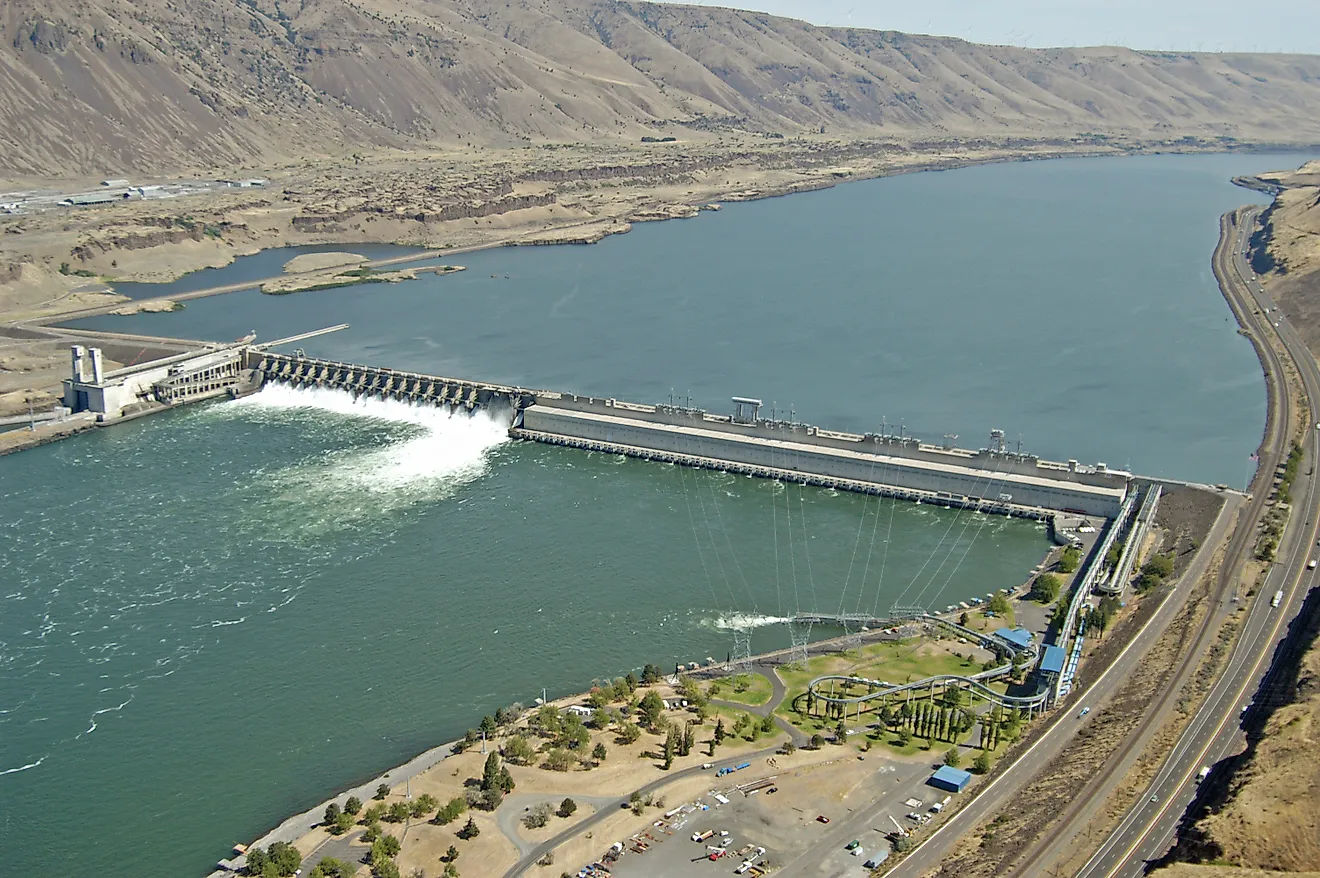
Columbia River, Oregon and Washington

White sturgeon still spawn naturally in the Columbia, although conditions change dramatically from one reach to another. The lower river supports the strongest population, with adults able to move between freshwater, the estuary, and the Pacific. Spawning occurs in late spring and early summer in fast, turbulent water over rock, cobble, and other hard bottom. Females in the lower Columbia may wait four to six years between spawning events.
Dams have divided populations farther upstream into separate reaches, and recruitment is much less consistent in some of those sections. Adults can release eggs successfully while conditions for larvae and juveniles remain poor. Washington Department of Fish and Wildlife therefore treats the lower Columbia very differently from several impounded populations upstream. The same river holds both a productive spawning population and isolated groups struggling to replace themselves. White sturgeon can live for many decades, so those differences may take years to become obvious in the adult population.
Snake River, Idaho

Every May and June, crews in Idaho collect white sturgeon eggs from the Snake River between Bliss Dam and C.J. Strike Dam. The eggs come from wild adults spawning naturally in the river, and Idaho Power uses some of them in a conservation hatchery program because too few young sturgeon survive on their own in portions of the middle Snake.
The collection work is direct evidence of where and when spawning occurs. The same work also shows where the population is weak. Adults are reaching maturity, finding one another, and laying fertilized eggs, yet successful recruitment can still fall short in dam-fragmented reaches. Hatchery crews rear some of those naturally produced eggs through vulnerable early stages before young fish are returned to the river. Other reaches of the Snake have stronger natural reproduction. The result is a patchwork of white sturgeon populations separated by hydroelectric dams, each with a different level of spawning success and juvenile survival.
Sacramento River, California

Green sturgeon can wander enormous distances along the Pacific Coast, but the threatened southern population depends on a small group of California rivers for reproduction. The Sacramento is the centerpiece. Adults enter San Francisco Bay and move quickly inland during spring, eventually reaching deep, fast sections of the upper river with hard bottom suitable for spawning.
Larvae spend their earliest weeks moving downstream through freshwater before juveniles reach the Sacramento-San Joaquin Delta and estuary. Those young fish may later travel far beyond California. Tagged green sturgeon from this population have been detected along much of the West Coast.
NOAA also recognizes spawning in the Feather and Yuba rivers, but the Sacramento remains the principal reproductive corridor for the southern distinct population segment. That geographic bottleneck makes the river especially important. A fish can roam through coastal waters for years, yet to breed successfully, it must return to a limited section of California freshwater.
Klamath River, California

The Klamath supports spawning by the northern population of green sturgeon. NOAA groups fish reproducing in the Klamath, Eel, and Rogue rivers within the northern distinct population segment, separating them from the threatened southern group centered on the Sacramento system. That distinction comes from breeding geography, not simply where an adult happens to be caught.
Green sturgeon spend much of their lives outside their spawning rivers. Adults migrate along the Pacific Coast and regularly use large estuaries in Oregon and Washington. When reproduction approaches, mature fish return to a much shorter list of freshwater systems. In the Klamath, they move upstream to deep areas with strong current and firm substrate where adhesive eggs can develop. The contrast in scale is striking without needing embellishment: after years of coastal wandering, the fish return to a specific river reach where the next generation begins.
Yuba River, California

The Yuba's status as a green sturgeon spawning river was confirmed with about 270 tiny pieces of evidence. In 2018, California Department of Fish and Wildlife researchers recovered roughly that many green sturgeon eggs on an egg mat placed immediately downstream of Daguerre Point Dam. It was the first confirmed spawning record for the species in the Yuba.
The researchers had begun placing mats in Sacramento Valley rivers specifically to catch adhesive sturgeon eggs. Females release the eggs into moving water, where they stick to hard surfaces instead of being placed in a nest. Finding a concentrated batch below the dam gave biologists a precise location and season for reproduction.
NOAA now includes the Yuba with the Sacramento and Feather among confirmed spawning rivers for the southern green sturgeon population. The finding widened the known spawning map through one of the simplest field clues available: fresh eggs attached exactly where spawning fish had left them.
What These Spawning Runs Actually Show
A sturgeon river can pass one test and fail the next. Eggs prove that adults spawned. Larvae prove that at least some eggs hatched. Juveniles surviving for several years tell scientists much more about whether the population is replacing itself. The Suwannee and Yuba have yielded eggs, the Lower Missouri has produced genetically confirmed pallid sturgeon larvae, DNA has tied Menominee offspring to known adults, and repeated surveys on the Rainy have turned up younger age classes. Those are very different levels of reproductive success. For sturgeon, that distinction is crucial. Many species take well over a decade to mature, and females may reproduce only once every several years. The most encouraging rivers are therefore not simply the ones where a huge adult appears each spring. They are the rivers where researchers keep finding evidence of what came afterward.