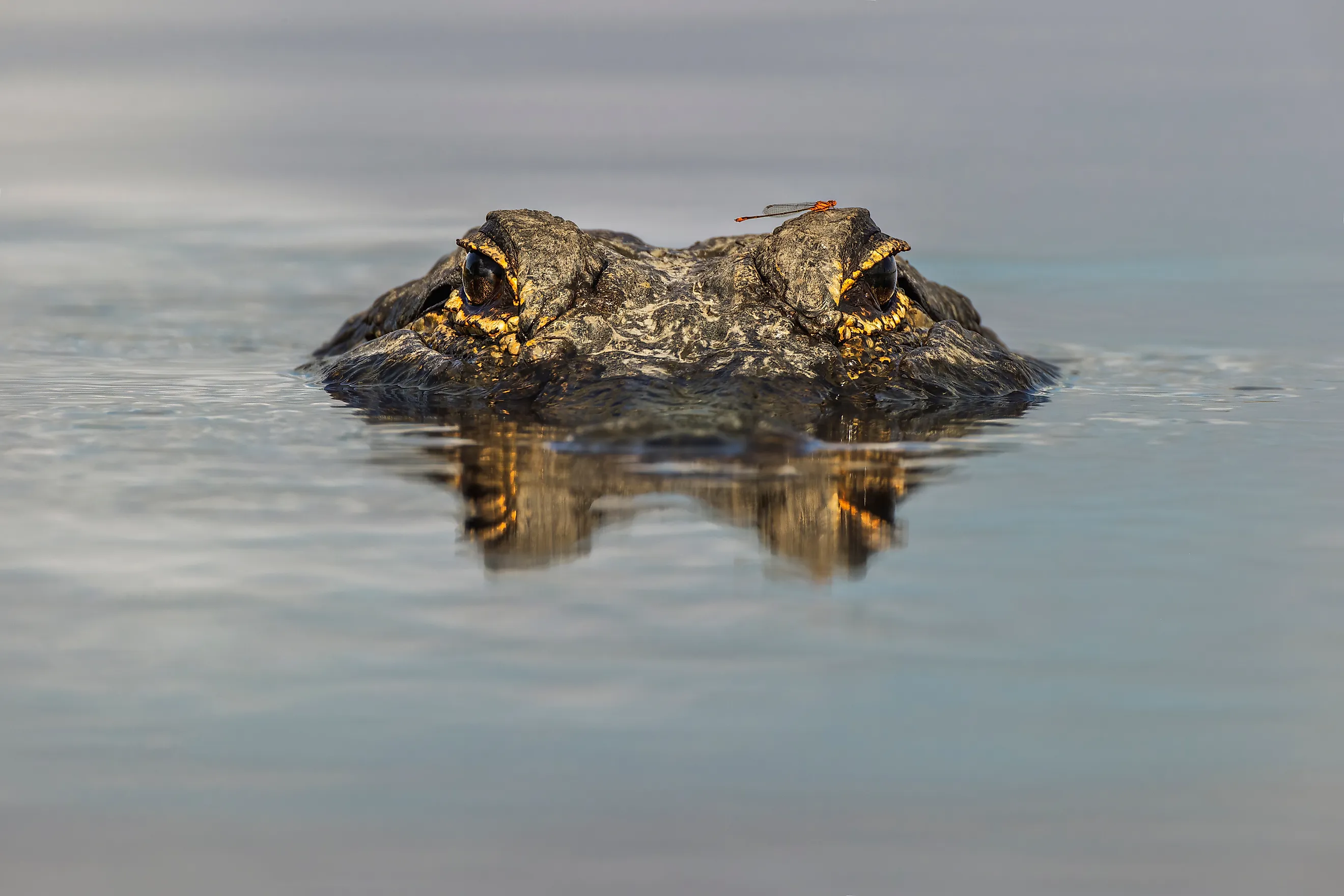
American Alligator
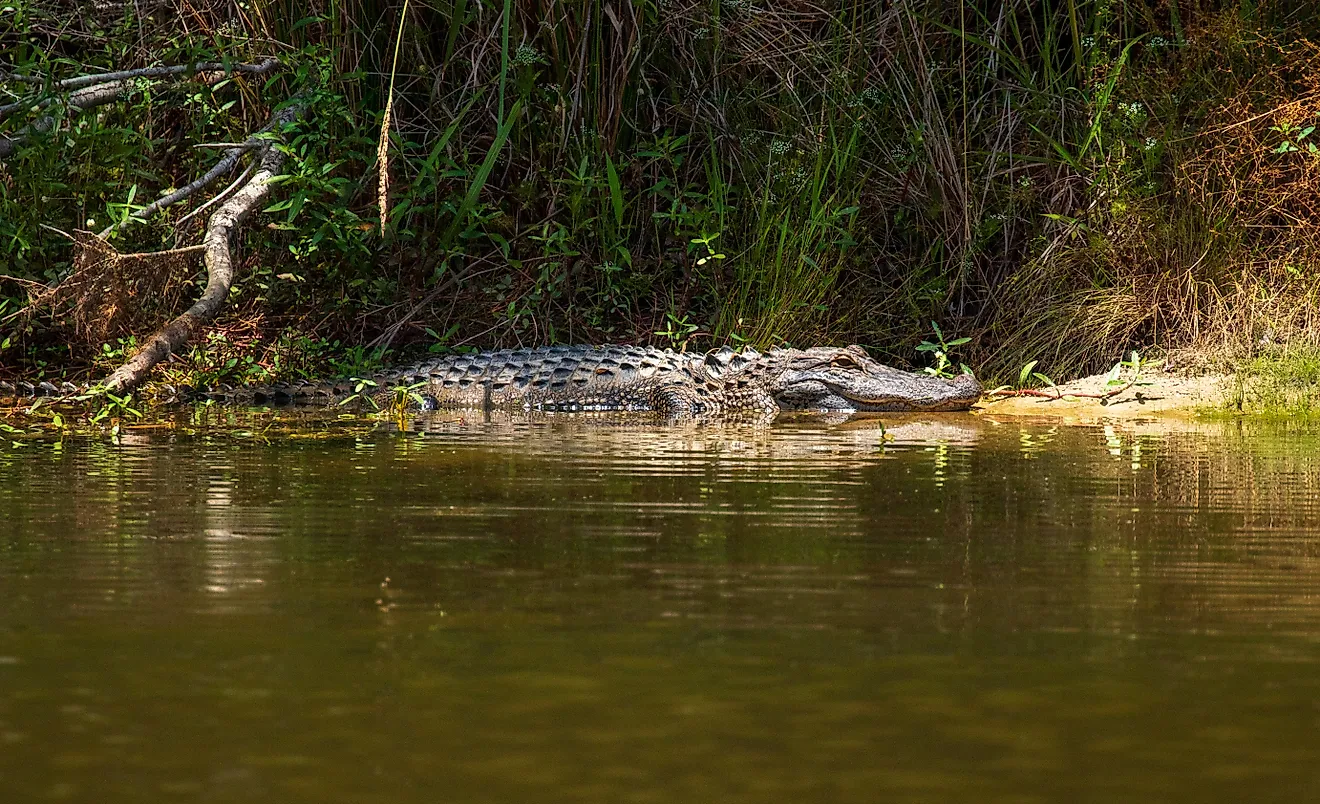
Once threatened with extinction, the American alligator is now a common sight across the American South. It thrives especially in Florida and Louisiana. The species turns up in bayous and creeks as well as lakes and rivers across swamps and marshes throughout the region. Powerful jaws and strong swimming let it capture large prey and stay submerged for extended periods by slowing its heart rate. These are just a few of the unique characteristics of this American reptile.
Taxonomy

The American alligator’s scientific name is Alligator mississippiensis. It has no recognized subspecies, and its genus contains only one other living species: the Chinese alligator (Alligator sinensis), a critically endangered reptile native to eastern China and the Yangtze River basin. The species name mississippiensis is Latin for “of the Mississippi,” referring to the reptile’s historic range throughout the Mississippi River region and much of the southeastern United States.
The American alligator belongs to the family Alligatoridae, which also includes caimans, and the order Crocodilia. Although alligators and crocodiles are both crocodilians, they are distinct species with notable physical and genetic differences. The American alligator is the most common crocodilian found in the United States. The only other crocodilian native to the US is the American crocodile (Crocodylus acutus), which is primarily found in southern Florida as well as parts of Latin America and the Caribbean.
Range and Habitat

American alligators live throughout the southeastern United States, including parts of Oklahoma, Texas, Arkansas, Louisiana, Mississippi, Alabama, Georgia, South Carolina, North Carolina, and all of Florida. Their range also extends close to the Texas-Mexico border. American alligators are semi-aquatic reptiles that primarily inhabit freshwater environments. They are commonly found in slow-moving waters such as marshes, swamps, wetlands, rivers, lakes, and bayous throughout the American South. Although they prefer freshwater habitats, alligators can tolerate brackish water and are sometimes found in coastal estuaries near the Gulf of Mexico and the Atlantic coast. However, they generally remain close to freshwater sources because they lack the specialized salt glands that allow crocodiles to live more comfortably in saltwater environments.

As ectothermic, or cold-blooded, animals, alligators rely on external temperatures to regulate their body heat. They thrive in warm climates, with preferred body temperatures ranging from about 82°F to 92°F (28°C to 33°C). During cooler weather, they become less active and feed less frequently. They may also bask in the sun to warm themselves. Louisiana has the largest alligator population in the United States, with an estimated 2 million wild alligators, followed by Florida with roughly 1.3 million. Texas is home to an estimated 400,000 to 500,000 alligators. Smaller populations are found in states such as Arkansas, North Carolina, and Oklahoma.
Physical Traits

American alligators are among the largest reptiles in North America. Adult males typically measure 11 to 15 feet (3.4 to 4.6 meters) in length, while females are generally smaller, averaging 8 to 10 feet (2.4 to 3 meters) long. One of the largest American alligators ever recorded was captured in Alabama in 2014 and measured 15 feet 9 inches (4.8 meters) long while weighing more than 1,000 pounds (454 kilograms).
Another striking feature of the American alligator is its armored body. Embedded within its thick skin are bony plates called osteoderms, or scutes, which extend from the neck down the back and tail. These structures provide protection and also help regulate body temperature through blood flow near the skin’s surface.

An American alligator can have around 74 to 80 teeth at a time, and those teeth are continuously replaced throughout its life. Scientists estimate that a single alligator may go through thousands of teeth over its lifetime. These teeth are designed for gripping and crushing prey rather than chewing. The alligator’s bite is one of the strongest measured in the animal kingdom. Researchers have recorded bite forces exceeding 2,000 pounds per square inch (psi) in large individuals.
American alligators have four short legs with five toes on their front feet and four on their back feet. Despite their bulky appearance, they can move surprisingly quickly over short distances on land, reaching speeds of about 11 miles (17.7 kilometers) per hour in brief bursts. Underwater, alligators are powerful swimmers and can remain submerged for long periods by slowing their heart rate to conserve oxygen.

Several physical adaptations make alligators well-suited for aquatic life. Their nostrils and eyes are positioned on the top of the head, allowing them to breathe and observe while most of the body remains underwater. Their eyes also contain a reflective layer called the tapetum lucidum, which improves vision in low-light conditions and helps make them effective nocturnal hunters. Unlike crocodiles, American alligators lack functional salt glands, making them far less tolerant of saltwater environments. As a result, they primarily inhabit freshwater habitats, although they can survive in brackish water for limited periods.
Food

The American alligator is an apex predator, meaning adult alligators have few natural predators in the wild. As opportunistic carnivores, they will eat a wide variety of prey, including fish, turtles, snakes, birds, and mammals. They have also been known to attack pets such as dogs if the animals wander too close to the water’s edge. American alligators primarily hunt at night and often bask during the day. They typically wait just below the surface near the shorelines of lakes, rivers, swamps, marshes, or creeks for prey to approach. Using a sudden burst of speed, they lunge forward, clamp down with their powerful jaws, and drag prey into the water.
When capturing large prey such as wild pigs or deer, alligators may use a behavior known as the “death roll.” While gripping the animal, the alligator spins rapidly in the water, which helps overpower prey and tear it into smaller pieces for easier swallowing. Because alligator jaws move mainly up and down rather than side to side, they cannot chew food in the same way mammals do.
Behavior and Reproduction

Although American alligators are often solitary hunters, they are considered more social than many other reptiles. During colder months, alligators become far less active and may enter a dormant state known as brumation rather than true hibernation. They often shelter in burrows called “gator holes,” which can provide habitat and water for many other animals during dry periods. They sometimes gather in groups to bask, share habitat, or feed in the same area. Hatchlings frequently remain together in groups called pods, which may help protect them from predators.
Male alligators typically maintain territories that can span several square miles, especially during the breeding season. To establish dominance or attract mates, alligators use a variety of displays and vocalizations, including head slapping, bellowing, and vibrations that ripple across the water’s surface. Hatchlings communicate with high-pitched chirping sounds that can alert their mother to danger.

Female alligators are highly protective mothers and may remain with their young for up to two years. They are also known to gently carry hatchlings in their mouths to transport them safely. Juvenile alligators face far more predators than adults. Birds such as herons, egrets, and raptors may prey on hatchlings, while large fish, snakes, raccoons, otters, and even larger alligators can also threaten young alligators. Raccoons are especially known for raiding alligator nests and eating their eggs.
American alligators usually reach sexual maturity between 10 and 15 years of age, depending on their size and environment. Females sometimes mate with more than one male during a breeding season. Breeding typically occurs in late spring, with females laying eggs in June or early July. A female may lay between 20 and 50 eggs, although larger clutches are possible. The eggs incubate for about 65 days inside nests made of vegetation, mud, and debris. Females guard the nests closely against predators. Like many reptiles, the sex of hatchlings is determined by incubation temperature: cooler nest temperatures generally produce females, while warmer temperatures produce males.
Threats

The American alligator is currently classified as a species of Least Concern by the International Union for Conservation of Nature (IUCN). This status reflects one of the most successful wildlife conservation recoveries in the United States. By the mid-20th century, the species had been severely reduced by unregulated hunting and habitat loss. In 1967, the American alligator was listed as endangered under federal law, leading to widespread conservation efforts and legal protections that helped populations recover.
Today, some alligators are still legally harvested for their meat and hides through tightly regulated hunting programs in several southern states. Wildlife officials may also remove alligators deemed dangerous to people or pets. In states such as Florida, alligators may be classified as nuisance animals if they lose their fear of humans or pose a threat near homes, pets, roadways, or waterways. Florida’s nuisance alligator program generally considers alligators longer than 4 feet (1.2 meters) that may threaten people, pets, or property for removal. Despite the species’ recovery, American alligators still face environmental threats. Habitat destruction, wetland drainage, pollution, and contamination from toxins can negatively affect alligator populations and the ecosystems they inhabit.
Apex American Predator

The American alligator is a highly specialized predator and one of the dominant carnivores in many southeastern freshwater ecosystems. Its powerful jaws, keen low-light vision, stealth, and behaviors such as the death roll make it an effective hunter. Despite its fearsome reputation, the American alligator rarely poses a threat to humans when left undisturbed. Most negative encounters occur when people swim, walk pets, or approach waterways inhabited by alligators, especially during feeding or breeding seasons. Alligators may also become more dangerous if they lose their natural fear of humans after being fed intentionally or unintentionally.
To help reduce dangerous interactions while maintaining healthy alligator populations, several southern states manage alligators through conservation programs, nuisance-removal systems, habitat protection efforts, and regulated hunting seasons. These measures have helped allow American alligator populations to recover and coexist alongside growing human populations.