Where Megalodon Teeth Are Found On American Beaches
In 2015, a man walking North Topsail Beach in North Carolina picked up a megalodon tooth nearly six inches long. Six years later, a 5-year-old playing along the water at North Myrtle Beach found another. Finds like these are uncommon, but they explain why people spend hours scanning American beaches for dark triangles among the shells.
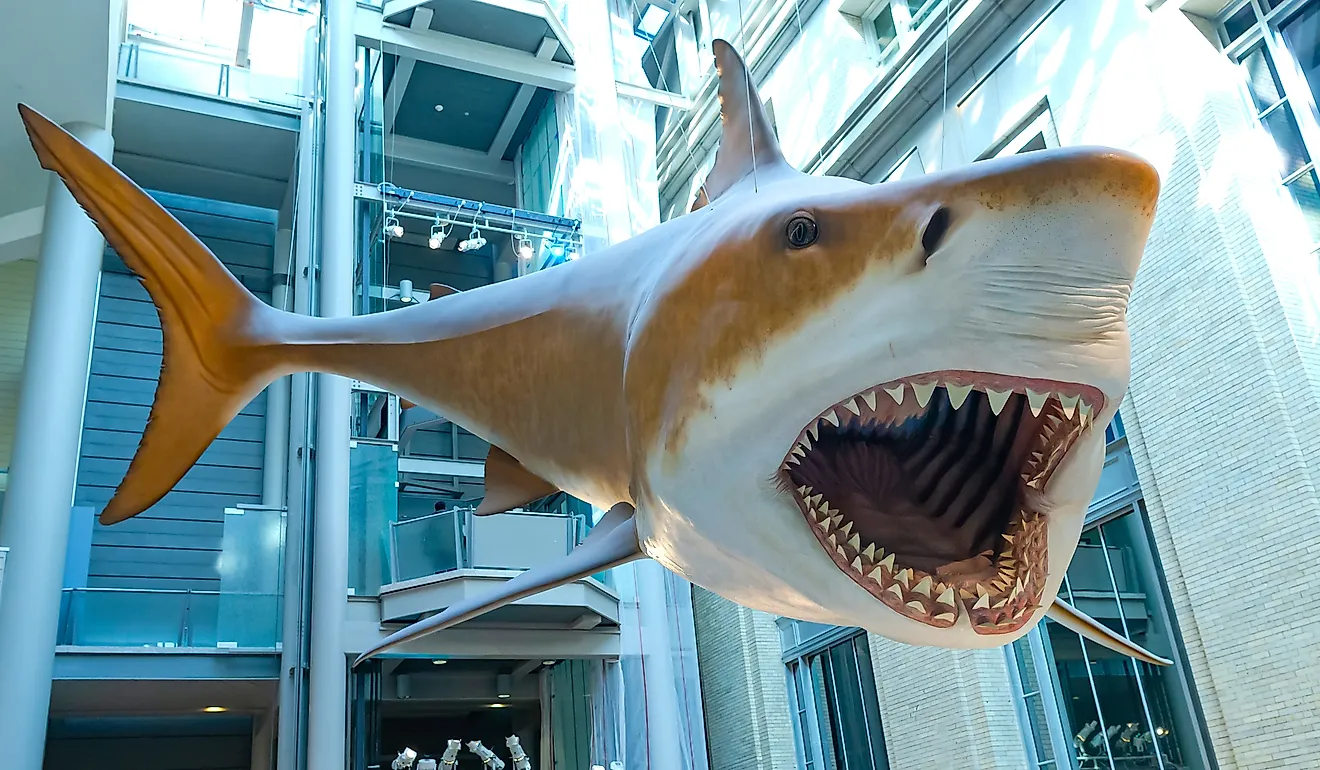
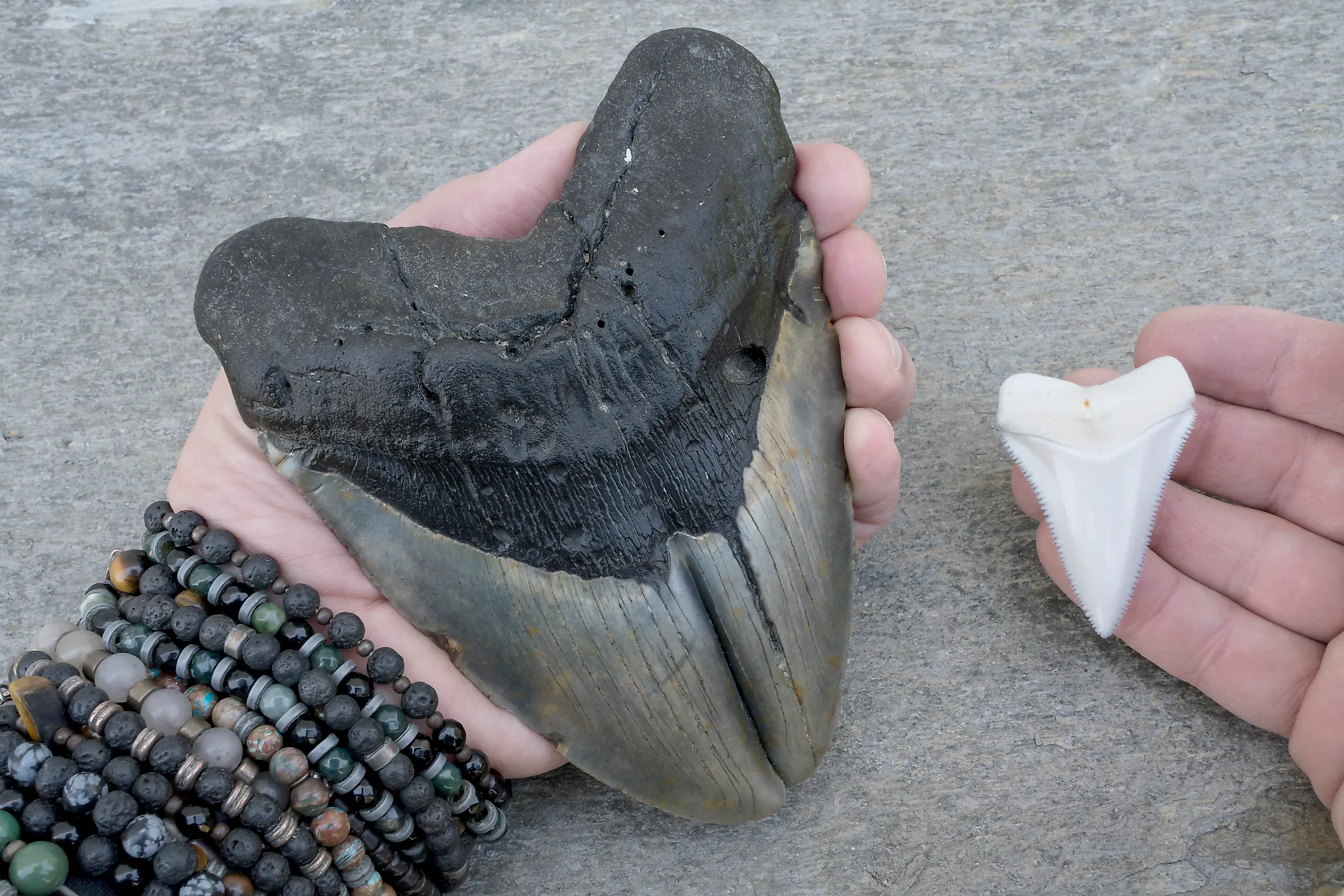
Megalodon lived from about 23 million to 3.6 million years ago. The shark continually shed teeth during its lifetime, and some eventually became fossils. The largest known megalodon teeth exceed seven inches, though most beachcombers will never find one anywhere near that size. Florida, Maryland, North Carolina, and South Carolina all have coastal areas with documented megalodon fossils. At these beaches, there is at least a chance that the next shark tooth in the sand came from something much larger, and much older, than the sharks swimming offshore today.
How Megalodon Teeth End Up On Modern Beaches

A megalodon tooth found in the surf has already survived millions of years of geological change. Sharks replace teeth continuously throughout their lives. Once shed, a tooth could settle into sediment on the seafloor. Shark skeletons are largely cartilage, which does not preserve as readily, but teeth contain harder mineralized tissue. Over time, minerals can fill spaces within a buried tooth and help preserve it as a fossil.
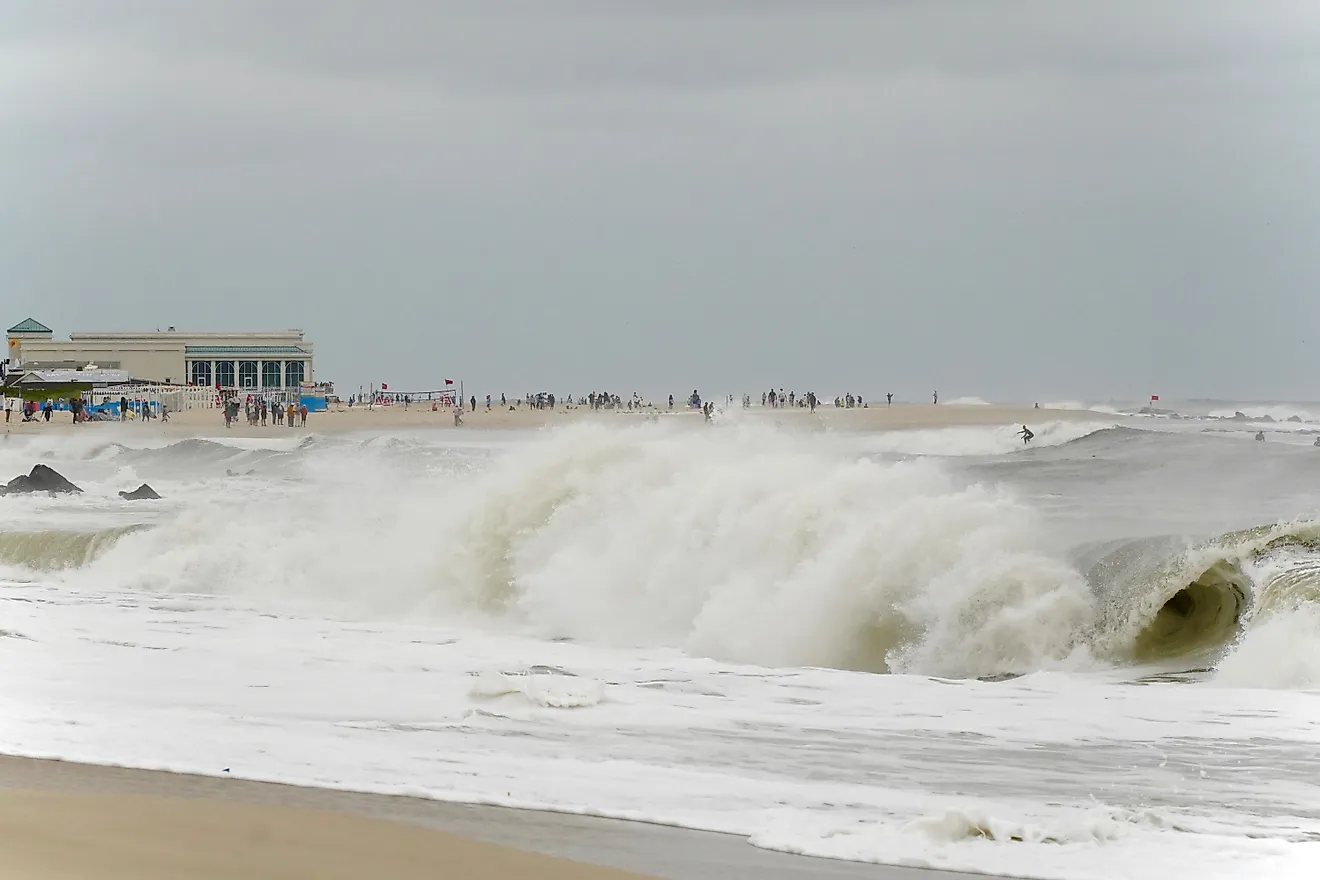
The coastline looked very different when megalodon was alive. Sediments deposited beneath ancient seas are now found under modern beaches, rivers, coastal waters, and dry land. Erosion cuts into those deposits and exposes fossils that may have remained buried for millions of years. That is why a hurricane, strong surf, or an unusually low tide can change what appears on a beach. Searching where erosion has already exposed fossil-bearing material tends to be more productive than digging at random.
Caspersen Beach, Florida

Caspersen Beach is one of the first places fossil hunters head in Venice, Florida. The beach is on Harbor Drive South and is a well-known spot to search for prehistoric shark teeth. Look closely at the darker material left behind by the water. Broken shells, pebbles, and small fossil fragments can conceal shark teeth measuring less than an inch. A mesh screen helps, but many people hunt by sight.
Megalodon teeth occur in Florida's fossil record and have been found throughout much of the state. A complete giant tooth is another story, and such finds are very rare. Access at Caspersen changed following damage during the 2024 storm season. The park remains open to pedestrians and bicyclists, but vehicle parking, restrooms, and the playground remain unavailable while repairs are pending. Check current conditions before heading out with buckets and sifters.
Venice Beach, Florida

You do not have to stay at Caspersen to hunt shark teeth in Venice. The city has 14 miles of beaches along the Gulf Coast, with Venice Beach on The Esplanade giving collectors another place to look. The city calls itself the "Shark Tooth Capital of the World," and the nickname makes more sense once you see how small some of the fossils are. Many of the shark teeth found locally measure between roughly one-eighth and three-quarters of an inch. They are easy to miss among broken shells.
Larger teeth are also found offshore. The largest specimens are generally farther from shore and may require dive equipment to locate. A suspected megalodon tooth should have more going for it than size. Megalodon teeth typically have a broad triangular crown, serrated cutting edges, and a band of exposed dentine called a bourlette between the crown and root.
Calvert Cliffs State Park, Maryland

The fossils at Calvert Cliffs come straight out of Maryland's geological past. Between 10 million and 20 million years ago, the area was covered by a warm, shallow sea. Today, the sediments left behind form cliffs along Chesapeake Bay. More than 600 fossil species have been identified here. Shark teeth are a common find, and megalodon fossils have been documented in Calvert County.
There is a hike involved. From the parking area at Calvert Cliffs State Park, the Red Trail runs about 1.8 miles to a quarter-mile sandy beach. Visitors can sift through loose material there using small shovels and sieves. The cliffs themselves are off-limits. Erosion makes sections unstable, and landslides can occur without warning. Maryland prohibits climbing the cliffs, walking directly beneath them, or collecting fossils from the base. Stay on the designated beach and search what has already washed free.
North Topsail Beach, North Carolina

In October 2015, a beachgoer walking North Topsail Beach noticed a large fossil in the sand. It turned out to be a megalodon tooth measuring almost 15 centimeters, or just under six inches. Hurricane Joaquin had recently produced rough coastal conditions, and the rain and high tides that followed may have helped expose or move fossils onto the shoreline.
North Topsail occupies the northern part of Topsail Island, a barrier island with the Atlantic on one side and the Intracoastal Waterway on the other. Shark teeth are found along this part of the North Carolina coast, but a tooth that size is far from typical. Megalodon teeth can exceed seven inches. A nearly six-inch example sitting on a public beach is the sort of find collectors may spend years looking for.
Wrightsville Beach, North Carolina

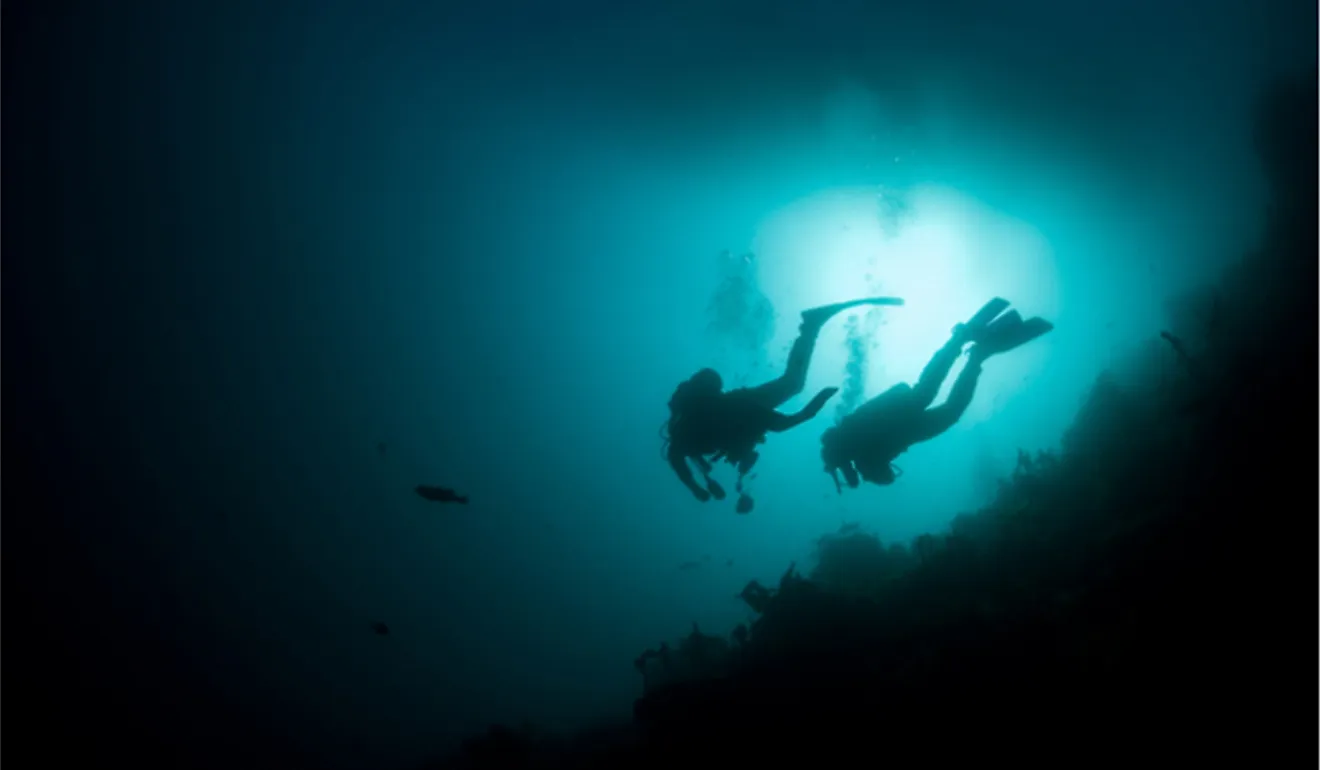
In August 2018, a couple who had walked Wrightsville Beach many times before found something new near Beach Access 28: a megalodon tooth about four inches long. The find stood out because Wrightsville Beach is better known among dedicated fossil hunters for what lies offshore. Fossil divers travel well beyond the beach to search ancient deposits off the North Carolina coast. Some megalodon-tooth dives exceed 100 feet in depth and require the training and equipment appropriate for deep-water diving. The couple found theirs without leaving the sand. Wrightsville Beach is on a barrier island immediately east of Wilmington. Beach Access 28, where the tooth was found, is on the ocean side of the island.
Folly Beach, South Carolina

Shark-tooth hunting is common enough at Folly Beach that local beachgoers know to watch the shell piles left by the tide. Megalodon teeth have also been reported from the area, although smaller shark teeth are a much more routine find. Folly Beach is south of Charleston on Folly Island. From its northeastern end, Lighthouse Inlet separates Folly from Morris Island, another fossil-hunting area. Morris Island has no road connection, so getting there requires a boat or kayak.
Color is not a reliable way to identify a megalodon tooth. Fossil teeth can appear black, brown, gray, reddish, or other shades depending on the minerals present while the tooth fossilized. Shape matters more. A megalodon tooth generally has a wide triangular crown and serrated cutting edges. The bourlette above the root can help with identification when it survives, though a tooth that spent millions of years being moved through sediment may be heavily worn.
North Myrtle Beach, South Carolina

North Myrtle Beach produced two megalodon finds within a few weeks in the summer of 2021. The first came in July, when a 5-year-old vacationing with his family at Ocean Creek Resort spotted a large tooth in the swash while they searched for shark teeth together. A few weeks later, a local resident made another discovery near Beach Cove Resort. She saw something in shallow water that looked like a rock, picked it up, and later learned it was a megalodon tooth. She was no first-time fossil hunter and regularly searched the beach for shark teeth, but she had never found a megalodon tooth before. Formed in 1968 when four beach communities merged, the city now covers about nine miles of the Grand Strand, from Windy Hill in the south to Cherry Grove in the north, giving shark-tooth hunters a long stretch of Atlantic shoreline to search.
Chasing a Prehistoric Giant on American Beaches
If you're hoping to find something older than the shells at your feet, the right beach in Florida, Maryland, or the Carolinas could put a megalodon tooth within reach. Tiny fossils hide among the broken shells in Venice, loose material washes free below Calvert Cliffs, and the Carolina shores have given up a tooth nearly six inches long. Bring a mesh screen to Caspersen Beach or scan the swash at North Myrtle Beach, because each of these beaches gives you a genuine chance at a piece of prehistory. For collectors, the odds are part of the hunt. The nearly six-inch North Topsail tooth had been sitting in the geological record for millions of years. On an October day in 2015, it was sitting where a passing beachgoer could reach down and pick it up.