The Great Lakes Shipwrecks You Can See From Shore
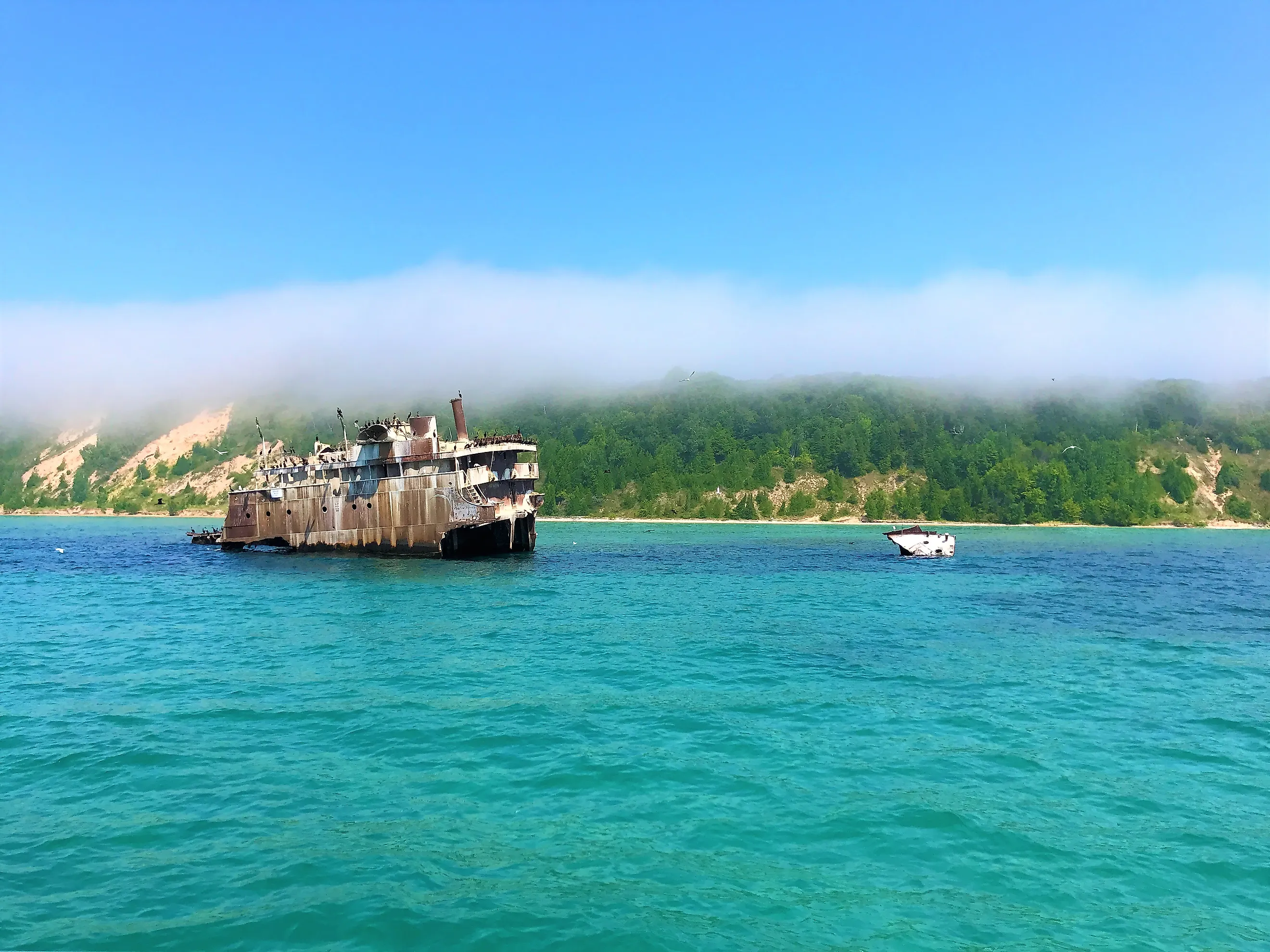
The Francisco Morazán is still sitting in Lake Michigan, its rusting upper decks clearly visible from a bluff on South Manitou Island. It ran aground in 1960 and was never removed.
Other Great Lakes wrecks are closer still. Near Rogers City, Michigan, a long section of the Joseph S. Fay lies on the beach, while visitors to Pictured Rocks can spot the remains of wooden freighters in the shallows of Lake Superior. Each wreck can be viewed while standing on shore. Some ships remain recognizable above the waves; others have been reduced to timbers that appear and disappear as sand shifts. Their shallow resting places mark the reefs and shorelines that once defeated even experienced crews.
Francisco Morazán, Lake Michigan

South Manitou Island has a shipwreck big enough to be seen from a bluff. The steel freighter Francisco Morazán lies partly submerged off the island's southern shore, with sections of its upper structure still above Lake Michigan. The National Park Service directs hikers toward the Old Growth Cedars trail, about 2.5 miles from the island dock, for an overlook of the wreck. The bluffs give a clear view of the stranded freighter without approaching its unstable metalwork.
The Morazán left Chicago in late November 1960 carrying cargo bound for Europe. Fog and snow made navigation difficult, and it struck a shoal where another freighter, the Walter L. Frost, had gone aground decades earlier. The captain's pregnant wife was evacuated first, while the remaining crew stayed aboard for several days before being rescued. Efforts to recover the cargo ended with the vessel still on the reef. Double-crested cormorants now nest on the stranded freighter, which the park asks visitors to appreciate from the overlook without disturbing the birds.
Joseph S. Fay, Lake Huron

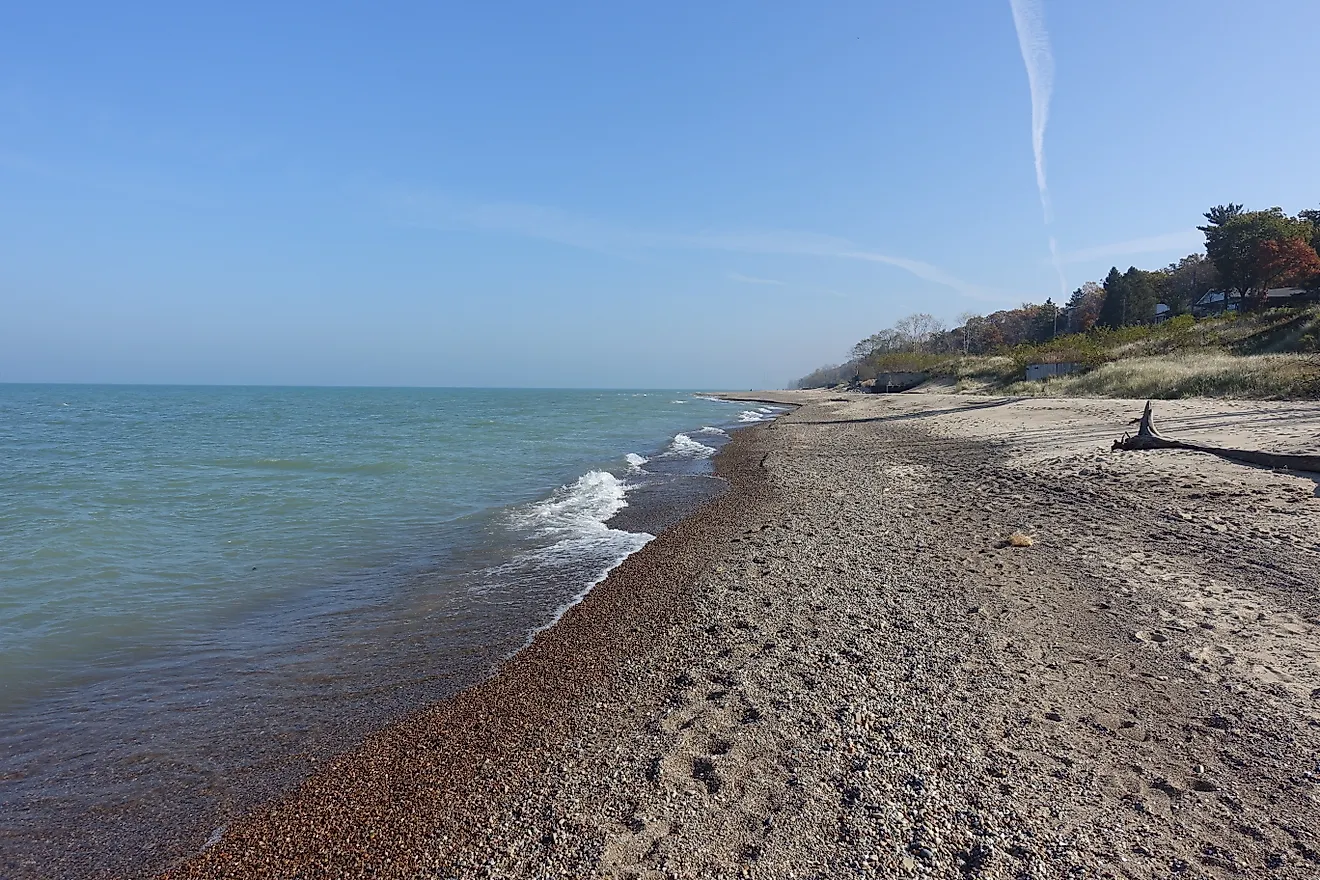
A visitor walking the beach near 40 Mile Point Lighthouse can come upon the side of a wooden freighter. Walk along the Lake Huron beach from the light station and you can find a huge wooden section of the Joseph S. Fay, a freighter destroyed in October 1905. Roughly 150 feet of its side has been reported along the shore, with heavy timbers held together by old iron fasteners. The rest of the ship rests underwater a few hundred yards away. Sand sometimes covers part of the beached wreckage, so what visitors find can change between seasons.
The Fay was carrying iron ore when a violent storm struck as it towed the barge D.P. Rhodes. The towline parted, the two vessels separated, and the Fay broke apart near the lighthouse. Most of the crew escaped, but the first mate died. The wreck survives in two settings that are easy to connect: a broken hull out in the lake, and the enormous timber structure thrown up along the beach. Those remnants are protected, and visitors can examine them without pulling nails or wood from the sand.
Erie Belle, Lake Huron

A rusted boiler on a Canadian beach is all that many visitors see of the Erie Belle. The wreck gave Boiler Beach, south of Kincardine, Ontario, its name. Depending on Lake Huron's level, the twisted metal sits partly in the shallows or exposed against the sand. The township identifies access along Boiler Beach Road, where the beach is a short distance from the water's edge. The boiler dates to a failed attempt to help another stranded ship. In November 1883, the Erie Belle was trying to free the grounded schooner J.N. Carter when its boiler exploded. Four crew members were killed. The tug was destroyed, and salvage efforts later left the boiler close to shore. The rusty mass is the lower portion of the equipment that generated the steam needed to power the tug. The boiler marks a wreck that most people would otherwise never notice beneath the water, and it remains the feature for which the beach is named.
Mary Jarecki, Lake Superior

The Mary Jarecki ran aground on the Fourth of July in 1883, near the mouth of the Hurricane River in what is now Pictured Rocks National Lakeshore. Loaded with iron ore and traveling through fog, the wooden steamer hit the shallow sandstone reef just off Lake Superior's coast. Everyone survived. Attempts to save the ship recovered some material, but storms eventually scattered the remaining structure across the area.
The wreck is still part of the walk toward Au Sable Light Station. Near the beginning of the lighthouse access road, long oak timbers lie just outside the breakers. The water and sand determine how much you see: during low lake levels the wood and old fasteners can rise above the surface; at higher levels the remains may look like a dark shape underwater.
Much of the original steamer has disappeared, but the surviving timbers still show how the freight vessel was built. The National Park Service has placed an interpretive wayside near the site, allowing walkers to connect the material in the surf with the vessel's history.
Sitka and Gale Staples, Lake Superior

Farther along the same lakeshore trail, the wrecks of two large wooden freighters have become mixed together. The Sitka struck Au Sable Point in 1904 after losing its way in fog and strong wind. Fourteen years later, the Gale Staples grounded nearby while hauling coal toward Port Arthur, Ontario. Both crews survived, but waves and ice have broken up the ships and moved their remains across the sandstone reef and onto the beach.
Near Au Sable Light Station, hikers can find pieces of framing and planking among the shore's rock and sand. Identifying which ship a particular piece belonged to is difficult, even for park staff: the vessels were built to similar designs, each stretching more than 270 feet. The Park Service describes the wreckage as most visible along the beach during summer, although its exact position can change. On the reef, further pieces remain in shallow water, often close enough to be seen through the surface.
Columbus, Lake Superior

In remote Gargantua Harbour on the Canadian side of Lake Superior, the most conspicuous surviving piece of the Columbus is its boiler. It can sometimes be seen projecting above the water in the sheltered harbor. The wreck is reached on foot by following the old road from the parking area inside Lake Superior Provincial Park, a walk of about two miles. Higher lake levels can hide the remains, so even a hike to the correct spot is no guarantee of a clear view. The Columbus was a wooden steamer more than 130 feet long. In September 1909, it caught fire while docked at Gargantua. The vessel was cut loose and left to burn and sink away from the settlement's waterfront. Gargantua had once been a fishing and logging community; traces of that history remain around the harbor, including the old road and the site of the wharves. The Canadian government recorded the loss as a fire at the Gargantua dock on September 10, 1909.
Portland, Lake Huron

Near Bell Bay north of Alpena, the Portland came apart in shallow water while carrying a load of salt. A violent storm in October 1877 drove the two-masted schooner onto rocks, destroying the 150-foot vessel. The crew survived. Today the wreck lies in two principal groups: most of the hull is about 100 yards offshore in six feet of water, and its stern section rests in a shallow lagoon close to the beach.
The lagoon is the part worth seeking out for a shore-based visit. Trails through Besser Natural Area lead past traces of the former village of Bell toward Lake Huron. Just north of the main beach trail, the remains of Portland's stern can be seen in the lagoon when conditions allow. Most of the structure offshore is better suited to snorkelers and paddlers. Waves broke the schooner into sections, and sand and ice have since rearranged some of the loose material. Visitors should leave every piece where it rests.
The Francisco Morazán has remained visible above Lake Michigan for decades because its steel structure stands well clear of the surface. At Au Sable Point, Lake Superior repeatedly covers and exposes wood from vessels that broke apart more than a century ago. The Joseph S. Fay occupies both worlds, with a large section on the beach and most of the ship still offshore. An accessible shipwreck can therefore mean an unmistakable freighter on a shoal, a boiler in the sand, or a few old timbers below clear water. At Pictured Rocks and in Michigan's protected underwater preserves, moving wreckage or taking a souvenir is prohibited. The shorelines are still changing, and a timber exposed this summer may be covered with sand by the next visit.