The Biggest Waves Ever Recorded Off The US Coast
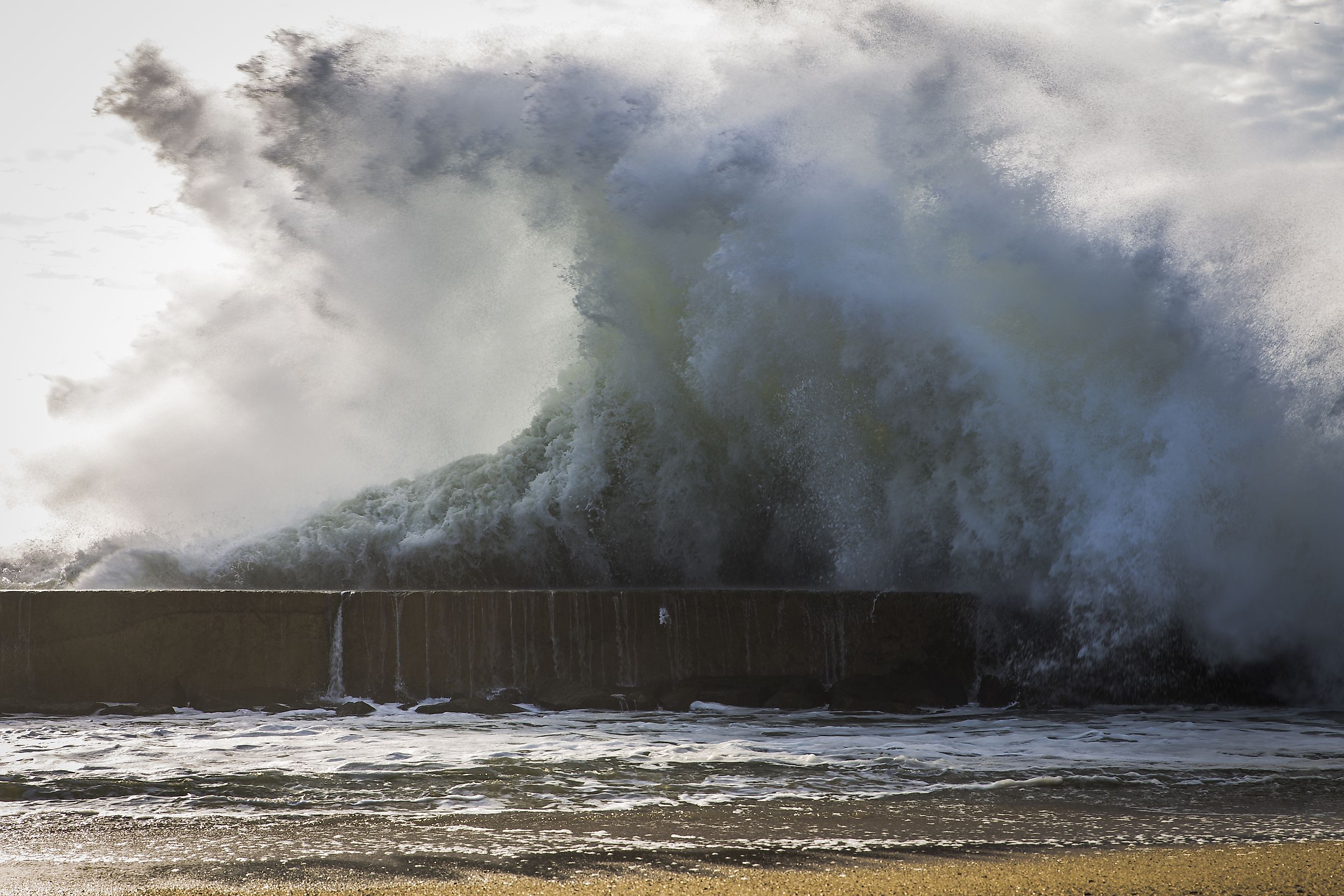
Waves are a natural occurrence in the ocean, and they fluctuate from small to large, but some can become tsunamis caused by earthquakes beneath the water. Powerful winds like those off Cape Mendocino can also create enormous swells in the deep ocean. Hidden sunken islands can turn ordinary waves into massive walls of crashing water, such as in Cortes Bank. These events prove how unpredictable and mighty the ocean can be, and the enormous waves it can create.
Lituya Bay, Alaska

Lituya Bay is a sea inlet located on the northeast shore of the Gulf of Alaska. On July 9, 1958, a powerful magnitude 7.8 earthquake hit, triggering an epic rockslide in Lituya Bay and producing the highest tsunami run-up ever recorded, a staggering 1,720 feet. The earthquake shook the mountains and glaciers around the fjord, causing about 40 million cubic yards of rock to plunge into the waters of the Gilbert Inlet inside the bay.
This historic event caused a mega run-up wave to splash up the mountainside to an incredible height of 1,720 feet, completely stripping the once dense forest of trees and soil along the way. As the remaining waves traveled down Lituya Bay toward its mouth, eyewitnesses described walls of water roughly 100 feet tall. Surprisingly, only two people in the bay died, aboard a fishing boat that sank. Another fishing boat, the Badger, was carried over La Chaussee Spit, a narrow strip of land at the bay's mouth, and back into the ocean, with the passengers aboard surviving as witnesses to the harrowing event.
Cape Mendocino, California

Along the rugged coastline of Humboldt County, Cape Mendocino juts out as a rocky headland into the Pacific. On November 26, 2019, a buoy run by the Scripps Coastal Data Information Program recorded a monstrous wave measuring 75 feet high about 20 miles off the cape. Experts at the institute say a strong bomb cyclone brought hurricane-force winds up to 80 mph, which led to the massive wave over the Thanksgiving week holiday. They noted that this type of wave was historically unusual and found far out into the deep ocean.
A rare weather event called a dynamic fetch created the massive wave. It happens when a powerful storm moves at the same speed and in the same direction as the waves it creates. Because the bomb cyclone's winds of more than 80 mph kept adding power to the waves, they grew to a documented record height. What made it even more rare was that waves higher than 70 feet are usually logged in very deep, remote areas of open sea. Finding a wave this size less than 20 miles off the California mainland was almost unheard of. Because the National Weather Service issued accurate advance warnings, local boaters stayed in port, preventing any major maritime disasters.
Cortes Bank, California
Cortes Bank lies about 100 miles west of Southern California and is home to huge wave swells of over 60 feet. The waves form over Bishop Rock, a sunken island whose highest point lies only a few feet below the ocean's surface. When large waves travel through the deep water and reach the shallow seafloor of Cortes Bank, they slow down and grow much taller. The waves also stretch out for hundreds of yards, which makes them so powerful. Under the right conditions, waves at Cortes Bank can reach 60 to 80 feet high, and some forecasters believe waves over 100 feet are possible
The largest documented wave there came in 2008, when Mike Parsons surfed an estimated 77-foot wave. During an early surfing expedition in December 1990, George Hulse joined photographer Larry "Flame" Moore and two other surfers in exploring Cortes Bank. Their pioneering trip helped establish the remote underwater bank as a surfing destination. The area has since attracted some of the world's most daring big-wave surfers. However, this part of the ocean is also extremely dangerous because it sits so far offshore, with unpredictable currents and no nearby land for easy escapes. Great white sharks also inhabit the waters, which adds another layer of risk to this remote and iconic surf break.
Not All Waves Are Alike
The oceans are fascinating and full of mystery, but they can also harbor dangerous waves that can sink boats. Every ocean has waves, but it's important to remember that not all waves are the same. There is a big difference between traditional swells along the coastline and massive ones that form in the deep sea. Luckily, agencies like NOAA and CDIP can educate the public and potentially warn them about possible wave disasters.