How The Great Salt Lake Holds Less Water Than Lake Tahoe Despite Being Larger
The Great Salt Lake covers about 1,700 square miles. Lake Tahoe covers 191. The Great Salt Lake is therefore nearly nine times the larger of the two, and it holds roughly one eighth as much water, which means Tahoe wins the only round that counts by a factor of about eight. Here is the number that settles it: Lake Tahoe's average depth is 1,000 feet. The deepest point anywhere in the Great Salt Lake is 33. Tahoe's shallow parts are thirty times deeper than the Great Salt Lake ever gets.
The Numbers Are Almost Rude

Set them side by side and the comparison goes one way on area and the opposite way on everything else. The Great Salt Lake is 8.9 times larger on the surface. Lake Tahoe is 62.5 times deeper on average, 50 times deeper at the deepest point, and holds about 8.2 times more water. Multiply the area advantage by the volume deficit and the Great Salt Lake underperforms its own size by a factor of roughly 73.
Both figures check out against the arithmetic. Area multiplied by average depth reproduces each lake's published volume within about ten percent, which confirms there is no clever secondary explanation. It is depth, and only depth.
One Is A Puddle, The Other Is A Canyon
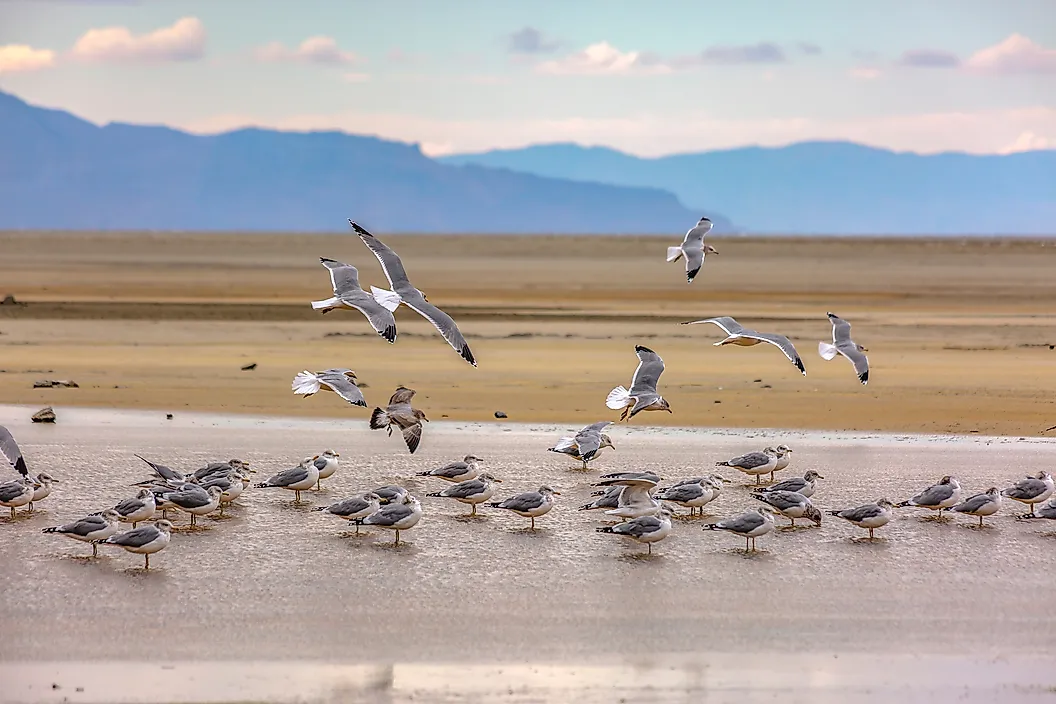
The Great Salt Lake averages about 16 feet deep, which is not a lake depth in any meaningful sense. A reasonably tall person could stand in the average Great Salt Lake and hold a conversation.
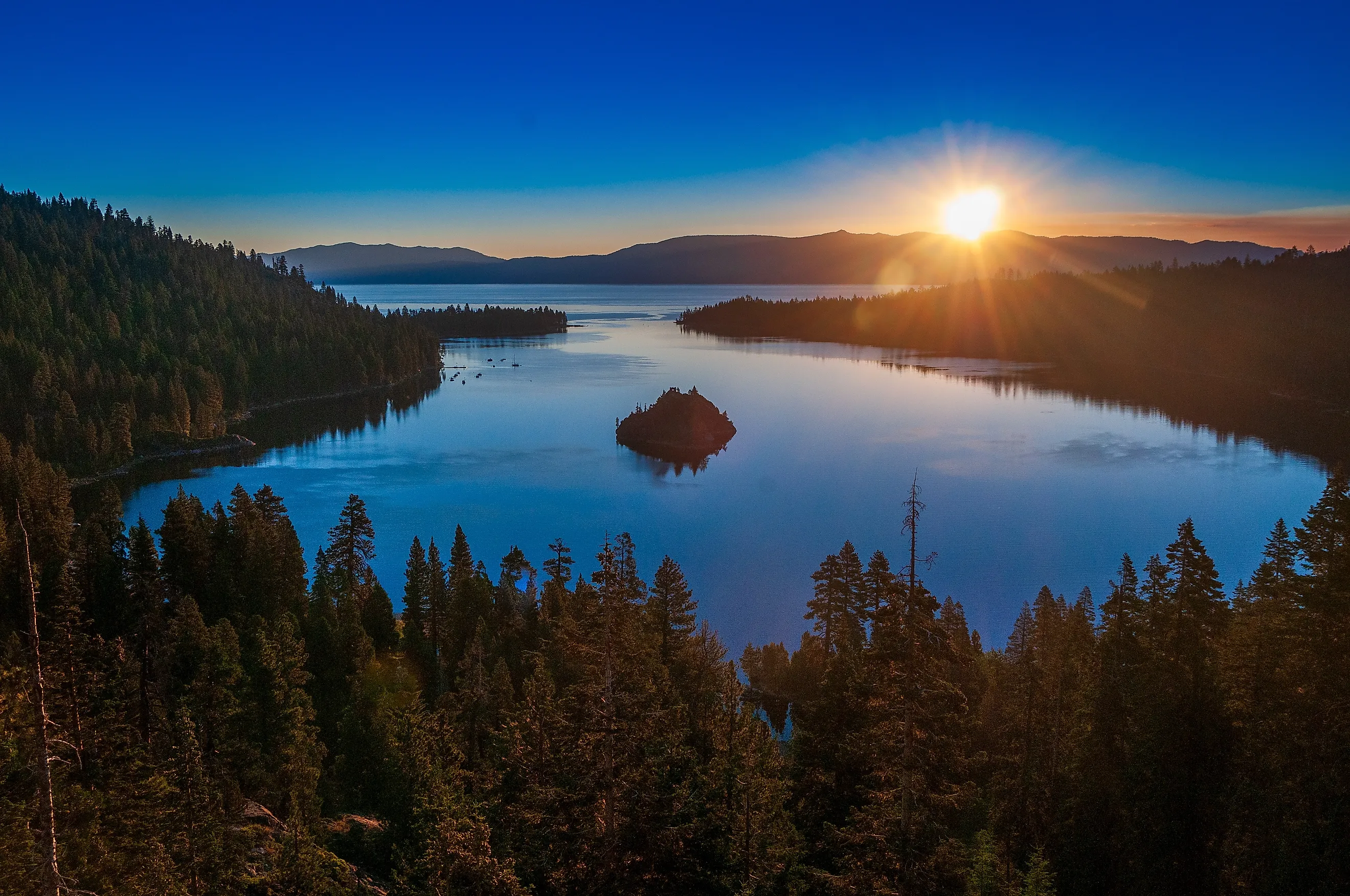
Lake Tahoe averages 1,000 feet and bottoms out at 1,645, which makes it the second deepest lake in the United States after Crater Lake and the largest alpine lake in North America. It is less a lake than a flooded chasm with a shoreline.
The Great Salt Lake spreads an enormous amount of surface over almost no depth. Tahoe does precisely the reverse, and the reverse turns out to be how you store water.
Blame The Geology, Not The Weather

The two basins were made by entirely different processes, which is the whole explanation for the shapes.
Tahoe sits in a fault-block basin, a block of the Earth's crust that dropped between two parallel faults as the Sierra Nevada and the Carson Range rose on either side. Volcanic flows then dammed the northern outlet and glaciers worked on the sides. The floor fell a very long way, and the water filled a genuine hole.
The Great Salt Lake has no hole. It is the shallow residue of Lake Bonneville sitting in a broad desert basin with nowhere to drain, spreading sideways across a nearly flat floor because there is nothing to spread into.
It Barely Knows How Big It Is

Being 16 feet deep has a consequence beyond poor water storage, which is that the Great Salt Lake cannot commit to a size. It shrank to 950 square miles in 1963 and swelled to 3,300 in 1987, a threefold swing within one human lifetime, because a lake that shallow gains or loses enormous area for every extra foot of depth. It hit 950 again in 2021 and 2022.
Lake Tahoe moves within a range of a few feet and nobody writes articles about it, because a few feet of a 1,000-foot lake is a rounding error rather than a crisis.
One Of Them Is Also Undrinkable
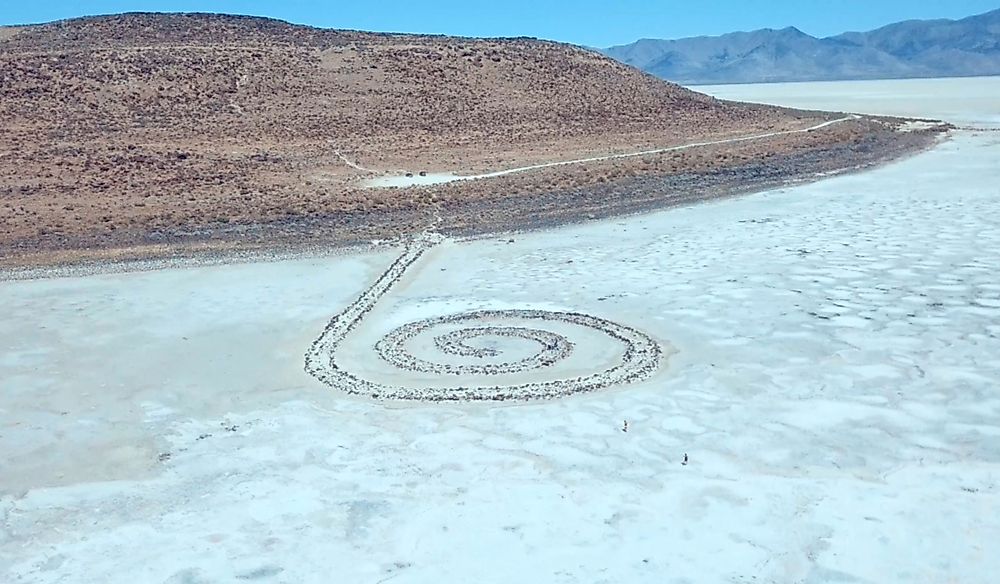
Worth noting while the Great Salt Lake is losing every category, since this one is not close either.
Tahoe is famously clear fresh water, clean enough that its clarity is measured annually and reported as news. The Great Salt Lake is two to seven times saltier than the ocean, reaching 27.5 percent salinity in its north arm, because it has no outlet and water can only leave by evaporating, which takes the water and leaves the salt behind.
So Tahoe holds eight times more water and all of it is usable, while the Great Salt Lake holds a smaller amount of brine that nothing can drink.
Tahoe Could Flood A State
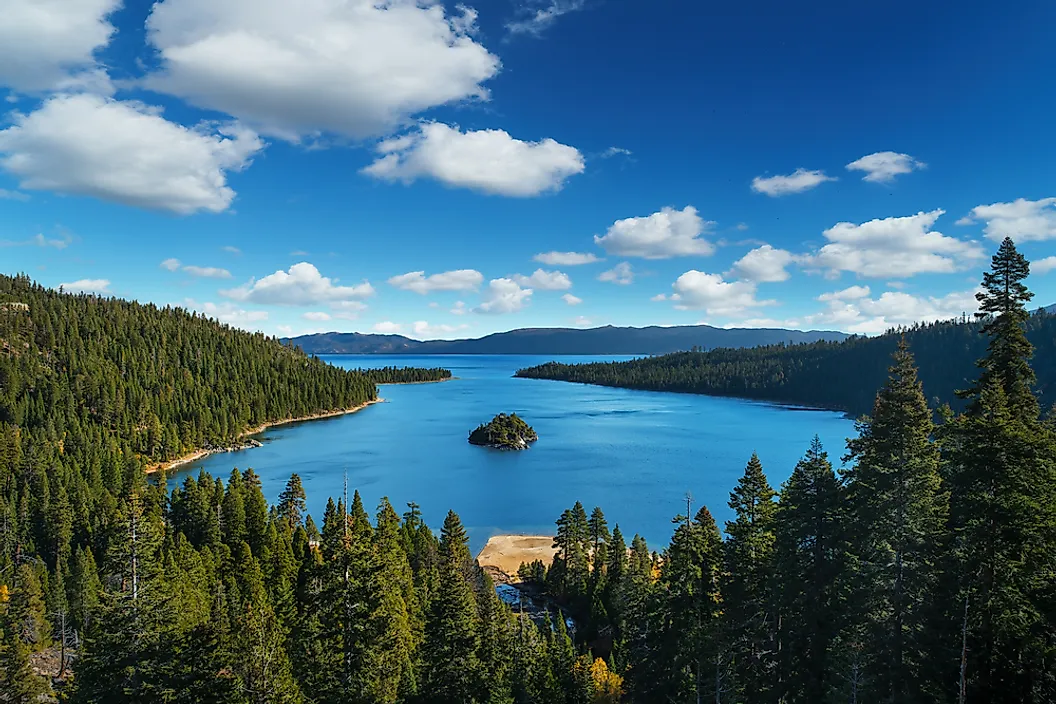
The standard way of expressing Tahoe's volume is worth repeating, because it makes the point better than any ratio can.
There is enough water in Lake Tahoe to cover the entire state of California to a depth of about 14 inches. California is roughly 164,000 square miles. Tahoe covers 191.
Try that calculation with the Great Salt Lake and you would cover California to a depth of under two inches, in brine, which nobody has requested.
The Great Salt Lake Does Win Some Things

In fairness, and there is some fairness available here. It is the largest saltwater lake in the Western Hemisphere and the largest lake in the United States that is not one of the Great Lakes. It supports a brine shrimp industry whose eggs feed commercial fish farming worldwide, and it feeds millions of migratory birds. It generates lake-effect snow onto the Wasatch, supplying a meaningful share of the snow Utah's ski industry sells.
Tahoe does none of that. It just sits there being deep and extremely good-looking, which is admittedly a strong position.
Why Area Is The Number Everyone Quotes

If depth decides everything, the obvious question is why surface area dominates every reference book and every pub argument.
Area is easy to measure. You can take it from a map, a satellite image or a walk around the shoreline, and people have been doing so for centuries. Volume requires sounding the entire lakebed and integrating the result, which is a much more recent and much more laborious exercise.
So the familiar rankings record what was measurable first rather than what matters. For any question involving actual water, volume is the number, and the Great Salt Lake does badly at it.
The Verdict

The Great Salt Lake is nearly nine times larger and holds about an eighth as much water, because it averages 16 feet deep against Tahoe's 1,000, and surface area without depth is just a wet map.
The fairest summary is that these are two completely different objects that happen to share a word. Tahoe is a filled tectonic trench a quarter of a mile deep. The Great Salt Lake is an enormous shallow tray of brine that changes size when it rains. Only one of them is really a lake in the way most people picture one, and it is not the big one.