The Lakes Where Freshwater Drum Grow Largest
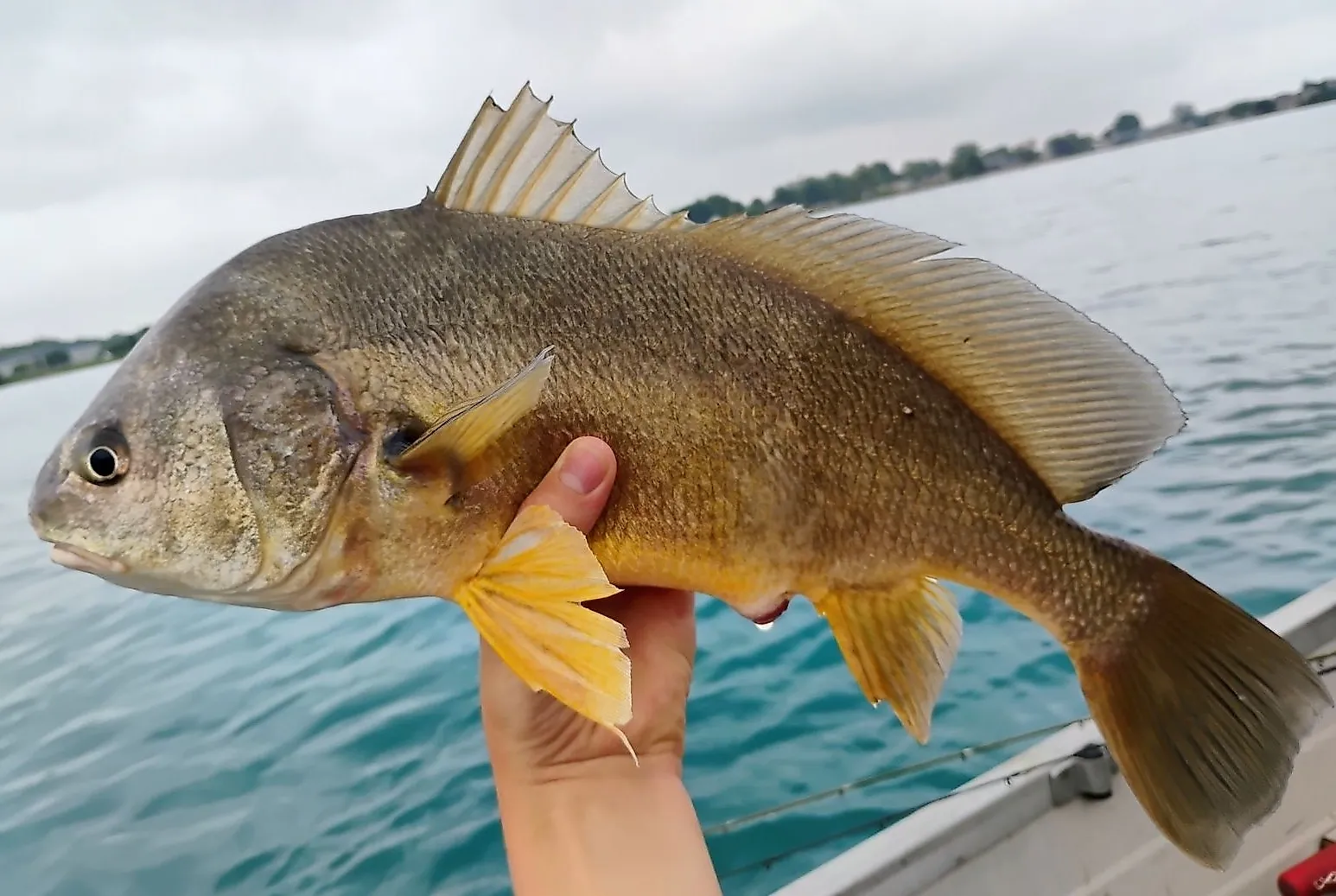
The heaviest freshwater drum ever landed on a rod and reel came out of Nickajack Lake in Tennessee on April 20, 1972. It weighed 54 pounds, 8 ounces (24.7 kilograms), and it still holds the all-tackle world record, even though the Missouri Department of Conservation notes that adults generally weigh just 1 or 2 pounds (0.5 to 0.9 kilograms). Also called sheepshead or gaspergou, freshwater drum are the only North American members of the drum family that live their entire lives in fresh water. They range from Hudson Bay in Canada to Guatemala, with strongholds in the Mississippi River basin and the Great Lakes, and take their name from the grunting sound males make by vibrating special muscles against the swim bladder. Heavy, molar-like throat teeth let drum crush snails and invasive zebra mussels, and in Missouri the drum is the only known fish host for the endangered scaleshell mussel. Age estimates from specimens recovered at archaeological sites have reached 73 years.
This list ranks 10 US lakes and reservoirs by the weight of the state-record freshwater drum currently held by each, as certified by state wildlife agencies for hook-and-line (rod-and-reel or pole-and-line) catches. Records from rivers, bowfishing, and trotlines are not included, which rules out fish like the 55-pound (24.9-kilogram) trotline drum on Texas's books, a fish heavier than the world record.
Nickajack Lake, Tennessee

Benny Hull's world-record drum came from a reservoir less than five years old. The Tennessee Valley Authority finished Nickajack Dam in 1967 to replace the leaking Hales Bar Dam upstream. Nickajack was the only TVA dam built to replace an existing hydroelectric plant. Hull's record fish took the bait in April 1972, and the Tennessee Wildlife Resources Agency still lists it as both the state record and the all-tackle world record.
The lake is a dammed stretch of the Tennessee River, covering 10,370 acres (42 square kilometers) and featuring 179 miles (288 kilometers) of shoreline. It runs about 46 miles (74 kilometers) upstream from the dam to the base of Chickamauga Dam in Chattanooga, passing through the steep Tennessee River Gorge near the point where Tennessee, Alabama, and Georgia meet. Big, slow river reservoirs like this one suit drum, which favor deep pools and sluggish current. Hull's fish is a true standout and hasn't been matched anywhere in the world since. In fact, no other state record on this list comes within 8 pounds (3.6 kilograms) of it.
Spirit Lake, Iowa

Drum often seek out deep pools, yet the second-heaviest drum on this list came from a lake with a maximum depth of just 22.5 feet (6.9 meters). R. F. Farran caught the 46-pound, 38.5-inch (97.8-centimeter) fish on October 1, 1962, and the Iowa Department of Natural Resources still lists it as the state record more than six decades later.
Spirit Lake, the largest natural lake in Iowa, covers 5,684 acres (23 square kilometers). It sits at the northern end of the Iowa Great Lakes, a cluster of glacial lakes near the Minnesota line. That shallow, fertile water is productive in other ways too. The Iowa DNR uses Spirit Lake as one of its walleye broodstock lakes, and the state-record muskellunge also came from here. Drum still earn a place in the lake's Master Angler entries, but none has come close to Farran's catch. A 26-inch (66-centimeter) Spirit Lake drum entered in September 2025 was barely two-thirds the length of the record.
Lake Wilson, Arkansas

Arkansas's biggest drum did not come from the usual big-fish waterways like the Mississippi, the Arkansas River, or one of the state's mountain reservoirs. Chuck Piker of Hamburg caught the 45-pound, 7-ounce fish on Lake Wilson in July 2004, according to the Arkansas Game and Fish Commission. The Encyclopedia of Arkansas places the record lake in Ashley County, in the southeastern corner of Arkansas near the Louisiana line.
The size of Piker's fish is noteworthy next to more typical catches. The Commission's Master Angler program recognizes drum starting at 12 pounds (5.4 kilograms), and an Arkadelphia fishing guide told the Commission's weekly fishing report that a 15.8-pound (7.2-kilogram) drum from Lake Ouachita was the biggest he had ever caught. The species is common across the state, mainly in larger lakes and rivers, and it can occur in staggering numbers. In late December 2010, about 83,000 freshwater drum turned up dead along a 17-mile (27-kilometer) stretch of the Arkansas River below Ozark-Jeta Taylor Lock and Dam. Tests ruled out disease, parasites, and toxins, and state biologists never found a cause.
Lake Conroe, Texas

Texas tracks fish records both statewide and for each public water body, and its statewide freshwater drum record belongs to a reservoir built to supply water for Houston. Jesse Ashley caught the 44-pound, 38.5-inch (97.8-centimeter) drum on Lake Conroe on May 22, 2011, using simple dough bait. Texas Parks and Wildlife lists it as the state rod-and-reel record. Texas's water body records show how unusual the Conroe whopper is. Lake Texoma's all-tackle drum record, for example, is 34.70 pounds (15.7 kilograms), more than 9 pounds (4.1 kilograms) lighter.
Lake Conroe covers about 20,118 acres (81 square kilometers) on the West Fork of the San Jacinto River in southeast Texas. The San Jacinto River Authority built it with the City of Houston and the Texas Water Development Board, and the lake filled in October 1973. About 5,000 acres (20 square kilometers) of the reservoir lie within Sam Houston National Forest.
Dale Hollow Lake, Kentucky and Tennessee

Dale Hollow Lake is famous for two record catches. The first is the 11-pound, 15-ounce (5.4-kilogram) smallmouth bass David Hayes caught in 1955, which still holds the all-tackle world record for the species. The second came in April 2021, when Alan Cooper of Morgantown, Kentucky, landed a 42.81-pound drum that the Kentucky Department of Fish and Wildlife Resources certified as the new state record.
The drum record that Cooper displaced had stood since June 1980, a 38-pound (17.2-kilogram) fish from the Green River caught by Larry Cardwell, also of Morgantown. That river record lasted more than four decades before being broken by a fish from a reservoir that lies mostly in Tennessee. Of Dale Hollow's 25,519 acres (103 square kilometers), the Kentucky department counts 6,614 acres (27 square kilometers) on the Kentucky side. The US Army Corps of Engineers impounded the lake in 1943 by damming the Obey River, a tributary of the Cumberland River. The Kentucky side includes Dale Hollow Lake State Resort Park, and the lake's clear water is a draw for scuba divers and anglers alike.
Wilson Lake, Alabama

Alabama's drum record is the oldest on this list, and it once held an even bigger title. Wilson Brock of Birmingham caught the 41-pound, 8-ounce fish on Wilson Reservoir on July 24, 1949. The Alabama Department of Conservation and Natural Resources lists the catch as a former rod-and-reel world record, a title Nickajack Lake's 54-pound, 8-ounce fish now holds.
Wilson Lake is impounded by Wilson Dam on the Tennessee River in northwest Alabama. The US Army Corps of Engineers began construction of the dam in 1918 to power nitrate production for World War I, but it was not completed until the mid-1920s. It later became the first dam placed under the control of the Tennessee Valley Authority, and it was designated a National Historic Landmark in 1966. The reservoir covers 15,500 acres (63 square kilometers) with 166 miles (267 kilometers) of shoreline. Brock's record has now stood in Alabama for 77 years. The waters below the dam keep producing records for other species, too; state records for sauger and silver redhorse both came from the Wilson Dam tailwater.
Lake of the Ozarks, Missouri

Missouri keeps two kinds of fish records: pole-and-line and alternative methods, which include trotlines, bows, gigs, and snagging. The state's pole-and-line drum record, a 40-pound, 8-ounce fish caught by Ronald P. Wagner, came from the Lake of the Ozarks. That fish is more than 20 times the weight of a typical adult drum in Missouri, by the Missouri Department of Conservation's own estimate. It also dwarfs the state's alternative-method record. A bowfisherman shot a 30-pound, 15-ounce (14-kilogram) drum on Table Rock Lake in 2016, breaking an earlier bowfishing record of 26 pounds, 8 ounces (12 kilograms) that had also come from the Lake of the Ozarks.
The lake itself is a result of hydropower development. Union Electric (now Ameren) built Bagnell Dam across the Osage River between 1929 and 1931, flooding a winding valley to create a reservoir of about 54,000 acres (219 square kilometers). Because it follows the old river channels and creek arms, it has roughly 1,150 miles (1,850 kilometers) of shoreline.
Clinton Lake, Illinois

Illinois's drum record survived 58 years before a catfish angler broke it. Johnathan Inman was fishing for catfish on Clinton Lake in May 2018 when he hooked a 38-pound, 4-ounce drum. Finding a large enough scale was a challenge, since one local scale topped out at 30 pounds (13.6 kilograms). The fish was finally weighed at a meat-packing plant in Decatur. The Illinois Department of Natural Resources certified it as the new hook-and-line record, toppling a 35-pound (15.9-kilogram) record drum caught on DuQuoin City Lake in 1960.
Clinton Lake is a 4,900-acre (19.8-square-kilometer) reservoir in central Illinois, built by Illinois Power Company to supply cooling water for the Clinton Power Station. The lake reached normal pool in 1978, and most of it lies within the 9,300-acre (37.6-square-kilometer) Clinton Lake State Recreation Area. Warm water discharged from the plant circulates through a section of the lake known as the cooling loop, and fish gather near the discharge in colder months.
Tenkiller Ferry Lake, Oklahoma

Oklahoma's rod-and-reel drum record is a long fish. Harold Phillips's 38-pounder from Tenkiller Ferry Lake measured 41.75 inches (106 centimeters), more than 3 inches (7.6 centimeters) longer than Iowa's 46-pound record. Its girth was 28.75 inches (73 centimeters). Oklahoma also keeps an unrestricted record category for fish taken by trotline, jug line, bow, and other legal methods, and fish in that category must tie or beat the rod-and-reel record to qualify. The state's unrestricted drum record is a 47-pound (21.3-kilogram) trotline fish from the Neosho River. That catch outweighs every rod-and-reel state record on this list except Nickajack's.
Tenkiller is a reservoir of roughly 12,500 acres (51 square kilometers) on the Illinois River in eastern Oklahoma. The US Army Corps of Engineers calls it Oklahoma's Clear Water Paradise, and the lake's two main feeder streams, the Illinois River and Baron Fork, are both designated Oklahoma Scenic Rivers. Tenkiller State Park sits along its shoreline.
Oneida Lake, New York

No state's drum record has climbed faster than New York's. In June 2014, a 26-pound, 9-ounce (12-kilogram) drum from Irondequoit Bay on Lake Ontario set the state record. In June 2016, a 12-year-old angler topped it with a 29-pound, 14-ounce (13.6-kilogram) fish from Lake Champlain. A year later, on June 16, 2017, Jason Bair of Macedon caught a 36-pound drum on Oneida Lake, beating that mark by more than 6 pounds (2.7 kilograms). When the record was announced, the state Department of Environmental Conservation noted that drums were growing much larger in New York waters than ever before.
Oneida Lake lies about 10 miles (16 kilometers) north of Syracuse and is the largest lake entirely within New York, covering 50,894 acres (206 square kilometers). It is also shallow for its size, with an average depth of about 22 feet (6.7 meters) and a maximum of 55 feet (16.8 meters). The lake drains into Lake Ontario via the Oneida and Oswego rivers, and researchers at the Cornell Biological Field Station conduct an annual assessment of the lake's fish community.
Why Lake Erie and Lake Winnebago Are Not on This List

If pure drum abundance decided this ranking, Lake Erie or Lake Winnebago might top it. Lake Erie, the shallowest and warmest of the Great Lakes, is also the most biologically productive, and drum are a routine catch. In 2023 alone, anglers reported 810 qualifying Lake Erie drum to Ohio's Fish Ohio program, which requires a minimum length of 24 inches (61 centimeters). The longest of those measured 36 inches (91 centimeters).
Yet Ohio's state record is a 23.5-pound (10.7-kilogram) drum, caught in the Sandusky River, a Lake Erie tributary, in 2001. Abundance and maximum size are not the same thing. Wisconsin offers a similar example. Lake Winnebago was so full of drum that a state removal program hauled out 11.8 million pounds (5.4 million kilograms) of them between 1955 and 1957, yet Wisconsin's hook-and-line record came from the Mississippi River.
The Drum Record Books Keep Changing
Several of the records on this list are more than 40 years old, but the drum's place in the record books is far from settled. New York's record rose by more than 9 pounds (4.3 kilograms) in just three years. In February 2026, Vermont Fish and Wildlife certified a new state record for a 28.5-pound (12.9-kilogram) freshwater drum caught by 10-year-old Grayson Carey during a Lake Champlain fishing derby in June 2025. The fish beat the previous Vermont record by 3 pounds (1.4 kilograms).
Kerr Lake, a reservoir on the Virginia and North Carolina line, currently holds both states' drum records. A Vermont Fish and Wildlife biologist noted that many anglers still consider the drum a trash fish. Trash or not, the record books suggest the anglers who take it seriously keep finding bigger ones.