How Ducks Keep Their Feet From Freezing On Ice
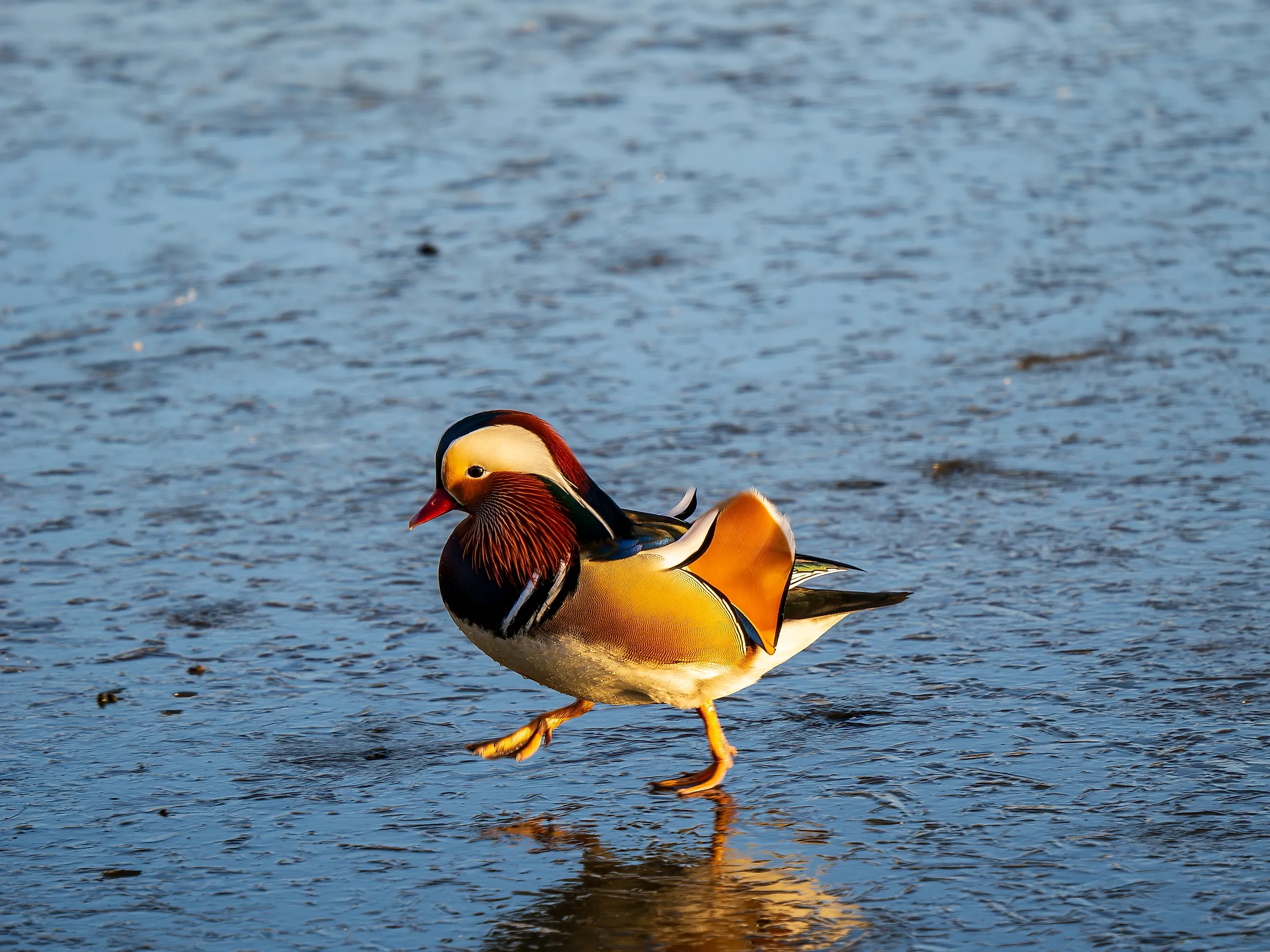
On a bitter winter morning, a mallard duck can stand on a frozen pond as if it were an ordinary day. Its bare, webbed feet are pressed flat against a surface cold enough to freeze human skin, yet the duck appears perfectly comfortable. The duck's secret isn't a thick layer of insulation or feet that can somehow resist freezing. Instead, ducks use a specialized circulatory system that allows their feet to become cold while protecting the rest of their bodies.
Ducks Let Their Feet Get Cold

The first surprising fact about a duck's winter survival strategy is that its feet aren't kept as warm as the rest of its body. In fact, keeping them warm would be a waste of valuable energy. Like other birds, ducks maintain a high internal body temperature, typically around 104°F (40°C), depending on the species. Their feet, however, can be much colder. By allowing the temperature of their feet to approach that of the surrounding ice or water, ducks reduce the amount of heat escaping their bodies.
This works because heat naturally moves from warmer objects to colder ones. The greater the temperature difference, the faster the heat transfer under otherwise similar conditions. If a duck's feet were as warm as its body, they would lose heat rapidly when standing on ice. Cooler feet reduce that temperature difference, slowing the loss. This doesn't mean a duck's feet are immune to freezing. In certain conditions, the cold can cause injury or even death. However, ducks have evolved adaptations that allow them to tolerate cold while maintaining a warm core. Their survival depends on controlling heat loss, not eliminating it.
How Countercurrent Heat Exchange Works

The key to this adaptation lies in the arrangement of blood vessels in a duck's legs. Arteries carry blood away from the heart toward the feet, while veins return blood toward the heart. In a duck's legs, these vessels run very close together, allowing heat to pass between them. By the time arterial blood reaches the feet, it has already lost much of its heat to the returning blood. Meanwhile, the venous blood gains heat before traveling back toward the body's core. The result is an efficient exchange that reduces heat loss through the feet while conserving heat within the body.
This system is called countercurrent heat exchange because the blood flows in opposite directions through adjacent blood vessels. It isn't unique to ducks, though. Similar heat exchange systems occur in many other animals, including some marine mammals and sea turtles. According to Ducks Unlimited, this system is especially effective in mallards, with only about five percent of their total body heat lost through their feet. Ducks can also adjust blood flow to their feet as temperatures change. When conditions become cold enough to threaten their tissues, increased circulation can help prevent freezing while the countercurrent system continues to limit overall heat loss. Together, these adaptations help explain why a duck can stand on ice without its feet or the rest of its body freezing.
No Feathers On Their Feet

While a duck's body is covered in feathers that trap insulating air, its lower legs and feet are exposed. Although this might seem like a disadvantage in winter, bare feet are well-suited for walking and swimming, while specialized circulation helps limit heat loss. In addition to countercurrent heat exchange, the structure of a duck's feet also plays a role in how it avoids freezing.
Their lower legs and feet contain relatively little muscle, with much of the foot consisting of bones, tendons, and other tissues. This limits the amount of metabolically active tissue that must be supplied with oxygen and maintained at a high temperature. Their feet are also covered in tough, scaly skin, which provides protection against abrasive surfaces. Combined with specialized circulation, these features help ducks tolerate cold conditions. Despite these evolutionary protections, cold tolerance has its limits. Extreme conditions, poor health, injury, and prolonged exposure can still threaten birds.
Standing On One Leg Also Conserves Heat

Observing ducks on a frozen pond reveals another simple method of heat conservation: standing on one leg while tucking the other up into their feathers. They may alternate legs or eventually settle down with both feet protected beneath their bodies. By drawing one foot up into the insulation of its feathers, a duck can reduce heat loss from that extremity while allowing it to warm.
This posture is normal and may become particularly useful in cold weather, much like a human tucking a chilly hand into a pocket. Ducks also tuck their bills into their feathers when resting. Like their feet, their bills are exposed to cold air, so this posture can help reduce heat loss.
Waterproof Feathers Provide Another Layer Of Warmth

Down feathers help ducks retain body heat by trapping insulating air close to their skin. Their outer feathers provide protection against wind and water, and regular preening helps maintain their condition. Preening allows ducks to clean and realign their feathers, preserving the microscopic structure that makes their plumage water-resistant. Ducks also distribute oils from a gland near the base of the tail across their feathers. These oils help maintain feather condition and flexibility, supporting the water-resistant properties of their plumage.
Keeping their feathers in good condition is important because wet, matted plumage provides less effective insulation. Well-maintained feathers trap air and help ducks retain warmth, even when swimming in cold water. Maintaining a stable internal temperature requires energy, particularly during winter when food availability may be limited. Ducks can conserve energy by resting and avoiding unnecessary movement. Sheltered areas also provide protection from harsh weather, allowing birds to preserve energy for feeding, swimming, and other essential activities.
How Ducks Survive When The Pond Freezes

A frozen pond doesn't necessarily mean a duck's winter habitat has become inhospitable. Many waterfowl migrate to regions where food and open water remain available, while others stay in colder areas when conditions permit. Moving water, springs, and areas kept open by currents can provide access to aquatic plants and invertebrates that some duck species rely on for food.
Their winter survival depends on more than temperature alone. They also need suitable feeding areas and places to rest. If a pond freezes over completely and food becomes inaccessible, ducks may relocate to another body of water or a more suitable habitat. Their ability to tolerate cold feet is only one part of surviving a bitterly cold winter.
Seeing Winter Through A Duck's Eyes
Countercurrent heat exchange is an effective example of how ducks and other animals adapt to cold environments without keeping every part of their bodies equally warm. A duck standing on ice may appear to have an unusual resistance to freezing temperatures, but its survival depends on several adaptations that work to conserve body heat and protect vulnerable tissues. When we see ducks standing on a frozen pond, it's natural to imagine how cold their feet must feel. But this reaction reflects a human tendency to assume that what would be uncomfortable for us must be equally uncomfortable for other animals.
Wildlife experience winter through bodies shaped by millions of years of evolution, with different species developing their own ways of surviving the cold. Humans rely on clothing, shelter, and technology to withstand harsh conditions. Ducks depend on specialized circulation, insulating feathers, and energy-conserving behaviors. What looks uncomfortable to us, like a duck standing on a frozen pond with bare feet, is simply an animal going about its day.