Lake Mead Supplies 25 Million People, Lake Powell Supplies 7,500
Lake Mead provides drinking water for roughly 25 million people across Nevada, Arizona, California, tribal lands and northern Mexico. Lake Powell, which holds a comparable volume of the same river, supplies municipal water to Page, Arizona and the neighboring Navajo community of LeChee, around 7,500 people in total. That is a ratio of about 3,300 to one, between two reservoirs on the same river built 44 years apart. The gap is not an accident or an oversight. Powell was never built to supply anybody.
Mead Is A Tap, Powell Is A Bank
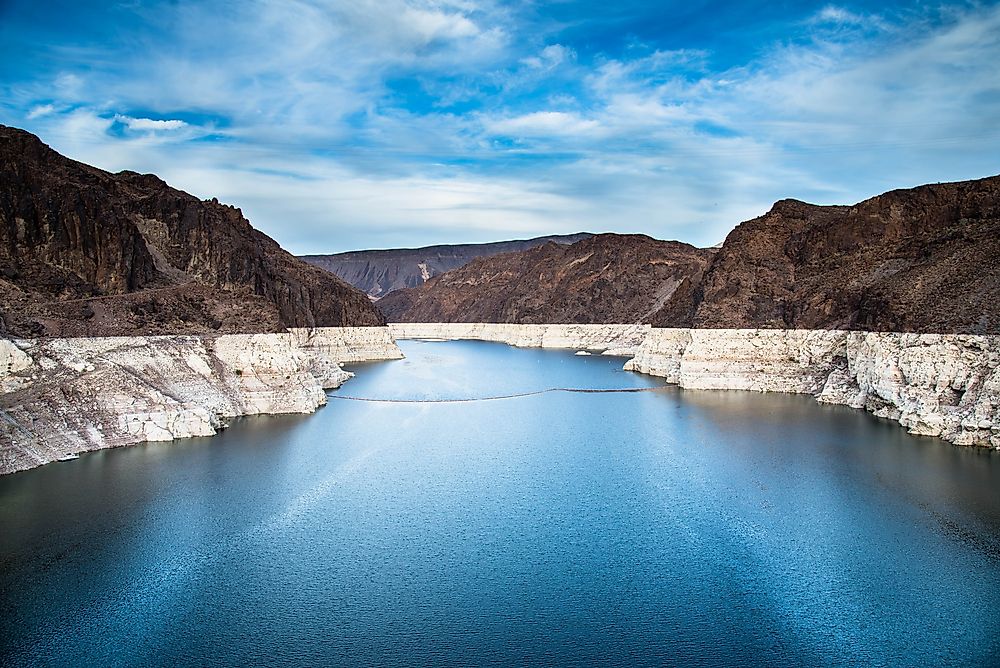
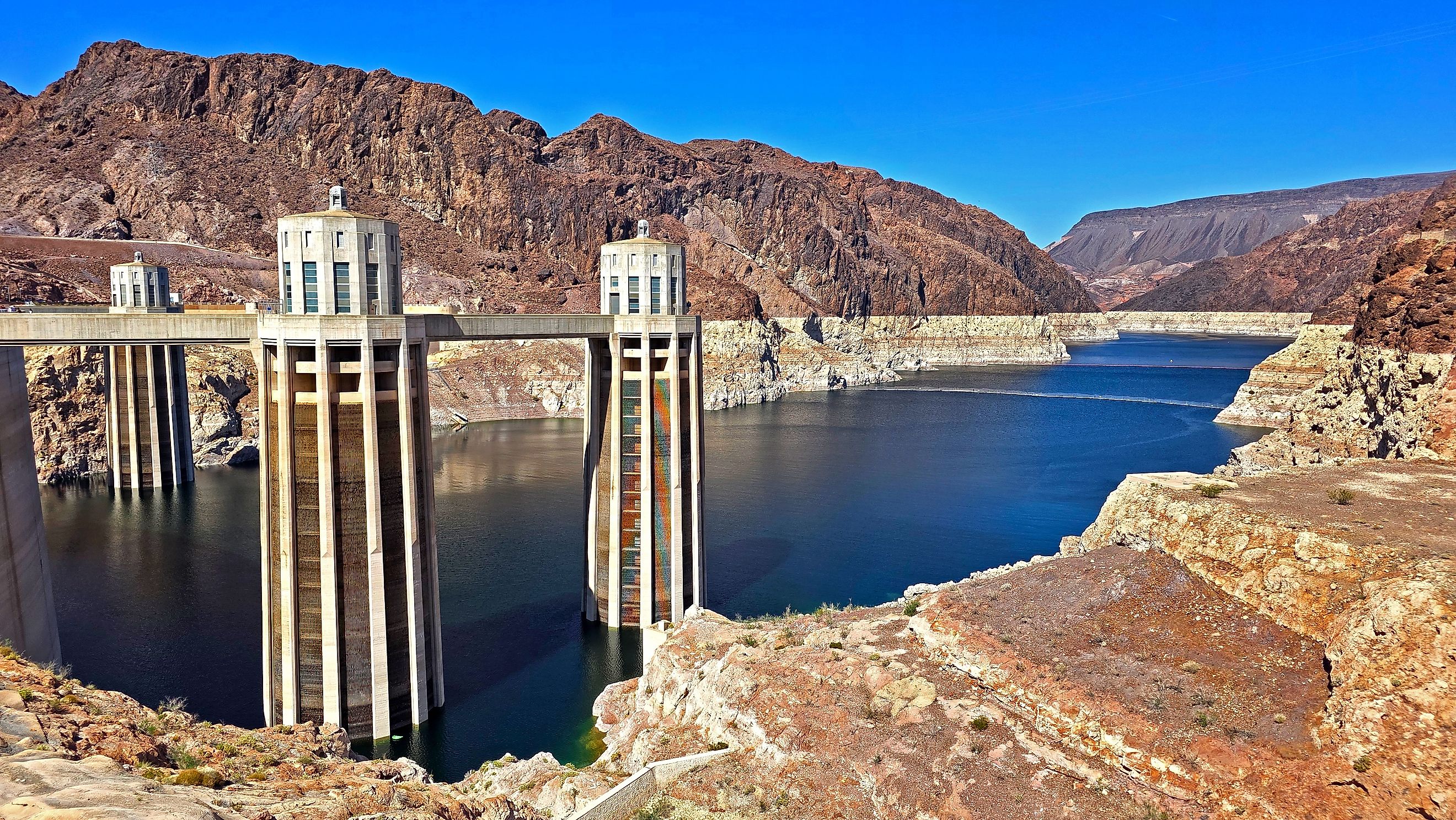
The difference in customers follows directly from the difference in purpose. Lake Mead currently provides municipal water to Las Vegas, Henderson, North Las Vegas and Boulder City, plus municipal, industrial and irrigation water to downstream users across the Lower Basin. Intakes draw straight from the reservoir.
Lake Powell was authorized to store water so the Upper Basin states could meet their delivery obligation to the Lower Basin under the Colorado River Compact. Storage, not supply.
There Is No Practical Way To Take Water Out

This is the engineering fact underneath the whole comparison and it is rarely stated plainly.
As one commentary in the Las Vegas Review-Journal put it, there is no practical way to withdraw significant quantities of water from Lake Powell for municipal, agricultural or other uses. The water sits there or evaporates until it is released through Glen Canyon Dam.
Adding water to Powell therefore does not increase the supply available to anyone. It only changes where in the system the water is sitting.
Page Draws At The Dam Itself

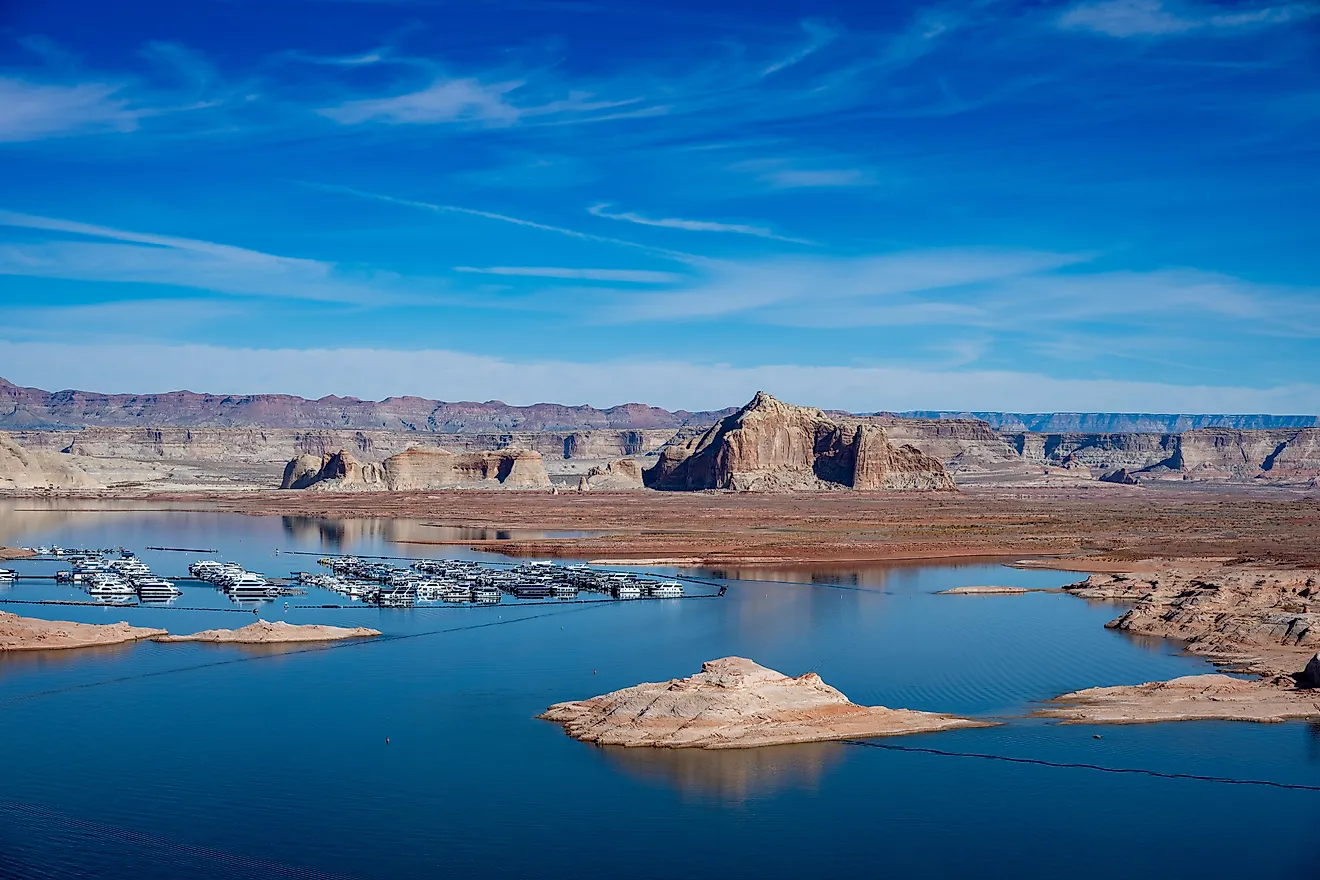
The 7,500 figure comes from a single municipal intake, and its location matters. The City of Page pulls water out of Lake Powell at Glen Canyon Dam, treats it, and delivers it to its own residents and to LeChee. That is the entire municipal draw from a reservoir with a full-pool capacity of around 24 million acre-feet.
Page exists because of the dam. The town was built in 1957 as a construction camp for it, which is why it is the only settlement with an intake.
Everything Powell Releases Ends Up At Mead

The two reservoirs are not alternatives, which is the part most framings of this get wrong.
Water released through Glen Canyon Dam travels 300 miles through the Grand Canyon and arrives in Lake Mead. Powell's outflow is effectively Mead's inflow, so the 25 million people are being supplied by water that has already passed through Powell.
Counted that way, Powell serves the same 25 million. It just does it indirectly, with a delay, and with evaporation losses along the way.
The Upstream Reservoir Pays A Toll

Storing water in two reservoirs rather than one has a measurable cost, and it is the strongest argument the consolidation camp makes.
Published estimates for Lake Powell's annual evaporation range from about 336,000 acre-feet to 500,000, and Reclamation's operating models still use coefficients dating from 1986. Whatever the true figure, every acre-foot evaporating from Powell is an acre-foot that never reaches a tap.
There is also bank seepage into the Navajo sandstone, which is why Powell has been described as one of the most contentious reservoirs in the country among water accountants.
Powell Supplies Power, Not Taps
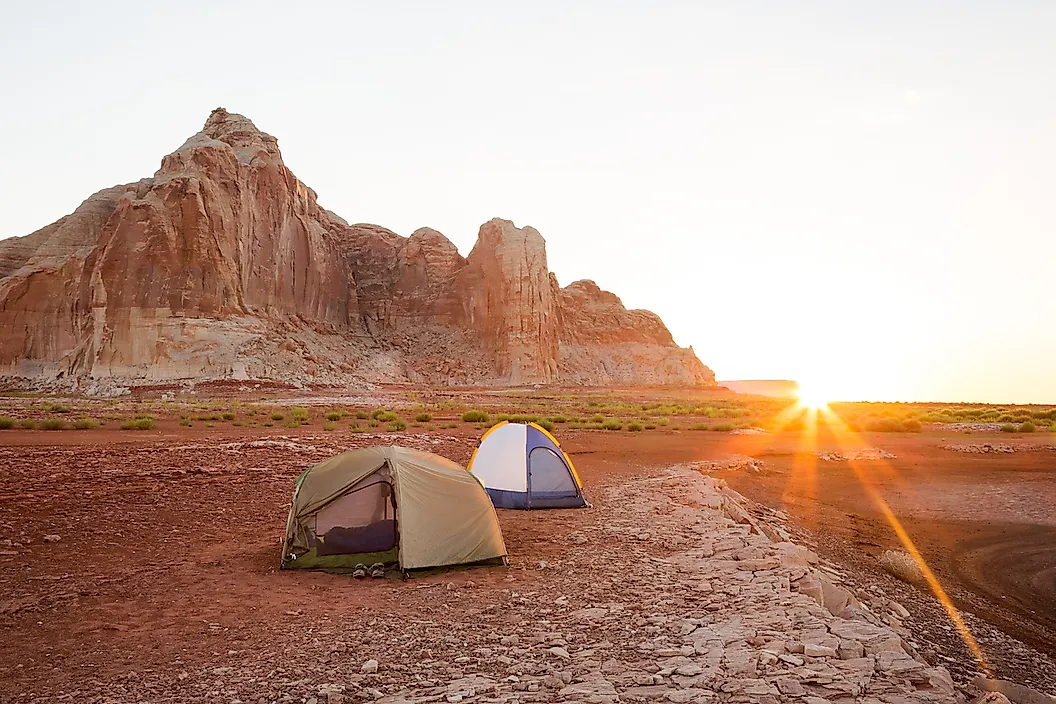
Measured by the right output, Powell serves a great many more than 7,500. Glen Canyon Dam generates hydroelectricity distributed across the Upper Basin states, including to Navajo communities. The Hoover Dam equivalent downstream produces power for over 1.3 million people across Nevada, Arizona and California.
So the honest version of the comparison is that one reservoir supplies drinking water at scale and the other supplies electricity, storage and compliance with a 1922 agreement.
Las Vegas Is The Most Exposed City
Within Mead's 25 million, the dependence is not evenly spread.
Las Vegas draws roughly 90 percent of its municipal drinking water from Lake Mead, which is the highest single-source dependence of any major city on the river. Southern Nevada has offset that with engineering rather than diversification, building an intake below dead pool and cutting consumption about 40 percent while adding 875,000 people.
California and Arizona take far larger volumes from the system overall, with California using roughly three times more Colorado water than Arizona.
Do Not Confuse It With Forty Million

One of these numbers regularly gets substituted for the other, and they measure different things.
About 25 million people are supplied by Lake Mead. Around 40 million are supplied by the Colorado River Basin as a whole, across seven states, tribal nations and Mexico. The basin figure includes everyone upstream of Lake Powell and everyone on tributaries that never reach either reservoir.
Some sources also give Mead's figure as 20 to 25 million, so the lower bound is worth keeping in mind when the number is doing load-bearing work in an argument.
The Proposal This Comparison Feeds

The ratio is quoted most often by people arguing for consolidating storage, and it is worth knowing what they are proposing.
The argument runs that Reclamation should concentrate Colorado River storage in Lake Mead rather than continuing to prop up Lake Powell, on the grounds that Mead's remaining capacity could hold more than three times the volume currently stored in Powell.
The counterarguments are the Compact delivery obligation, Glen Canyon's hydropower, and the Grand Canyon ecosystem between them, which depends entirely on managed releases from Powell.
The Short Answer
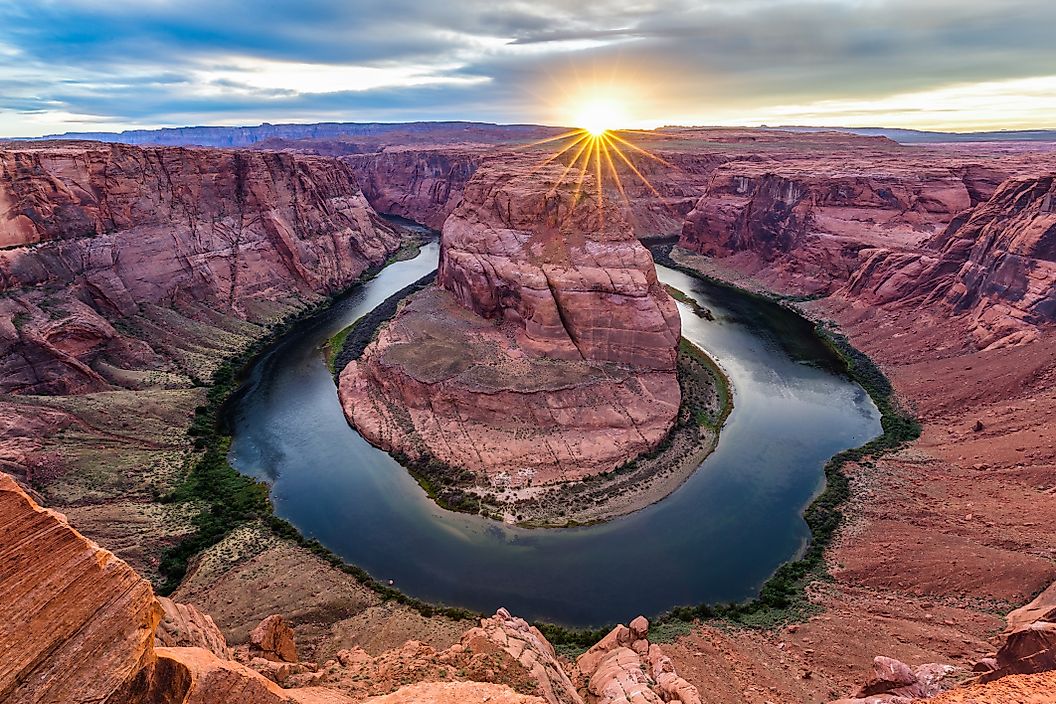
Lake Mead supplies drinking water to roughly 25 million people because it has intakes and cities built around it. Lake Powell supplies about 7,500, all of them in Page and LeChee, because it has one municipal intake and was built to store water rather than deliver it.
The ratio is real and it is also slightly unfair, because every drop reaching those 25 million has already passed through Powell. One reservoir is where the water is kept and the other is where it is handed out, and the argument over whether the West needs both is now a live one.