The Longest Lakes In The United States
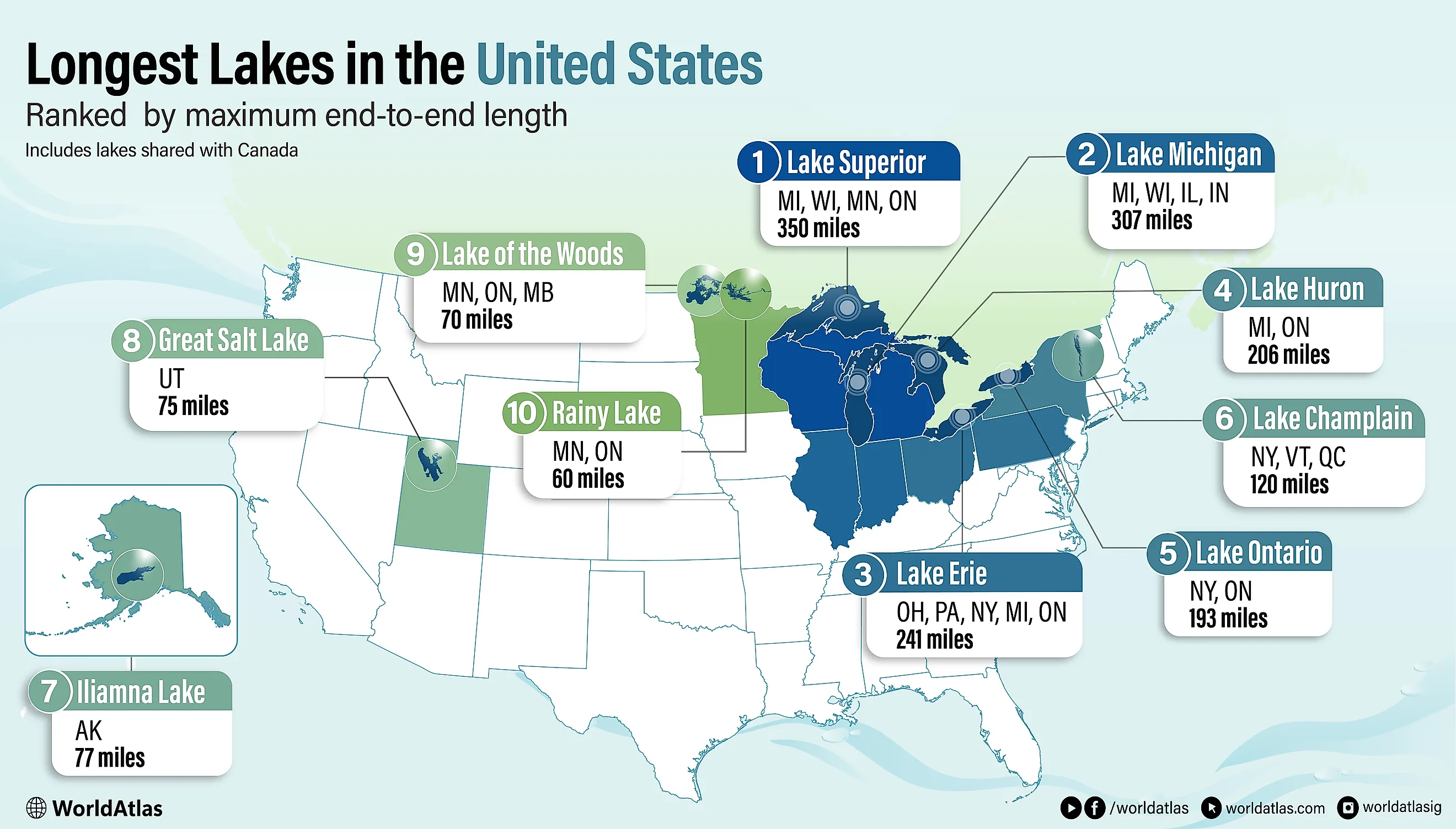
Lake Erie stretches 35 miles farther than Lake Huron, even though Huron covers more than twice as much surface area. Rank America's lakes by length and the shape of each lake matters. Lake Champlain, for instance, is just 12 miles across at its widest point, yet its waters extend 120 miles north into Canada.
This ranking uses published lengths for naturally formed lakes that lie wholly or partly in the United States. For lakes shared with Canada, the figure covers the whole lake. The five Great Lakes appear separately, following NOAA's convention. All lengths are approximate because sources can measure an irregular lake along different routes or axes.
1. Lake Superior - 350 miles (563 kilometers)

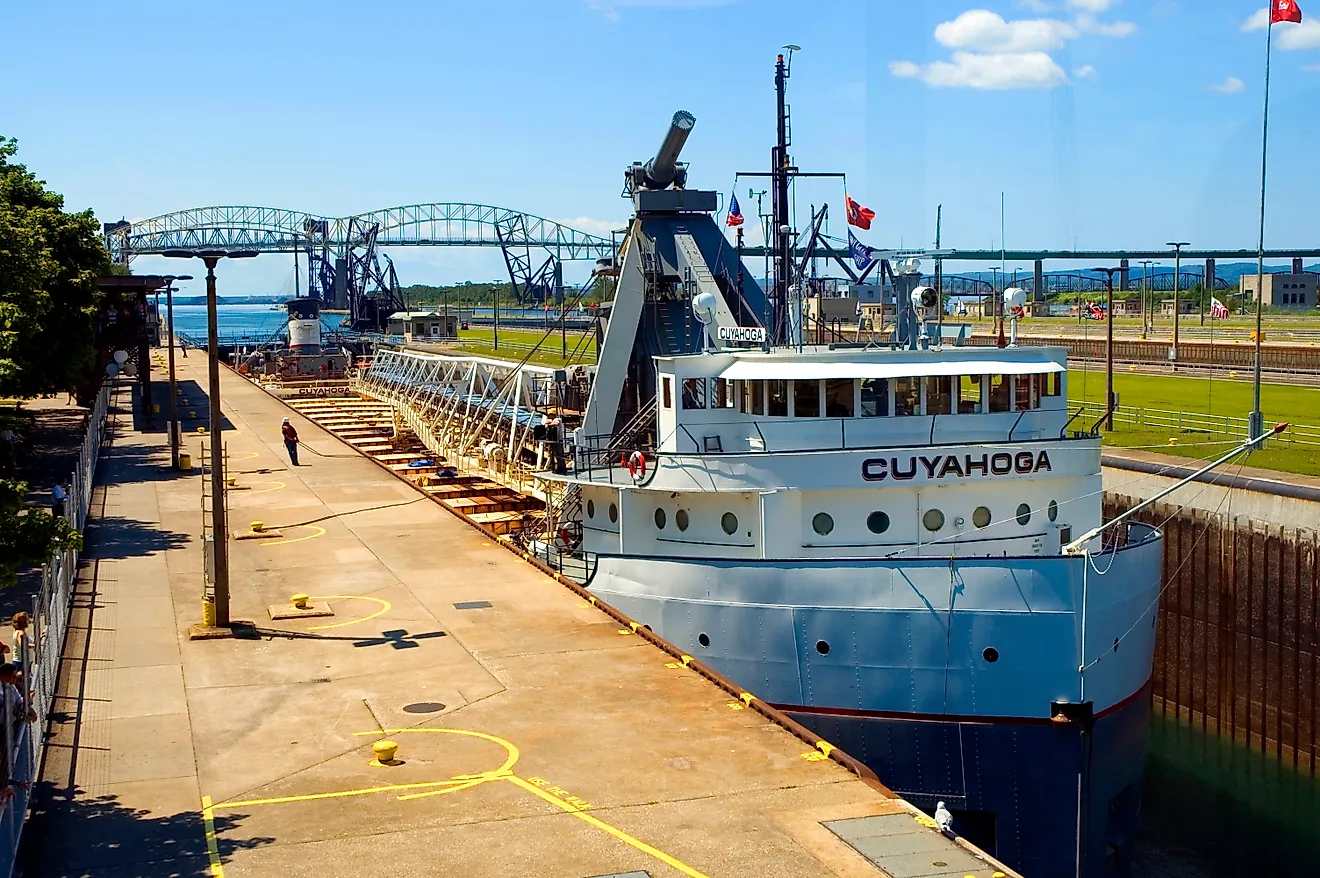
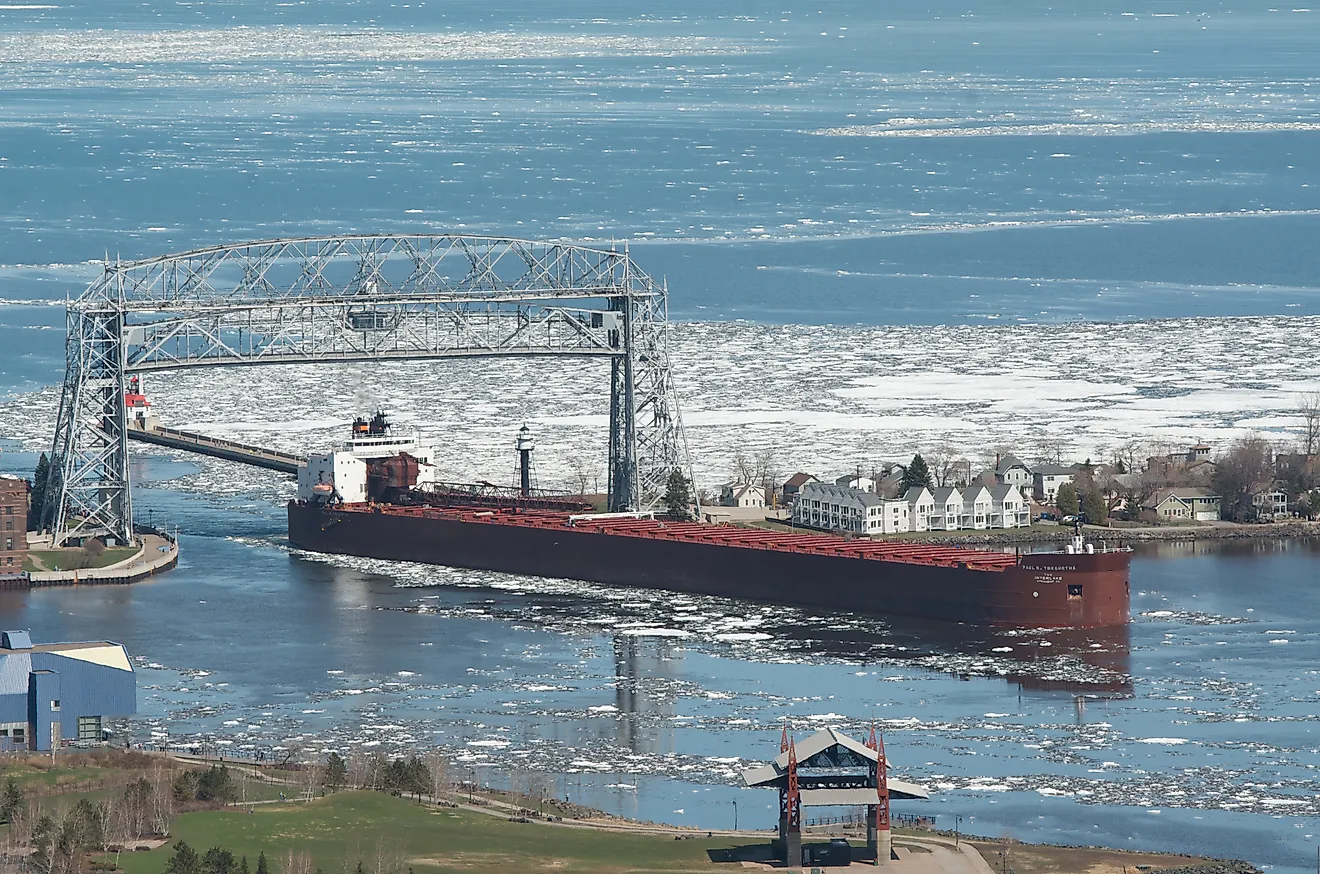
At Duluth, Minnesota, freighters enter the western end of Lake Superior with most of its 350-mile length still ahead of them. Ships bound for the lower Great Lakes travel east past Michigan's Upper Peninsula, enter Whitefish Bay, and leave the lake by the St. Marys River. At Sault Ste. Marie, the Soo Locks lower them to the river channel leading to Lake Huron.
Superior has the greatest surface area of the five Great Lakes as well as the greatest length. Even at its widest, though, the distance between opposite shores is about 160 miles, less than half its length. Minnesota and Wisconsin share the western end, while Michigan and Ontario face each other across much of the lake farther east.
2. Lake Michigan - 307 miles (494 kilometers)

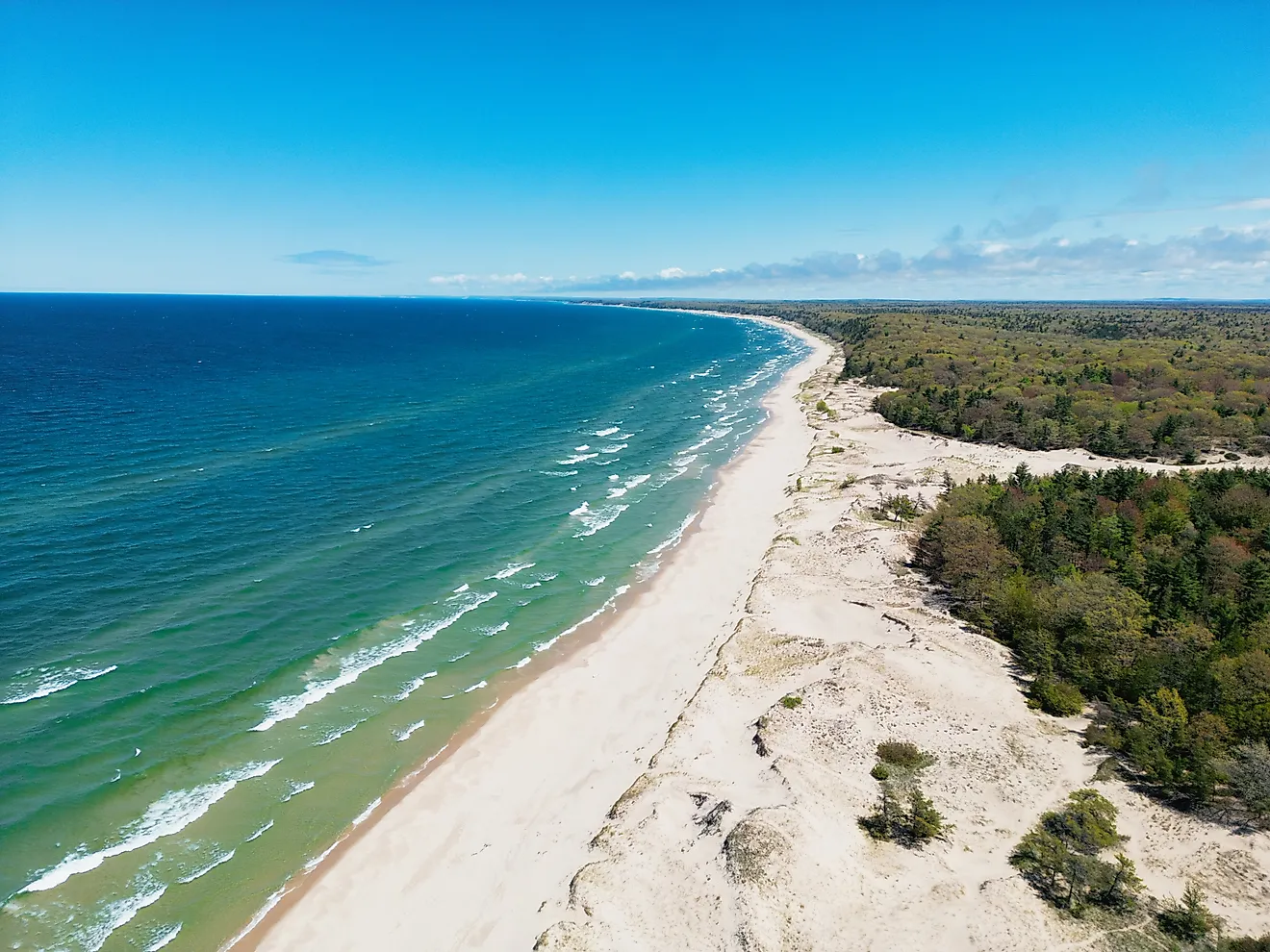
Chicago and Milwaukee both stand on the western shore of Lake Michigan. Its 307-mile length runs roughly north to south, with Indiana's dunes along the southern shore and the Straits of Mackinac near the northern end. Along the Michigan side, sandy beaches extend well up the eastern coast to the high bluffs at Sleeping Bear Dunes National Lakeshore.
At the straits, water moves between Lakes Michigan and Huron through a channel wide and deep enough for the two to share a water level. Geographers traditionally give each lake its own name. By that convention, Lake Michigan is the longest natural lake entirely within the United States and the only Great Lake with an entirely American shoreline.
3. Lake Erie - 241 miles (388 kilometers)

Lake Erie extends east for 241 miles, with Toledo near its western end and Buffalo at its outlet to the Niagara River. Depth changes considerably over that distance. Where the Detroit and Maumee rivers enter the western basin, the water averages just 24 feet deep. East of Long Point, Ontario, the lake floor drops to 210 feet, deep enough to give cold-water fish refuge in summer.
Erie's long east-west reach also helps explain a familiar sight in Buffalo during storms. A sustained wind blowing east along the lake can push water toward the city, raising the level there as it falls at the other end. Along the shallow western shore, enough water can recede to leave boats resting on the bottom of Maumee Bay.
4. Lake Huron - 206 miles (332 kilometers)

Lake Huron measures 206 miles long, but its outline is harder to follow on a map than Lake Erie's. On the Michigan side, Saginaw Bay reaches inland behind the state's Thumb. Across the lake in Ontario, the Bruce Peninsula and Manitoulin Island separate much of Georgian Bay from the main basin. Manitoulin also forms the southern shore of the North Channel.
Those bays and islands help explain how a lake shorter than Erie can have so much more coast. Including its islands, Huron has about 3,827 miles of shoreline, the most of any Great Lake. Its outlet is easier to pinpoint. At the southern end, the shores converge between Port Huron, Michigan, and Sarnia, Ontario, where water enters the St. Clair River.
5. Lake Ontario - 193 miles (311 kilometers)

The Niagara River delivers water from Lake Erie to the western end of Lake Ontario, downstream of Niagara Falls. The lake then extends east between New York and Ontario. Toronto stands on the northwestern shore, while Rochester lies on the southern side. Near Kingston, Ontario, the open lake gives way to the island channels at the head of the St. Lawrence River.
At 193 miles long, Ontario is the shortest of the Great Lakes, although it still exceeds Lake Champlain by 73 miles. Its smaller outline conceals a much deeper basin than Erie's. Ontario reaches about 802 feet at its deepest point and holds more than three times as much water as its longer upstream neighbor.
6. Lake Champlain - 120 miles (193 kilometers)
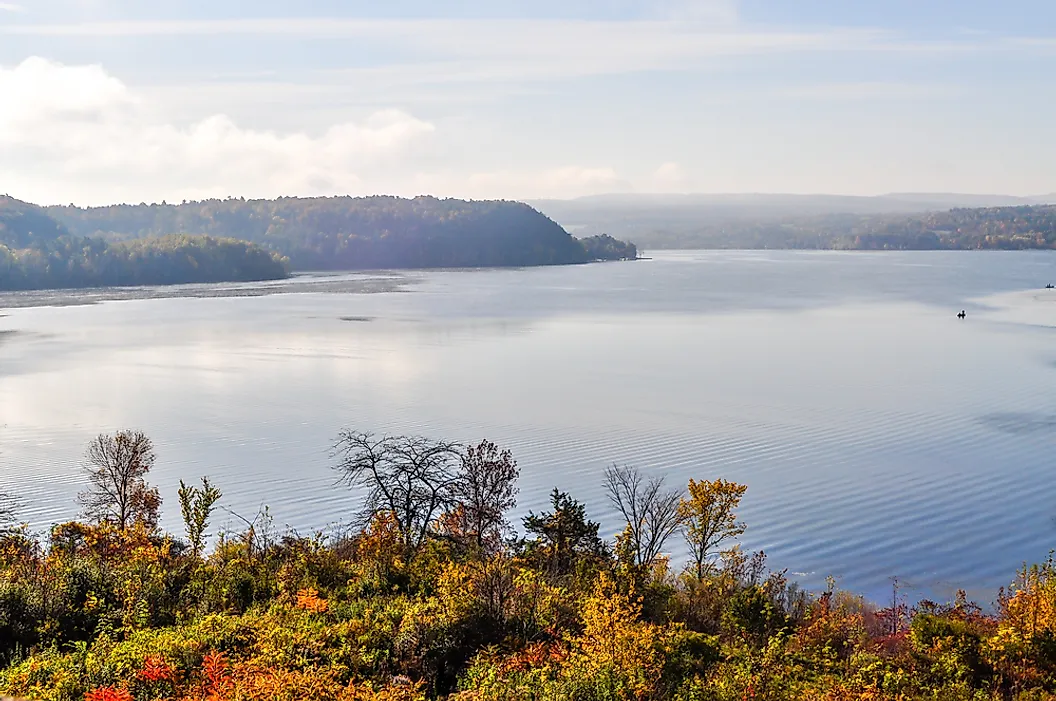
At Whitehall, New York, the southern end of Lake Champlain is narrow enough to look like a river. Head north and the shores draw farther apart, with the Adirondacks on the New York side and the Green Mountains in Vermont. The broad water off Burlington is more familiar to many visitors, yet even at its widest the lake measures only 12 miles across.
The Lake Champlain Basin Program gives a length of 120 miles for the lake's course north to its outlet in Quebec. There, the Richelieu River carries its water on to the St. Lawrence. The Canadian stretch counts toward the published length, just as the narrow reach south of the main lake in New York does.
7. Iliamna Lake - 77 miles (124 kilometers)

At 77 miles long and up to 22 miles wide, Iliamna Lake is Alaska's largest freshwater lake by area. The Kvichak River drains its southwestern end into Bristol Bay, an arm of the Bering Sea. Each summer, sockeye salmon swim up the Kvichak to spawn in the lake and its tributaries. Their young spend time in fresh water before making the journey back downstream.
The same lake supports a breeding population of harbor seals. Researchers have documented seals using the lake in winter as well as during the summer salmon runs. For a species most Americans associate with the coast, Iliamna provides an unusual home some 75 river miles inland.
8. Great Salt Lake - 75 miles (121 kilometers) at a reference water level

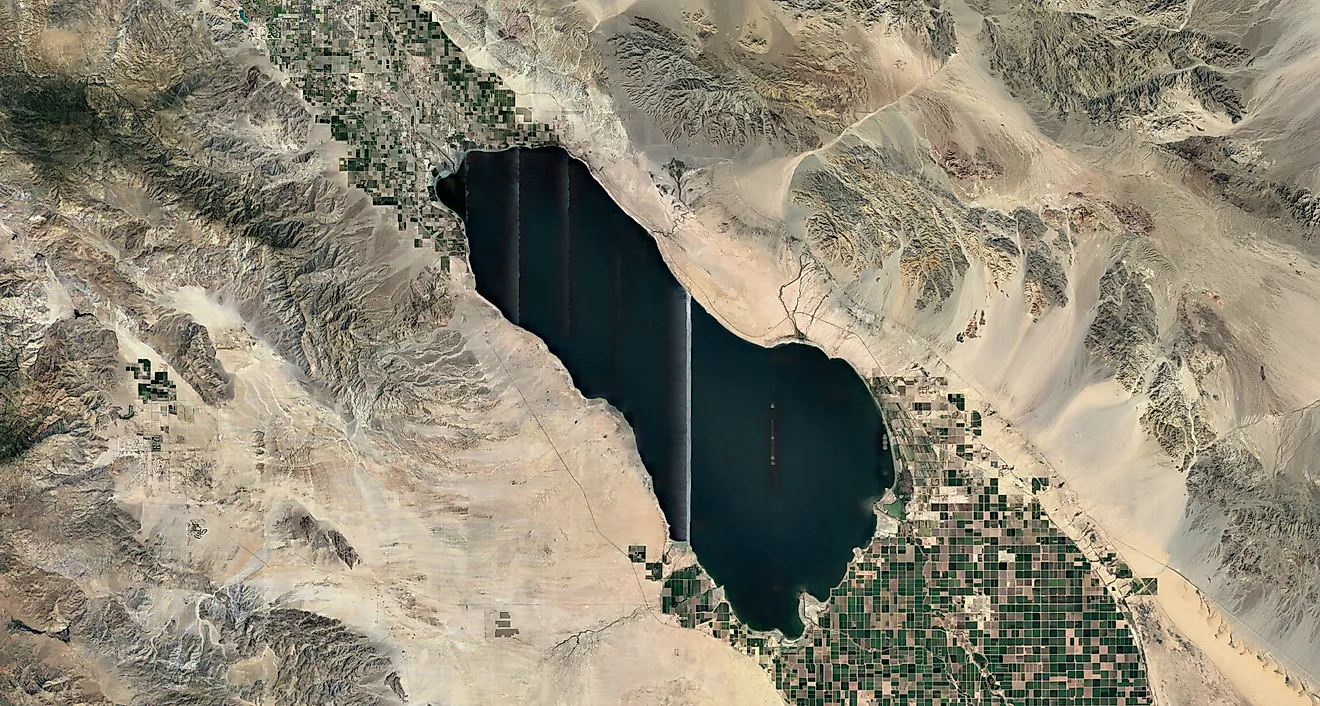
The Great Salt Lake has the most variable length in this ranking. The Utah Geological Survey puts it at about 75 miles long and 35 miles wide when the lake surface stands 4,200 feet above sea level. Much of the lakebed is so flat that a modest drop in elevation can expose a broad stretch of mudflat. The 75-mile figure describes the lake at that reference elevation.
The Bear, Weber, and Jordan rivers supply much of the fresh water that reaches the lake. With no surface outlet, water evaporates and the dissolved salts stay behind. Brine shrimp and brine flies thrive in the salty water and provide food for migrating birds, including eared grebes and Wilson's phalaropes.
9. Lake of the Woods - about 65 to 70 miles (105 to 112 kilometers)

Minnesota faces the broad, relatively shallow waters of Big Traverse Bay at the southern end of Lake of the Woods. Farther north, in Canada, the open water breaks into narrow passages around rocky islands and the long Aulneau Peninsula. More than 14,000 islands lie within the lake, which extends into both Ontario and Manitoba.
For a lake with so many arms, the choice of endpoints matters. The International Joint Commission reports a north-south span of 65 miles, while Environment Canada gives the lake's longer dimension as roughly 70 miles. Those are the figures used here. A hydrodynamics study describes the lake as about 99 miles long without specifying the same measurement axis. Using that estimate would put Lake of the Woods seventh, ahead of Iliamna.
10. Rainy Lake - 60 miles (97 kilometers)

Rainy Lake stretches 60 miles along the Minnesota-Ontario border. Much of the American shore lies within Voyageurs National Park, where boaters can follow the water east toward Kettle Falls. The shoreline, broken up by wooded islands and deep bays, measures 929 miles. The National Park Service gives both figures, a useful distinction on a lake where exploring even a few bays adds miles to a boat trip.
At its western outlet, between International Falls, Minnesota, and Fort Frances, Ontario, Rainy Lake empties into the Rainy River. Follow that river downstream and it reaches Lake of the Woods. The two lakes at the bottom of this ranking share a watershed, but each has its own shoreline and outlet. The stretch of river between them counts toward neither lake's length.