Why Lake Erie Turns Green Every Summer
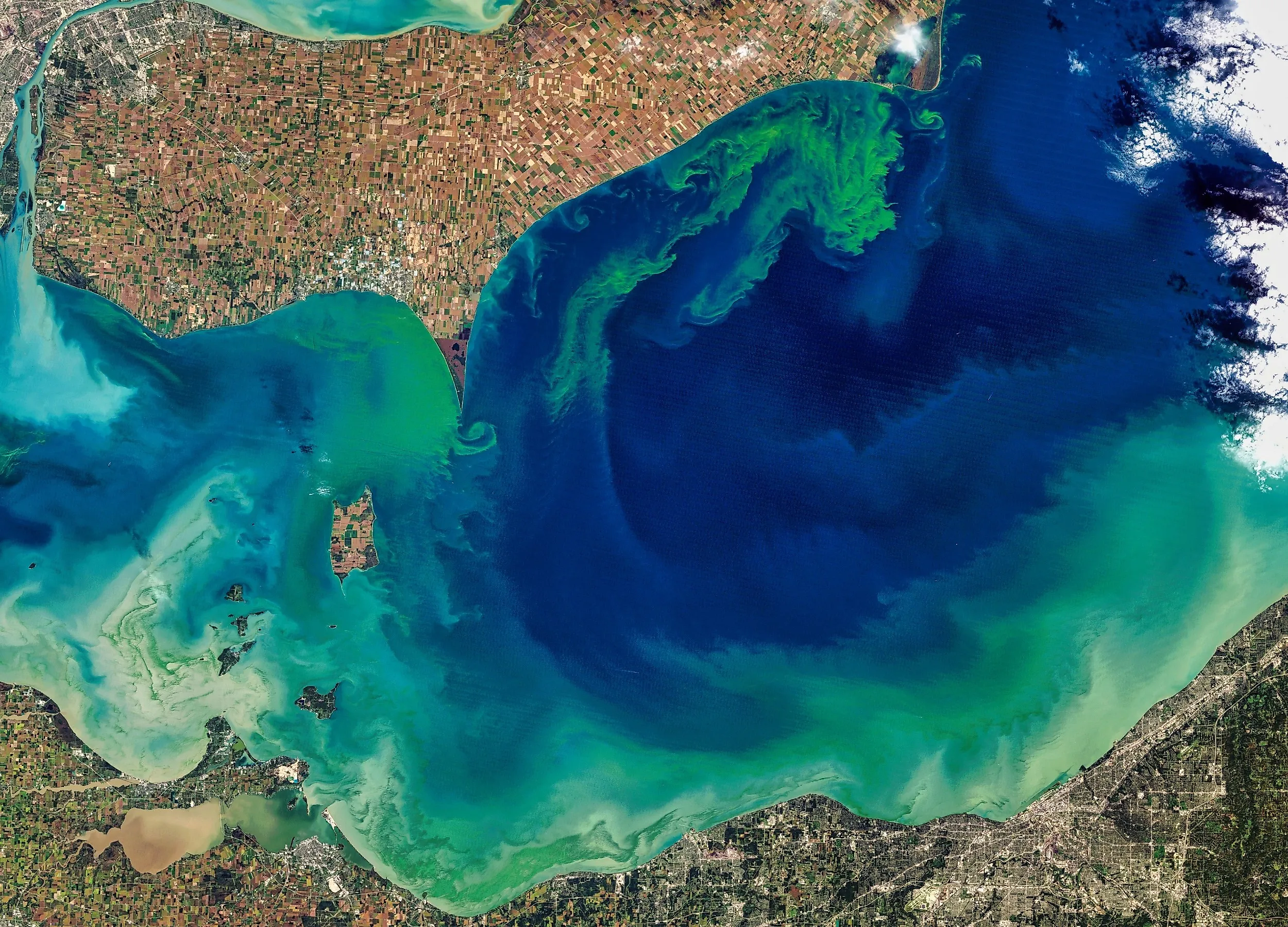
Each summer, parts of western Lake Erie can turn bright green or turquoise as cyanobacteria called Microcystis form large blooms. Some Microcystis produce microcystins, a group of toxins that can harm the liver and make people, pets, and wildlife sick. Toxin levels can vary across the lake, so color and bloom size alone cannot show whether the water is safe. Lake Erie’s shallow water warms quickly and helps blooms grow, but excess phosphorus from the surrounding land is their main manageable fuel. Over the past decade, federal and state agencies have provided more than $400 million to support conservation practices that reduce phosphorus losses. Understanding how that phosphorus reaches the lake helps explain why the blooms keep returning.
What Causes Algal Blooms?

Harmful Algal Blooms (HABs) can be produced by true algae or by cyanobacteria, which are commonly called blue-green algae. Western Lake Erie's seasonal blooms are generally dominated by the cyanobacterial genus Microcystis.
In order for these bacteria and algae to multiply quickly enough to form a bloom, certain environmental conditions must be in place, such as warmer temperatures, sunlight, low wind, and certain nutrients that algae and cyanobacteria feed on. In Lake Erie, the dominant bloom-forming cyanobacterium is Microcystis, with Microcystis aeruginosa commonly present.

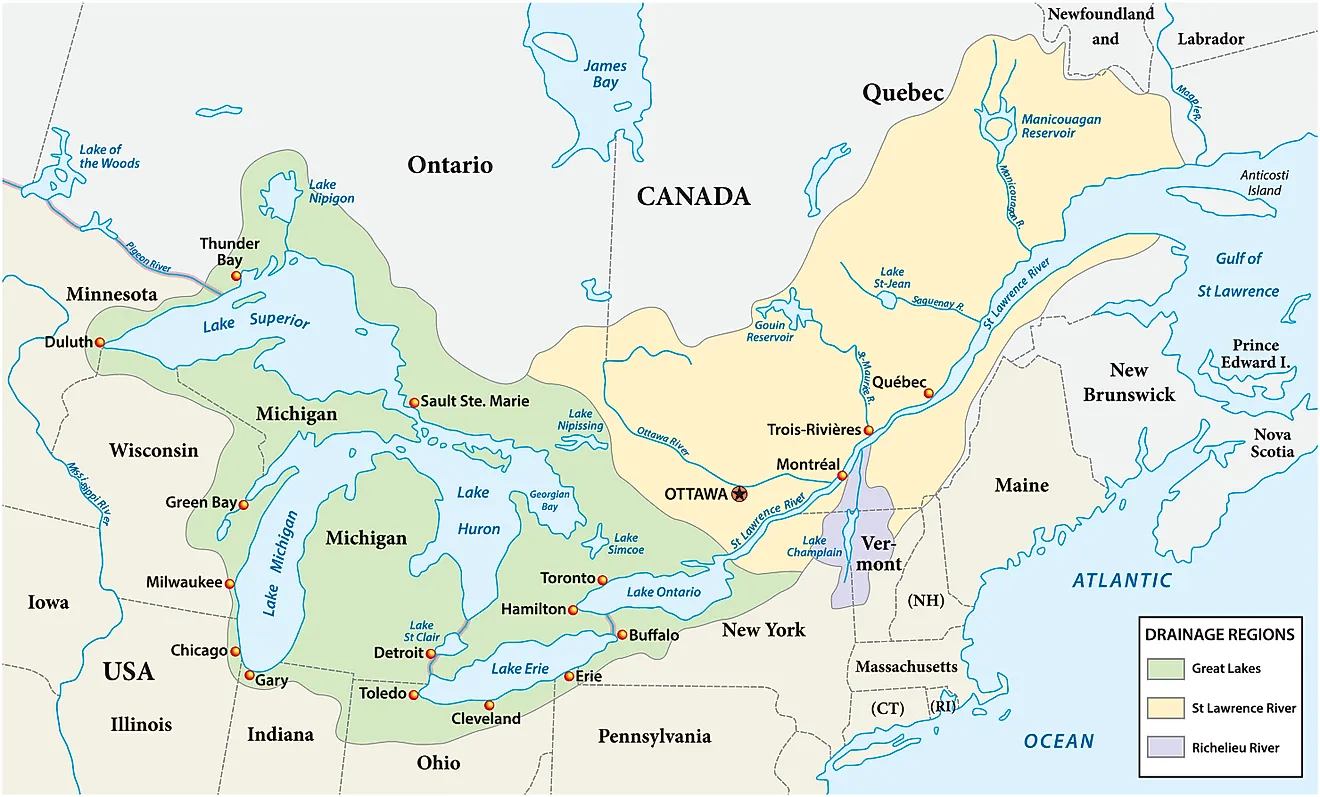
This species thrives in the presence of phosphorus. The Maumee River delivers close to half of the total phosphorus load reaching Lake Erie's western basin, where the blooms form, and EPA estimates that nonpoint sources account for about 90% of the phosphorus in the Maumee watershed. Most of that nonpoint load comes from agricultural fertilizer and manure. Spring rain and high river flows carry dissolved and particle-bound phosphorus from fields, soils, drainage systems, and streambanks into tributaries that discharge into Lake Erie. One of the primary paths is the Maumee River, which crosses northeastern Indiana and northwestern Ohio before joining Lake Erie at Toledo. Other phosphorus inputs include erosion, residential fertilizer, atmospheric deposition, wastewater, septic systems, and tributaries outside the Maumee watershed.
The bloom's location and concentration depend on wind, currents, and storms. Calm conditions allow buoyant cyanobacteria to concentrate near the surface as dense scum, while strong winds mix and disperse the cells through the water column.
What Health Problems do Algal Blooms Cause?

HABs can cause many different health problems or symptoms, depending on the concentration of the bloom and how long someone is exposed directly to the HAB, either by touching the water, swimming, breathing in water droplets, or swallowing the HAB-impacted water.
The CDC mentions common symptoms of stomach aches, rashes, coughing, sore throats, and watery eyes. Swallowing contaminated water can cause gastrointestinal illness and, at sufficiently high microcystin exposure, liver or kidney damage; other freshwater HAB toxins can cause neurological symptoms.
Animals that consume the water can die or show serious symptoms such as diarrhea, vomiting, seizures, and convulsions. If a pet enters water containing a suspected bloom, the CDC recommends rinsing it immediately with clean water and preventing it from licking its fur; a veterinarian should be called right away if the animal shows signs of illness.

HABs can harm fish directly through toxins or clogged gills and indirectly when decomposing bloom material consumes dissolved oxygen. In Lake Erie's central basin, excess nutrients contribute to seasonal hypoxia that can force fish to leave affected water or cause them to suffocate.
In August 2014, Toledo issued a "do not drink or boil" advisory for nearly 500,000 customers after elevated microcystins associated with a bloom were detected in treated drinking water; the advisory was lifted about two days later.
What is Being Done About These Blooms?

There is no clear-cut path to clean up algal blooms. Invasive zebra and quagga mussels have been known to eat algae and other phytoplankton, but they also tend to avoid Microcystis, the genus that causes the blooms, and as they digest the plankton, they release more phosphate and ammonia into the water, which allows the algal blooms to grow larger.
Environmental experts instead focus on methods to prevent phosphates from entering Lake Erie in the first place. On an individual basis, they recommend that residents near Lake Erie use phosphate-free soaps and detergents, pick up pet waste, and avoid using too much fertilizer.
Agriculture is the largest controllable source of phosphorus in the Maumee watershed, and Ohio generally prohibits surface application of fertilizer on frozen or snow-covered soil in the western Lake Erie basin. The law allows specified exceptions such as injection, incorporation within 24 hours, or application to a growing crop. In addition, Ohio State is encouraging farmers to utilize buffer strips to prevent runoff.
Reducing runoff remains difficult because phosphorus stored in soils, streambeds, and drainage systems can continue moving downstream, while manure management and intense storm events can offset progress, even as commercial fertilizer use and soil-test phosphorus decline in Ohio.
How Lake Erie's Dimensions Contribute to Algal Blooms

Lake Erie is particularly vulnerable to algal blooms due to its dimensions and features. Out of all the Great Lakes, Lake Erie is the shallowest, with an average depth of 62 feet (19 meters) and a maximum depth of 210 feet (64 meters).
The next shallowest of the Great Lakes is Lake Huron, which has an average depth of 195 feet (59 meters) and a maximum depth of 750 feet (229 meters). Lake Erie also has the smallest water volume of the Great Lakes at only 116 cubic miles, compared to 393 in Lake Ontario, 850 in Lake Huron, 1,180 in Lake Michigan, and 2,900 in Lake Superior.

Due to Lake Erie's shallow depth, it warms up much more quickly than the other Great Lakes, reaching temperatures of more than 70 degrees Fahrenheit (21 degrees Celsius) in the summer.
Lake Erie's shallow, comparatively warm, and nutrient-rich waters support a highly productive ecosystem, including a commonly cited inventory of 107 fish species. However, this warm water is also ideal for algal blooms to thrive, which in turn impacts more fish and humans, who come to Lake Erie in the summer to swim or fish.
Why Prevention is the Main Strategy
Algal blooms eventually die off as the weather conditions change, making it no longer possible for the blooms to survive in Lake Erie. Once a Lake Erie bloom develops, no practical method can remove it across the lake, so phosphorus reduction remains the primary long-term strategy. Monitoring, public advisories, drinking-water treatment, and limited bloom-control methods can still reduce exposure and other effects. For those who see the green waters in Lake Erie in the summer, it is important to stay away from it and avoid drinking or touching the water.