Did The Roman Republic Or Empire Have A Better Army?
The Roman army went through many different forms and iterations. The transition from the Roman Republic to the Roman Empire in particular ushered in several fundamental changes. This naturally leads to the question: did the Roman Republic or Empire have a better army? The answer is complicated. If you were a leader looking to expand your territory, the Republican army was your best bet. On the other hand, if you wanted to defend your land, you couldn't do much better than the Empire's army.
The Republic's Army Was Better For Expansion
Ancient Rome as we know it began sometime in the mid-750s BCE. For its first 240 or so years, it was a small Italian city-state run by a monarch. This changed in 509 BCE, when the king was pushed out and replaced with a semi-democratic republican system of government based on power-sharing.

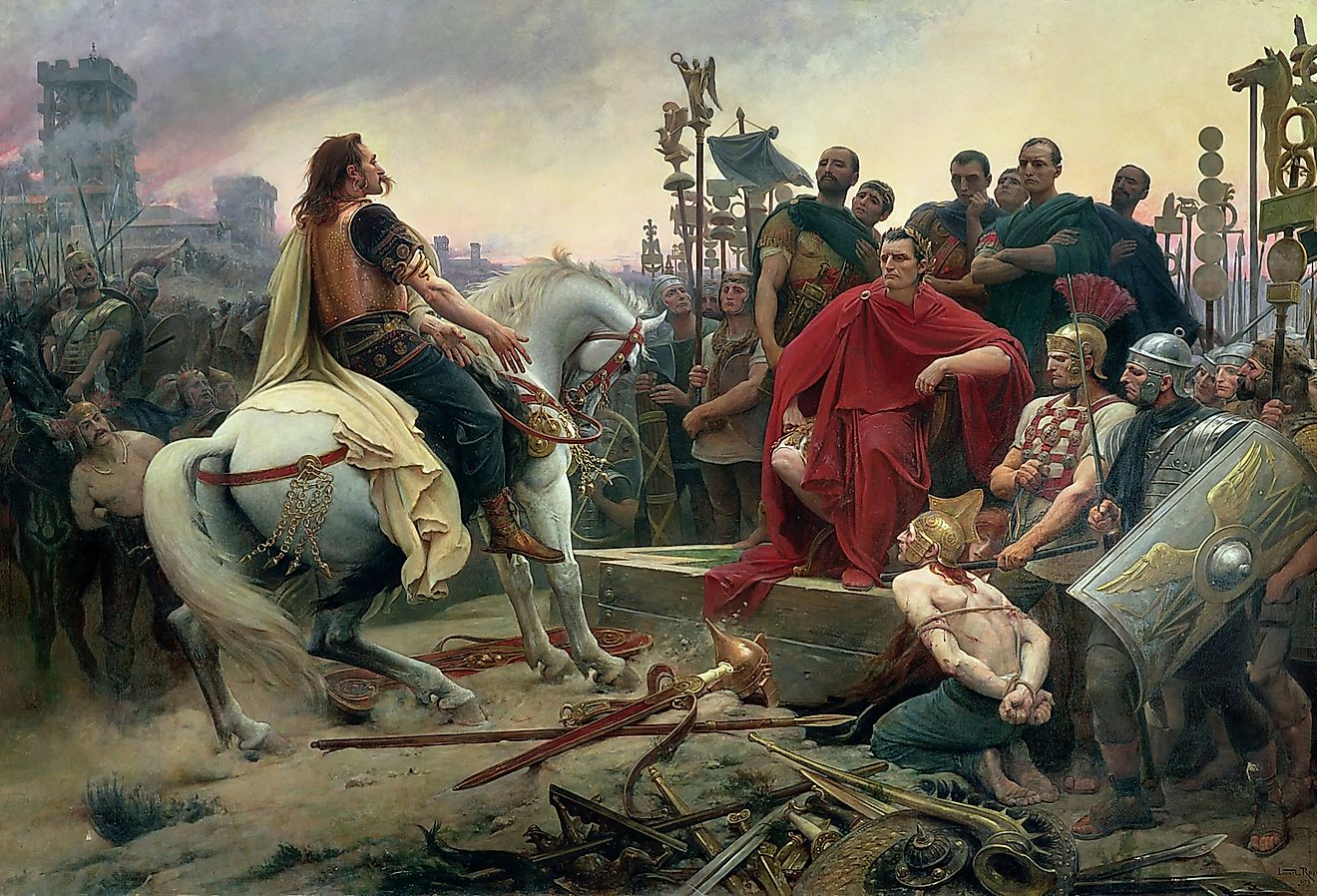
This change of government was accompanied by a shift towards an expansion-based military approach. From 509 to the 270s BCE, Rome gradually took more and more territory in Italy, until it controlled basically the entire peninsula. Over the next 120 years, it fought several wars against the Tunisia-based empire of Carthage. In doing so, it established dominance over Sicily, Spain, and North Africa. Afterward, Rome conquered Macedonia, Greece, parts of Anatolia, and the Levant. Perhaps its most important military achievement came in the 50s BCE when, under the leadership of general Julius Caesar, Rome took Gaul (modern-day France, Belgium, and Luxembourg). This established the Republic as a broader European power, not just a Mediterranean one. Finally, following the Battle of Actium in 31 BCE, Rome annexed Egypt.

After Rome transitioned from a republic to an empire in 27 BCE, expansion continued, but much more slowly. Incursions into places like Britain, Germania, Dacia (modern-day Romania), and Mesopotamia yielded increasingly diminishing returns. Part of this was the sheer size of the Roman state, since any future expansions needed to be massive to make a difference with regard to population growth or tax revenue. However, another component was changes in the army. Factors like increased reliance on auxiliary forces and better logistics (both of which will be explored later) meant that it made sense to focus more on defense than expansion.
The Republican Army Was More Flexible

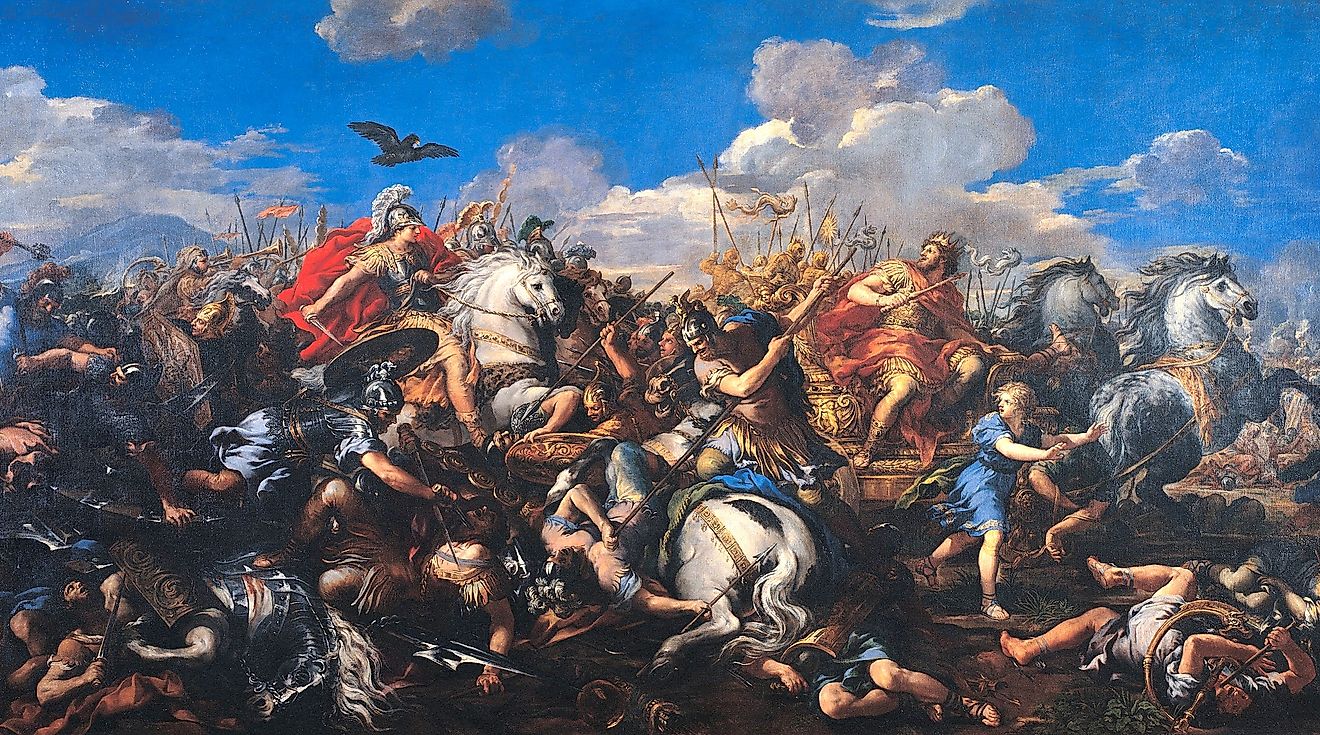
The Roman Republic's army was arguably more flexible than the empire's. Since it was citizen-based, military leaders could simply call upon the general population whenever they needed to raise a fighting force. This meant that the army could rapidly mobilize in times of crisis. Consider the Second Punic War (218 to 201 BCE). Carthaginian general Hannibal Barca completely caught the Romans off guard when he marched over the Alps and invaded Italy from the north. But, despite losing battle after battle to start the war (including a near-catastrophic defeat at Cannae in 216 BCE), the Romans ultimately recovered due to their sheer manpower, resources, and flexible military strategy.
The Empire's Army Was More Professional

This flexibility was a double-edged sword. Problems emerged when poor, landless citizens began working as soldiers. They were paid and housed by their generals, rather than the government. This created a situation where there were armies of thousands who had more loyalty towards their commanding officers than the Roman state. Therefore, from about 100 to 27 BCE, the Roman Republic was in a near-constant state of internal strife as ambitious generals vied for power. The most famous example of this occurred from 49 to 45 BCE, when Julius Caesar and Pompey the Great fought a bloody civil war that ended in Caesar declaring himself dictator for life.
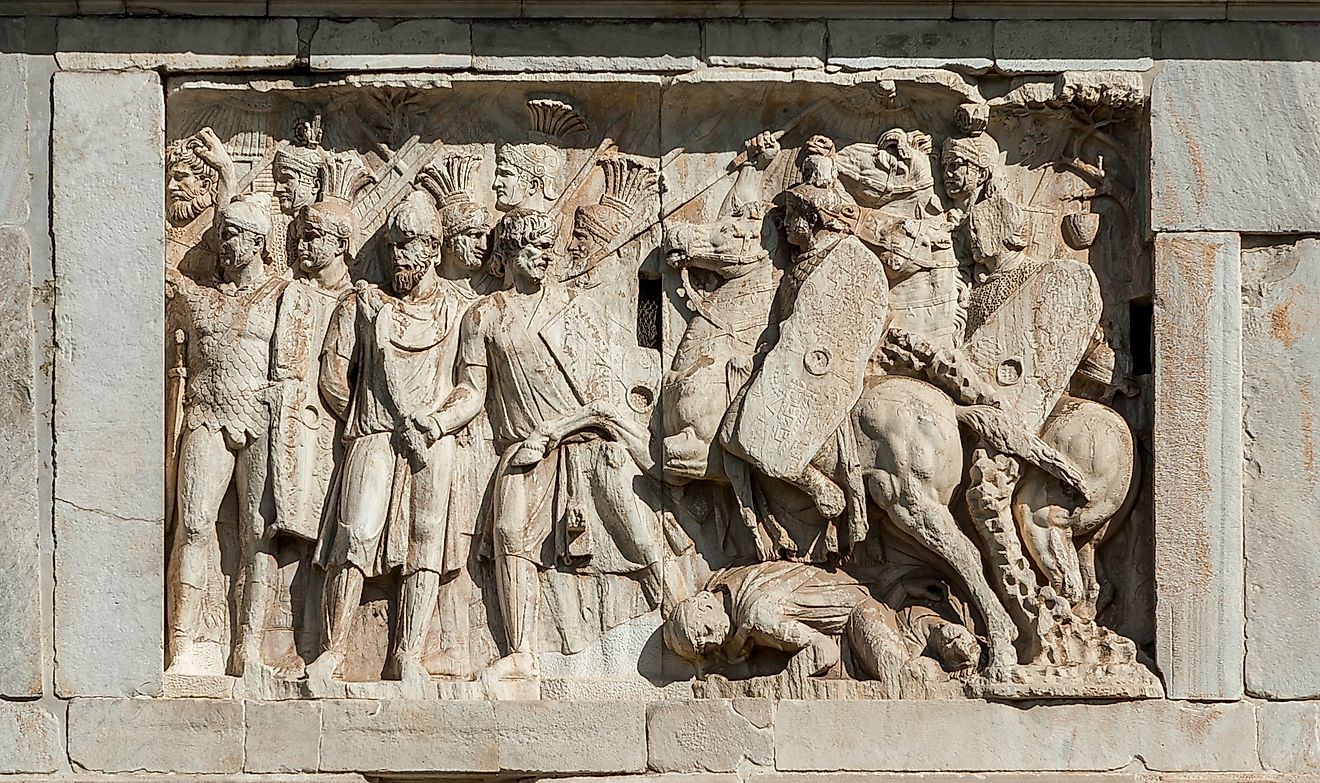
Rome's first emperor, Augustus, realized the problem with this dynamic. He thus created a standing army that was paid directly by the state treasury, rather than the generals. Doing so ensured that soldiers were loyal to Rome itself. While this meant that it was more difficult to rapidly raise armies, it ensured that the existing troops were more professional and effective.
The Empire's Army Had Better Logistics

Both the Roman Republic and Empire were logistical powerhouses. However, the Empire had the edge. Since it was building off of what had been started during the Republican era, it created an even more sophisticated logistics network. The Empire's army was thus able to take advantage of permanent military roads, fortified bases, supply depots, and river transports. The professionalization of the army also led to the standardization of military equipment, tactics, and provisions, since everything was now organized by the state rather than by individual generals. Finally, the Roman Empire had vastly superior defensive logistics. Perhaps the clearest example of this was Hadrian's Wall, a massive fortification stretching across modern-day northern England. Ordered for construction by Emperor Hadrian in 122 AD, it helped keep out invading tribes from the north.
The Empire's Army Was Better For Defense

For all these reasons, the Roman Empire's army was much better suited for defense than its Republican counterpart. Permanent, professional soldiers were ideal for garrison duty, a chain of frontier forts stood as a robust defensive network, and along a dense road system the army could reach the border quickly to repel invasions. The sheer size of the empire also necessitated that more resources be put towards defense. Finally, the increasing reliance on auxiliary troops (non-Roman soldiers) allowed the army to respond to invading forces in a much more robust and effective manner. The majority of Roman soldiers were infantry, but auxiliaries frequently specialized in things like cavalry, archery, and reconnaissance. This combined arms approach made them ideal for defensive, frontier warfare.
Which Army Was Better?
The armies of the Roman Republic and Empire had their strengths and weaknesses. The Republican army was renowned for its aggression and flexibility, allowing it to take vast swaths of territory and also rapidly respond to existential threats. On the other hand, the Empire's army was more professional, logistically sophisticated, and defensive-minded. This ensured it could hold its pre-existing territory. In short, it's difficult to say if the Roman Republic or Empire had a better army. Each had a different goal and served its purpose well.