How Did Rome Conquer Gaul?
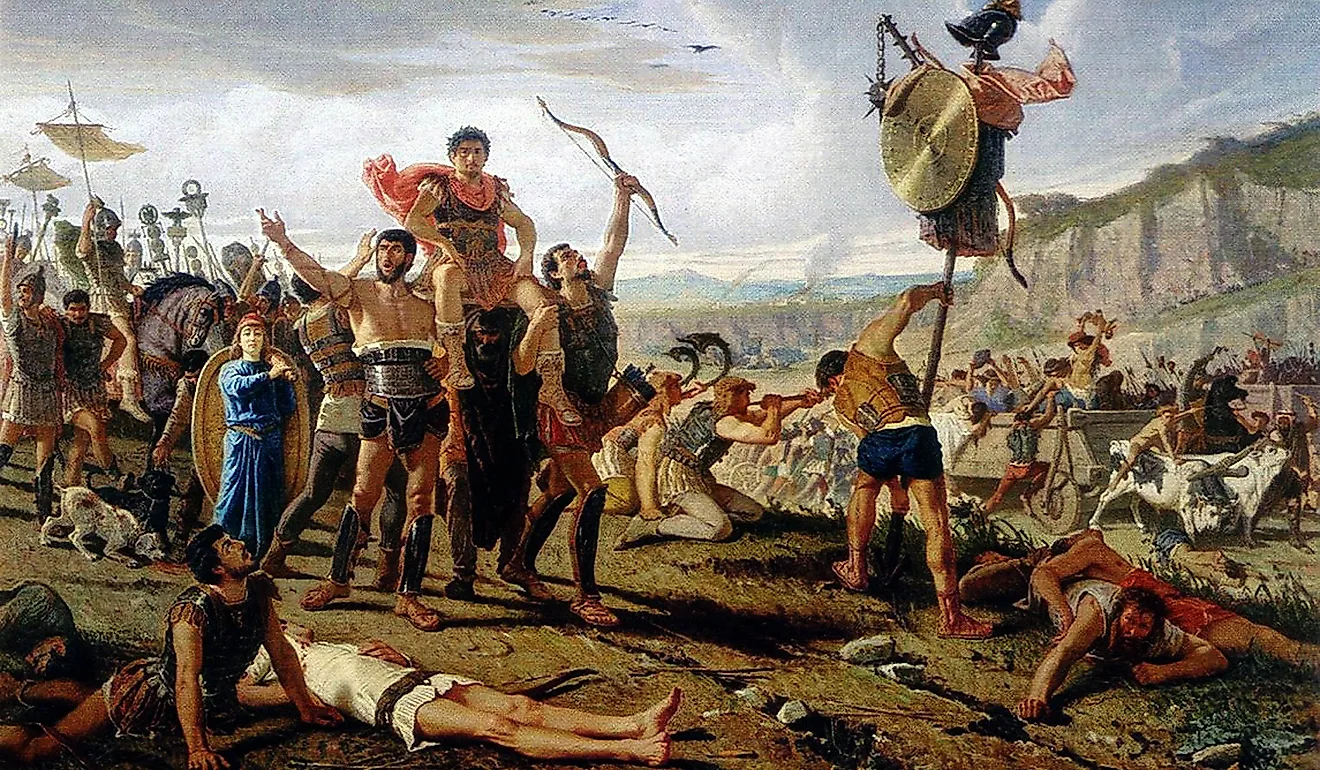
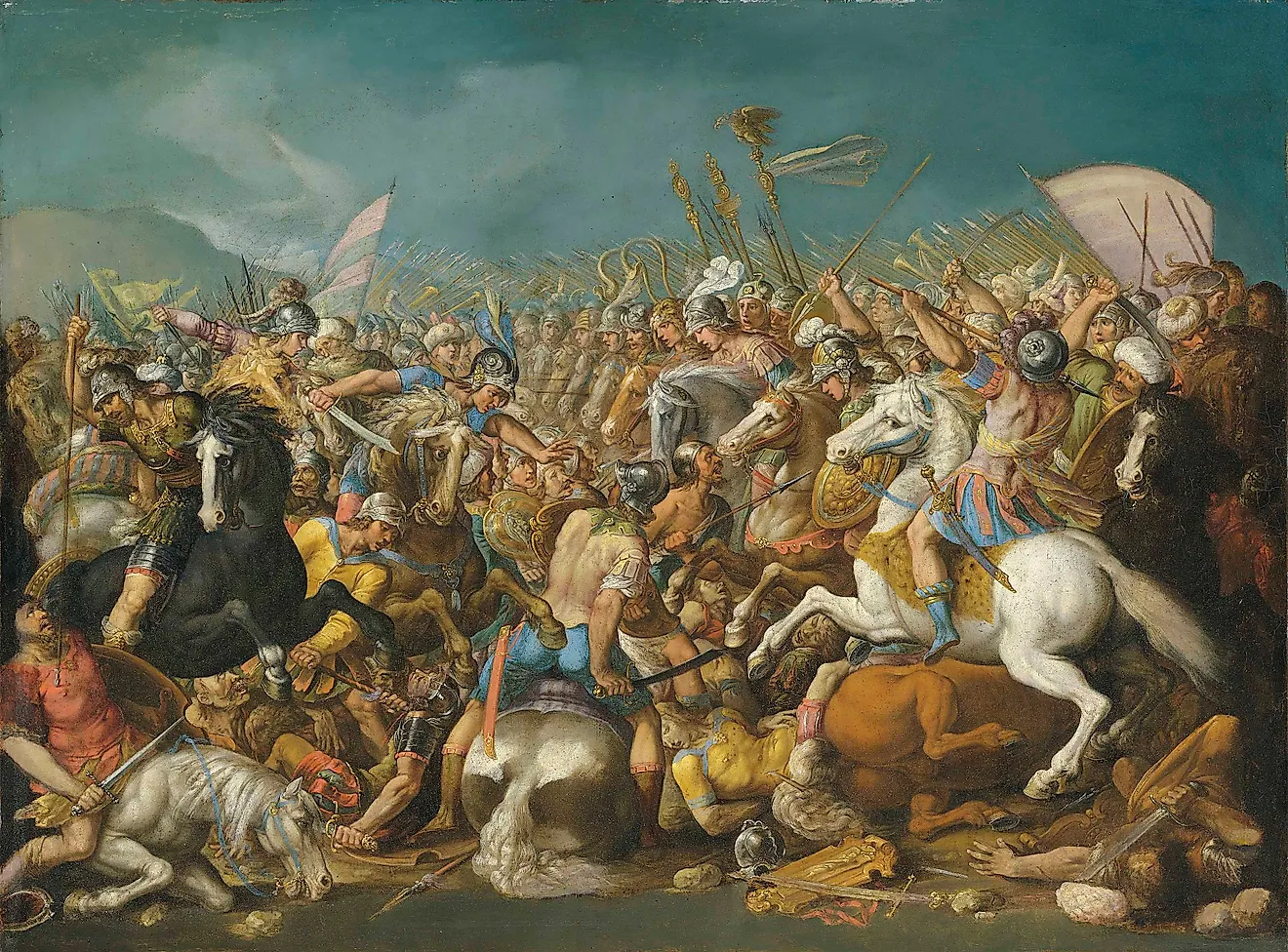
Rome’s conquest of Gaul holds an almost mythic importance in popular historical memory. It resulted in a significant enlargement of Rome’s territory and fundamentally altered its cultural and geographic makeup. Taking Gaul was also the most impressive achievement of Julius Caesar’s military career, leading him to accumulate unfathomable amounts of power. This set the stage for Rome’s transition from a republic to an empire.
Security, Wealth, And Political Ambition

Gaul was the Roman name for the area roughly corresponding to France, Belgium, and parts of Germany, Switzerland, and northern Italy. It was occupied by tribes of many different Celtic peoples, collectively called the Gauls. The Romans wanted Gaul for three reasons. First, memories of the Gauls’ sacking of Rome around 390 BCE loomed large in collective Roman historical memory, and they wanted to prevent another such catastrophe. Gaul was also rich in farmland, slaves, metals, and trade routes, making it a strategically advantageous place to conquer.

Finally, ambitious generals like Julius Caesar wanted Gaul for glory and political power. Around 60 BCE, he entered into a tenuous alliance with two other generals, Pompey and Crassus, called the First Triumvirate. While the three men worked together, they also competed for influence. Taking Gaul was a crucial step in gaining the money and military influence necessary to establish dominance over Pompey and Crassus.
Caesar Invades Gaul

The immediate trigger for Caesar’s invasion of Gaul came when the Helvetii tribe attempted a mass migration from Switzerland into western Gaul. Caesar claimed that this threatened Roman interests and launched his campaign. His strategy was to exploit Celtic disunity. While the tribes disliked the Romans, they also disliked each other. The Aedui often cooperated with Caesar because they feared other tribes, like the Arverni and the Allobroges, more. When combined with superior Roman military organisation, which allowed them to withstand difficult conditions and build infrastructure like roads, forts, and bridges, and Caesar’s trademark speed, Rome made rapid progress for the first six or so years of the Gallic campaign.
Major Roman Victories

One of the first major battles was against a Germanic king named Ariovistus in 58 BCE. Caesar portrayed him as a threat to both the Gauls and the Romans. Doing so gained him many Gallic allies and justified further incursions into Gaul. Caesar’s campaign against the Belgae in 57 BCE then saw him subdue northern Gaul by defeating a small coalition of Celtic tribes.
With the south and north stable, Caesar was free to look elsewhere. He invaded Britain twice, once in 55 BCE and again in 54 BCE. While Caesar did not establish a permanent Roman settlement in Britain, the invasions were nonetheless crucial for demonstrating Roman strength and enhancing Caesar’s reputation back home. He also invaded Germania during the Gallic campaign for similar reasons.
The Rise Of Vercingetorix

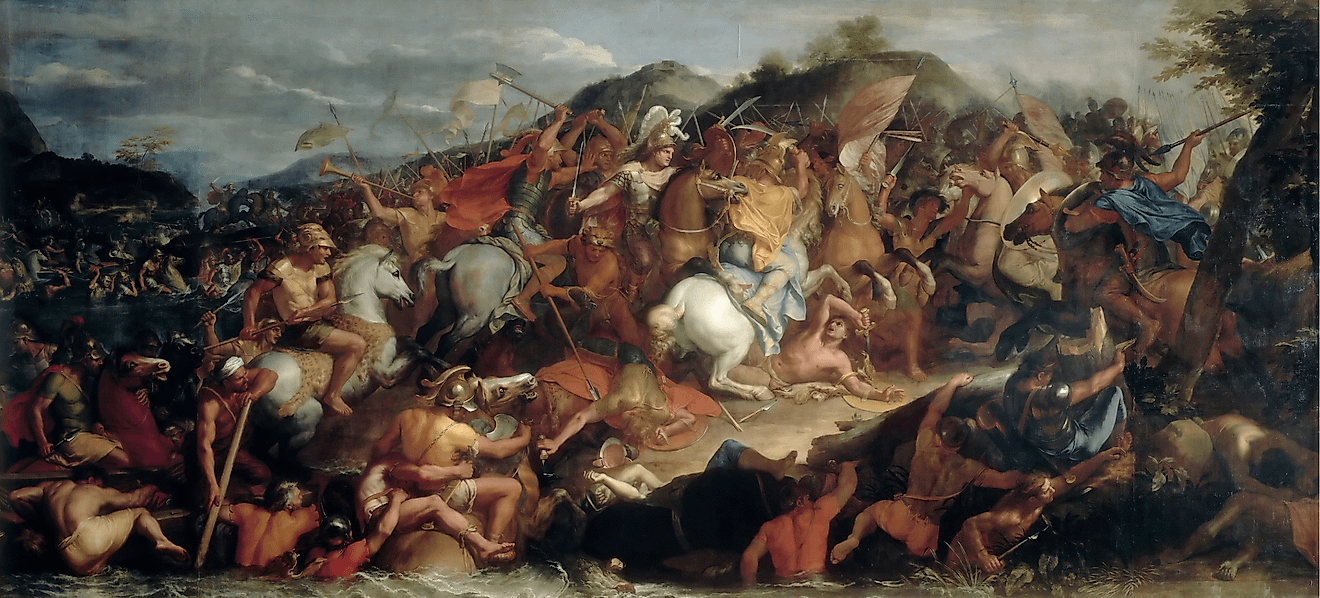
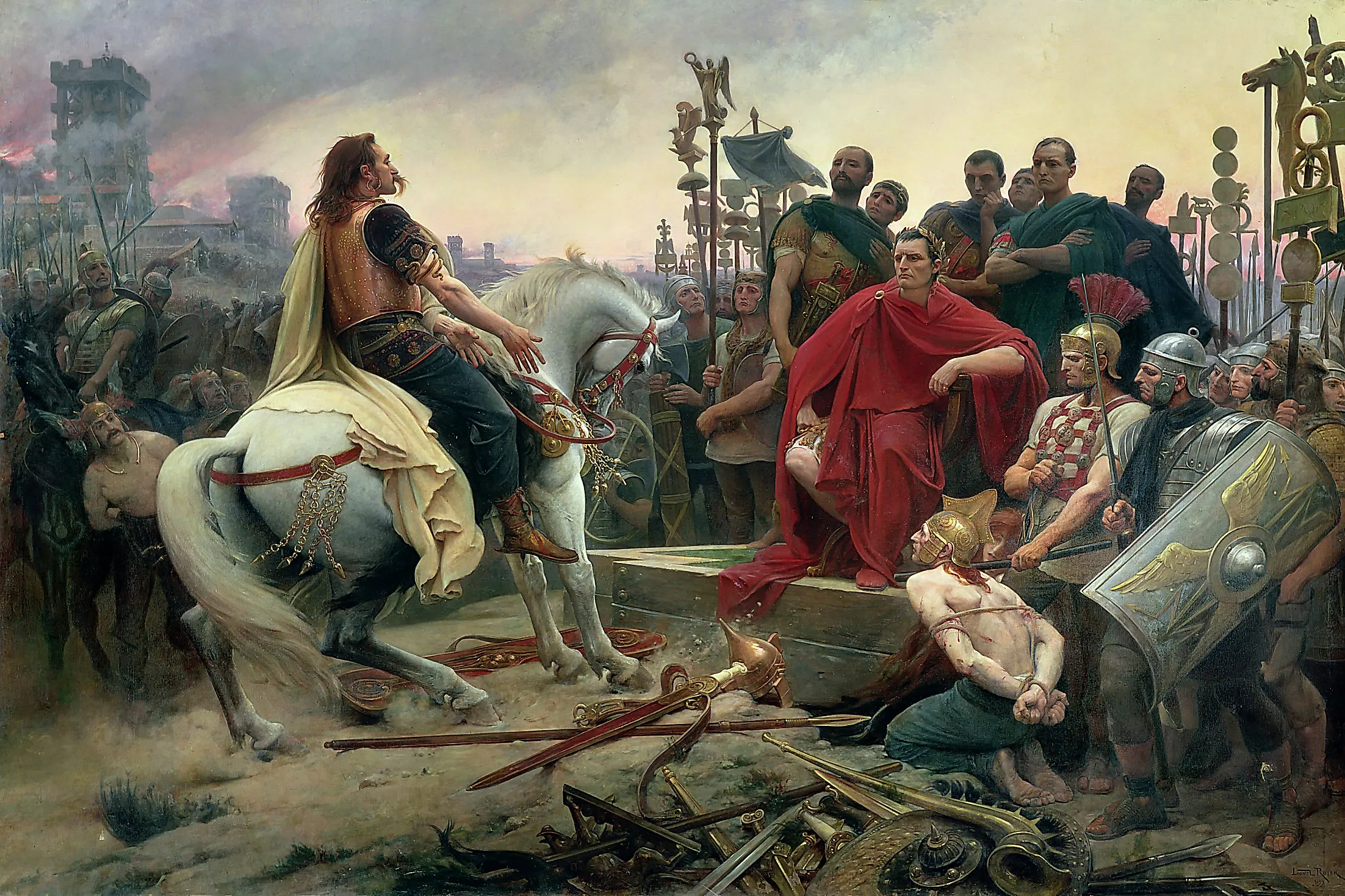
Rome’s gains were nearly all lost in 52 BCE when a charismatic Arvernian noble named Vercingetorix emerged. He managed to unite many Gallic tribes against the Romans and used scorched earth and guerrilla tactics to resist them. The Gauls had much more success under Vercingetorix’s leadership than they had over the previous half-decade.
The Fall Of Vercingetorix And Gaul

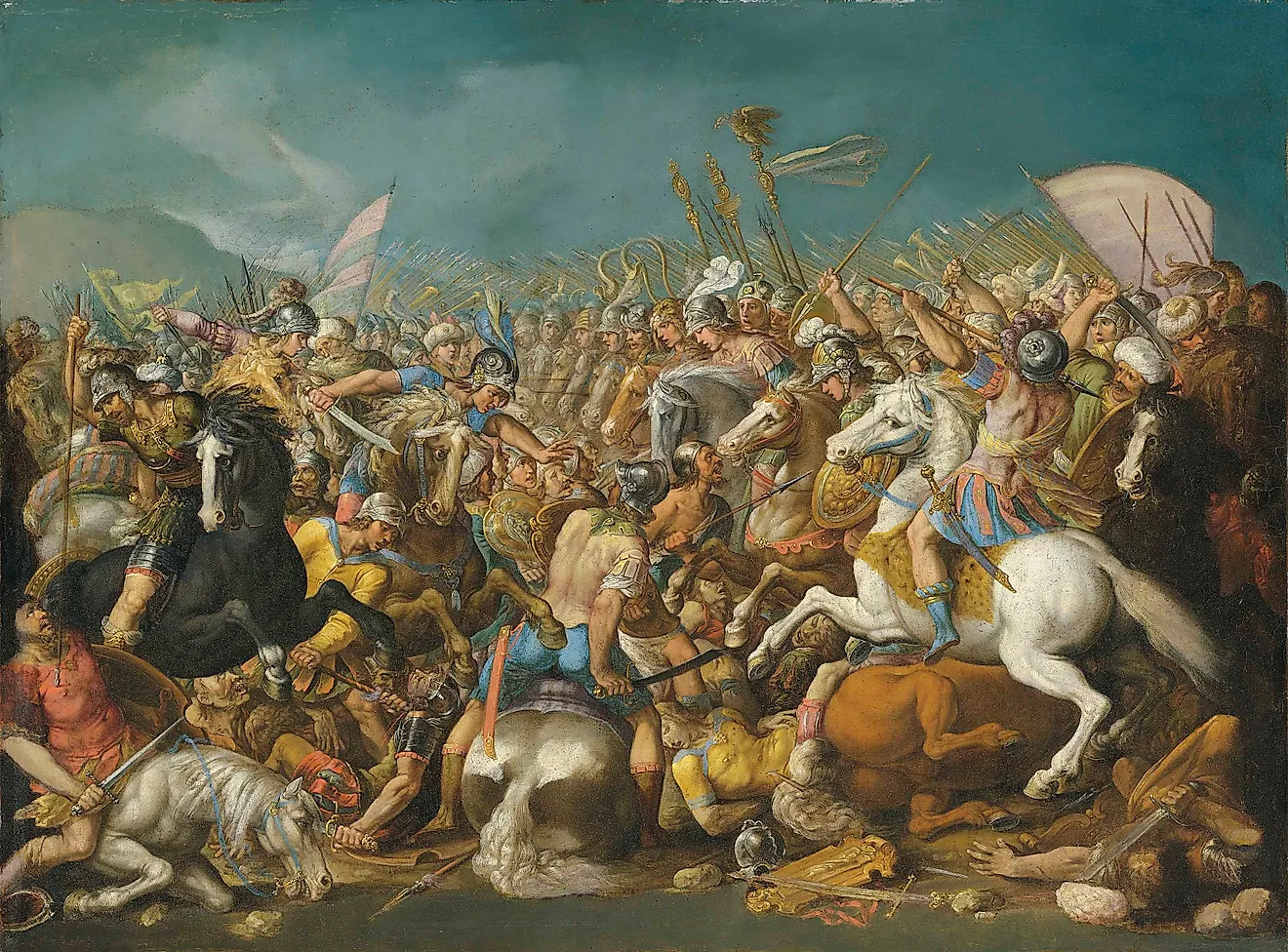
Caesar prevailed in the Battle of Alesia. The battle began when Vercingetorix retreated into the fortified hill town of Alesia. Caesar proceeded to brutally besiege the Gallic leader. The Romans built an inner wall surrounding the town and an outer wall facing outwards. These walls included towers, traps, and ramparts. Trenches were also dug between the walls. All these fortifications made it impossible for Vercingetorix’s relief forces to supply him, leading to starvation throughout Alesia. Seeing the writing on the wall, Vercingetorix surrendered. With major organised Gallic resistance defeated, Rome managed to take Gaul by 50 BCE.
Short-Term Impacts

Caesar’s conquest of Gaul had immediate impacts, the most notable of which was the enormous human cost. While impossible to know exact numbers due to limited ancient sources, up to a million people were likely killed. As many, if not more, were also enslaved. Caesar himself described massacring entire communities in his writings. Historians debate whether these acts were genocidal in nature.
Medium-Term Impacts

The Gallic campaign also gave Caesar his desired wealth and reputation, making him easily the most powerful person in Rome. This made Pompey nervous, causing him to ally himself with the Roman Senate against Caesar. The Senate subsequently demanded that Caesar give up his army, which he refused to do. Tensions came to a climax in 49 BCE when Caesar crossed the Rubicon River. As the legal border of Caesar’s provincial command, crossing the Rubicon was an effective declaration of war. The decades-long civil war that followed resulted in the demise of the Roman Republic and the rise of the Roman Empire.
Long-Term Impacts
Caesar’s campaign had long-term impacts on Gaul itself, which became one of Rome’s most prosperous provinces. Cities like Lugdunum (modern-day Lyon) and Lutetia (modern-day Paris) grew into major urban centres, and the Romans built roads, aqueducts, temples, and forums. Latin also spread throughout the region. All these developments established the cultural foundation for the France we know today.