What Did Roman Soldiers Do When They Weren't Fighting?
Roman soldiers are often remembered for their battlefield accomplishments. However, they weren't constantly fighting. Much of this time was spent training, but there were periods for leisure activities as well. The role of soldiers also changed significantly as Rome transitioned from a republic to an empire, and again in the late imperial period. These duties offer a fuller picture of the soldiers who sustained Roman military power.
Soldiers In The Roman Republic

In the Roman Republic (509 to 27 BCE), and particularly during its early and middle periods, most troops were citizen-soldiers, rather than permanent members of the military. When Rome was at war, they were called upon to fight. Citizen-soldiers normally returned to civilian life after discharge, although lengthy overseas campaigns increasingly kept them under arms for years at a time. They thus occupied a wide variety of positions. A soldier could be a farmer, doctor, or politician. Even while serving, they weren't always fighting. Soldiers attended military camps to ensure they were well-trained. While campaigning, much of their time would be spent marching, constructing camps, preparing roads, and building up defensive positions.
Soldiers In The Roman Empire

The military transformed during the late Roman Republic. During the late Republic, longer campaigns and repeated service produced an increasingly experienced army, but conscription continued, and many legionaries were not yet permanent professionals. An individual soldier would now serve for years or decades, rather than returning home after a war. Gaius Marius (157 to 86 BCE) is often associated with the reforms that led to this transformation, although modern historians argue that it likely began before Marius and continued after him. Rather than resulting from reforms by a few individual generals, the transition developed gradually during the late Republic and culminated in Augustus' creation of a permanent standing army.
Arguably, the most profound shift occurred when Rome transitioned from a republic to an empire in 27 BCE. Its first emperor, Augustus, inherited a system in which soldiers received state pay, but commanders could cultivate personal loyalty by controlling booty, special payments, and the rewards promised at discharge. This dynamic led to near-constant civil wars during the late Republican period. Augustus regularized service terms and retirement benefits, and in 6 CE, he established the military treasury primarily to fund veterans' discharge payments. The army now resembled a fully professional fighting force. However, soldiers still didn't spend all their time fighting.
Training

Imperial soldiers drilled regularly, but Republican troops also received training once mobilized, and surviving descriptions do not support a simple empire-wide comparison between the two periods. Their training regimen included physical conditioning, weapons practice, and formation drills. Physical conditioning was the foundation of it all. Soldiers practiced long-distance marching, running, jumping, carrying heavy equipment, swimming, digging, and climbing. Marching was particularly important, since troops were expected to travel vast distances while campaigning.
There was also extensive, combat-specific training. Weapons instruction emphasized the gladius and the pilum, a heavy javelin, while the pugio was carried as a sidearm. Sword training often utilized a wooden sword and a dummy, and soldiers focused on precise thrusts rather than wild slashing. Scutum, or shield training, was also key. Shield training prepared soldiers to defend themselves, maintain formation, and use the shield offensively in close combat.
Soldiers didn't train in isolation. Roman armies depended on discipline and collective movement. This meant that formation training was perhaps the most important part of a soldier's training routine. They practiced advancing in formation, changing direction, closing gaps, and responding to orders from their commanding officers, among other things.
Construction and Engineering

Even while campaigning, Roman soldiers weren't always on the battlefield. Perhaps the most important thing they did when they weren't fighting was construction and engineering. Roman soldiers performed extensive construction and engineering work. When stationed somewhere, they often built forts, walls, roads, bridges, towers, and ditches. These projects primarily supported troop movement, supply, surveillance, defense, and territorial control, although permanent infrastructure could also benefit nearby civilians. Roads made supplying armies easier, and they facilitated the rapid movement of troops. Forts, watchtowers, and barracks provided accommodation, surveillance, storage, and defensible bases for military operations.
These non-combat activities often had direct utility on the battlefield. Consider an example from Julius Caesar's Gallic campaign (58 to 50 BCE). In 55 BCE, Caesar ordered his soldiers to bridge the Rhine River as a demonstration of Roman power while pursuing the Sugambri and supporting the Ubii. The Romans did so in ten days, facilitating incursions into Germania to scare off the tribes that had been bothering them.
Leisure Activities

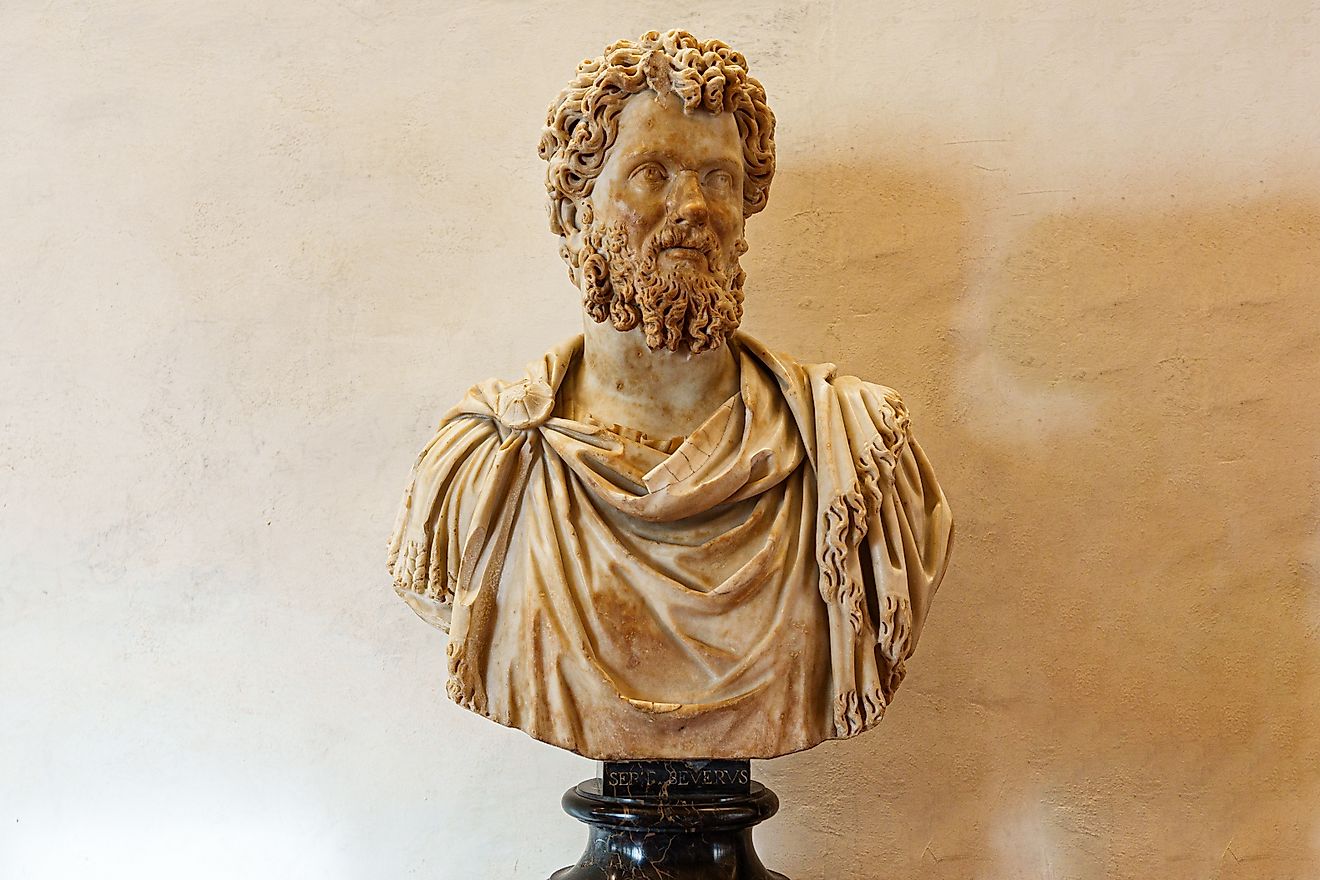
Despite being professionals, soldiers still enjoyed some leisure time. Popular activities included going to the baths, drinking, gambling, playing games, and participating in religious ceremonies. Sexual relationships were another part of soldiers' lives. Until Septimius Severus lifted the prohibition around 197 CE, serving soldiers generally could not contract legally recognized marriages, although many maintained informal unions and raised families near their bases. Soldiers enjoyed music as well, and the army employed musicians for military communication, religious ceremonies, and celebrations. Finally, some soldiers could read and write. They therefore wrote letters to friends and family in their leisure time.
Soldiers In The Late Roman Empire

The Roman army transformed during the 200s CE. The Crisis of the Third Century (235 to 284 CE) was marked by civil war, Germanic incursions, Sasanian invasions, political fragmentation, economic disruption, and epidemic disease. The distinction between mobile field armies and frontier forces developed through reforms under Diocletian and Constantine, becoming fully established under Constantine in the early fourth century. This meant that many soldiers became closely connected with specific civilian communities. The amount of leisure available to late Roman soldiers varied according to their unit, location, duties, and the demands of campaigning. The proliferation of Christianity across the Roman Empire in the 300s CE also changed soldiers' day-to-day activities. As imperial policy increasingly favored Christianity during the fourth century, Christian worship became more visible in army life, although pagan practices and religious diversity did not disappear immediately.
Impact And Legacy
In the early and middle Republic, Rome relied largely on citizen levies, although long campaigns could keep soldiers away for years. The transition toward a professional standing army unfolded gradually and was institutionalized under Augustus. During the late Empire, reforms under Diocletian and Constantine created a clearer distinction between mobile field forces and frontier armies, while Christianity became increasingly visible in military life.