Who Were The Huns?
The Roman Empire faced many formidable opponents. However, perhaps none were more dangerous than the Huns. Originating in Central Asia and the Eurasian Steppe, their westward migration put enormous stress on a state already grappling with countless problems. This culminated in several invasions and near-catastrophic battles. While the Hunnic threat ultimately dissipated in the mid-450s BCE, its legacy would be felt for centuries.
Who Were The Huns?

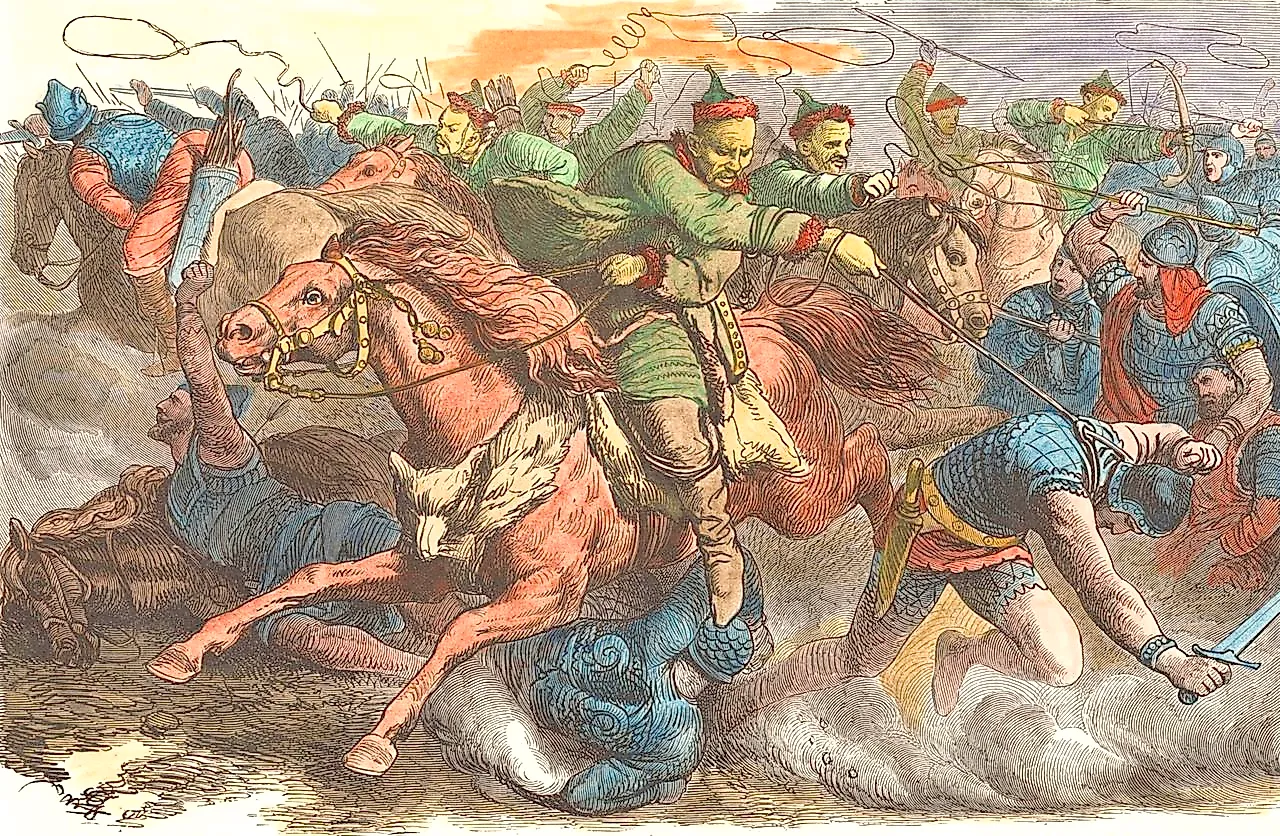
The Huns were a confederation of Nomadic, horse-riding peoples. Originally based in Central Asia and the Eurasian steppe, this environment was ideal for nomadic pastoralism. Rather than relying on agriculture, the Huns raised animals like horses, sheep, and cattle, and moved between seasonal pastures.

Constant movement shaped all aspects of Hunnic society. Skilled horse archers defined their army, and it could cover massive distances and strike much faster than traditional infantry forces. Their political system was also tribal, with authority being distributed between chiefs, aristocratic families, and military leaders. Finally, constant movement has led to questions about their relationship with other peoples. The Xiongnu, another nomadic confederation that challenged the Han Dynasty in China from the third century BCE to the first century CE, is the primary source of comparison. Some historians argue that the Huns are descendants of the Xiongnu who migrated westward. While meaningful similarities exist, the connection is not as straightforward as is often presented. The Huns were multiethnic, so they couldn’t have been descendants of one group. Regardless, such a connection is a consequence of their Nomadic lifestyle.
The Huns Arrive In Europe

The Huns arrived in Europe in the late fourth century CE around the Black Sea and the Danube River. These regions were home to various Germanic peoples like the Visigoths and Ostrogoths. As the Huns fought these groups, they migrated westward into the Roman Empire. The Romans allowed the people displaced by the Huns to settle in their territory but treated them terribly. Fed up, the Visigoths eventually rebelled, leading to the Battle of Adrianople in 378 CE, in which Eastern Roman Emperor Valens was killed. This whole affair greatly weakened the Roman Empire’s strategic position and reputation. It was also indicative of how the Huns almost immediately caused problems for the Romans, albeit indirectly.
The Rise Of Attila And The Hunnic Empire

By the early fifth century CE, the Hunnic confederation was a major power in Central and Eastern Europe. The Great Hungarian Plain gave its horses and livestock extensive grassland and provided access to the Roman Empire’s Danubian frontier. Its political leadership was also growing stronger. Rua (also known as Rugilia) helped consolidate the confederation and established a permanent foothold in Europe. After he died in 434 CE, his two nephews, Bleda and Attila, succeeded him. They led the Huns to new heights, fighting several wars against the Eastern Roman Empire in the Balkans. However, the true turning point came when Bleda died in 445 CE. It's unclear exactly how he passed, but ancient accounts blame Attila. Nicknamed the “Scourge of God”, he struck fear into the rest of Europe, and the Romans in particular.
The Huns Invade The Balkans

During the 430s and 440s CE, the Huns’ main target was the Eastern Roman capital of Constantinople. The Romans attempted to prevent conflict with the Treaty of Margus in 435 CE, in which they agreed to increase gold payments to the Huns, return Hunnic refugees, and avoid forming alliances with peoples hostile to the Huns. This didn’t work, and the Huns invaded the Balkans in 441 CE. They captured large swaths of territory and several major Roman cities, including Naissus (Niš in modern-day Serbia). The Romans eventually negotiated a settlement, but the Huns returned in 447 CE. This invasion was arguably even more destructive and demonstrated how the Eastern Roman provinces could be particularly vulnerable to mobile cavalry.
The Huns Invade The Western Roman Empire

Attila eventually turned his attention to the Western Roman Empire, invading Gaul (modern-day France, Belgium, and Luxembourg) in 451 CE. The Huns initially advanced quickly. However, Roman General Flavius Aetius organized a coalition of Roman and Germanic troops to resist them. The two sides fought at the Battle of the Catalaunian Plains. Although the exact outcome is debated, the engagement halted Attila and forced him to withdraw from Gaul.

The Huns then invaded Italy in 452 CE. They again made notable advances and even captured Aquileia, a wealthy and strategically important Roman city near the Adriatic Sea. The tide ultimately turned when Emperor Valentinian III sent a delegation, which included Pope Leo, to treat with Attila. While often believed that the Pope single-handedly convinced Attila to stop his invasion, the reality is likely more complicated. Disease and supply shortages may have been affecting his army, or threats from the Eastern Roman Empire may have prompted him to retreat. Regardless of the reason, Attila ultimately spared the city of Rome and left Italy.
The Death Of Attila And The Collapse Of The Hunnic Empire

In 453 CE, Attila died unexpectedly shortly after marrying a woman named Ildico. Ancient accounts assert that he experienced a severe nosebleed or internal bleeding during his wedding, while later sources claim that he was murdered. His death led to a succession crisis, as his sons vied for power. This was problematic, since the Hunnic Confederation required strong leadership to stay together. The true turning point came in 454 CE with the Battle of Nedao. Fought between a coalition of formerly subordinate peoples and the remaining members of the Hunnic confederation, it ended with Attila’s son, Ellac, being killed. With their political structure destroyed, the Huns lost control over many of their subjugated peoples, and they fragmented into smaller and smaller groups.
Impact And Legacy
The Huns were one of the most important peoples of late antiquity. Their migration to Europe in the fourth century CE set off a chain reaction that greatly weakened the Roman Empire. Their wars with the Romans were even more problematic. Attila the Hun was a particularly formidable foe, with his invasions of the Balkans, Gaul, and Italy threatening both the Eastern and Western Roman Empires. The Hunnic Confederation collapsed in the mid-450s CE, but its legacy persisted. Indeed, while the Huns can’t purely be blamed for the collapse of the Western Roman Empire, they certainly weakened it and made its fall in 476 CE more likely.