The Roman Generals Who Won Battles But Lost Their Wars
Roman generals achieved some major victories in individual battles. However, these didn’t always translate into success in the larger war. Pompey the Great won the Battle of Dyrrhacium against Julius Caesar but was killed less than a year later. Mark Antony defeated Caesar’s assassins at the Battle of Philippi in 42 BCE, only to lose the war for control of Rome. Finally, while Germanicus won individual engagements against Germanic tribes, he was unable to permanently conquer the region. These are just some examples of Roman generals who won battles but lost their wars.
Gaius Marius

Gaius Marius is remembered as one of the most successful generals in Roman history. His victory against the Gauls in the Cimbrian War led to him being elected consul seven times, more than anyone in history. His bitter rivalry with Lucius Cornelius Sulla also ended in (temporary) triumph. While Sulla was away fighting in the east, Marius, with the help of Lucius Cornelius Cinna, marched on Rome in 87 BCE and took the city. They purged Sulla’s supporters, and Marius was again elected consul.

Only months after regaining power, Marius died. Despite having taken the city, the conflict wasn’t over. Cinna and Marius’ other allies continued to govern Rome and prepared for Sulla’s return. He eventually did in 82 BCE and set out to destroy the Marian faction. The final engagement was the Battle of Colline Gate in November 82 BCE, which ended in Sulla’s victory. While perhaps unfair to blame this defeat on Marius, since he had been dead for years, it's indicative of his failure to consolidate victory when he was alive.
Pompey The Great

Pompey the Great was one of the most important figures of the late Roman Republic. A formidable general, he was also a member of the informal alliance that governed Rome in the 50s BCE. Known as the First Triumvirate, it was a powerful but tenuous arrangement between Pompey, Julius Caesar, and Marcus Licinius Crassus. Pompey and Caesar in particular didn’t like each other. Tensions came to a boil when the Senate, with which Pompey was aligned, demanded that Caesar give up his army and return to Rome (he was the governor of Gaul at the time). Caesar refused and crossed the Rubicon River with his army in 49 BCE, effectively declaring war on the Senate and Pompey.

The war began with Caesar conquering Italy and Pompey fleeing to the east. Believing he needed time to regroup and gather his strength, Pompey eventually met Caesar at the Battle of Dyrrhachium in 48 BCE. Caesar suffered enormous losses and was forced to retreat. However, Pompey failed to capitalize on this victory and was decisively defeated when he confronted Caesar at the Battle of Pharsalus. With his army greatly weakened, Pompey was forced to flee to Egypt. There, he was assassinated on the order of Pharaoh Ptolemy XIII, who was trying to curry favor with Caesar.
Mark Antony

Having achieved victory over Pompey and the Senate, Julius Caesar declared himself dictator for life in 44 BCE. This wouldn’t last long, since he was assassinated a few months later by a group of senators concerned about his increasingly tyrannical rule. Enraged by this turn of events, Caesar’s allies vowed revenge. The Second Triumvirate, an alliance of Octavian, Mark Antony, and Lepidus, was instrumental in this regard. These men enacted a series of purges and went to war with the assassins. Antony and Octavian ultimately defeated the two lead assassins, Brutus and Cassius, at the Battle of Philippi in 42 BCE.

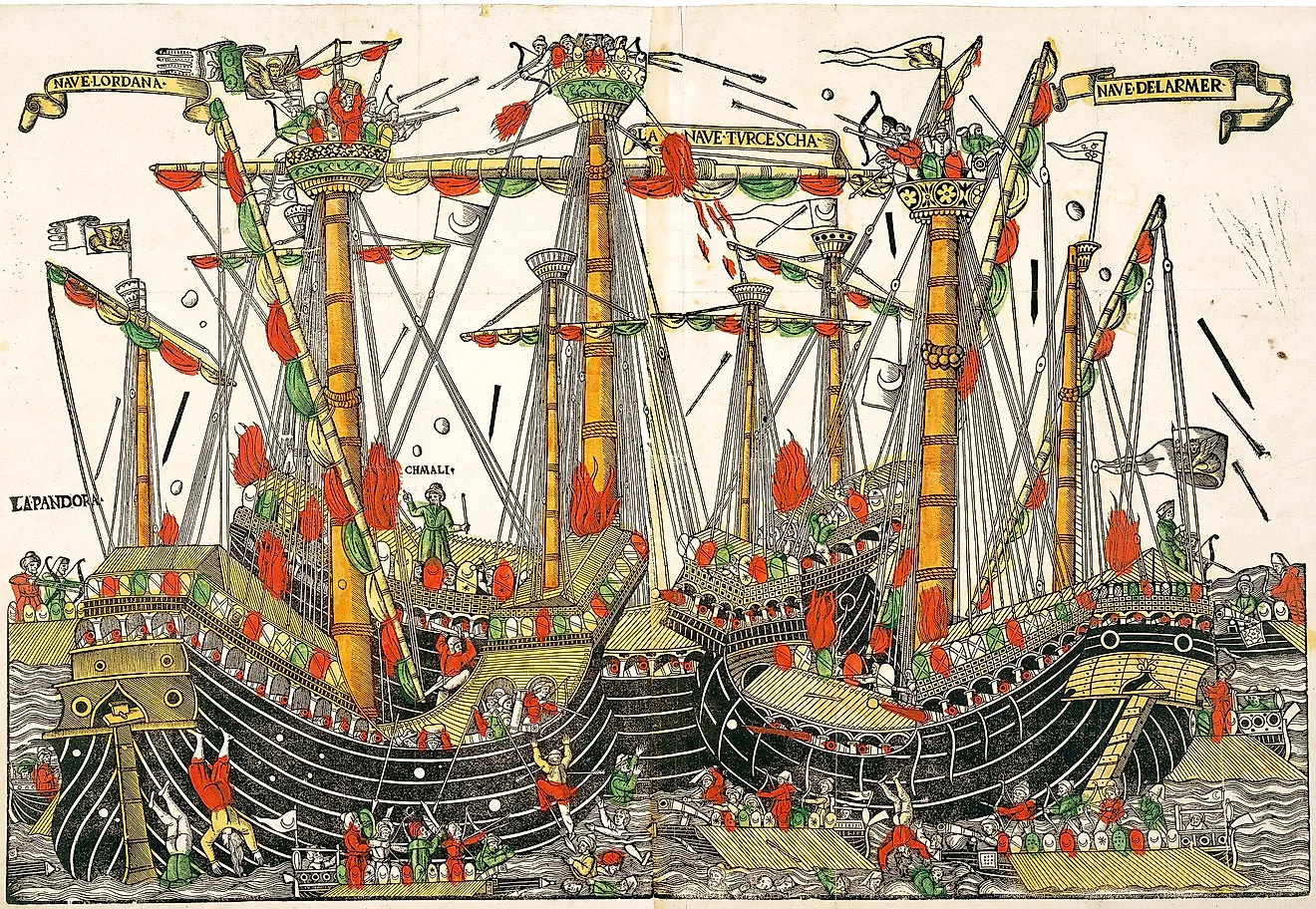
Even though the assassins were defeated, the war for Rome wasn’t over. Much like how Pompey and Caesar didn’t like each other, Octavian and Antony clashed. Antony’s relationship with the Egyptian leader Cleopatra was the main source of conflict, with Octavian claiming that the “foreign queen” was corrupting him and Roman politics. These claims eventually convinced the Senate to declare war on Cleopatra (and, in turn, Antony). The climactic engagement occurred in 31 BCE in the Battle of Actium. Octavian decimated Antony and Cleopatra’s fleets, and they were forced to return to Egypt. There, they committed suicide. A little over ten years after he won the Battle of Philippi, Antony was dead.
Germanicus

The Romans made their first incursions into Germania during Julius Caesar’s Gallic campaign (58 to 50 BCE), but the true attempts to settle the region began during Augustus’s reign (27 BCE to 14 CE). They initially made steady progress, building up infrastructure along the Rhine and establishing diplomatic relations with the local tribes. Disaster then struck in 9 CE, when Publius Quinctilius Varus led three legions into the Teutoburg Forest. There, they were decimated by Germanic tribes who launched a surprise attack. Between 15,000 and 20,000 troops were killed, and the scale of the defeat was so great that it reportedly caused Augustus to have a mental breakdown.

This context is necessary to fully understand Germanicus. One of the most popular generals in Roman history (and the father of future emperor Caligula), he oversaw campaigns into Germania from 14 to 16 CE. Partly intended as retribution for the Battle of the Teutoburg Forest, the expeditions were mostly successful in this regard. Some notable victories include the Battle of Idistaviso in 15 CE and the Battle of the Angrivarian Wall in 16 CE. However, Germanicus was unable to establish a permanent foothold in the region, and Emperor Tiberius eventually recalled him and abandoned further attempts at large-scale conquest. Hence, while Germanicus technically won most of his battles, he failed to translate these victories into long-term strategic gains.
Impact And Legacy
Several Roman generals won battles but lost the war. Consider Gaius Marius. He temporarily defeated Sulla and even died in power. Crucially, though, he didn’t consolidate this victory, and the Marian faction ultimately lost to Sulla in 82 BCE. Pompey won the Battle of Dyrrhachium in 48 BCE, only to be assassinated that same year. Mark Antony beat Caesar’s assassins in 42 BCE, before Octavian, his former ally, defeated him in 31 BCE. Finally, while Germanicus achieved most of his explicit objectives, he was unable to establish Roman control of Germania.