How Julius Caesar Changed Rome
Much like Alexander the Great and Napoleon, Julius Caesar exists in an almost mythical tier of political and military leaders. As the most important figure in Roman history, he fundamentally altered its trajectory, along with the broader ancient world. Therefore, it is worth asking exactly why and how Caesar had such an impact. Answering this question demonstrates that Caesar changed Rome by enlarging its territory and causing it to descend into civil war. These factors created the necessary conditions for Rome’s transition from a republic to an empire.
Background

Julius Caesar was born in 100 BCE to a patrician family (the patricians were the wealthy, landowning, aristocratic class of Rome). His early life was shaped by the growing instability of the Roman Republic, particularly the conflict between the Populares, who supported the power of the common people, and the Optimates, who supported the power of the elite-run Senate. Caesar’s family, and Caesar himself, leaned towards the Populares. This support endangered Caesar when an Optimate general, Lucius Cornelius Sulla, seized power in 82 BCE and forced him to flee to avoid being purged.

Caesar fled by joining the military, which took him far from the centre of Roman power to Anatolia. After a few minor but formative campaigns, he returned to Rome in 78 BCE to begin his political career. Some early positions included military tribune, quaestor (a financial official), and aedile (a magistrate responsible for public maintenance, games, and city regulation). He began his first major position in 63 BCE when he was elected the Pontifex Maximus, the chief priest of Rome. As the supposed “bridge” between gods and men, Caesar now had significant religious and political authority. Around the same time, he also became praetor (a senior judicial official) and the governor of Spain. Finally, in 60 BCE, Caesar formed an alliance known as the “First Triumvirate” with two other powerful generals, Crassus and Pompey. This let the three men effectively run Rome for the next ten years due to their combined wealth, military, and political influence.
Territorial Enlargement

In this context, Caesar led the Roman invasion of Gaul (modern-day France) from 58 to 50 BCE. Before him, Rome loosely controlled parts of the south, but its grip was tenuous, and the north was divided between independent Celtic tribes. Thus, while military force was an important component of Caesar’s campaign, diplomacy and playing the tribes against each other also proved essential.

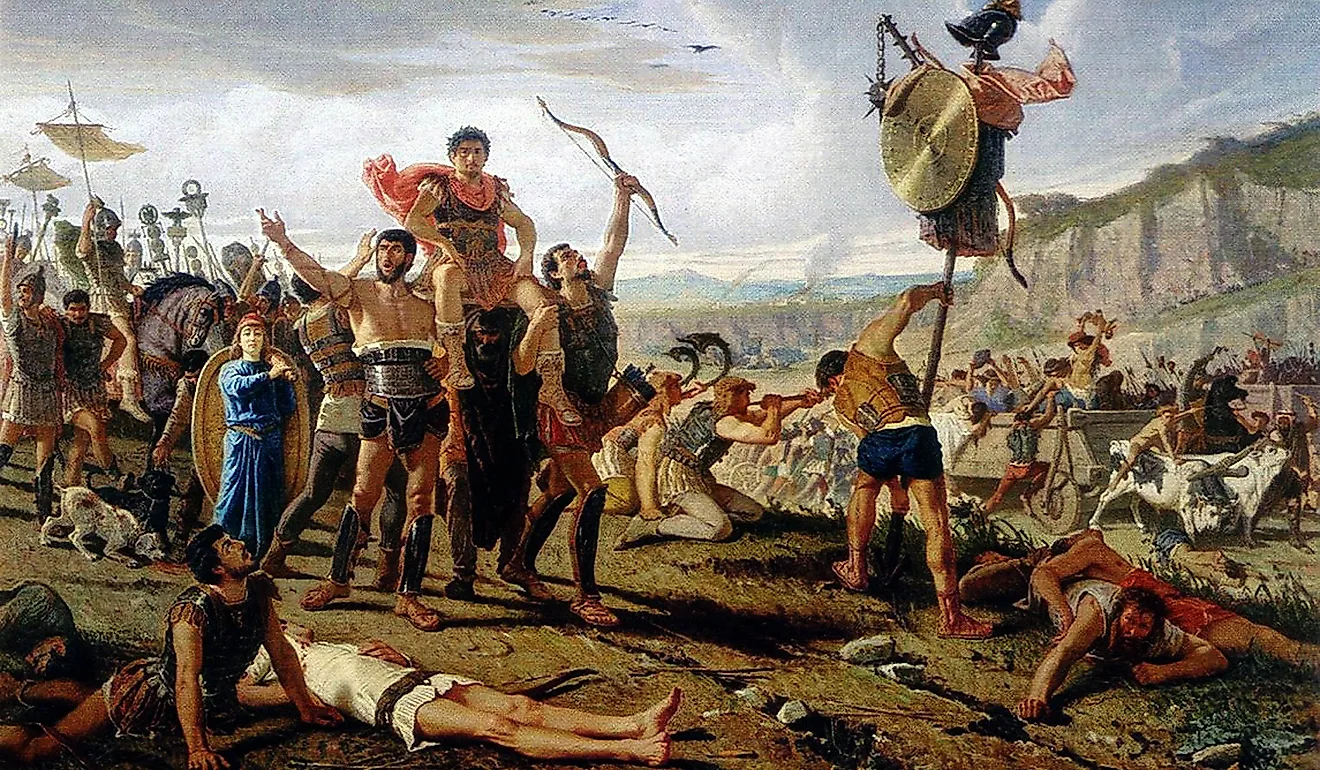
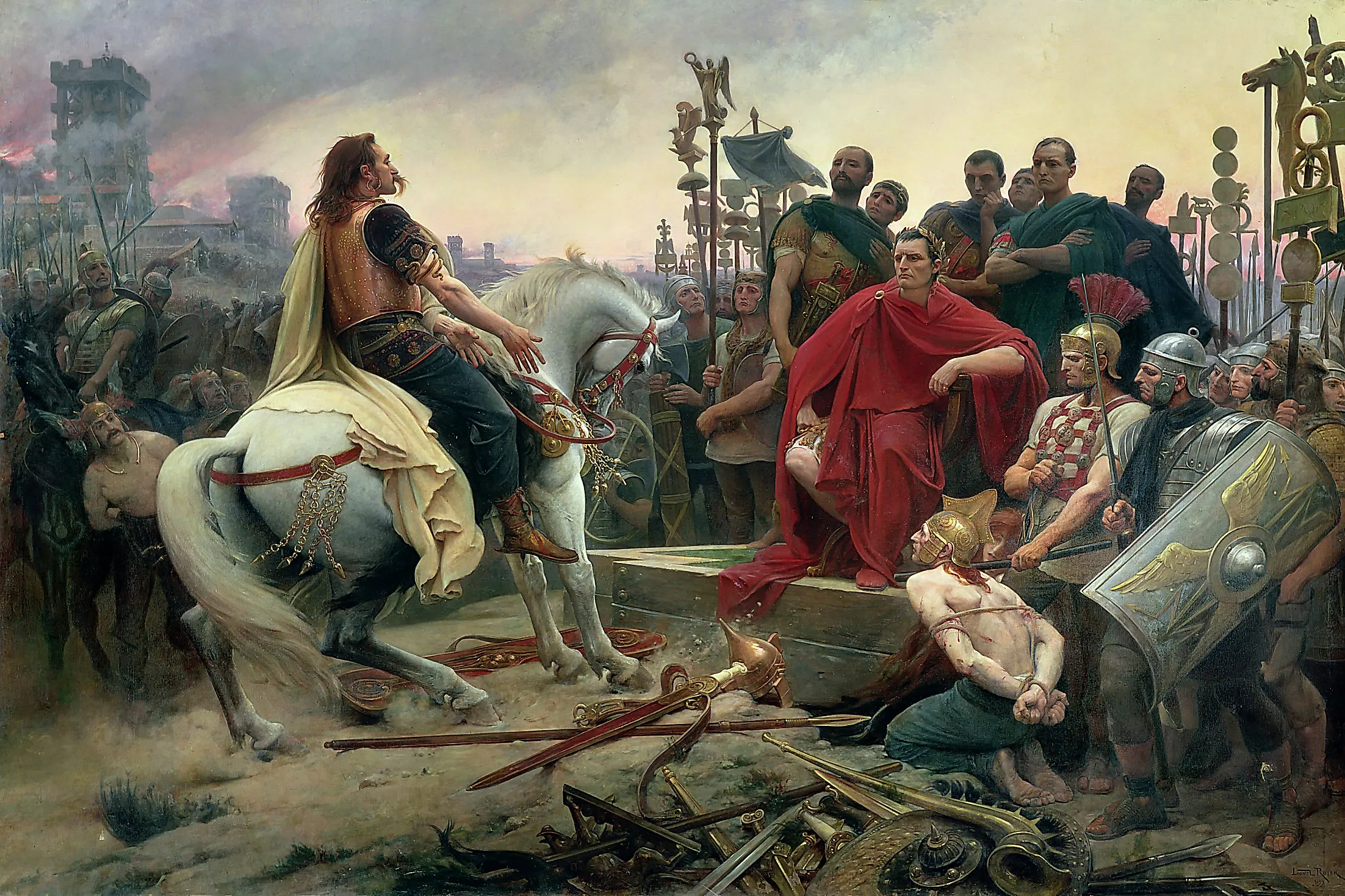
The largest challenge came in the form of the Gallic chieftain Vercingetorix, who united many of the tribes against Rome. Nonetheless, Caesar managed to defeat him in the Battle of Alesia in 52 BCE, effectively ending organised Gallic resistance. With Gaul under his control, Caesar took steps to secure the territory, making incursions into both Britain and Germania. While he did not permanently conquer these areas, he invaded them to establish diplomatic ties and discourage invasions of Gaul via a display of military might. Ultimately, by 50 BCE, Caesar had completely conquered and secured Gaul, making him even more powerful.
Civil War

As the 50s BCE went on, the First Triumvirate fell apart. Pompey was uncomfortable with Caesar’s increasing military might and popularity and began to ally himself with the Senate. The rift between the two men widened even further in 53 BCE when Crassus, the “glue” of the alliance, died. Eventually, the Senate demanded that Caesar give up his army and return to life as a private citizen. Caesar refused, and in 49 BCE, he crossed the Rubicon River with his army. As the legal border of Caesar’s provincial command, crossing the river meant that he was effectively declaring war on the Senate.

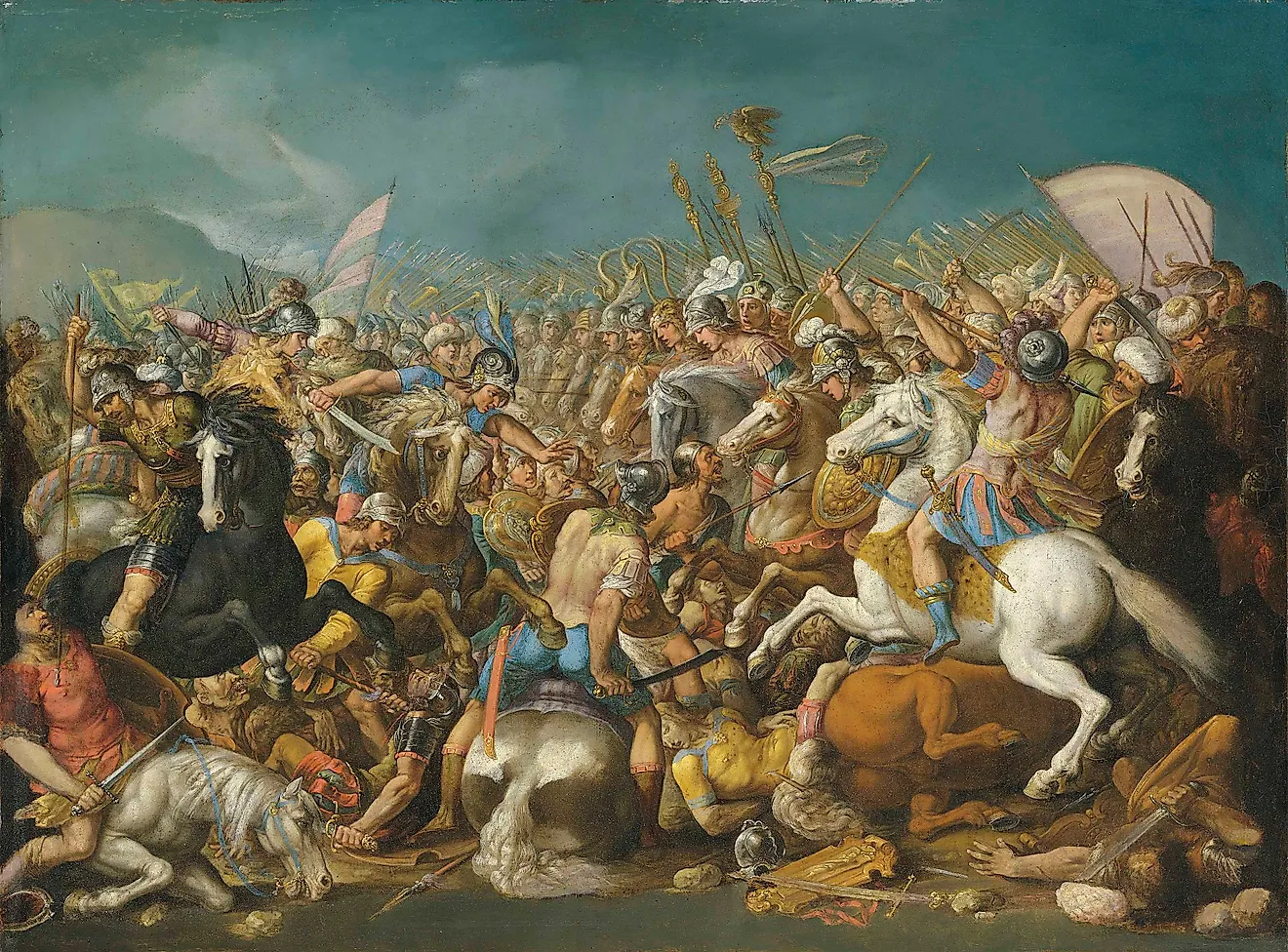
In the first stage of the war, Caesar quickly took all of Italy, forcing Pompey and his allies to flee. Caesar then secured his rear in Spain, which had many Pompey supporters, before chasing him to Greece. They faced off in the Battle of Pharsalus in 48 BCE, in which Caesar decisively defeated Pompey and forced him to flee once again, this time to Alexandria. However, Pompey was assassinated upon his arrival. Regardless, Pompey’s forces, particularly his sons, were still providing Caesar with resistance. Therefore, with the help of the Egyptian leader, Cleopatra, Caesar defeated them in 45 BCE.
Creating The Conditions For An Empire

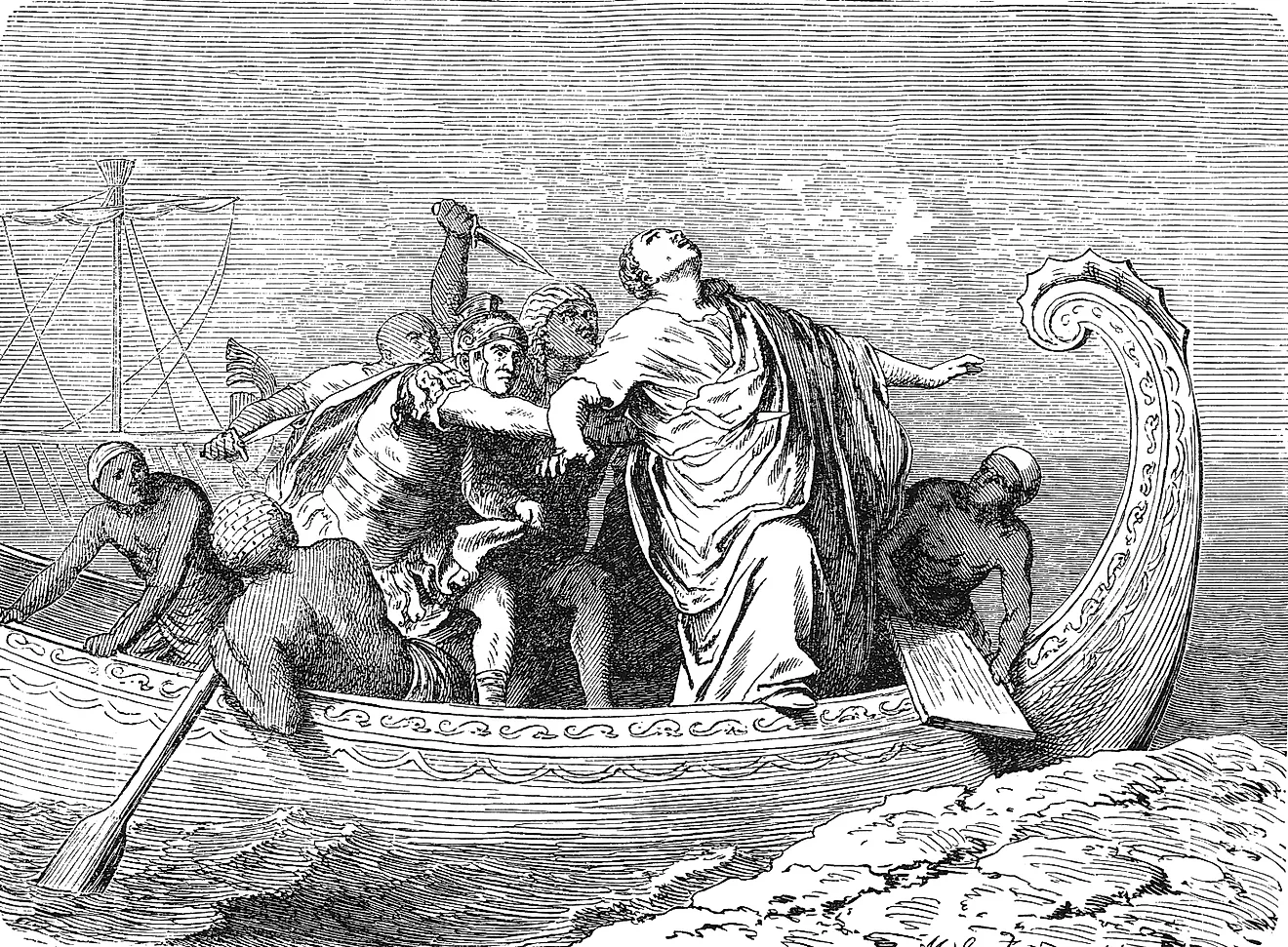
This civil war effectively ended Republican-era Rome. Whereas before many believed that norms, rules, and institutions held power, by crossing the Rubicon, Caesar demonstrated that military might could override these traditions. He further demonstrated this by declaring himself dictator for life in 44 BCE. Soon afterward, Caesar was assassinated by a group of senators concerned about his now seemingly absolute power. As Rome once again descended into civil war, trust in republican ideals was further shattered. The conflict ultimately ended with Octavian, now renamed Augustus, declaring himself emperor in 27 BCE. This action marked Rome’s official transition from republic to empire.
Impact And Legacy
Julius Caesar changed Rome forever. When he was born, it was a republic built on powersharing and the rule of law. However, through military might, political influence, and strategic cunning, Caesar helped erode these ideals. While he would not be alive long enough to see the Roman Empire, he was instrumental in establishing the necessary conditions for absolute rule.