How Carthage Nearly Defeated Rome
Carthage came closer to defeating Rome than any other power until the empire's late-period crises seven hundred years later. Hannibal's invasion of Italy and his victories at Trebia, Lake Trasimene, and Cannae destroyed Roman armies and shook Rome's Italian alliance system. But Carthage failed to convert its battlefield success into political settlement. The Romans raised new armies, pressured Carthaginian holdings in Spain and Sicily, and eventually carried the war to Africa, where Publius Cornelius Scipio defeated Hannibal at Zama in 202 BCE.
Before the Conflict

Founded by Phoenicians from Tyre in 814 BCE according to traditional dates, Carthage is archaeologically visible from the late eighth century BCE onward. It grew into a wealthy maritime empire in the western Mediterranean, with influence extending across North Africa, Sicily, Sardinia, and Corsica. Carthaginian wealth rested on a commercial network, a substantial navy, and merchant elites in the city itself. The economy was also agricultural and depended on subject communities, allies, and levied troops. By 270 BCE, Carthage had established a system of colonies and trading ports projecting both military and economic power across the Mediterranean.
Rome's model was different. While Carthaginian armies often included mercenaries and non-Carthaginian troops, the Romans used a citizen-and-allied levy system aimed at territorial expansion. Carthage was the dominant naval power until Rome began catching up during the First Punic War (264-241 BCE), considered the longest continuous war of the ancient Mediterranean. The conflict produced the foundation of Roman maritime power, with over a thousand galleys built in roughly two decades, a naval mobilisation that helped lay the groundwork for Roman control of the Mediterranean over the next six hundred years.
Hannibal's Military Brilliance

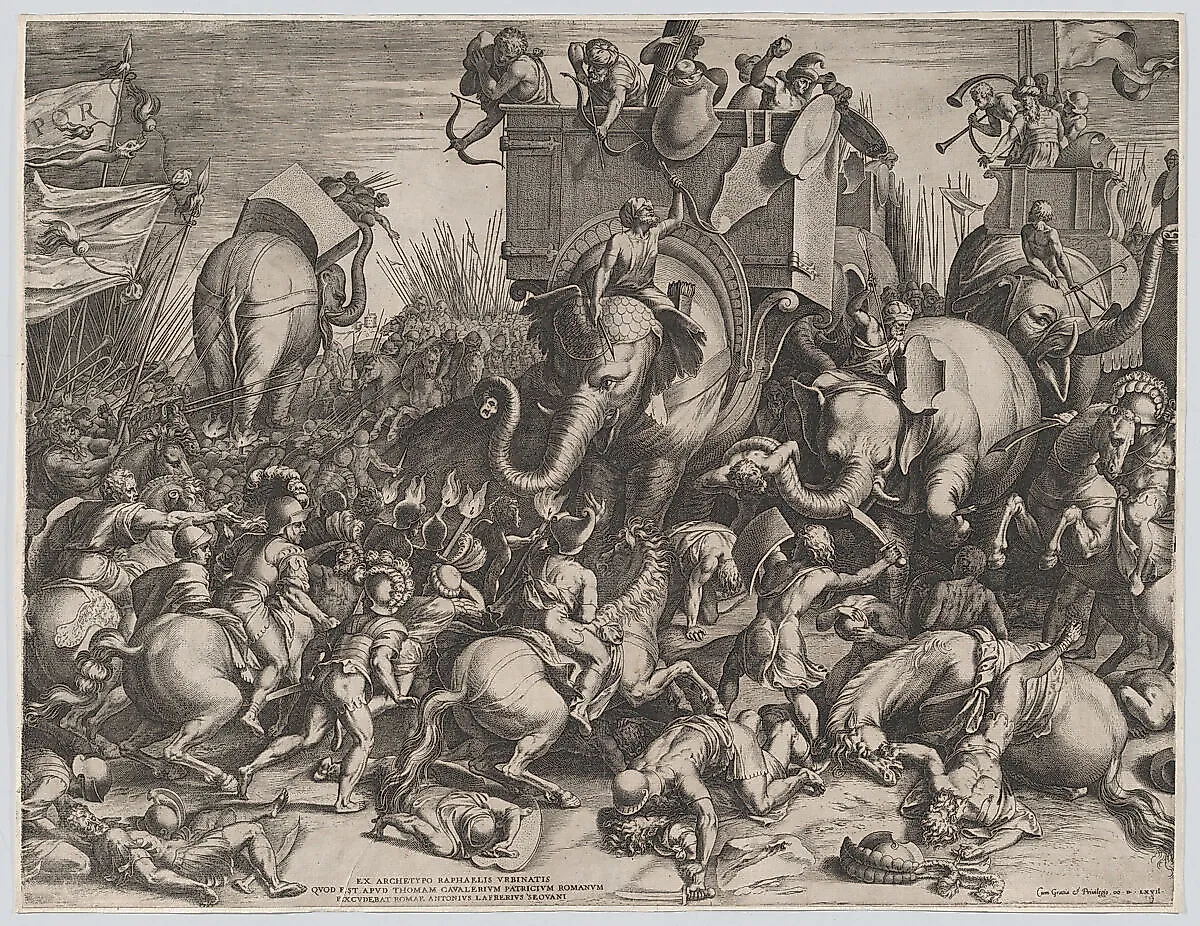
After losing the First Punic War, Carthage ceded Sicily and later lost Sardinia and Corsica. The Carthaginians began rebuilding their power base in Spain from 237 BCE under the Barcid family. This set the stage for Hannibal Barca, son of the Carthaginian general Hamilcar Barca and one of the most consequential military commanders of antiquity. Hannibal opened the Second Punic War with one of the more daring campaigns in ancient military history, crossing Spain, Gaul, and the Alps and reaching the Po Valley in 218 BCE.
His victories at Trebia (218 BCE) and Lake Trasimene (217 BCE) showed his command of terrain, formation, and timing. At Trebia, he forced the Romans to cross a freezing river before the battle, exhausting them physically. At Lake Trasimene, he used fog, terrain, and concealed troops to spring a complete ambush on a marching Roman army. The defining victory of the campaign came at Cannae (216 BCE), one of the bloodiest battles of the ancient world.

The Romans massed an army of around 80,000 troops to defeat Hannibal in southern Italy. Hannibal had about 50,000 men. He chose terrain that restricted Roman manoeuvre, and the conditions on the day (crowded ranks, wind-blown dust) gave his army the advantage in detail.
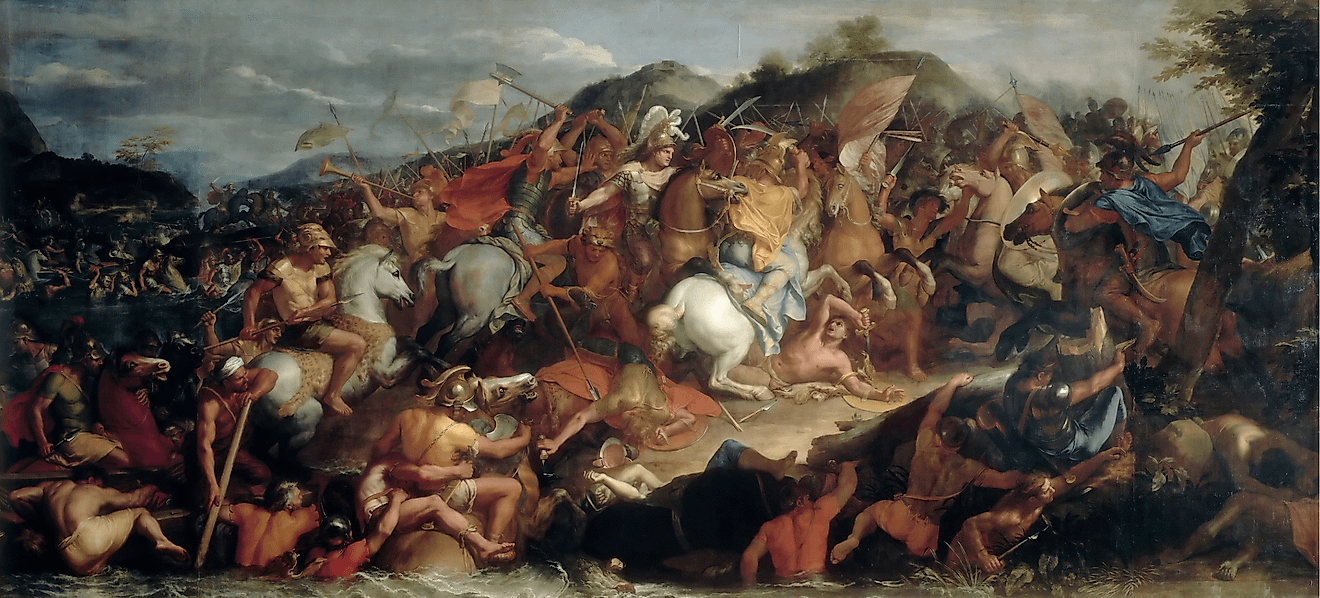
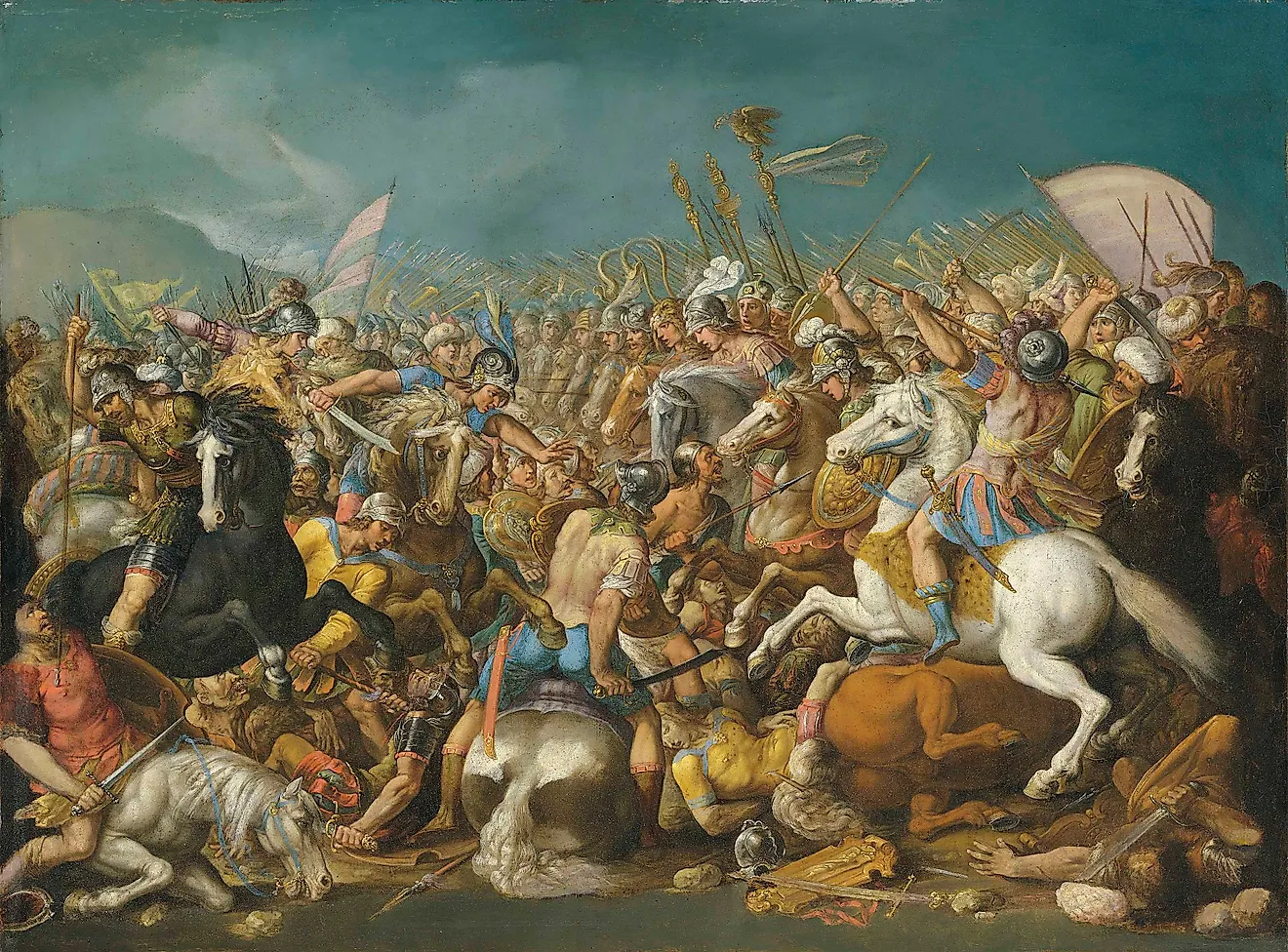
Hannibal's tactical setup at Cannae is one of the most studied in military history. He placed his weaker Gallic and Spanish infantry in the centre, formed into a forward-curving crescent. His stronger African heavy infantry anchored the flanks. As the Romans pushed inward against the bowing centre, the Carthaginian line bent backward without breaking. The Carthaginian cavalry then defeated the Roman cavalry on both wings and swept around behind the Roman infantry. The African heavy infantry on the flanks turned inward and closed the trap, encircling the Roman legions and forcing them to face attacks from every direction. Roman losses are estimated between 55,000 and 70,000. Many southern Italian cities defected to Carthage in the immediate aftermath, and Macedon and Syracuse eventually allied with Hannibal. The scale of the defeat shocked Rome but also hardened its resistance, and the Senate refused to negotiate.
Why Hannibal's Success Nearly Broke Rome

Rome's political system depended on citizen-and-allied levies, and the cumulative casualties at Trebia, Trasimene, and Cannae threatened to exhaust its manpower base. Several Italian allies began to defect, and the alliance system that supported Roman dominance came under severe strain. Without sufficient manpower or siege equipment for an assault on Rome itself, Hannibal aimed to weaken the Republic by detaching its allies and forcing the Senate to negotiate. The Senate refused, which left Hannibal with battlefield victories he could not convert into a political settlement.
Why Carthage Failed to Deliver the Decisive Blow

Despite Hannibal's command performance, Carthage failed to capitalise on Cannae and ultimately lost the Second Punic War at the decisive Battle of Zama (202 BCE). The Carthaginian senate did not provide Hannibal with reinforcements at the necessary scale, due to internal political conflicts, personal rivalries, and a cautious governing council. The failure to translate victory into sustained strategic pressure gave Rome time to recover. The Romans replaced losses, raised new armies, and adopted a strategy of attrition under Quintus Fabius Maximus, avoiding large-scale direct engagements with Hannibal in Italy.

While Hannibal fought in Italy, Rome pressed its army into Spain, Carthage's main source of silver and recruits. Publius Cornelius Scipio captured Carthago Nova and won at Ilipa, ending Carthaginian control of the peninsula. Scipio then carried the war to Africa, forcing Carthage to recall Hannibal from Italy to defend the homeland. The two commanders met at Zama in 202 BCE; Scipio won, and the war ended on Roman terms. Carthage survived the Second Punic War as a diminished tributary state, but it did not survive the Third Punic War (149-146 BCE), which ended after a three-year siege with the city's complete destruction.
The Fall of Carthage
Carthage came close to defeating Rome because Hannibal's campaign exposed the Republic's vulnerabilities more dramatically than any earlier crisis. The victories destabilised Italy and devastated the Roman field armies. Carthage's failure was political rather than military: the senate could not or would not back Hannibal's strategic position with the resources required to convert tactical victories into a Roman surrender. Rome rebuilt and eventually destroyed its rival outright. The Punic Wars are studied in part because they show how often the deciding factor in a long war is not the battlefield but the political institutions behind it.