When Were The Last Egyptian Pyramids Built?
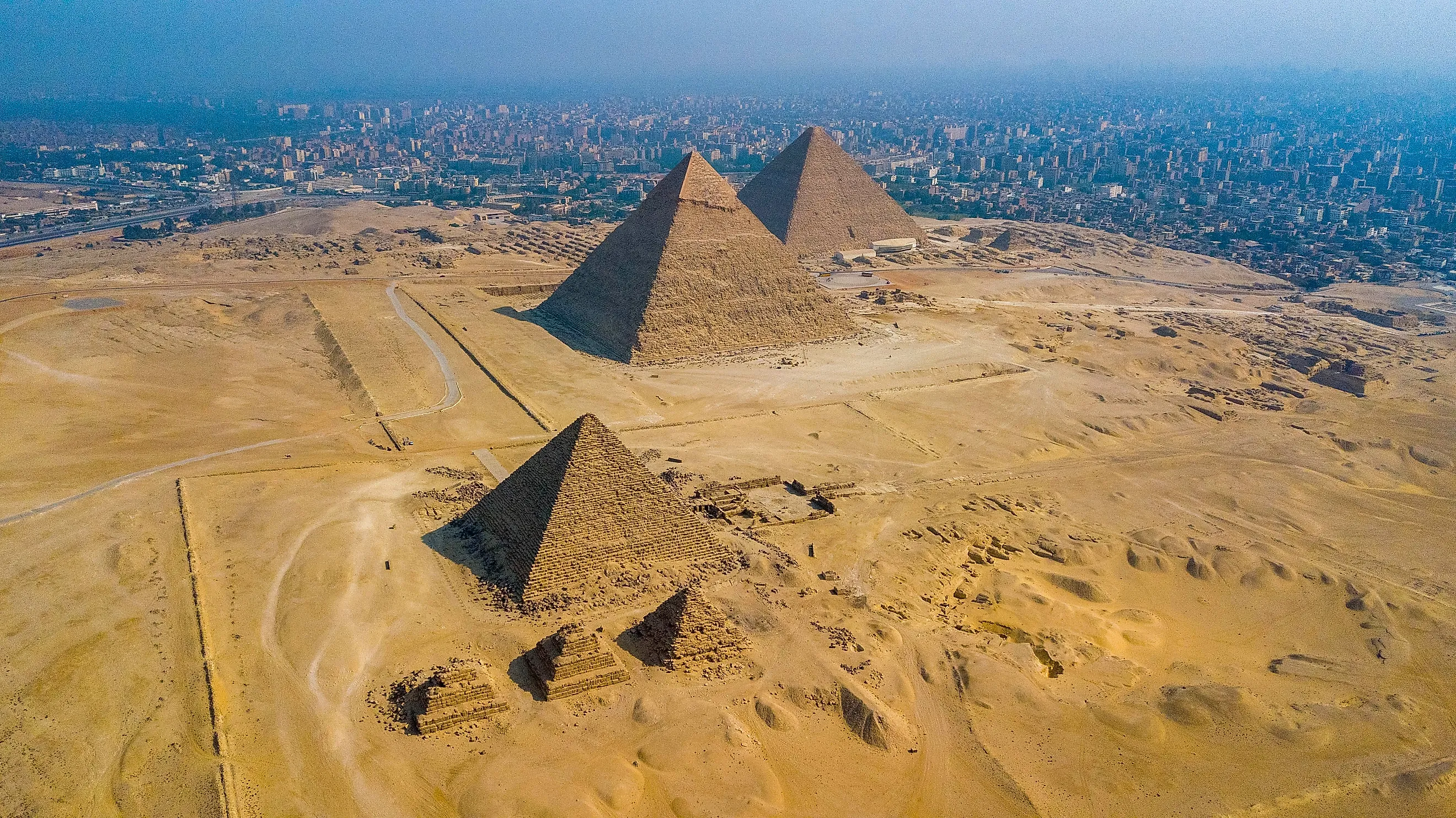
The pyramids are perhaps the most iconic feature of Ancient Egyptian civilization. Their size and longevity continue to impress people thousands of years later. It's therefore worth asking when the last pyramids were built. Answering this question is surprisingly difficult. While the last pyramids in Egypt were built in the 1500s BCE, we don’t know the exact date. Furthermore, Egyptian-inspired pyramids continued to be constructed for hundreds more years in the Kingdom of Kush.
The Early Pyramids (2600s BCE)

The pyramids didn’t come out of nowhere. Before they existed, Egyptian pharaohs were buried in structures called mastabas. These were large, rectangular tombs with flat roofs and sloping sides. Over time, the mastabas grew larger and more elaborate. This trend culminated during the reign of Djoser (2667 to 2648 BCE), who, along with his architect Imhotep, proposed stacking several mastabas on top of one another. The result was a giant step monument widely considered the first pyramid.

Over the next hundred years or so, the Egyptians experimented with various pyramid-building techniques. Consider the Bent Pyramid at Dahshur. Possibly due to concerns about structural integrity, the builders changed the angle halfway up, giving it a bent appearance. The Red Pyramid, also at Dahshur, was the first successful smooth-sided pyramid. Although relatively small, it paved the way for what would come next.
The Great Pyramid Era (2500s BCE)

The 2500s BCE are widely considered the golden age of pyramid building. This century saw the construction of the largest pyramids in Egyptian history, including the Great Pyramid of Giza. Originally nearly 150 meters, it was the tallest human-made structure for thousands of years. Building it and others like it was a massive endeavor. Stone had to be extracted from quarries and transported up the Nile to the construction site. Builders then had to place the stones in the correct positions. All these workers also required food and housing. Contrary to popular belief, the pyramids weren’t built by slaves but rather by paid laborers who were fed and sheltered by the government. In fact, their construction helped unify the populace under the pharaoh and demonstrated state power.
Decline And Revival (2000s BCE)

Pyramid building continued after the 2500s BCE, but generally at a smaller scale. Political upheaval and economic strain made massive construction projects less feasible. Around the collapse of the Old Kingdom in 2181 BCE, pyramid building stopped completely. Since Egypt was politically fragmented, the government lacked the ability to coordinate massive state-wide construction efforts.
This changed with the rise of the Middle Kingdom in the mid-2000s BCE. Pharaohs such as Amenemhat I, Senusret I, and Senusret II deliberately sought to reconnect with Old Kingdom traditions. Pyramids were one way to accomplish this. As a result, they built new pyramids at sites such as Lisht, Dahshur, and Lahun. However, there was a key difference. Middle Kingdom pyramids generally used mudbrick cores covered with limestone, rather than the massive stones of the Old Kingdom era. This made them far more vulnerable to erosion and collapse. Therefore, many Middle Kingdom pyramids are now badly damaged and barely recognizable.
The Last Egyptian Pyramid (1500s BCE)

As political unity waned once again in the 1700s BCE, pyramid building declined. Shifting burial practices also informed this change. Egyptian pharaohs increasingly chose to be buried in large rock-cut tombs, the most famous of which were found in the Valley of the Kings. This served a practical purpose. The pyramids essentially acted as giant markers for grave robbers, indicating where the pharaoh and his treasure were. A hidden tomb was much harder to find. Thus, the last official Egyptian pyramid was built between 1550 and 1525 BCE by Pharaoh Ahmose I. Reflecting changing burial practices, it served purely as a monument rather than a tomb, since Ahmose was buried elsewhere.
Revival In Nubia (700s BCE to 300s CE)

Pyramid building didn’t stop with the Egyptians. Nubia lay directly south of Egypt and roughly corresponds to modern-day northern Sudan. It was home to numerous states, arguably the most important of which was the Kingdom of Kush. Historically less powerful than Egypt, Kush’s influence increased with the fall of the Egyptian New Kingdom. Indeed, it even conquered Egypt in the 8th century BCE. Rather than ruling as an occupying power over a foreign land, Kushites like Piye, Shabaka, and Tantamani presented themselves as legitimate Egyptian pharaohs and adopted many traditional practices. One such practice was pyramid building.
The first Kushite pyramids were built at El Kurru and Nuri in northern Sudan. However, the most important construction site was Meroë, which became the capital of Kush in the 6th century BCE. Hundreds of pyramids were built there over the centuries. Although Egyptian-inspired, they looked very different from what you’d see at Giza. Smaller, narrower, and steeper, they were nonetheless impressive in their own right. Indeed, long after the Egyptians stopped building pyramids, Kushite kings continued to use them to legitimize their rule, establish a distinct identity from neighboring societies, and preserve an architectural tradition that had endured for thousands of years. Ultimately, the final Kushite pyramid was built sometime in the 4th century CE, not long before the Kingdom of Kush itself ceased to exist.
Impact And Legacy
Egyptian pyramid building has a long and complex history. It began in the 2600s BCE with Djoser and was perfected the next century. Pyramid building then declined and stopped altogether when the Old Kingdom collapsed, but it was revived with the rise of the Middle Kingdom. It stopped again in the 1500s BCE due to political instability and changes in royal burial practices. However, the Kushites carried on the legacy, constructing hundreds of Egyptian-inspired pyramids. This continued right up until the end of the Kingdom of Kush in the 4th century CE.